


 The World Bank Logo PNG
The World Bank logo combines the ideas of global reach and prosperity. The emblem represents an organization that cares for the entire planet and pursues global objectives. The lines and colors illustrate pathways where the wealthy assist the poor, fostering equality and universal well-being.
The World Bank was conceived in December 1944 at the Bretton Woods conference in New Hampshire, where 44 countries designed the postwar financial order. Created alongside the International Monetary Fund, it initially operated as the International Bank for Reconstruction and Development, or IBRD, with a mandate to rebuild economies after World War II.
Its first major task was European reconstruction. In 1947, the IBRD issued its first loan: $250 million to France for postwar recovery. By the 1950s, as Europe’s rebuilding progressed, the institution shifted lending toward developing countries in Latin America, Asia, and Africa. Its loans financed roads, power plants, irrigation systems, and other infrastructure tied to long-term economic growth.
In 1960, the International Development Association, or IDA, was created within the World Bank Group to provide concessional loans to the poorest countries. In the 1970s, under Robert McNamara, the bank expanded its focus from infrastructure to poverty reduction, agriculture, education, and healthcare. In the 1980s, it became involved in developing-country debt crises through structural adjustment programs.
In the 1990s, the World Bank supported former Soviet and Eastern European economies during their transition to market systems, combining financing with technical expertise. In the early 2000s, it aligned its programs with the UN Millennium Development Goals, increasing support for poverty reduction, health, and education. In the 2010s, it expanded its work in technology and digital transformation. From 2020 to 2024, it increased support for healthcare, social protection, technology modernization, and digital development.
Meaning and History
What is The World Bank?
This international financial organization supports global development and provides capital and technical assistance to poor countries. The International Development Association (IDA) and the International Bank for Reconstruction and Development (IBRD) are the bank’s main entities. Together, they promote global prosperity and reduce poverty. The bank offers grants, loans, and advisory services in infrastructure, governance, healthcare, and education. In addition to providing financing, the bank influences the shaping of global development policies and practices and helps address complex global challenges through its research, data collection, and analytical efforts.
1944 – 2014
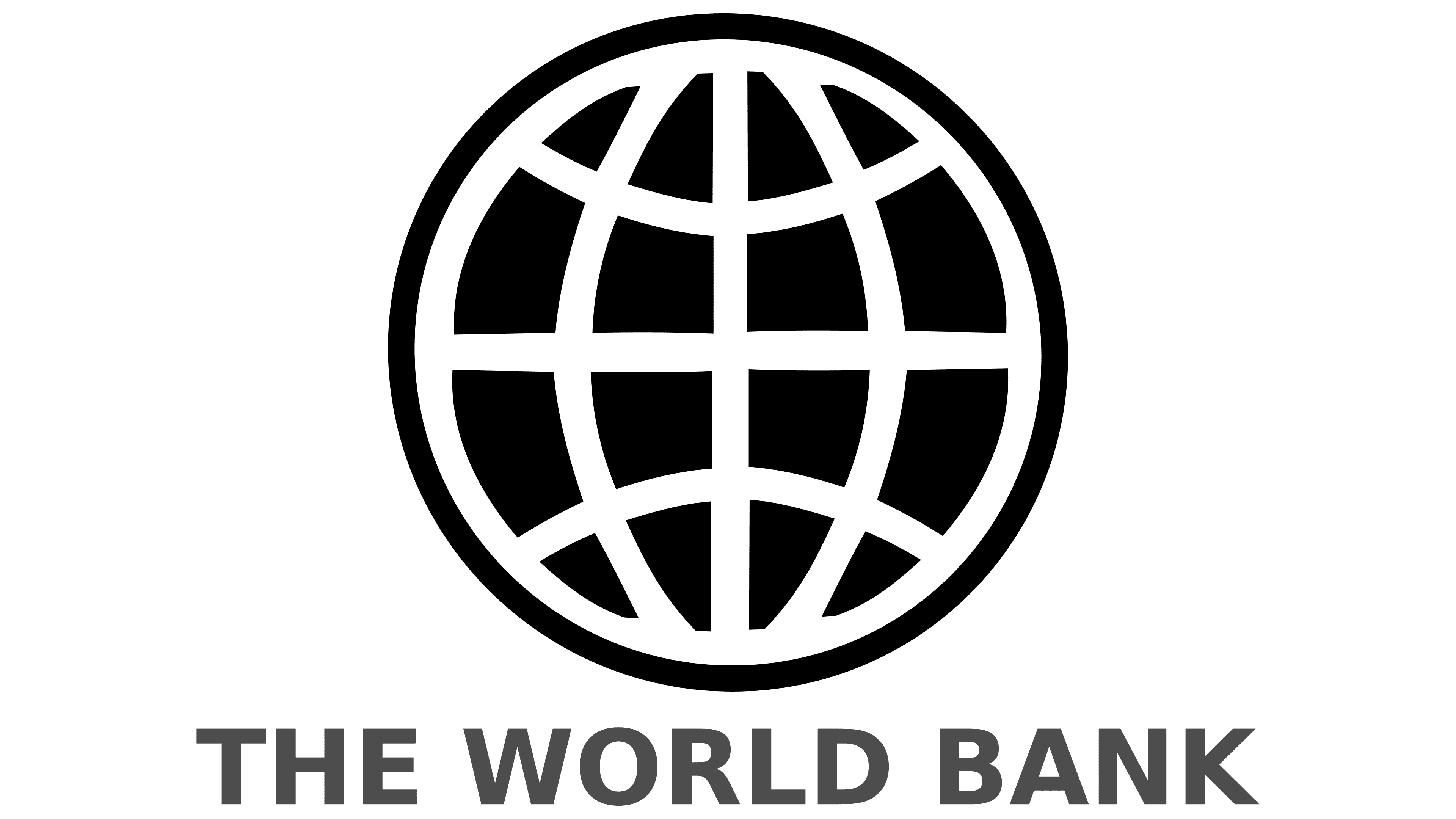
The organization’s first emblem emphasizes its global reach and the universality of its services. At the center is a large globe intersected by lines of meridians and parallels. The black color highlights the scale and the company’s commitment to providing equal opportunities to everyone, regardless of location. The organization stood out for its uniqueness and rigorous review of credit applications, underscoring its strength and influence.
The white lines crossing the globe hold symbolic significance. In addition to representing meridians, they reference the bank’s original functions aimed at developing infrastructure. The loans issued supported the construction of roads and ports, connecting remote regions to emerging hubs. These lines symbolize the framework of a road network, strengthening the connections between various parts of the planet.
Beneath the massive globe are gray letters spelling the organization’s name. The lettering is light and elegant, in contrast to the central element’s monumentality. This style reflects the ideas of support and stability that helped the bank sustain itself and grow during its early years.
2014 – today
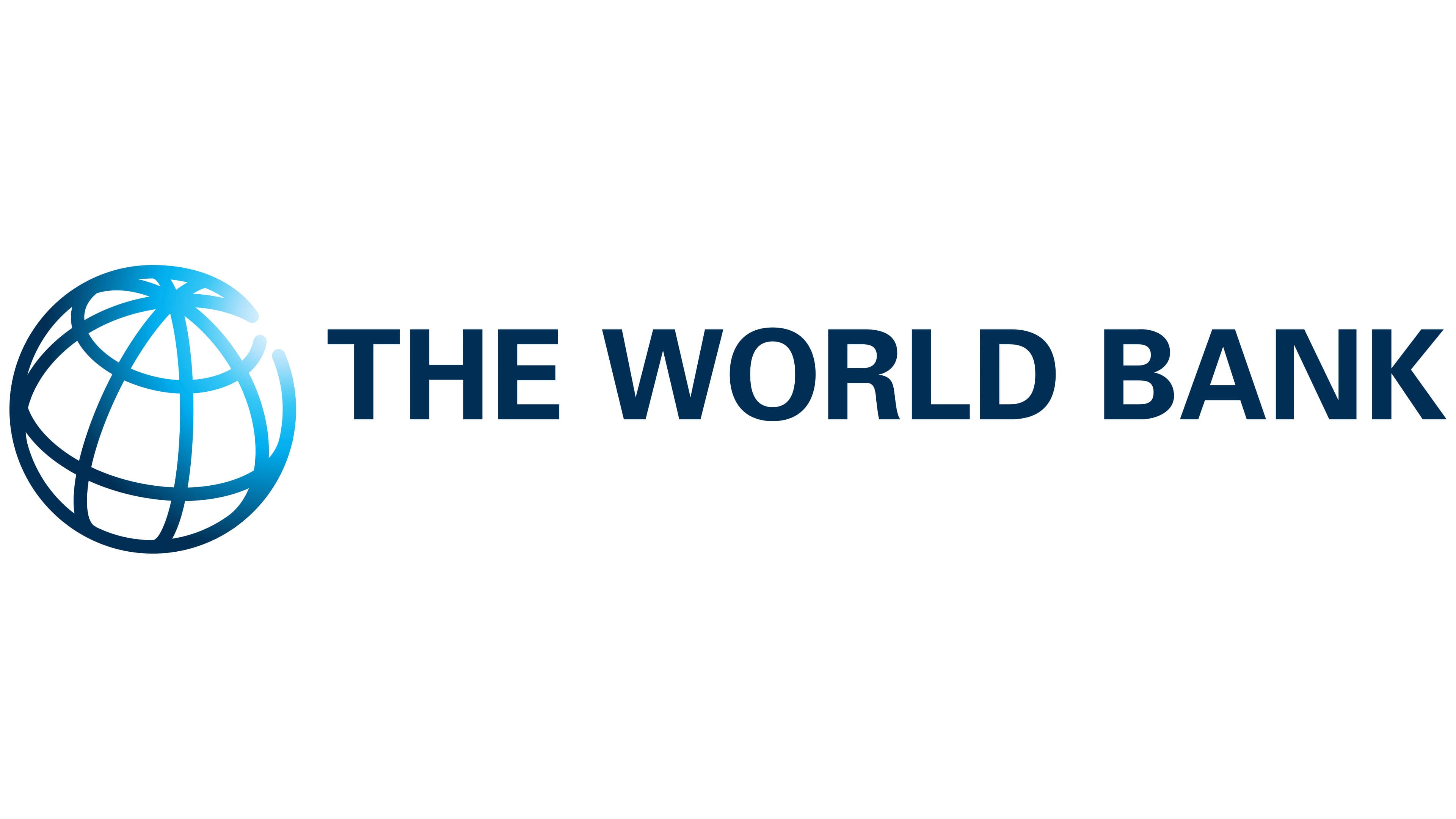
In 2013, the bank identified two primary areas of focus: reducing poverty and ensuring global prosperity. The new logo reflects these goals, symbolizing the organization’s renewed mission.
The emblem is presented in 3D. It features a globe covered with a pearlescent blue meridian and parallel lines. The shade was chosen to emphasize the connection to nature, evoking Earth as the “Blue Planet,” where water and sky are essential elements of life. The logo draws attention to the uniqueness of our shared home and the fragility of its ecosystem.
Sunlight shines on the globe, giving the lines a luminous, dimensional effect. This visual conveys a vision of a better future, which the World Bank strives to create. The organization invests in projects to increase the incomes of the poorest 40 percent of the population and reduce global poverty to 3 percent.
Next to the globe is the bank’s name, in large, dark-blue capital letters. Their size highlights the organization’s growing influence in global economic and social processes. The chosen shade conveys stability, reliability, and balance, which the bank seeks to bring to people’s lives worldwide.