


 uTorrent Logo PNG
The famous uTorrent logo is familiar to almost all users downloading files from torrent sites. The icon symbolizes ease, openness, and free access. It attracts you with its soft forms and pleasant color scheme.
The idea behind uTorrent grew out of frustration with early torrent clients. In 2003-2004, programs such as Vuze (then known as Azureus) used significant memory and CPU resources. Canadian programmer Serge Paquet suggested that Swedish developer Ludvig Strigeus create a lighter and faster client.
Strigeus began work in autumn 2004, with the first draft build dated October 17, 2004. He paused the project after about a month, then returned to it on September 15, 2005. On September 18, 2005, uTorrent 1.1 beta was released publicly. The program was under 200 KB and used very few system resources, which set it apart from bulkier rivals.
In its first year, uTorrent spread through forums and torrent communities. Strigeus added DHT, connection encryption, and other features that later became part of the wider BitTorrent standard. In 2006, Spotify bought uTorrent, mainly to bring Strigeus into its team. On December 7, 2006, BitTorrent, Inc., founded by Bram Cohen in San Francisco, bought uTorrent from Spotify for an undisclosed sum.
BitTorrent, Inc. used uTorrent’s code as the basis for BitTorrent 6.0. The client grew, then was monetized through ads, bundled offers, and paid plans. In March 2015, version 3.4.2 sparked backlash after EpicScale, a Bitcoin-mining component, was installed during setup. The company removed it and apologized, but many users moved to alternatives such as qBittorrent. In 2018, Justin Sun, founder of TRON, bought BitTorrent, Inc. for about $140 million. Bram Cohen left soon after the BTT token’s launch, and the company changed its name to Rainberry, Inc.
Meaning and History
uTorrent is called µTorrent. “u” and “μ” look similar, but otherwise they have nothing in common. In fact, “μ” is the lowercase grapheme for the twelfth letter of the Greek alphabet, Mu (it looks like “M” in uppercase). It is based on the Egyptian hieroglyph for water. And together with omega and alpha, this symbol represents the “beginning, middle, and end.”
In the metric system, “μ” is associated with the prefix micro because it comes from the Greek word “μικρός,” which translates as “small.” This is what prompted the program’s creators to name it μTorrent. The fact is that it differs from large BitTorrent clients in its small size. It requires minimal computer memory, but functionality is not compromised.
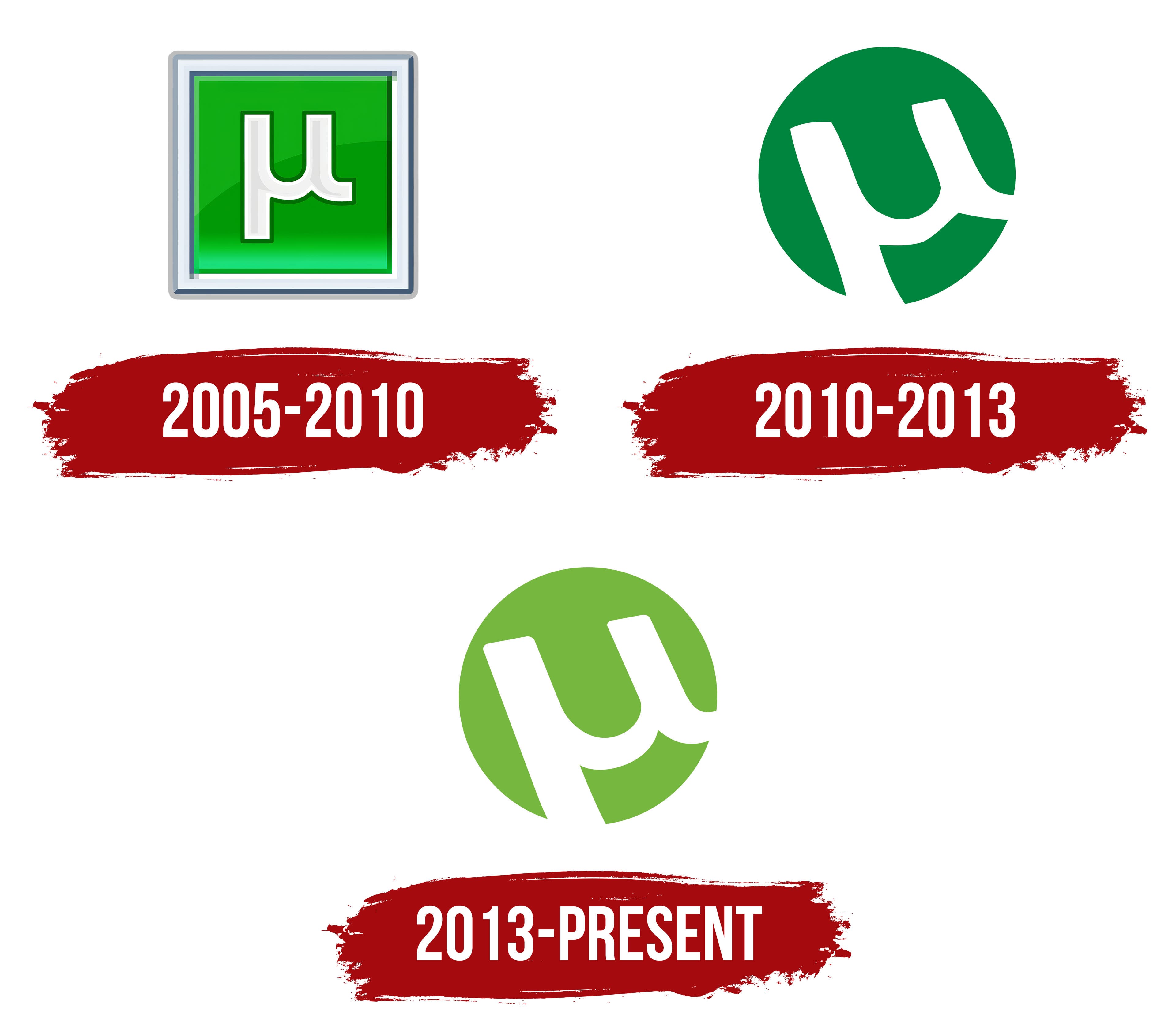
Since the Greek letter “μ” is considered the most important symbol of uTorrent, it has become the basis of its visual identity. This sign has been used in all brand logos, of which there are only three as of 2022. They are united not only by a common graphic element but also by a color scheme: the traditional combination of white and green.
What is uTorrent?
uTorrent is a closed-source program that enables file sharing using the BitTorrent protocol. Worldwide, except in China, it is the most popular client owned by the American company Rainberry, Inc. But its original developer is Swedish programmer Ludvig “Ludde” Strigeus.
2005 – 2010

In 2005, Swedish IT specialist Ludvig Strigeus developed his own BitTorrent client and called it μTorrent (due to the complexity of writing, another version became popular – uTorrent). The first letter, which hinted at the program’s small size, formed the basis of the logo. It was inside a green square with a silver border. The square was divided into two parts: a light top and a dark bottom, with the latter additionally using a linear gradient. Green stripes of different shades were drawn along the square’s edges, making it seem voluminous. The letter “μ” itself was white but uneven, with the color turning to silver closer to the center of each stroke. Moreover, the contour of the Greek symbol was outlined by a thin dark green line.
The edging of the quadrangle consisted of several layers. On the inside, the designers depicted stripes of white and dark gray. In the middle was a wide white-and-silver gradient border, and the outer part was painted in two shades of gray, with a blurry shadow.
2010 – 2013

The uTorrent client became the property of BitTorrent, Inc. in 2006, but it wasn’t until 2010 that the parent company changed its logo. Thus, in the new program version, there was no longer a square emblem but a round dark green icon with a white letter “μ” inside. This version, unlike the previous one, was asymmetrical: it contained a Greek character tilted to the left. It looked like it was “rolling” inside a spinning circle. Designers have simplified the palette significantly by removing the gradient. They chose one dark shade of green and paired it with pure white. The two-dimensional design, without shadows or highlights, corresponded to fashionable minimalism.
2013 – today

The modern logo was first introduced in the uTorrent 3.3 client, which was released in early 2013. The developers kept all the elements in place, left the circle green, and changed its tint. The letter “μ,” as before, is white. The most important update touched on the gradient: a slight darkening has now appeared at the bottom of the graphic sign.
Font and Colors
Since the most recognizable element of uTorrent’s visual identity is the first letter of the program’s name, it served as the basis for the emblem. And so that the symbol does not become boring, the designers depicted “μ” in a reclining form with a pronounced leftward inclination. This sign relates to the micro prefix used in the measurement system and hints at the BitTorrent client’s small size.
The uTorrent logo contains no inscriptions other than the Greek letter “μ.” Its font is difficult to identify because of its atypical layout, but it is clear that it lacks serifs. The palette contains green with a dark gradient and white. These two colors (in different shades and combinations) have been used since the program’s first release.