 Wachovia Bank Logo PNG
Wachovia Bank began on 16 June 1879 in Winston, North Carolina, when James Alexander Gray and William Lemly opened Wachovia National Bank with $100,000 in capital. Its roots went back to First National Bank of Salem, founded in 1866 by Israel Lash. The name came from “Wachau,” which Moravian settlers used for their Piedmont settlement founded in 1753.
In 1893, Wachovia Loan and Trust Company opened in the same city. They grew into a leading trust institution in the Southeast. In 1911, it merged with Wachovia National Bank, creating Wachovia Bank and Trust Company with $7 million in assets and $1.25 million in capital. Major regional clients included R.J. Reynolds Tobacco Company.
Wachovia expanded across the Southeast and, in 1964, became the region’s first bank with assets exceeding $1 billion. After interstate banking deregulation, it merged with First Atlanta Corporation in 1985, forming First Wachovia Corporation. In 1991, South Carolina National joined, and by 1997, the bank had expanded through 1st United Bankcorp, Central Fidelity Banks, and Jefferson Bankshares.
In 2001, Wachovia merged with First Union, which had earlier bought First Fidelity and CoreStates Financial. The combined bank kept the Wachovia name, moved to Charlotte, and held $324 billion in assets. In 2004, it bought SouthTrust for $14.3 billion. The 2006 $25.5 billion acquisition of Golden West Financial exposed Wachovia to risky adjustable-rate mortgages. In 2008, after about $24 billion in losses, Wells Fargo acquired the group for $15 billion. The last Wachovia signs disappeared on 15 October 2011.
Meaning and History
What is Wachovia Bank?
This former major American bank was known for its extensive branch network and diverse financial services. The bank, headquartered in Charlotte, North Carolina, offers investment services, asset management, retail, and commercial banking. The company had a strong presence in the Southeastern U.S. and expanded through acquisitions in other regions. During the financial crisis, the bank faced difficulties, leading to its acquisition by Wells Fargo. Today, the company no longer exists as a separate brand.
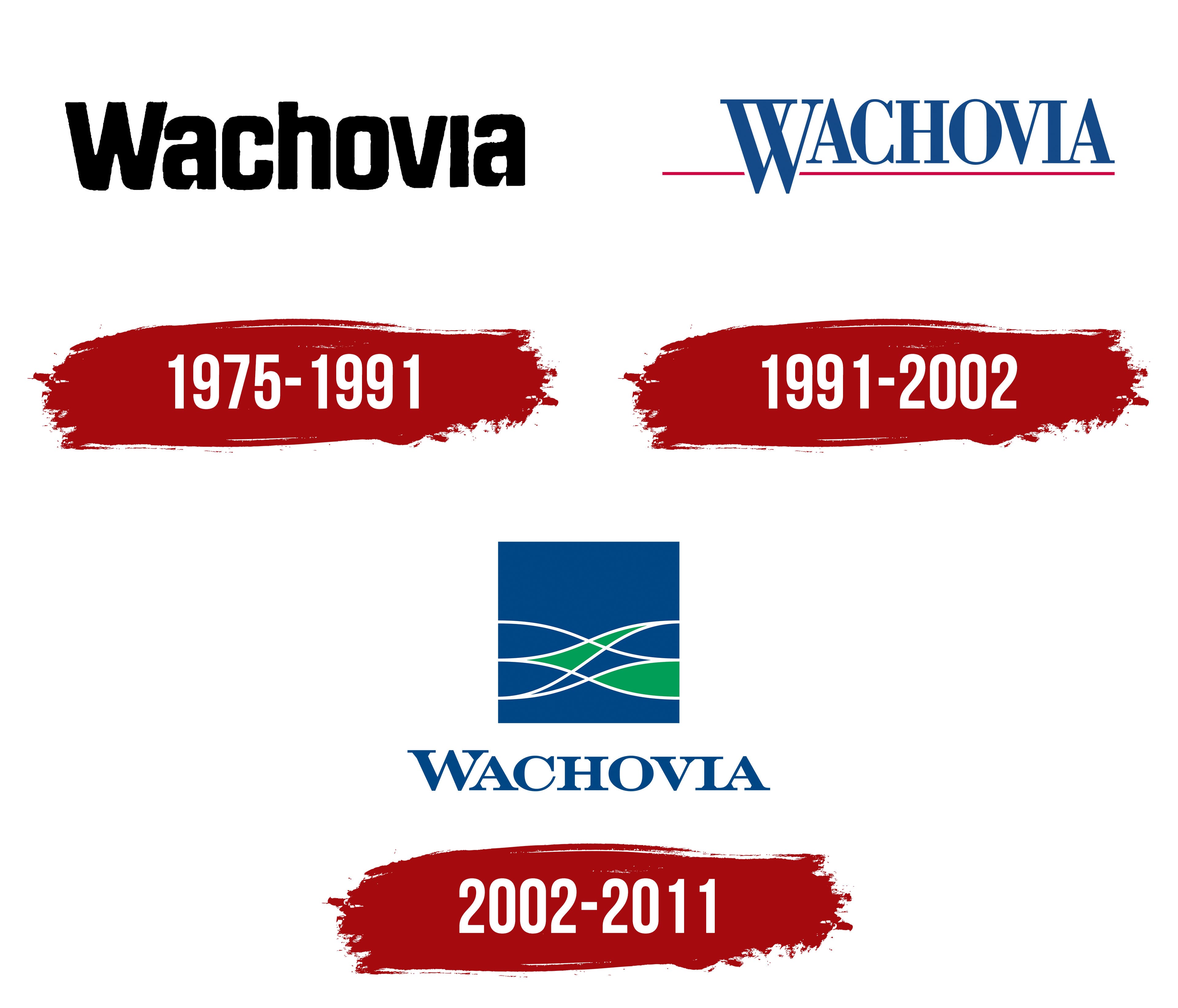
1975 – 1991

1991 – 2002

2002 – 2011