Webex Logo PNG
The Webex logo demonstrates the endless possibilities of partnership and collaboration through digital technologies. To this end, developers created a unique product that lets you connect with the right people from anywhere in the world. This is clearly reflected in the original symbol. The color palette confirms this idea and instills confidence in the application’s effectiveness.
Webex began in 1995 in Silicon Valley, when Min Zhu and Subrah Iyar founded a startup focused on web conferencing software. Zhu had worked at Quarterdeck, while Iyar came from technology sales and marketing. The company was first called Future Labs and later became Webex Communications. Its main idea was to let people hold business meetings and presentations over the internet without being in the same room.
The early Webex product allowed several participants to view the same presentation, document, or web page simultaneously on their screens. In the mid-1990s, this was technically difficult because internet bandwidth was limited. That function became the basis of the company’s commercial growth as corporate clients began using online meetings for training, product demos, and internal communication.
In 2000, Webex went public on NASDAQ during the dot-com crash. Unlike many internet startups of that period, it survived the 2000 to 2001 downturn and continued to grow through corporate subscriptions. In the early 2000s, it became one of the main U.S. providers of online meetings and webinars, competing with Microsoft collaboration tools and Citrix Systems’ GoToMeeting service, which launched in 2004.
In March 2007, Cisco Systems agreed to buy Webex Communications for about $3.2 billion in cash, and the deal closed in May. Webex then became a Cisco brand for video meetings and collaboration. Cisco later expanded the platform into messaging, cloud calling, and contact-center tools. Its main rivals included Zoom Video Communications, founded in 2011 by former Cisco executive Eric Yuan, and Microsoft Teams, part of Microsoft 365.
Meaning and History
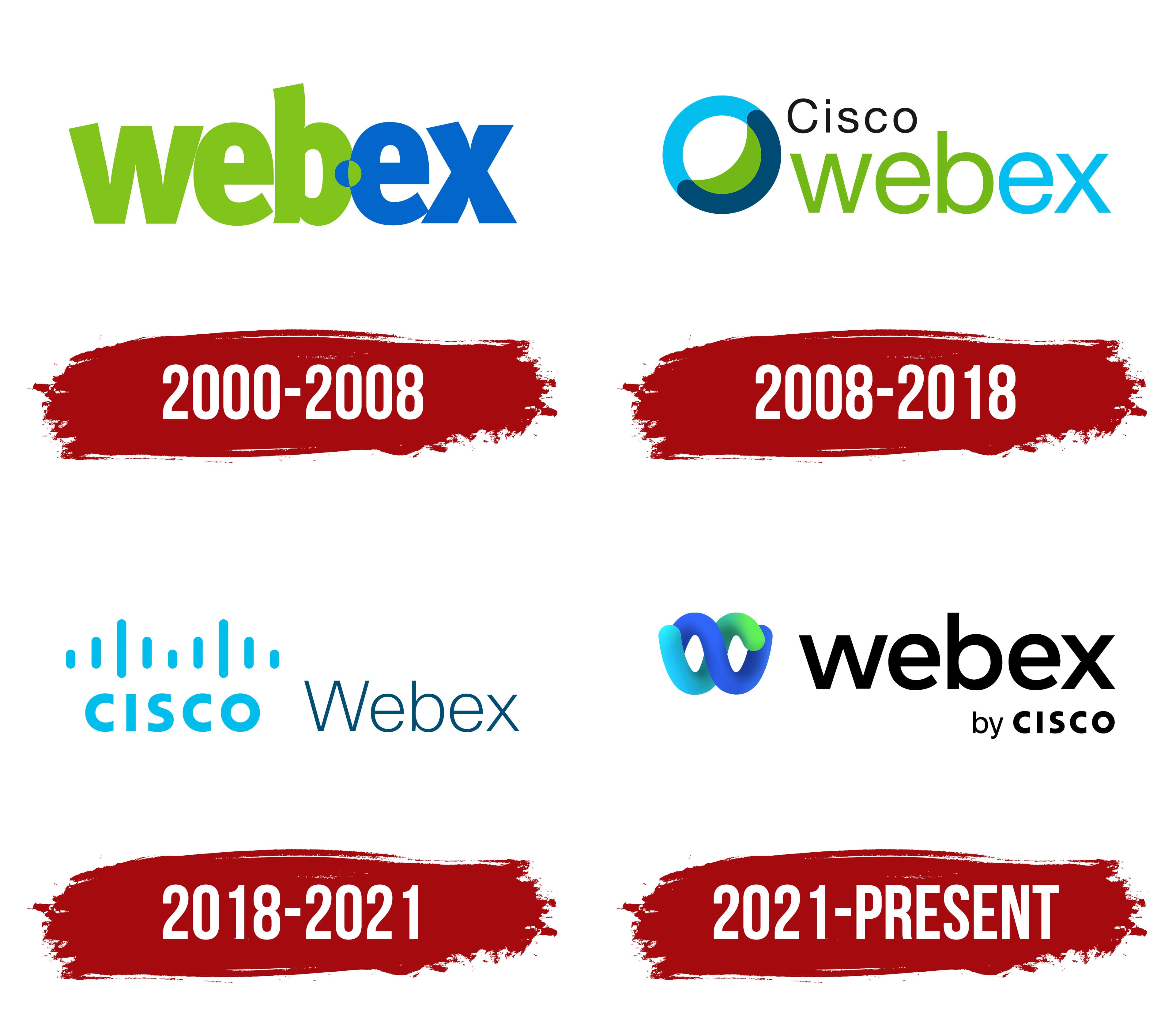
After the application’s launch, the Webex icon became widely recognized because of strong demand for the digital product it represented. As a result, the virtual world became familiar with the logo of a program for conducting remote conferences. It was a simple symbol consisting only of the developer’s company name. After operating independently for some time, Cisco Systems, a major player in the software industry, took control.
To emphasize its connection to digital technologies, the new owner changed the emblem to a virtual theme. He turned it into an improvised infinity symbol, resembling a horizontal figure eight. This form also carried another sacred meaning: close partnership and cooperation, shown through harmoniously curved lines. Before that, the logo took the form of a ring and a digitized voice diagram with different-level sound-height marks.
What is Webex?
Webex is a worldwide developer and supplier of applications for conducting full-fledged remote conferences. It provides online communication for all participants through programs such as Webex Contact Center, Webex App, Webex Suite, Webex Devices, Webex Calling, Webex Meetings, Webex Messaging, and other applications. The company has existed since 1995 and is owned by Cisco Systems.
2000 – 2008

The emblem consisted of a name divided into two parts by color, each written in lowercase. The word “web” was olive green, and “ex” was cobalt blue. Although they didn’t fit the bright palette, they were expressive and dramatic, instantly capturing users’ attention. The parts joined by a small dot were painted the same way, but with a different color combination. That is, on the side of the green letters, the tiny ball was blue; on the opposite side, it was green. This effect made the words easier to distinguish. Some glyphs had diagonal cuts at the ends, which made the application original and set it apart from similar designs.
2008 – 2018

In the emblem of this period, graphics and text combined clearly. They organically complemented each other because they were painted in the same color palette: blue-green. The word “webex” was even and thin, though it still visually divided into two parts. Above it was the name of the company that bought the application. This asserted its presence and ownership. Designers removed the small dot from the center and moved it to the beginning, turning it into a large ring in the company’s colors.
2018 – 2021
The logo was very unusual: it consisted of a “voice” diagram of acoustic waves in digital format. These were miniature columns of varying heights, placed a short distance apart. In this way, the company underscored the purpose of its voice communication program. The designers moved the word “Cisco” down and placed it before “webex,” highlighting the parent company. They made the first inscription bold, and the second was thin and barely noticeable. The green color was removed.
2021 – today
Developers have brought the product name to the forefront and, conversely, reduced the company name and pushed it to the lower right corner. The new priority was highlighted by a striking graphic element reminiscent of two things: a Möbius strip and the infinity sign. Both symbolize the process’s continuity. At the same time, the horizontal spiral conveys a sound, stylish, and modern design.
Font and Colors

Several font types have been used in the Webex logo, ranging from individual hand-drawn fonts to classic printed fonts. Options include styles similar to Sequel Sans Disp Light, Aspira Wide Demi, Metropolis Extra Light, or Bw Nista International Thin. They highlight the brand’s distinctiveness and harmoniously align with its purpose. Thin lowercase glyphs subtly convey the digital product’s name. The word “cisco” is set in Futura Bold.
The emblems’ color scheme is primarily blue and green. They are closely related, although, in nature, they are located in different areas: blue is at the top and green is at the bottom. At the same time, it is a harmonious symbiosis, as this spectrum demonstrates their mutual dependence and an uninterrupted connection, which is very important for a company engaged in communication applications. The counterbalance is black. It balances the bright spectrum well.