


 Zurich Logo PNG
The Zurich logo represents a large company operating in asset protection and capital growth. The emblem’s elements convey the corporation’s security and reliability, as well as the brand’s global presence. Beneath the compact symbol lie hundreds of branches and subsidiaries.
Zurich Insurance Group was founded in 1872 in Zurich, Switzerland, as Transport und Unfall-Versicherungs-Aktiengesellschaft. The company first focused on marine and accident insurance, serving the needs of industrial production and expanding international trade. Although its first market was Switzerland, it began moving abroad in the 1880s. It opened its first foreign office in Germany in 1884.
In 1894, the company opened an office in New York, entering the U.S. market as the country’s economic role was growing. Around the same period, it added liability insurance, then expanded again in 1912 with workers’ accident insurance for industrial employers. During World War I, the company maintained financial stability. It continued to expand its presence in Europe and the Americas in the 1920s and 1930s.
After World War II, the company provided insurance for reconstruction projects in Europe. It expanded strongly in North America during the 1950s. It also added auto insurance as car ownership increased. In 1976, the company adopted the name Zurich Insurance Company, reflecting its broader insurance profile, and began using computer systems to improve internal operations.
In 1998, Zurich bought BAT Financial Services, the financial arm of British American Tobacco. In 2000, it merged with Allied Zurich to form Zurich Financial Services. From 2010 to 2020, the company invested in digital claims handling, underwriting, and new operational tools. In 2012, it was renamed Zurich Insurance Group, marking a return to focus on core insurance. From 2021 to 2023, Zurich expanded work in artificial intelligence, data analysis, digital services, and new markets.
Meaning and History
What is Zurich?
This insurance giant offers individuals, small businesses, and large enterprises a wide range of insurance products and services, including general and life insurance. The company operates in over 170 countries and provides comprehensive solutions for a range of risk management needs through its expertise in life, farm, property, and accident insurance.
1891 – 1916
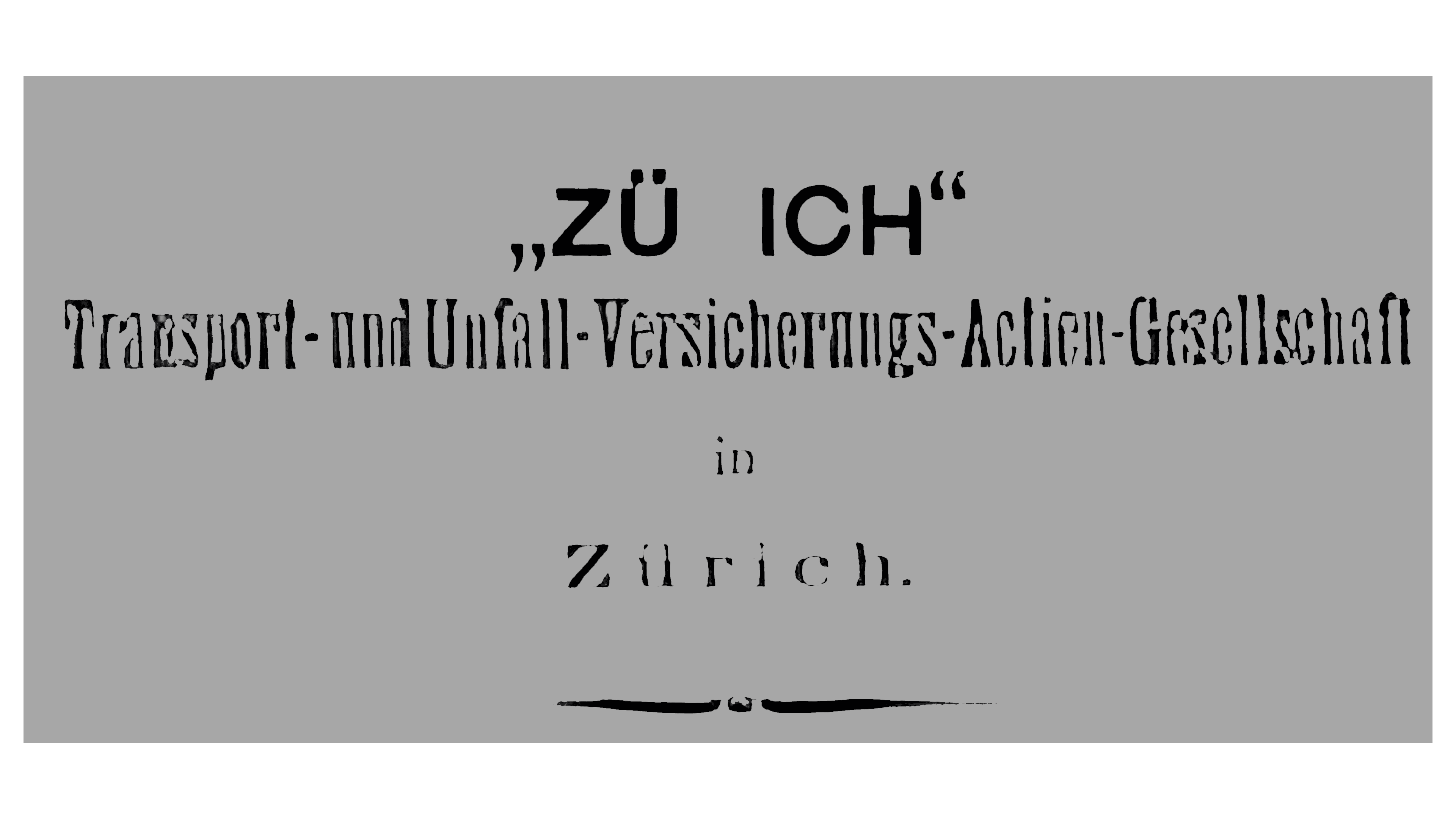
The emblem dates back to when the company, originally founded by Versicherungs-Verein, was renamed Transport und Unfall-Versicherungs-Actiengesellschaft. It is minimalist and designed as a business card. The core of the design includes the company name, its field of activity, and the office location. The organization’s primary focus was on vehicle insurance and accident protection.
The central element was the name “Zürich,” reflecting the company’s location. It was stylized in German and stood out due to the absence of the letter “R.” Two reasons explained this:
- A desire to avoid similarity to the capital city’s name.
- This is a subtle reference to eliminating shortcomings and losses, symbolizing the company’s role in the insurance industry.
The lower part of the emblem featured an artistic element, completing the composition and giving it a polished look. This addition added sophistication while maintaining a professional, concise appearance.
1916 – 1920
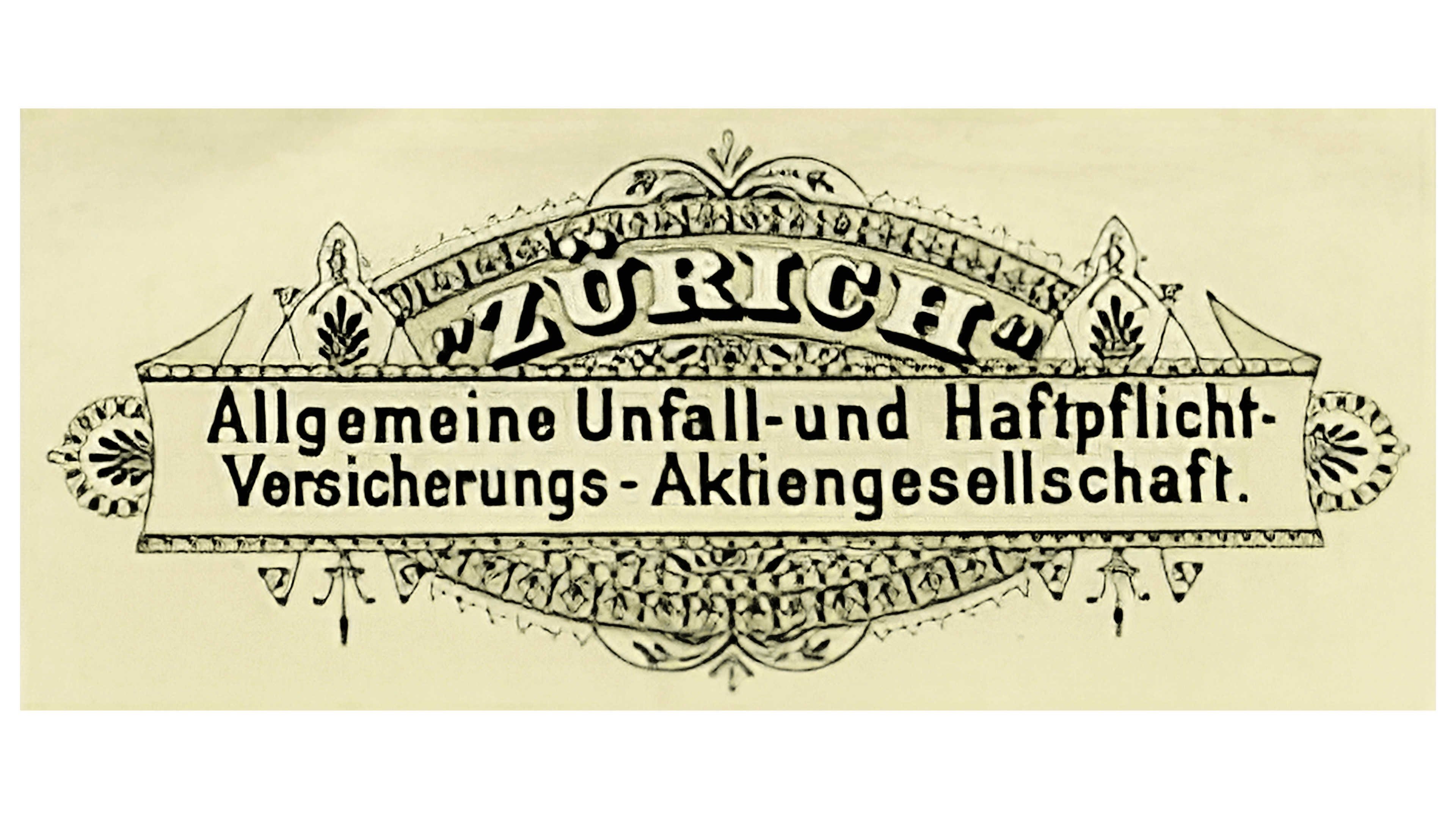
The company expanded its operations by obtaining licenses to work in Europe and the U.S., shifting its primary focus away from transport insurance. These changes led to an updated emblem reflecting the new development strategy.
The redesigned logo is more vibrant and expressive. The yellow background conveys the joy and peace clients experience when securing insurance services. Plant motifs and ornaments in the Spanish style enhance the background, highlighting the significance of acquiring Hispania Compañia General de Seguros, a major insurance company in Spain.
The company name is displayed at the top in an arched curve. The letters are three-dimensional and slightly bent, reminiscent of the design on dollar bills. They evoke associations with financial stability, protection, and client benefits.
The central section is highlighted by a band featuring an ornament that includes the company’s new area of expertise: Zürcher Unfall und Haftpflichtversicherungs-Actiengesellschaft. This element highlights the company’s shift in specialization and its transition to offering personal and property liability insurance.
1920 – 1930

The company’s logo was redesigned in a more classic style in four years. The new design features an image of the company’s headquarters in Zurich at the top. This lends the entire look a sense of formality and prestige, highlighting the brand’s success through the architectural details and the scale of the multi-story building.
At its completion, none of the existing buildings in Zurich could rival it in size and expressiveness. The design emphasized the business’s confidence and stability, particularly after it opened a subsidiary and several overseas branches. The headquarters became a symbol of reliability and solidity.
At the bottom, the company’s name is displayed in large, thin, tall letters, emphasizing its renown and high status. Quotation marks around the name highlight it, emphasizing the brand’s connection to the city where its headquarters is located. The logo combines visual elements that convey confidence, stability, and the company’s international ambitions.
1930 – 1937
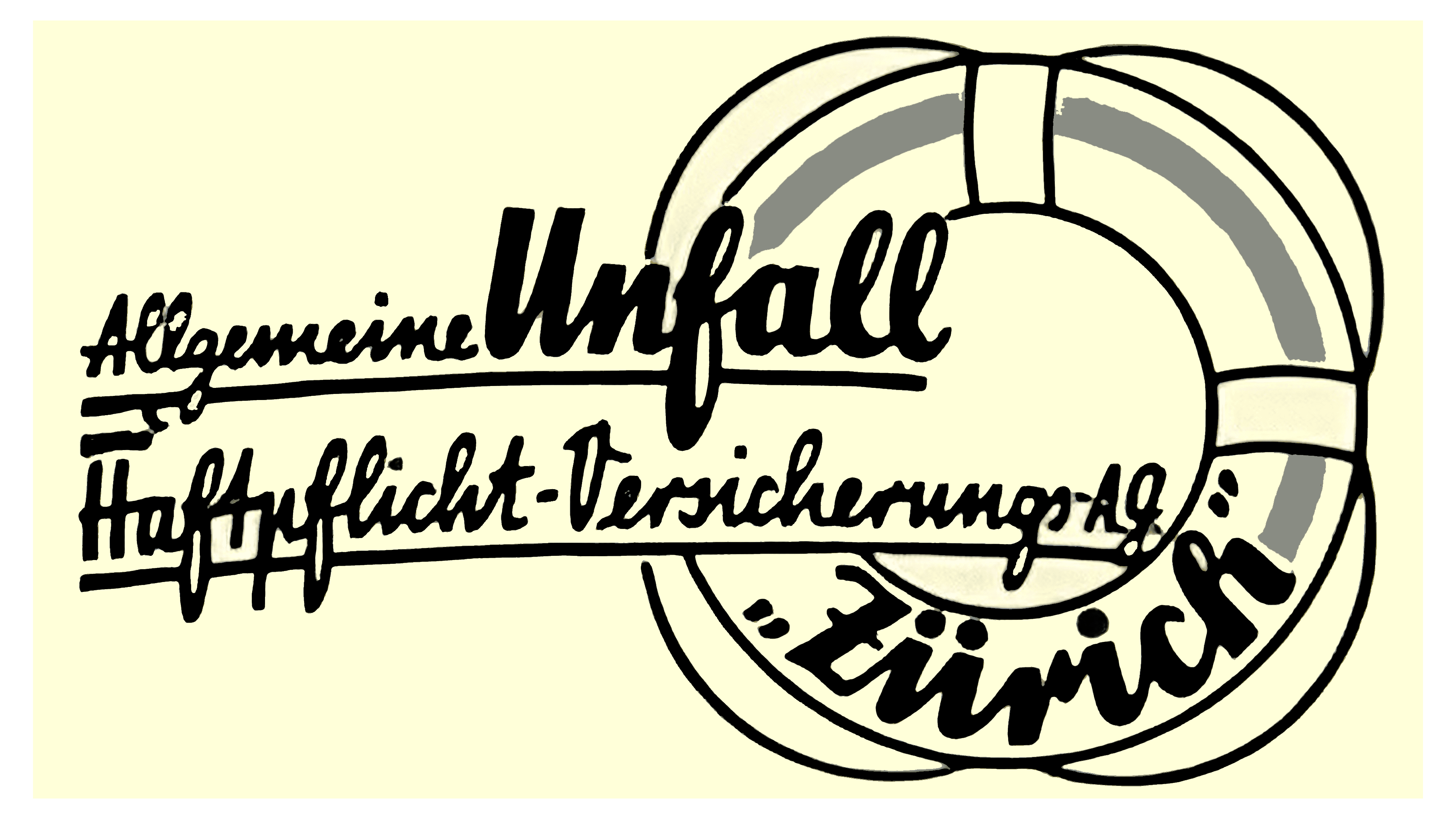
The new logo features a lifebuoy, conveying the company’s support in challenging situations. The circle serves as the central element of the design, representing reliability, like a hand extending a flotation device to those in need. Around the lifebuoy is a cursive inscription listing key insurance areas, underscoring the breadth of services offered.
The brand name “Zürich” stands out in the center, directly on the lifebuoy. The word “Unfall,” rendered in a large, bold font, creates a visual emphasis that harmonizes with the brand name. This underscores the company’s specialization in accident insurance, making the logo more informative.
The design combines rescue symbolism with clear brand identification, underscoring its key role in protecting and supporting clients.
1937 – 1942

The brand name is placed inside a sphere, with each letter adjusting in size to follow the shape’s contours. This reinforces the association with a lifebuoy and gives it a new interpretation: now, it represents a protective “bubble” that evokes a sense of safety.
The emblem reflects the company’s core idea of reliable protection. The design symbolized the brand’s preparation to launch its reinsurance company, Turegum, underscoring its focus on further development and improved service levels.
1942 – 1948
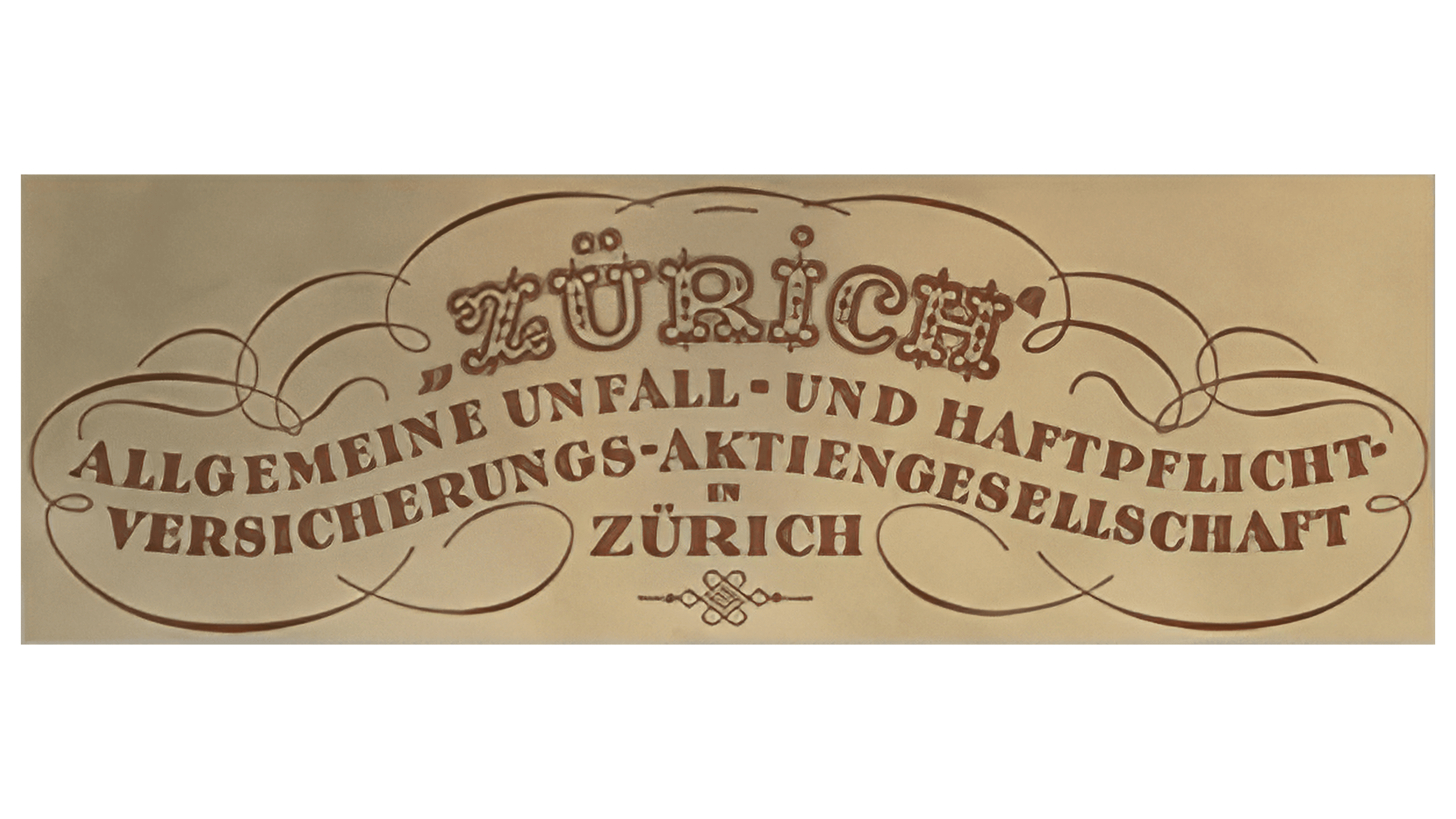
This logo is designed in a style reminiscent of dollar bill artwork. Arched inscriptions, wavy text lines, and semi-circular shapes create a unique structure that echoes the company’s original emblem. The top section features the name; the business type description appears below; and the headquarters is listed at the bottom.
The symbol’s lower part is detailed, and the lettering style evokes associations with the era of knights, tournaments, and fairy tales. This emphasizes the protective role of insurance, which served as a reliable shield for clients against destructive events and wartime instability.
The logo reflects the launch of the “Safety Zone” program, designed for defense industry enterprises. The design visually reinforces the company’s reliability and confidence, supporting and protecting its clients’ interests during challenging times.
1948 – 1956
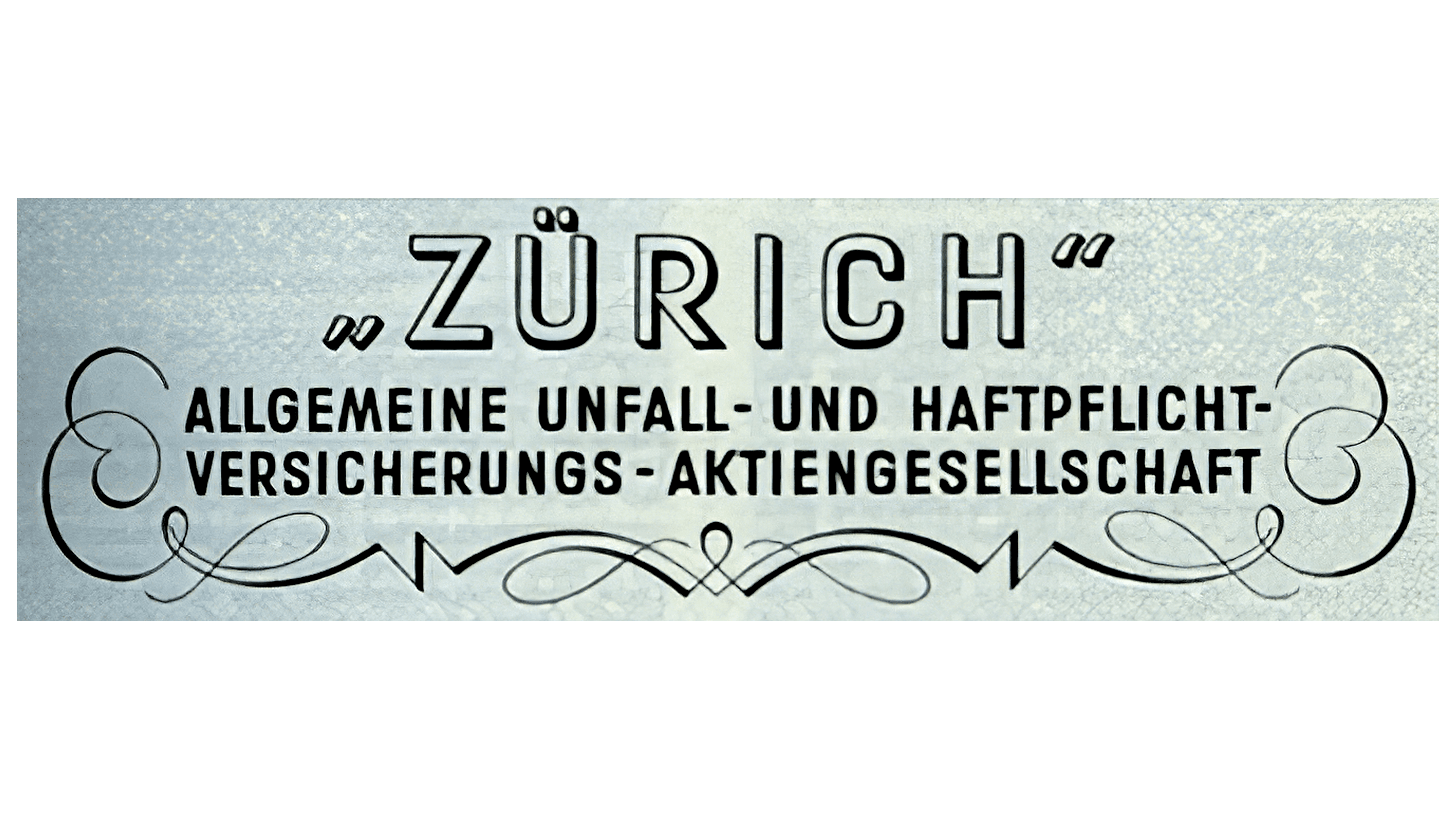
The logo is set against a background reminiscent of an official certificate. This choice underscores the company’s status, projecting reliability and formality. The company name is rendered in black, making the text appear lighter and easier to read.
Ornamental flourishes placed on the sides and below the text add sophistication and completeness to the overall design. These decorative elements enhance the association with refined business documents, emphasizing the company’s respectability and professionalism.
1956 – 1967
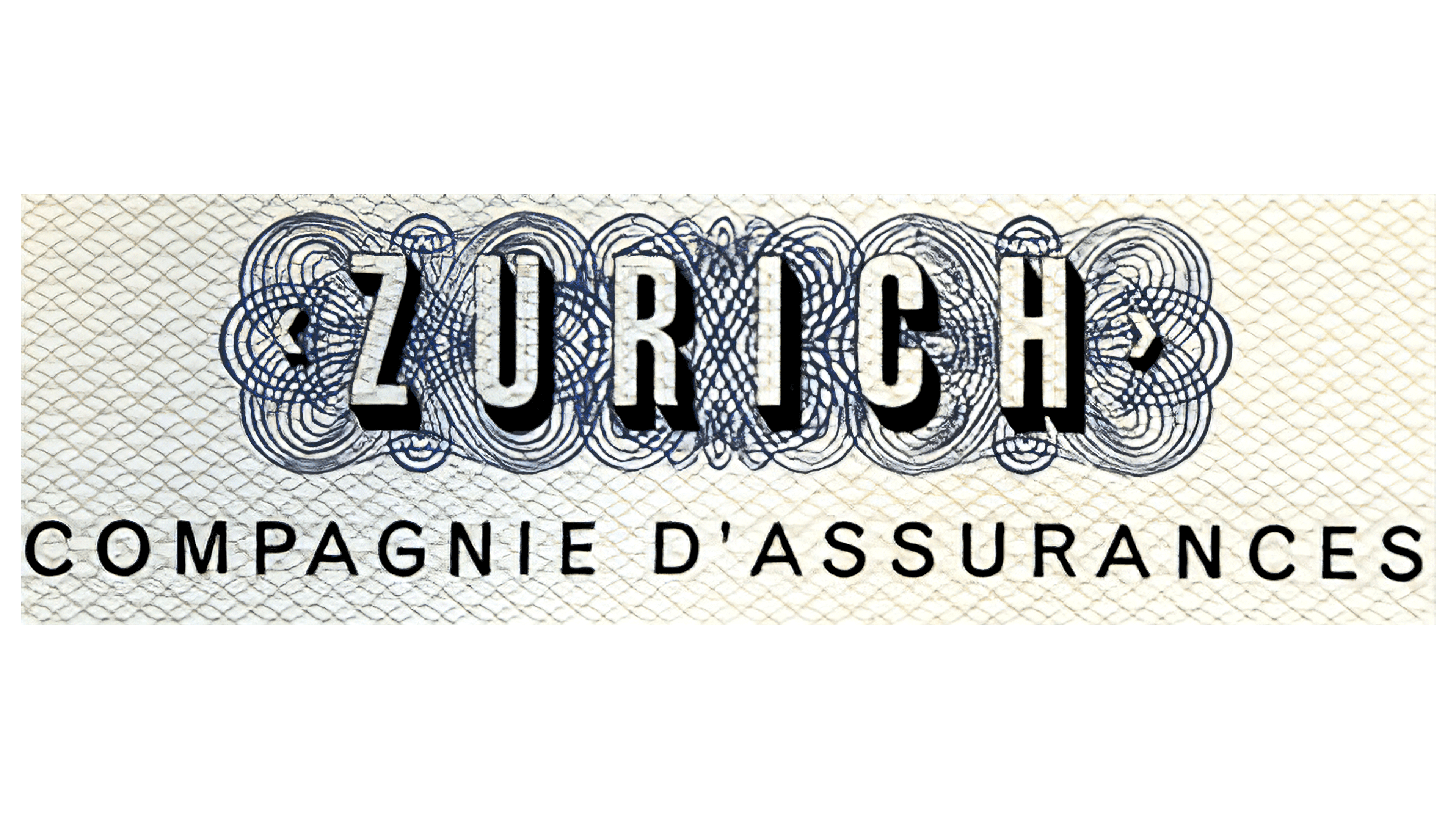
The logo has intricate symmetrical patterns and decorative motifs reminiscent of banknote designs. These elements evoke associations with reliability, protection, and financial stability. Geometric patterns convey precision and technological sophistication, visually representing a high level of counterfeit protection.
Against an elegant, interwoven-patterned background, the first part of the company’s name, “Zürich,” is displayed in bold capital letters. Beneath it is the continuation of the new name in French: “Compagnie d’Assurance.” This change reflects the company’s international growth. It has expanded its range of insurance products by adding new lines to the original two and is now positioning itself as a universal insurer.
The choice of French underscores the company’s close connection to the rapidly developing French employee insurance market. The French segment ranks third in volume and importance within Zürich’s portfolio, confirming the company’s successful strengthening of its position on the global stage.
1967 – 1970
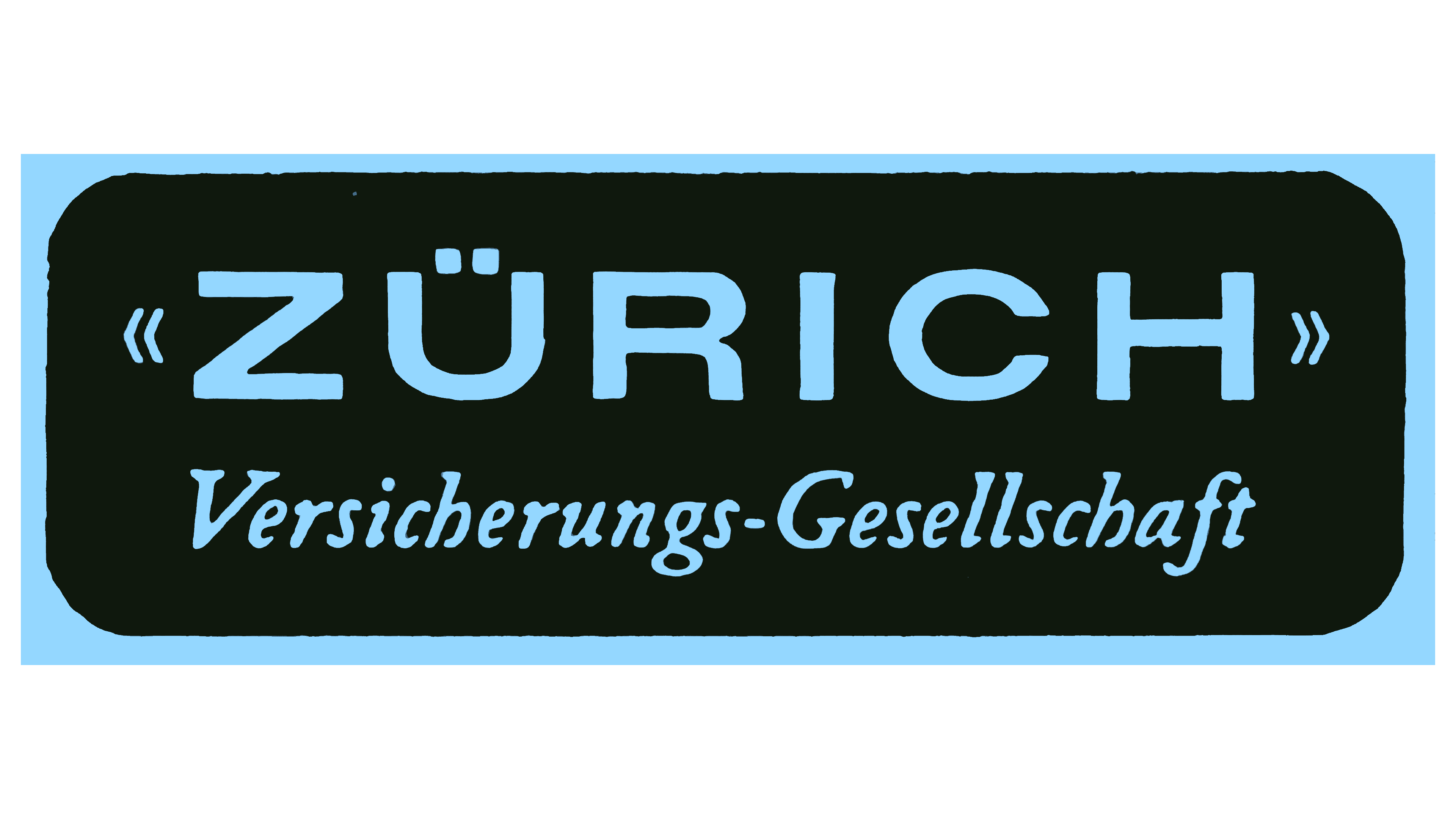
The company’s emblem has been updated to reflect its global presence across all continents except Africa. The new symbol is designed as a license plate, emphasizing movement and international expansion.
A black background with a blue border forms the base, with the company name written in blue. The first part is highlighted in large capital letters, emphasizing solidity and stability. The second part is set in smaller italics, conveying growth and ambition to enter new markets.
The logo design combines the ideas of stability and aspiration. Insurance is a tool that helps protect and support clients in achieving their goals. The blue color conveys the revival of the marine insurance sector, linked to the acquisition of Alpina Insurance Company.
1970 – 1980
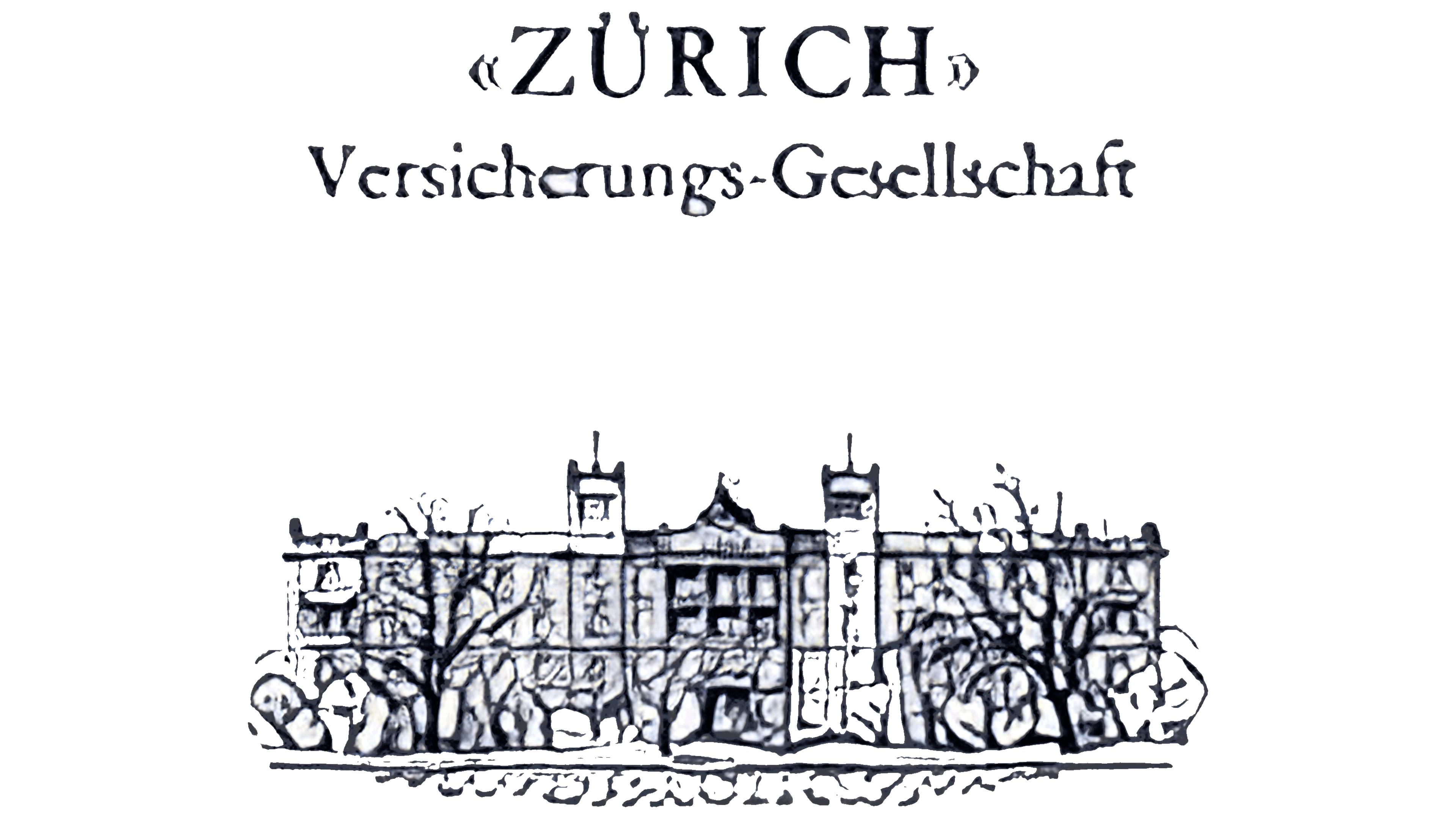
The company’s logo is designed in a classic style, reflecting its century-long history. Its black-and-white color palette enhances a sense of the past and underscores its connection to heritage. The centerpiece is an image of the brand’s headquarters in Zurich, depicted with precise, formal lines.
Above the building is a concise black inscription that includes the company name and its area of operation. This adds a formal touch to the emblem and highlights the organization’s long-standing experience. It conveys the ideas of reliability and stability, which have been the foundation of the company’s work, helping it attract clients over its history and earn an impeccable reputation.
1980 – 1997
A decade later, the company’s emblem adopted a modern style, reflecting a new stage in its development. At the top, enclosed in a circle, is the first letter of the name, evoking an association with the Sun. The closed lines emphasize reliability and stability. The emblem’s overall appearance resembles a seal, conveying assurance.
Below the circle, the name “Zürich” is prominently displayed in large font, without quotation marks. The addition is limited to “insurance,” which indicates the company’s primary business area. The bright blue color chosen for the design conveys stability and confidence, underscoring mutually beneficial, secure cooperation with the brand.
1997
The logo is designed in a blue color scheme and features a minimalist layout. On the left, a white circle is set against the background, with the letter “Z” at its center. To the right, the name “Zürich” appears in white, creating a visually harmonious composition that highlights the company’s status and international presence.
The blue color represents professionalism, the financial sector, and expertise, reflecting the acquisition of the American company Scudder Kemper Investments. The logo’s similar color palette reinforces the brand’s connection to global financial markets and underscores its confident growth on the international stage.
1997 – today
The modern logo is designed concisely and reflects the company’s new areas of activity, including insurance services and asset management. The composition features a single word, “Zürich,” conveying the brand’s confidence and stability.
The visual element is a circle, reminiscent of the Sun and a lifebuoy, emphasizing the importance of protection and support. At the center of the circle is the letter “Z,” rendered in white. It resembles a light cloud, harmoniously contrasting with the surrounding blue, creating a sense of reliability and balance.