


 20th Century Fox Logo PNG
As the 20th Century Fox logo shows, the studio is at the center of the world’s attention. The emblem conveys fame, universal recognition, and love. The film company creates iconic films that sell out in theaters and on TV screens.
20th Century Fox grew from the work of Hungarian immigrant William Fox, who bought part of a Brooklyn nickelodeon in 1904 for $1,667. By 1915, he had launched Fox Film Corporation and moved production to Los Angeles. In 1927, the studio introduced Fox Movietone News using newly acquired sound-film technology, including coverage of Charles Lindbergh’s transatlantic flight.
The 1929 stock market crash destroyed Fox’s finances. After a serious car accident and heavy investment losses, he lost control of the company in 1930. At the same time, Twentieth Century Pictures, founded by Joseph Schenck and Darryl Zanuck in 1933, was gaining momentum after Zanuck left Warner Bros. The companies merged in 1935 to form Twentieth Century-Fox Film Corporation. Twentieth Century Pictures contributed the studio name, logo, Alfred Newman’s fanfare, and Zanuck as production chief.
Under Zanuck, the studio joined Hollywood’s top tier alongside MGM, Paramount Pictures, and Warner Bros. During the 1940s, Fox released films such as The Grapes of Wrath and built a television division in 1949. In 1953, president Spyros Skouras launched CinemaScope with The Robe, helping to push widescreen filmmaking across Hollywood. The studio later recovered from the costly failure of Cleopatra through hits like The Sound of Music and Star Wars.
In 1985, Rupert Murdoch acquired the studio through News Corporation. He launched Fox Broadcasting Company to compete with ABC, NBC, and CBS. Fox later released Titanic and Avatar before The Walt Disney Company acquired most 21st Century Fox assets in 2019. In 2020, the studio became 20th Century Studios.
Meaning and History
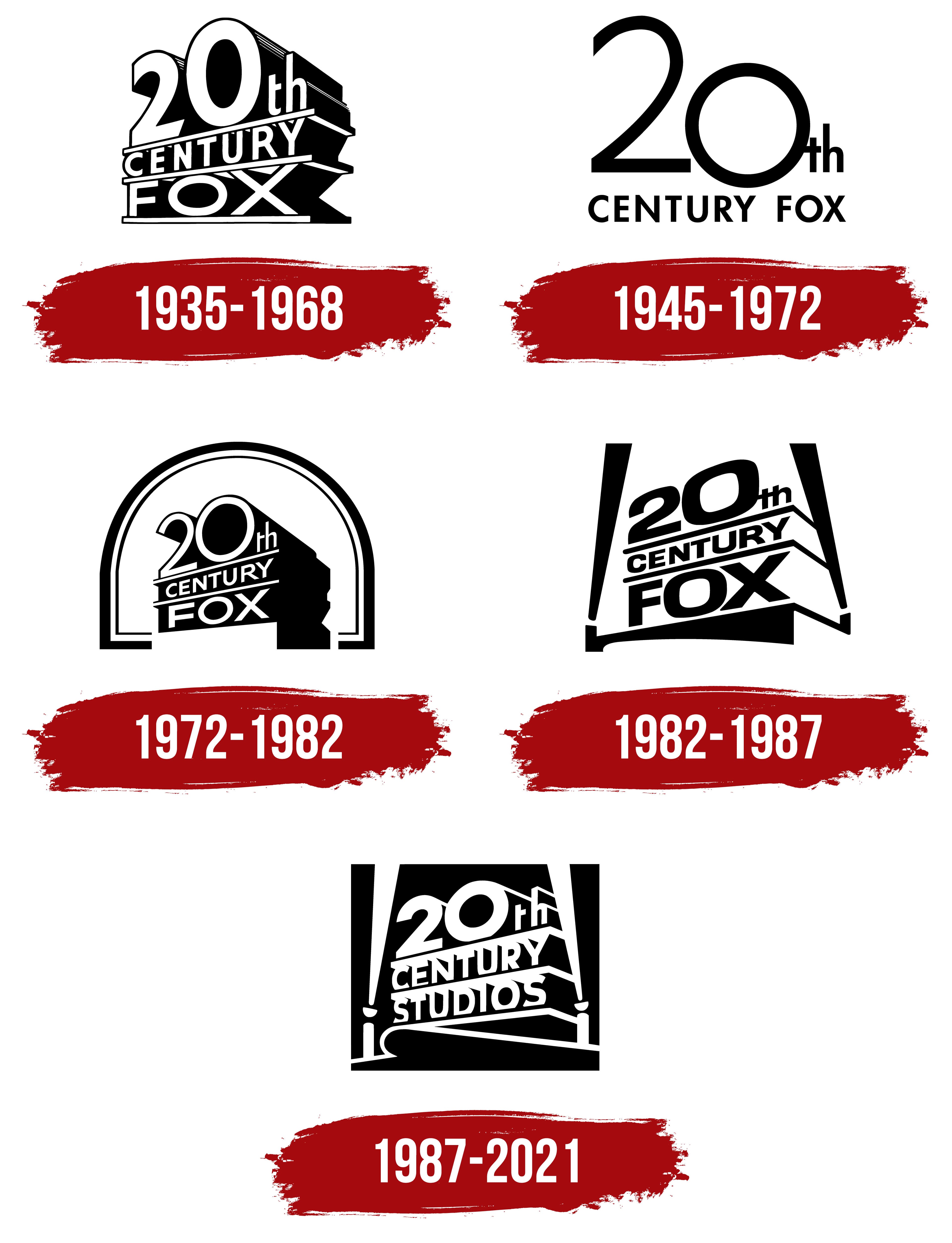
The iconic emblem was repeatedly changed until it included the spotlights from the opening credits. It remained even after The Walt Disney Company bought 20th Century Fox and rebranded the famous television brand. Thus, the movie studio lost the word “Fox” and became known as 20th Century Studios. The reorganization, which took place in early 2020, was part of a major rebranding. Picturemill’s design team redesigned 20th Century Studios while preserving its original aesthetics. The specialists redesigned the lettering using a modified version of the Proxima Nova font.
The changes before this were also very noticeable. Global style experiments accompanied them as the corporation sought to create a positive image.
What is 20th Century Fox?
20th Century Fox was the name of the American film company, now known as 20th Century Studios, from 1935 to 2020. Media conglomerate Walt Disney owns it and specializes in film production.
1935 – 1968

The company’s first printed logo did not have spotlights, although they appeared (on-screen) in the animated version. Immediately after its debut, the studio was called Twentieth Century-Fox, but the logo spelled the name without a hyphen: the first line read “20th,” the second line read “CENTURY,” and the third line read “FOX.” In addition, all letters and numbers were three-dimensional and strongly elongated toward the back. Wide diagonal lines separated the three parts of the lettering. The signature intro had the word “Presents” in italics. Emil Kosa Jr. developed the first design. He can be considered the “progenitor” of the modern emblem.
1945 – 1972

The 1945 version rightfully earned the title of the studio’s most minimalist logo. The designers kept the 20th CENTURY FOX lettering but simplified it, removing cross lines and three-dimensional effects. The most noticeable element they used was the number “20”: the digits were enlarged and arranged in a staircase pattern. The perfectly round zero resembled the letter “O” in shape and thickness, as in the word “FOX.” The lowercase “t” (from “th”) lacked a horizontal stroke on the left side, so it merged with the adjacent zero. The last two words of the company name were on the second line, written in bold black font with rounded ends.
1972 – 1982

In 1972, the studio attempted to merge the two old logos into one new one. It kept the font from the second version but slightly straightened the numbers, removed half of the horizontal stroke from the letter “t,” and stretched the letters in words to create a three-dimensional effect. I borrowed the structure from the very first logo. At the same time, the text background became black, and a kind of “pedestal” appeared at the bottom. Another new element is a semicircular arch consisting of two dark lines of different thicknesses.
1982 – 1987

After a redesign by Landor Associates, the 20th Century Fox logo featured spotlights illuminating the studio’s name on both sides for the first time. Previously, they had only been used in movie and cartoon intros. Two beams of light replaced the arch. The inscription remained, but the font became bolder. At the same time, the number “0” and the letter “O” became squares with rounded sides. The long shadows behind the words disappeared, and the separating diagonal lines curled down on the right side. This time, all elements were black, unlike the previous version.
1987 – 2021
The artists detailed the spotlights, showing them pointing upwards. The emblem was inside a rectangular frame. The old font was replaced with a new one similar to the one used since 1972. The line spacing was reduced, so the tops of the words “CENTURY” and “FOX” were crossed out with diagonal bars. Each number and letter in the top row has one thin line pointing slightly downward to the right.
Font and Colors
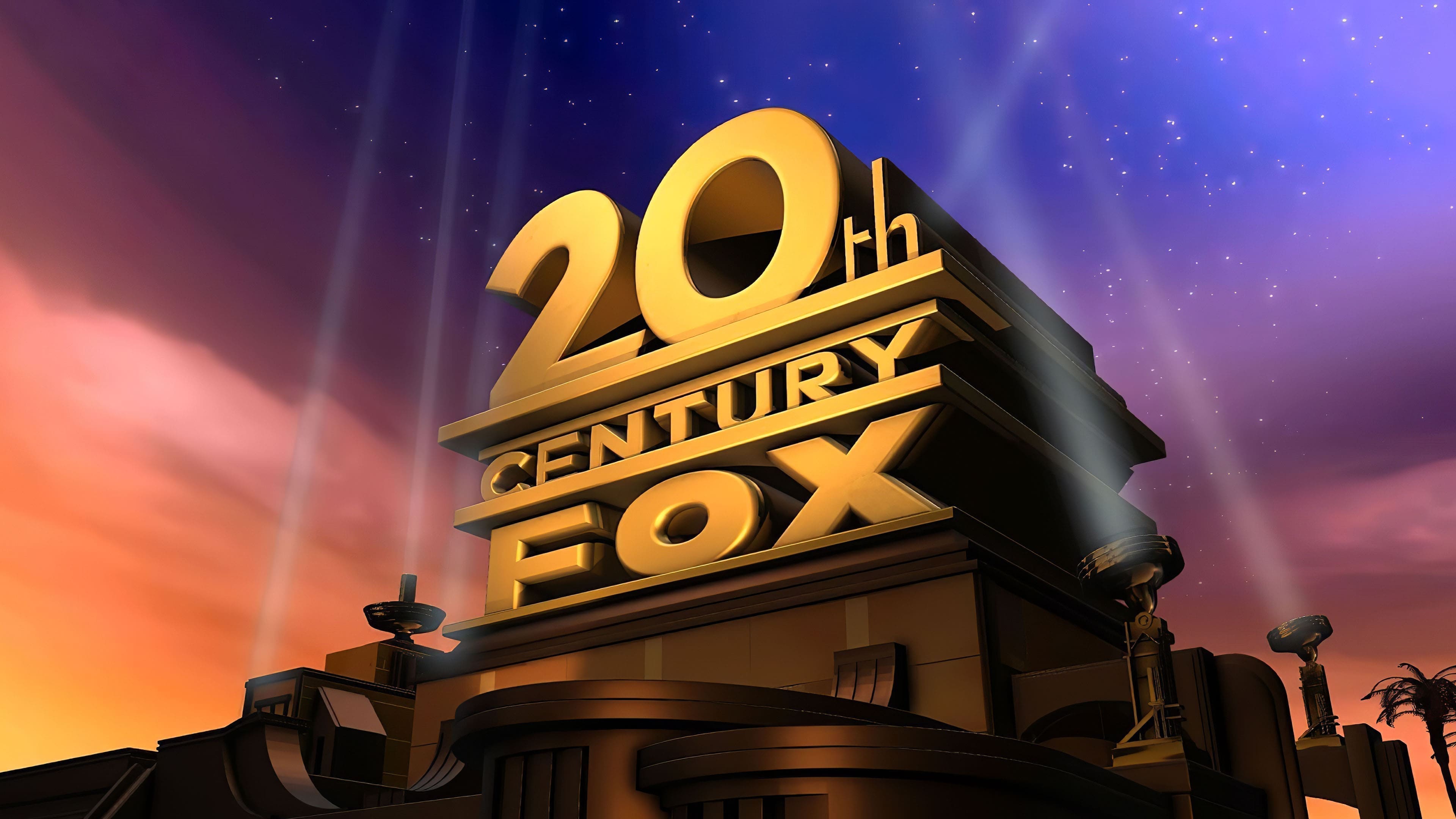
20th Century Fox is now 20th Century Studios, which is little reflected in the logo. Spotlights on the right and left create a frame, illuminating the lettering on both sides. These devices are a traditional attribute of filmmaking. Filmmakers use them to light the stage and create dynamic effects.

Sans-serif fonts have always been used for the TV studio’s name. Recent variants include a modified Franklin Gothic Heavy and a customized version of Proxima Nova. The designers adapted them to the jagged, as-if-receding lines. The printed logo’s color scheme remains black and white.
20th Century Fox Logo Color Codes:
- Original: Black (#000000); White (#FFFFFF)
- Modern: Deep Violet (#27076E); Spanish Gray (#96979B)
FAQ
Is the 20th Century Fox logo real?
Yes, the 20th Century Fox logo is real. After the film company was renamed 20th Century Studios, its owner (Walt Disney Company) did not replace the old symbol with a new one; instead, it wrote “Studios” in place of “Fox” and changed the logo to monochrome.
Does 20th Century Fox still exist today?
No, neither the name nor the movie company, 20th Century Fox, exists anymore. A new entity, 20th Century Studios, has replaced it.
What is the 20th Century Fox logo?
It represents a three-tiered sign. The top row says “20th”; the middle says “Century”; and the bottom says “Fox.” Spotlights and ramps flank the tall design.
How old is the 20th Century Fox logo?
The 20th Century Fox logo is over 85 years old and was created in 1935 by designer Emil Kosoy, Jr.
Why is 21st Century Fox called Fox?
The corporation was originally called Fox Group, and on April 16, 2013, it adopted its subsequent name as a tribute to the legacy of 20th Century Fox, marking an evolution rather than the company’s passing into the past.
Who is 20th Century Fox named after?
The original name, 20th Century Fox, pays homage to William Fox, founder of the predecessor Fox Film Corporation, which he created in collaboration with Joseph M. Schenck and Darryl F. Zanuck.
What is 20th Century Fox famous for?
In the late 1930s and into the 1940s, Twentieth Century Fox Studios became known for its contributions to genres such as westerns, musicals, biographies, and religious stories. The studio was particularly famous for films directed by John Ford, such as The Grapes of Wrath (1940), as well as musicals starring Shirley Temple and Betty Grable.