


 ACTRA Logo PNG
The ACTRA logo is multifaceted and vibrant. It represents an active organization that cares for actors and hosts. The emblem shows a close, friendly community where each member is protected.
ACTRA traces its history to 1943, when the Association of Canadian Radio Artists (CRA) formed in Toronto. The organization appeared during the rapid expansion of Canadian radio in World War II, when announcers, radio actors, and other broadcast performers needed a formal structure to defend professional standards, pay, and working conditions in a growing media field.
As television developed in Canada during the 1950s, the group expanded beyond radio work. In 1963, it was renamed the Association of Canadian Television and Radio Artists, keeping the ACTRA abbreviation while adding television performers to its mandate. In 1984, the name changed again to Alliance of Canadian Cinema, Television and Radio Artists, reflecting the union’s coverage of film performers as Canadian screen production grew.
ACTRA has traditionally represented English-speaking performers across Canada. The Union des Artistes (UDA), founded in 1937, has separately represented Francophone artists in Quebec and other French-speaking regions. This created two parallel systems for performers in Canada, with separate collective agreements, industry relations, and member support structures.
Beyond collective bargaining with producers in radio, television, and film, ACTRA developed practical services for its members. ACTRAonline became a performer database used by casting directors and producers; HAVEN was created as a helpline for members facing harassment or workplace problems; and PRS handled rights and royalty payments for recorded performances. Since 1968, ACTRA has presented the John Drainie Award and later developed the ACTRA Awards. Its work often overlaps with SAG-AFTRA, since many Canadian film and television projects are linked to the U.S. industry.
Meaning and History

From the start, ACTRA used the abbreviation in its logos, showing its commitment to conciseness and precision. The emblem has undergone several transformations, each differing drastically from the previous, reflecting the diversity of genres, work directions, and opportunities for the organization’s members. Each symbol reflects one facet of the conglomerate and the peculiarities of individual channels. It conveys a view of the radio and television landscape of that time.
What is ACTRA?
The union of popular channels, actors, actresses, and hosts in Canada working in film, radio, and television. It has nine branches across the country. It cares for safe working conditions, fair pay, and contract compliance. The organization’s income is $4.8 billion.
1984 – 1990

This emblem features the name in blurry white letters with a gray outline on a black rectangular background. The limited space indicates the association, an association with its own rules and charter. The background also signifies the limited territory in which the union operates.
ACTRA stands for the Association of Canadian Television and Radio Artists, and later the Alliance of Canadian Cinema, Television, and Radio Artists. The blurred letters indicate uneven coverage. New members gradually joined the team. The movement began with the RATS team and initially involved only Toronto radio. The composition gradually changed.
The blur symbolizes radio and television waves, the temporary, voluntary association of various actors. The inscription resembles an unfocused camera lens.
1990 – 1992
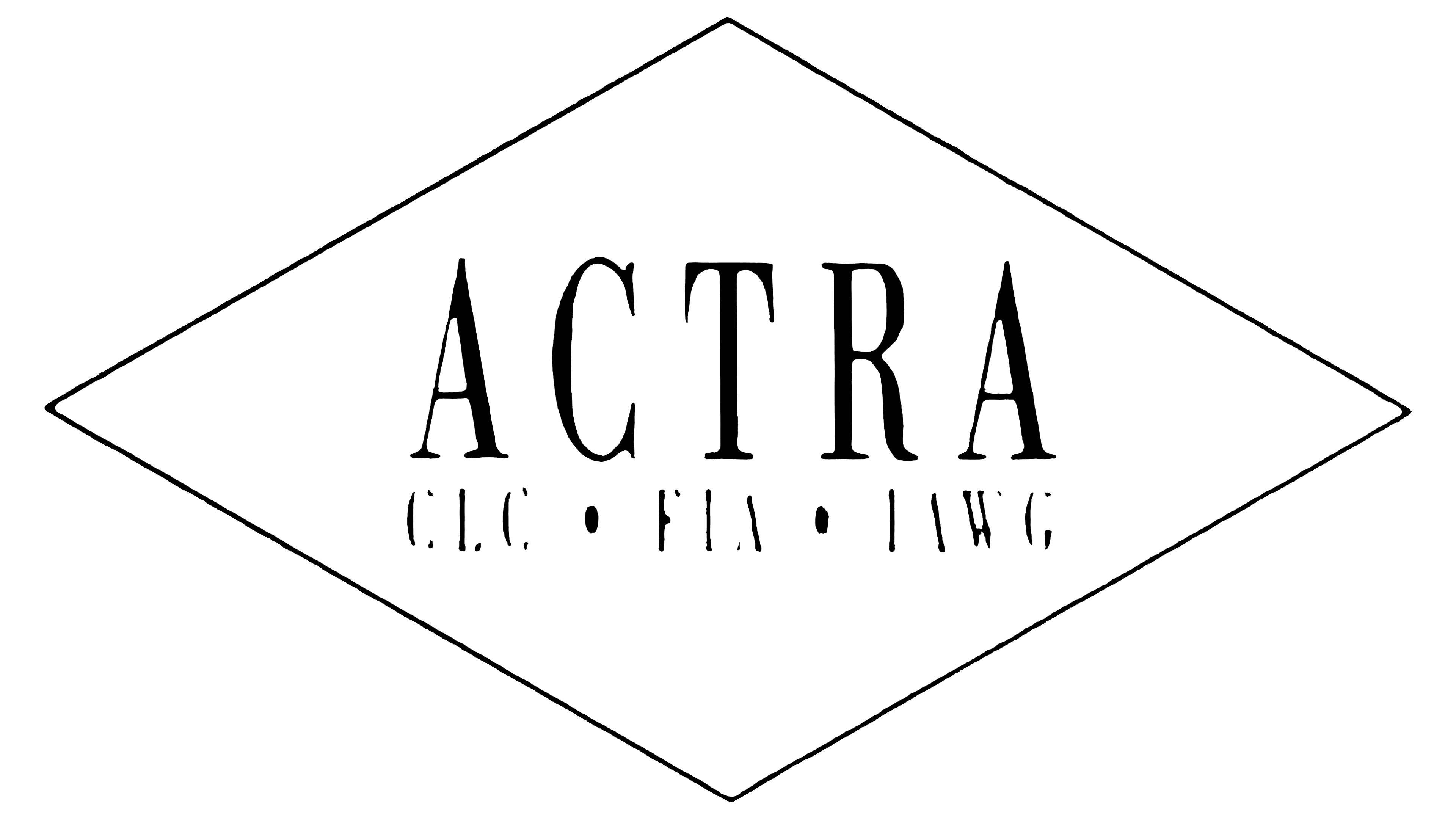
In 1990, the logo changed to a white diamond with a thin black border and a clear, elegant serif inscription. Below are the acronyms for other organizations linked to ACTRA: “Canadian Labour Congress” (CLC) and “International Federation of Actors” (FIA).
Adding white elements gave it an airy, light feel. It suggested artistry, invisible waves, news, live broadcasts, and the intangible matters the movement’s participants work with.
The diamond’s shape, as a rotated square, hints at nonconformity and a creative approach.
1992 – 2000

A white stripe with a large black shadow and a semi-oval line surrounding the letters ACTRA became the association’s logo in 1992.
The stripe symbolizes:
- A TV tower.
- An arrow shooting upwards.
- The letter I was part of the word information.
Two figures, a white one and its black shadow, indicate two sides of famous people’s lives: bright on stage and complex, with continuous hard work behind it. ACTRA knows both and cares for creative people.
The semi-oval symbolizes the planet, the group’s worldwide spread of ideas, and cooperation with similar movements. The figure indicates a television or radio broadcast.
The letters CT and RA are paired. The first pair refers to cinema and television, actors, and the second to radio hosts.
1998 – 2002

The symbol places a special emphasis on performers from Toronto, where the movement originated.
The symbol is circular, similar to an earring. Blue crescents form the figure’s base. At the top, a blue dot balances the structure. The design showcases beauty, harmony, and a play of colors and textures. It reveals the idea of diversity.
It resembles the head of a professional radio microphone, indicating the union’s primary focus on radio workers. Below are the letters ACTRA and the inscription “Performers Toronto,” separated by a thin red line.
The image hints at ACTRA Toronto’s online magazine Performers, which features the branch’s actors.
2002 – today

A white circle with a schematic figure of a person forms the basis of the modern logo. Three other circles surround the central element, forming a flower. Each petal represents:
- Television, film, and radio actors. Their union formed the association.
- ACTRA’s values: diversity, equality, and inclusivity for all community representatives.
- The association advocates for members’ interests, including the right to work, fair pay, and proper working conditions.
At the heart of all ACTRA’s efforts is the artist. The figure’s outstretched arms within the circle and red costume suggest a post-performance bow, conveying openness and service.
Font and Colors
Red becomes the emblem’s main color. It personifies artistry, leadership, and people accustomed to being the center of attention. It reflects the alliance’s active work and lobbying on behalf of creative people. The orange shades speak to a warm, friendly community built on communication and mutual support.
The inscription uses the FF Meta Pro Black font. Capital letters signify the group’s talented members and the importance of public figures in society.
ACTRA Logo Color Codes:
- Jasper Red: Hex color:#db3535; RGB:219 53 53; CMYK:0 76 76 14; Pantone:PMS Warm Red C