


 Air Atlanta Icelandic Logo PNG
The Air Atlanta Icelandic logo represents the airline’s promise to deliver top-notch service, fresh thinking, and attention to customer needs. It’s a symbol that speaks to both stability and being up-to-date. This logo reassures all passengers, whether experienced or new to flying, that they’ve made the right choice. It embodies trust and ambition, which are crucial for an airline in a field where trust matters so much.
Air Atlanta Icelandic was founded in 1986 in Kópavogur, near Reykjavík, as a subsidiary of Flugleiðir, the Icelandic national carrier later known as Icelandair. The new airline was created to handle charter and niche operations separately from the parent brand’s scheduled flights. From the start, it operated charter routes to Southern Europe and Africa, as well as ACMI services, providing aircraft, crew, maintenance, and insurance to client airlines.
In its early years, Air Atlanta Icelandic operated several wide-body aircraft, mainly early Boeing 747 models. Iceland’s location between Europe and North America supported transatlantic aviation operations, while Flugleiðir gave the company experience in international operations. In 1990, cargo activity was separated into Air Atlanta Cargo, which used Boeing 747-200F aircraft to meet freight demand linked to growing international trade.
In 1996, Air Atlanta Icelandic made its largest expansion by acquiring World Airways, an American operator based in Oakland, California. World Airways, founded in 1948, had flown military charters for the US Department of Defense and commercial wide-body charters. The deal gave Air Atlanta Icelandic access to the US market, FAA certificates, American crews, and extra aircraft, bringing the combined fleet above 40 aircraft.
The integration proved difficult due to differing regulations, labor systems, and operating cultures across two continents. By the late 1990s, World Airways was separated again, and Air Atlanta Icelandic returned to its ACMI and charter model. In the 2000s, as Icelandair Group reshaped its portfolio, the airline continued as an independent ACMI operator focused on Boeing 747 variants, including 747-8F freighters and 747-400 passenger aircraft.
Meaning and History
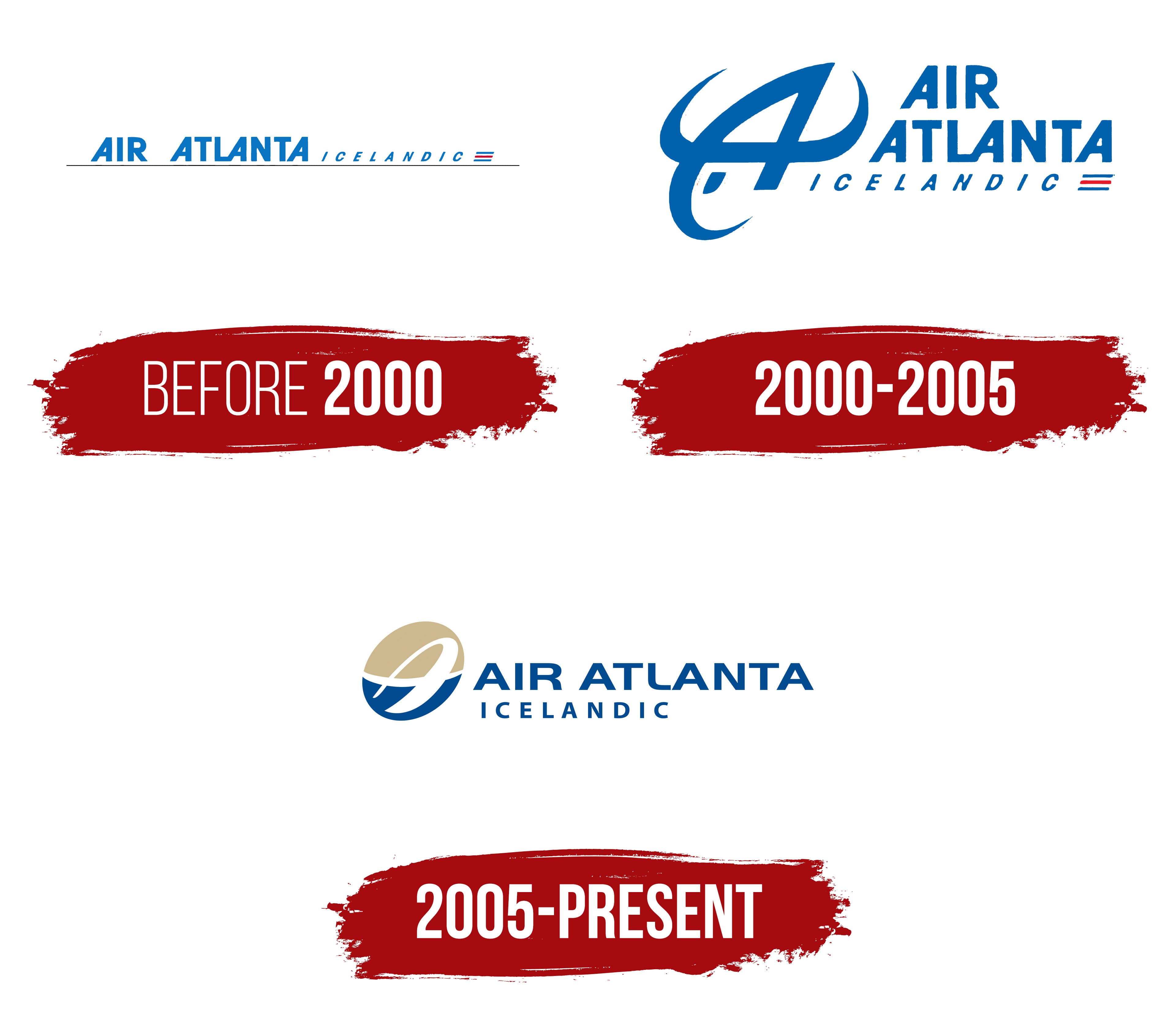
The logos of Air Atlanta Icelandic trace the company’s growth from a regional operator to a major international player. They show how the airline’s identity has matured alongside its expanding services. Initially, the logos were influenced by Iceland’s rugged nature, reflecting the airline’s beginnings. Over time, as the airline expanded its operations, the logos changed to reflect its ambition and global reach.
Today, the logo is straightforward and modern, showing Air Atlanta Icelandic’s focus on making air travel simpler for everyone. The emblem’s clean lines and bold colors tell a story of the airline’s drive and careful attention to detail. It’s more than just a logo; it’s a sign of the airline’s promise to keep passengers safe and reflects its long-standing commitment to connecting people worldwide.
What is Air Atlanta Icelandic?
It is an airline based in Kopavogur, Iceland, known for its charter flights and ACMI (Aircraft, Crew, Maintenance, Insurance) services. Serves a wide range of clients, including those in need of passenger and specialized cargo transportation. Starting with a single aircraft, the company has expanded its fleet to include a variety of aircraft models to meet different flight requirements.
Before 2000
Before 2000, Air Atlanta Icelandic’s first logo beautifully captured the spirit of flight and the airline’s dedication to connecting the world. The logo, designed to resemble the side profile of an airplane, was a deliberate choice to embody the essence of aviation and the airline’s role in it. The name “Air Atlanta” was written in a larger font, conveying confidence and a strong foundation, emphasizing the airline’s role as a trustworthy connector in the skies.
The clever combination of the letters A and L in the logo represented the airline’s mission to connect the Icelandic town of Kopavogur to the globe, highlighting its role in making Iceland a key hub for international flights. The word “Icelandic” was slanted in the logo, suggesting the aerodynamics of flight and adding a dynamic feel, symbolizing speed and the excitement of air travel. The varying sizes and thicknesses of the letters reflected the airline’s capacity to transport everything from small packages to large cargo.
Three horizontal stripes, colored in patriotic red and blue, represented the airline’s main focus areas: flying, aircraft leasing, and maintenance. These stripes weren’t just decorative; they symbolized Air Atlanta Icelandic’s broad range of services and its comprehensive role in aviation.
A thin line beneath the name suggested the earth, making the logo appear to fly high in the sky, showcasing the airline’s ambition to soar beyond the ordinary. This design conveyed the beauty of flight and the endless possibilities of aviation. The original logo perfectly represented Air Atlanta Icelandic’s identity, global connectivity, and foundational role in aviation with its meaningful design.
2000 – 2005
Air Atlanta updated its logo to reflect new leadership and expanded destinations, to match these big changes. The new logo is larger and tighter, highlighting the airline’s fleet growth and its many new partnerships. This update was carefully planned to showcase Air Atlanta’s progress and broader operations.
The new logo features a big ‘A’ designed to look like a flying plane, with the top resembling a plane’s tail and the middle bar ending in wing-like curves. There’s also a blue shape in the design that looks like an airplane window, adding to the aviation theme.
The large ‘A’ reflects the wide-body jets in Air Atlanta’s fleet, which can seat 7-10 passengers across the cabin. This change means the airline can now carry more passengers, symbolized by the ‘A’ in the logo.
The logo also has a three-layered name design that echoes the ‘A’s shape, keeping the look unified. Plus, it keeps the airline’s old symbol of three parallel stripes, which links to the Icelandic flag and shows its pride in its roots. This detail highlights Air Atlanta’s role in representing Iceland worldwide.
2005 – today
The emblem of Air Atlanta Icelandic is a powerful symbol representing the airline’s identity. It has two main parts: a unique icon and a two-level name design, carefully made to show the airline’s principles and values.
At the center of the logo is an oval split diagonally into two colors. The top is beige-gold, showing the airline’s high standards and commitment to quality service. The bottom is dark navy blue, reflecting the vast skies and seas Air Atlanta Icelandic flies over. A curved stripe resembling a wave and an orbit connects these two parts, highlighting the airline’s broad reach and seamless connections worldwide.
An important part of the emblem is a wide, white line running through the middle of the oval. This line shows the airline’s clear direction and unique path in the aviation world.
The logo’s clean, smooth text reflects Air Atlanta Icelandic’s professionalism. The “L” resembles a skateboard ramp, adding a creative touch and highlighting the airline’s innovative, forward-looking nature.
The smaller font at the bottom makes the name easy to read and highlights the airline’s attention to detail. This way of writing the name helps make the brand more visible and recognized globally.
Font and Colors
The Air Atlanta Icelandic logo uses a simple sans-serif font that conveys a professional vibe. The text is in all caps, which adds a touch of seriousness, fitting for an airline. It’s clear and easy to read, with generous spacing between the letters.
The logo’s symbol is an oval, split into two colors. The top is beige-gold, suggesting quality and warmth, while the bottom is navy blue, hinting at the airline’s depth of experience and professionalism.
A distinct white line runs through the oval’s center, breaking up the two colors and adding a modern look to the design. This line could symbolize the airline’s journey, straightforward and determined. The colors and design give the logo a reliable, seasoned look that aligns with what passengers might expect from an airline.
FAQ
Where is Air Atlanta Icelandic based?
Air Atlanta Icelandic is an airline specializing in charter flights and leasing planes to other airlines, complete with crew, maintenance, and insurance. It’s headquartered in Kópavogur, Iceland’s second-largest city, right next to the capital, Reykjavík. This spot is perfect because it’s in the middle of the Atlantic, making trips between North America and Europe easier.
The airline is a big deal in the aviation world because it helps other airlines grow by leasing their planes without the huge cost of buying more aircraft. Being based in Kópavogur means Air Atlanta Icelandic benefits from Iceland’s top-notch aviation setup, known for its safety and reliability.
Air Atlanta Icelandic makes the most of Iceland’s location to fly smoothly over continents. Iceland has a strong reputation in aviation, thanks to great air traffic control, modern airports, and good aviation laws. This helps the airline work globally, reaching customers far and wide.
How much do Air Atlanta Icelandic pilots make?
Captains at Air Atlanta Icelandic can earn a good amount of money, with annual pay ranging from $141,000 to $263,000. This includes their regular salary plus extra earnings such as bonuses and overtime, depending on how much they work and how well they perform.
The average pay for Captains is about $188,000 a year, but this can vary based on their experience, the number of flights they fly, and other factors related to their work. This shows that Air Atlanta Icelandic pays well, especially for Captains, given the high level of skill and experience required. Captains get paid so much because they have a very important job. They fly big planes and are responsible for keeping everyone safe during the flight.
Where is Air Atlanta from?
Air Atlanta was an airline headquartered in Atlanta, Georgia, that operated in the United States. It started in 1984 but only lasted until 1987. The airline mainly flew from William B. Hartsfield Atlanta International Airport, one of the busiest airports in the U.S. This airport was a key location because it’s a major center for travelers and business.
The airline had official codes for identification: “CC” for IATA, “CRB” for ICAO, and “AIRLAN” for its callsign. These codes helped organize flights and talk to other parts of the aviation world. Even though Air Atlanta was around for a short time, it played a part in the competitive airline industry of the mid-1980s. Choosing Atlanta as its home base was smart because the city is a big deal for domestic and international flights.
Which airline code is CC?
Air Atlanta Icelandic uses the airline code “CC”. Aviation authorities assign each airline a unique code for booking flights, planning trips, and handling luggage. “CC” specifically identifies Air Atlanta Icelandic as one of the airlines worldwide. This airline is known for leasing aircraft with crew and maintenance (ACMI) and offering charter flights. It works with various clients like other airlines, governments, and private groups. These codes help ensure flights run smoothly and everyone involved, from airports to air traffic controllers, can work together well.