


 Iberia Logo PNG
The Iberia logo represents quality, stability, and safety, key attributes of the Spanish carrier. The modern, minimalist text block, combined with a small icon in a bright color palette, enhances focus and recognition.
Iberia, officially Iberia Líneas Aéreas de España, was founded on June 28, 1927, by Horacio Echevarrieta. The first commercial flight took place on December 14, 1927, between Madrid and Barcelona. By 1928, the airline launched its first international route to Lisbon.
Operations were interrupted during the Spanish Civil War from 1936 to 1939. In 1940, Spain nationalized Iberia and made it its flag carrier. In 1946, it opened long-haul service to Buenos Aires, marking the start of transatlantic expansion.
Growth accelerated in the 1950s and 1960s. Flights to New York began in 1954, followed by the introduction of the Douglas DC-8 in 1960. In 1974, the fleet expanded with the introduction of the Boeing 747, increasing capacity on long-haul routes.
By 1987, Iberia carried 10 million passengers. In 1991, it launched the Iberia Plus loyalty program. In 1999, together with American Airlines, British Airways, Cathay Pacific, and Qantas, it became a founding member of the Oneworld Alliance.
In 2001, the airline was partially privatized and listed on the stock exchange. A 2009 merger with British Airways led to the formation of International Airlines Group in 2011.
In 2012, Iberia created Iberia Express to enter the low-cost segment. Between 2013 and 2014, restructuring included fleet renewal and route adjustments.
In 2016, it introduced a new livery. In 2018, the fleet received its first Airbus A350, further modernizing long-haul operations.
Meaning and History
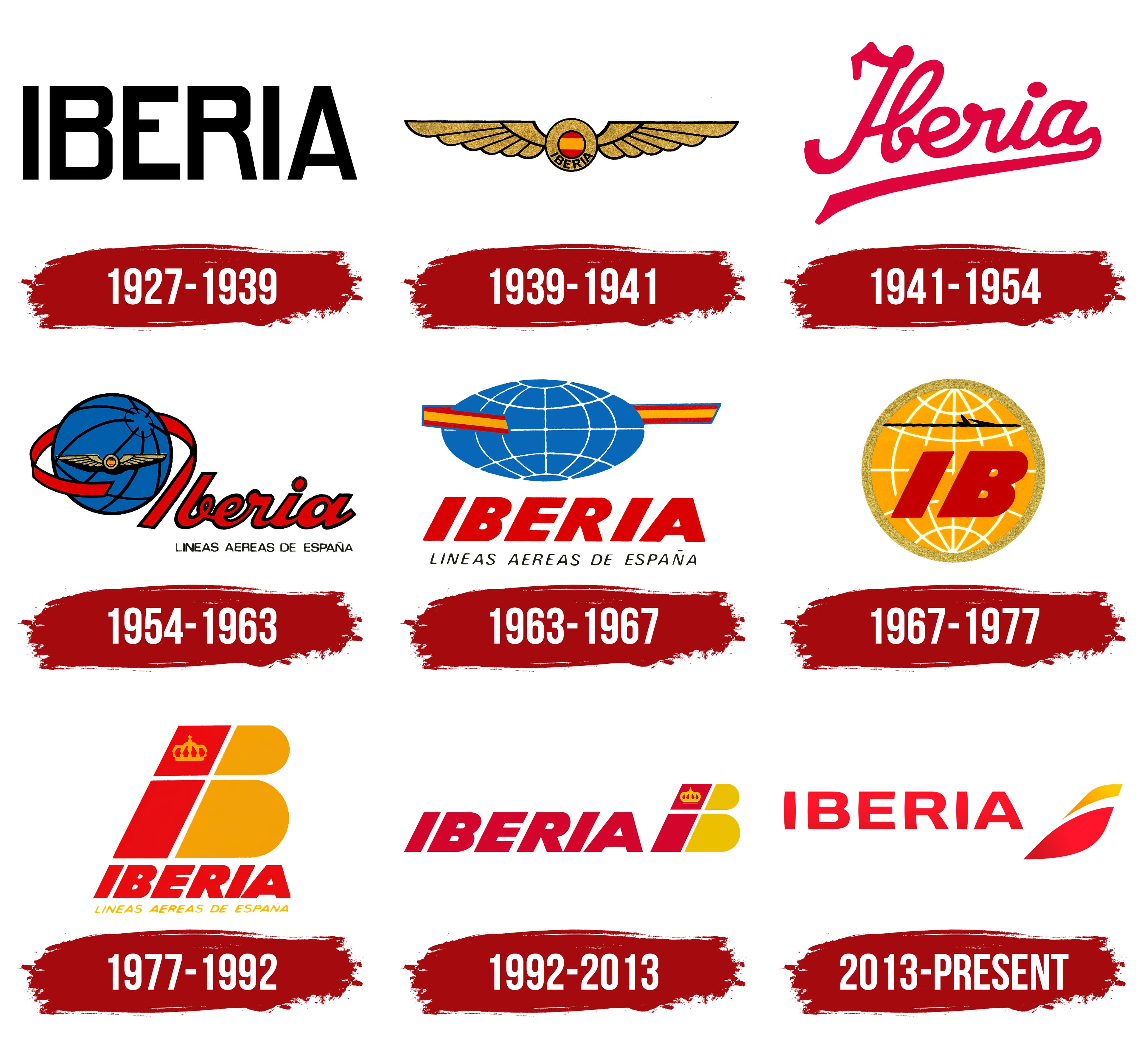
The company’s debut logo was very concise. Over time, it changed often, sometimes taking on a radically different look.
What is Iberia?
Iberia is the largest and oldest Spanish airline and is recognized as one of the safest in the world. Founded in 1927, it has been part of the Irish-British-Spanish holding company International Consolidated Airlines Group since 2010. The airline offers domestic and international flights to dozens of countries, using modern technologies to enhance service quality, such as providing electronic boarding passes and in-flight Internet access.
1927 – 1939

In its early years, the primary focus was readability. That’s why the first brand name was minimalist: it contained only the word “Iberia,” written in black capital letters.
1939 – 1941
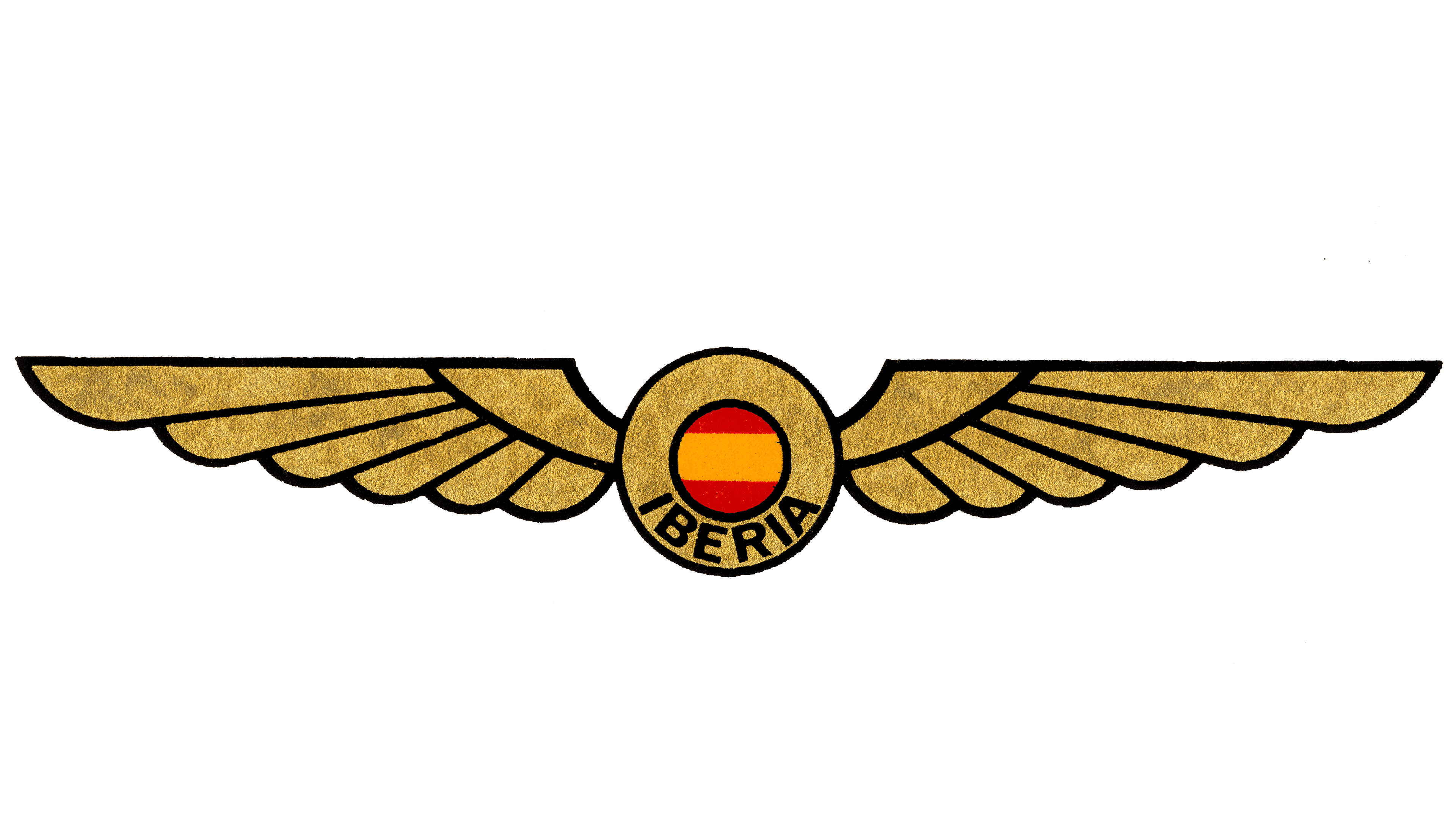
The company began using a winged symbol that directly reflects its line of business.
1941 – 1954
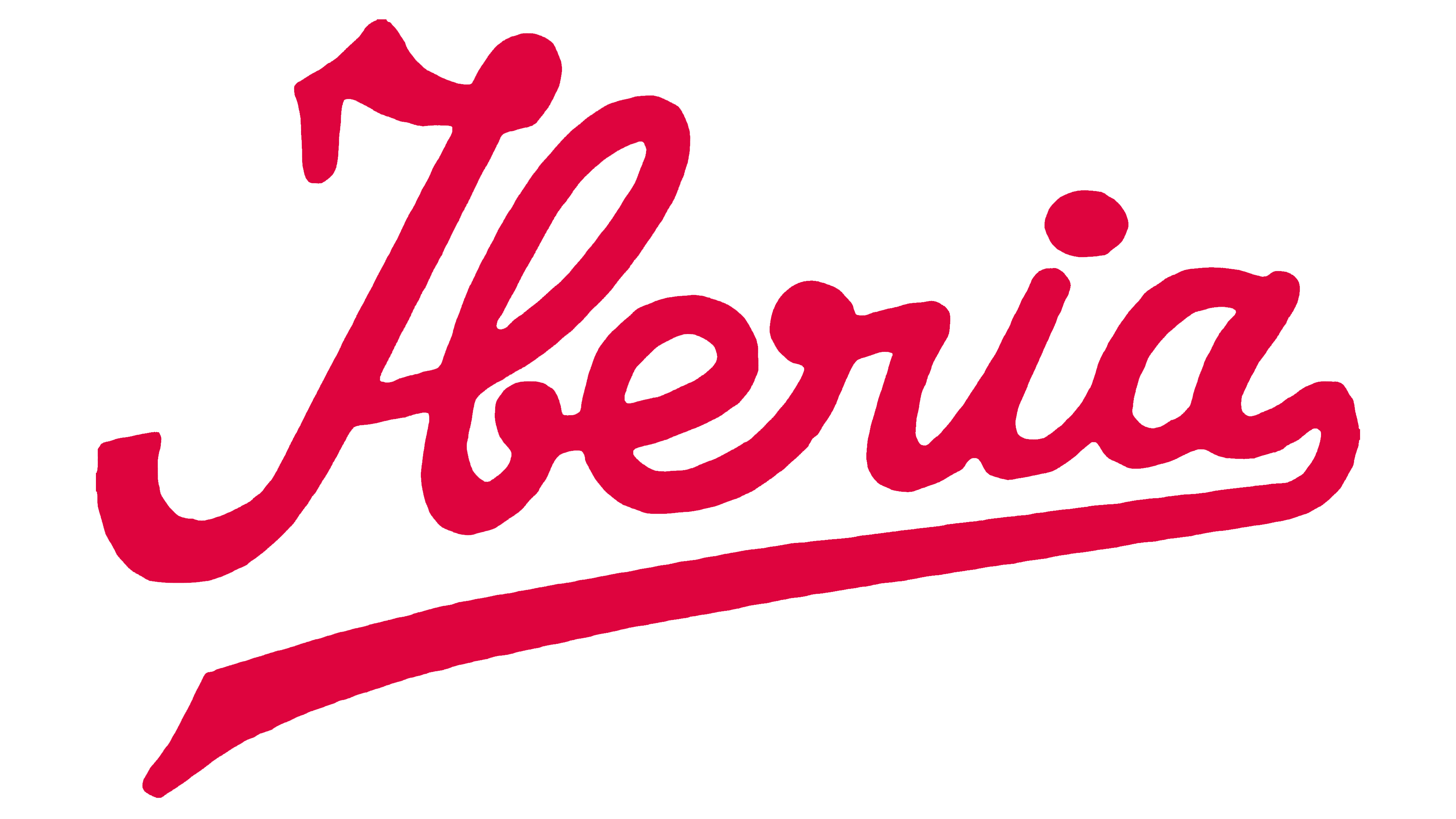
Designers again changed the logo. The inscription was made in red lowercase letters, and the font resembles handwriting.
1954 – 1963
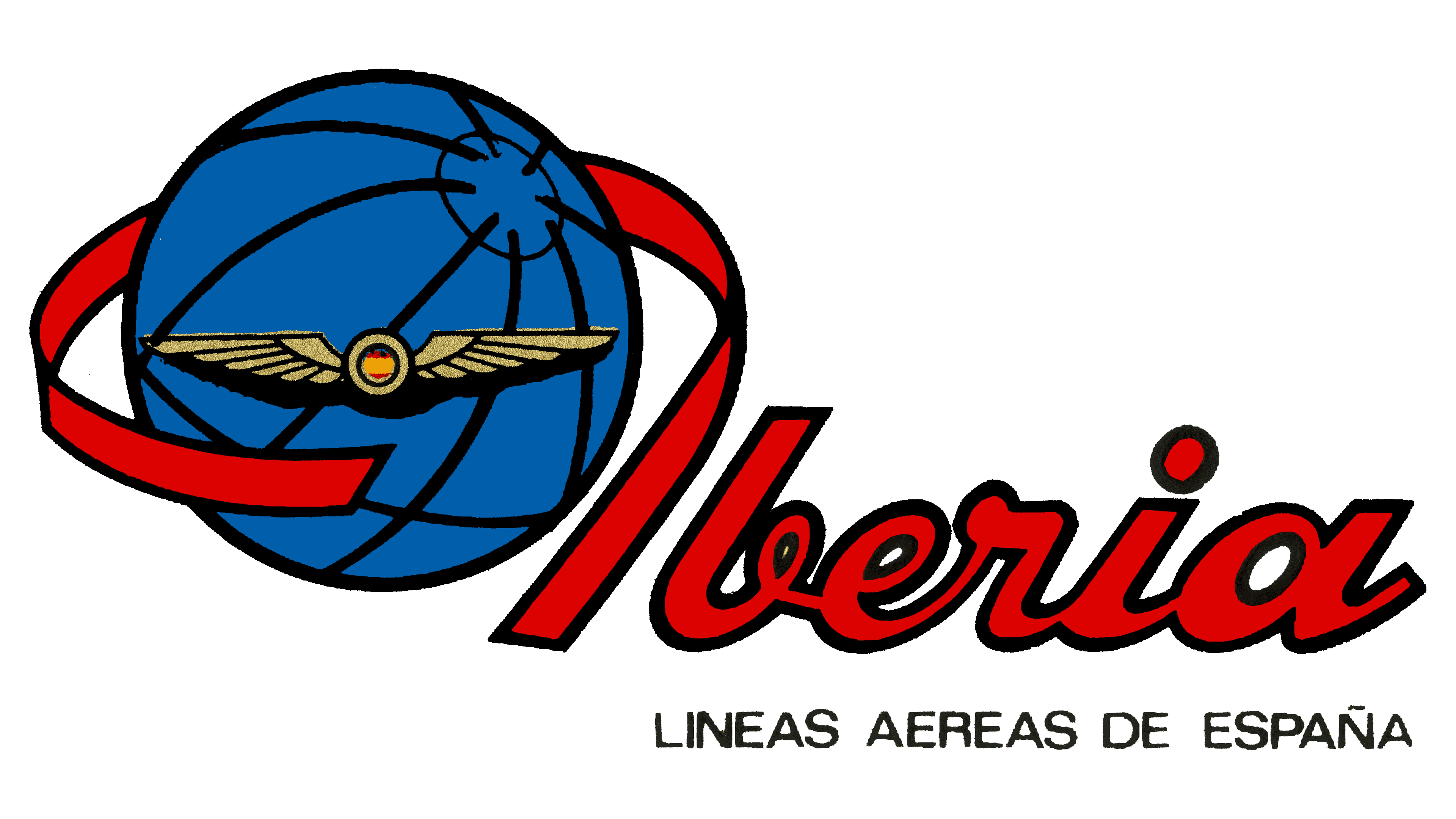
This year marked the beginning of the globe era in the corporate style. It is located to the right of the word “Iberia.”
1963 – 1967
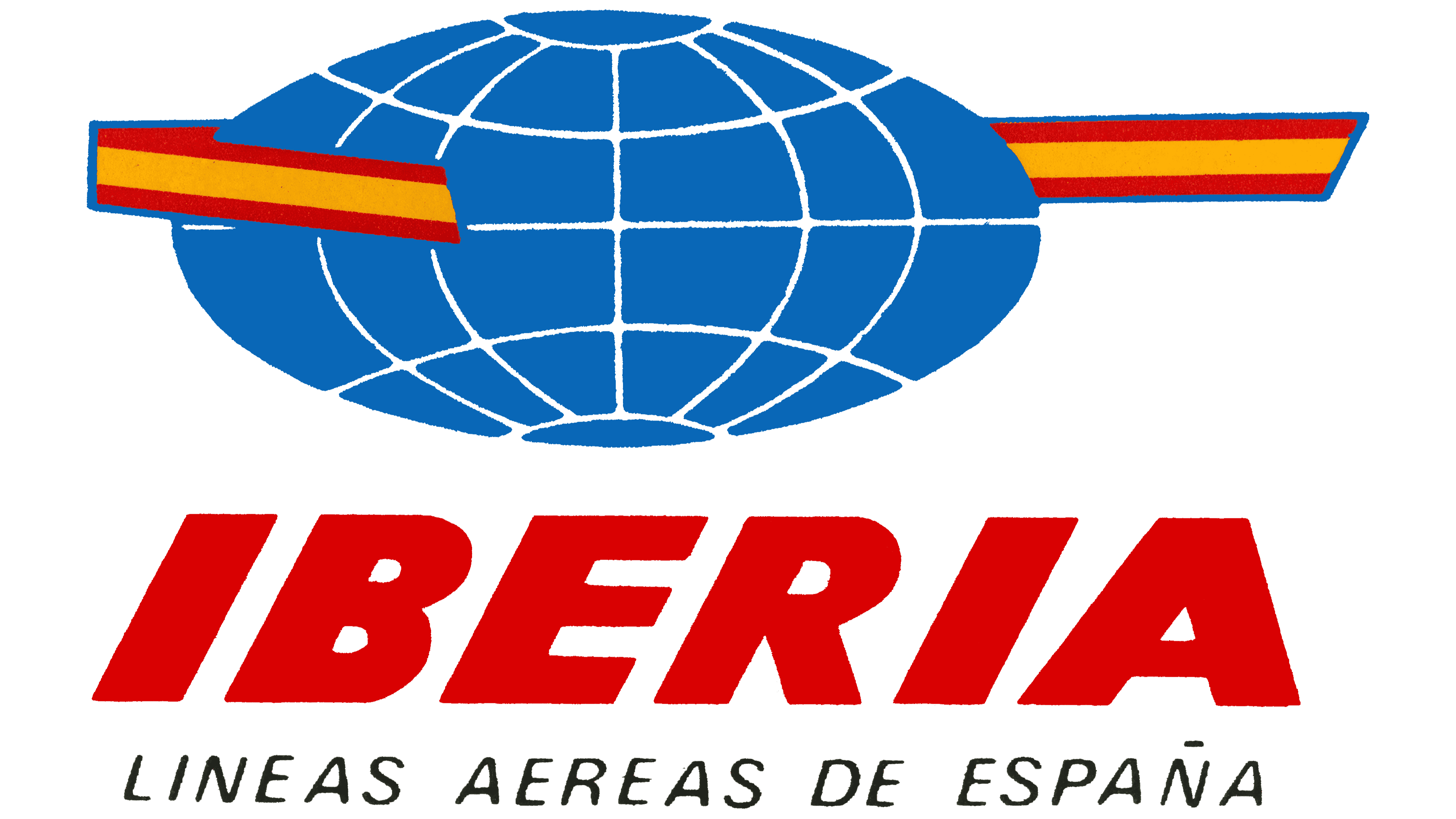
After the redesign, the logo received a large uppercase font, a slightly flattened globe, and a ribbon.
1967 – 1977

In 1967, an abbreviated version of the airline’s name, “IB”, appeared against a yellow globe.
1977 – 1992
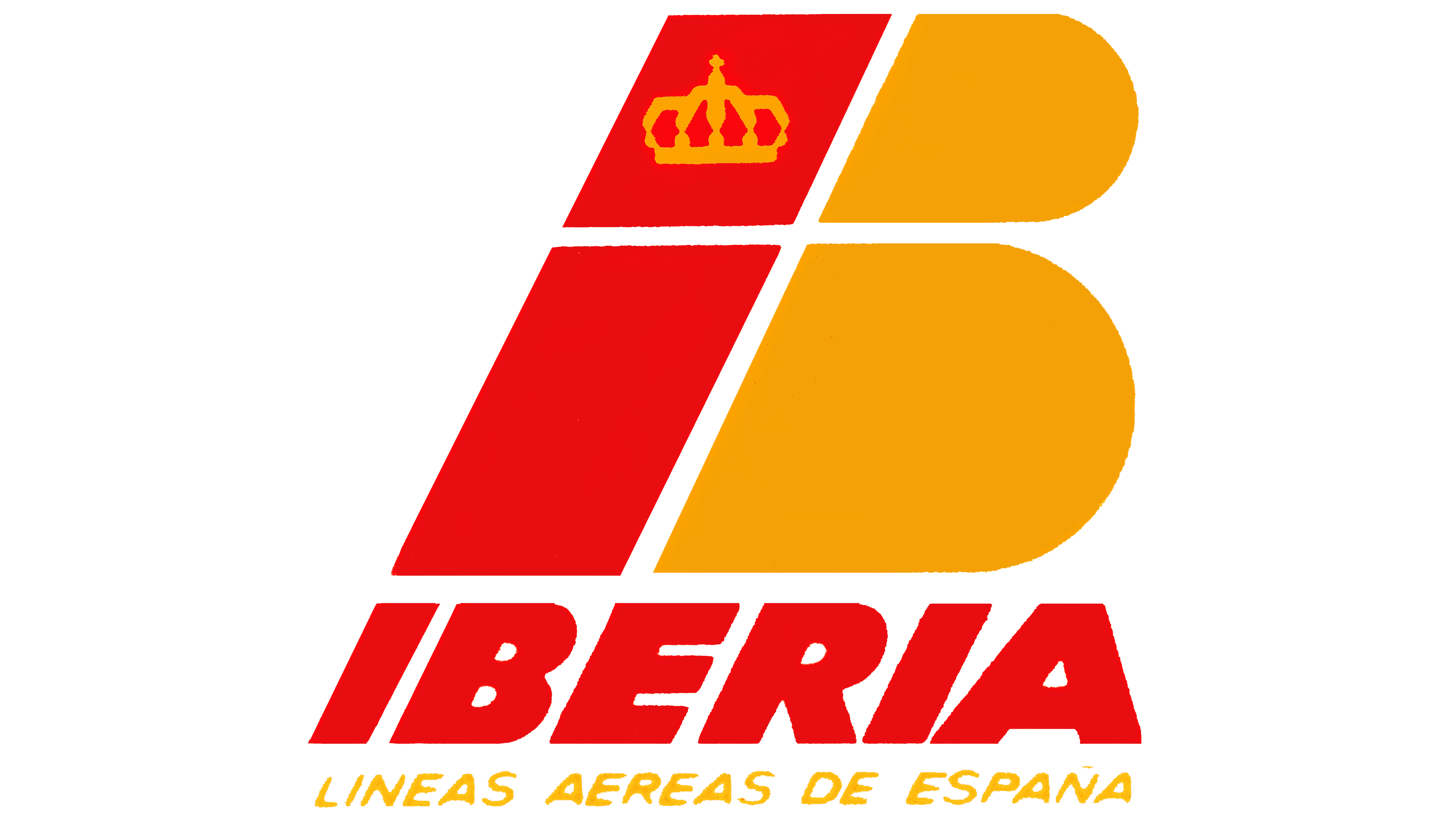
The developers removed the globe, enlarged the “IB” symbols, and placed the “Iberia” decryption below them.
1992 – 2013
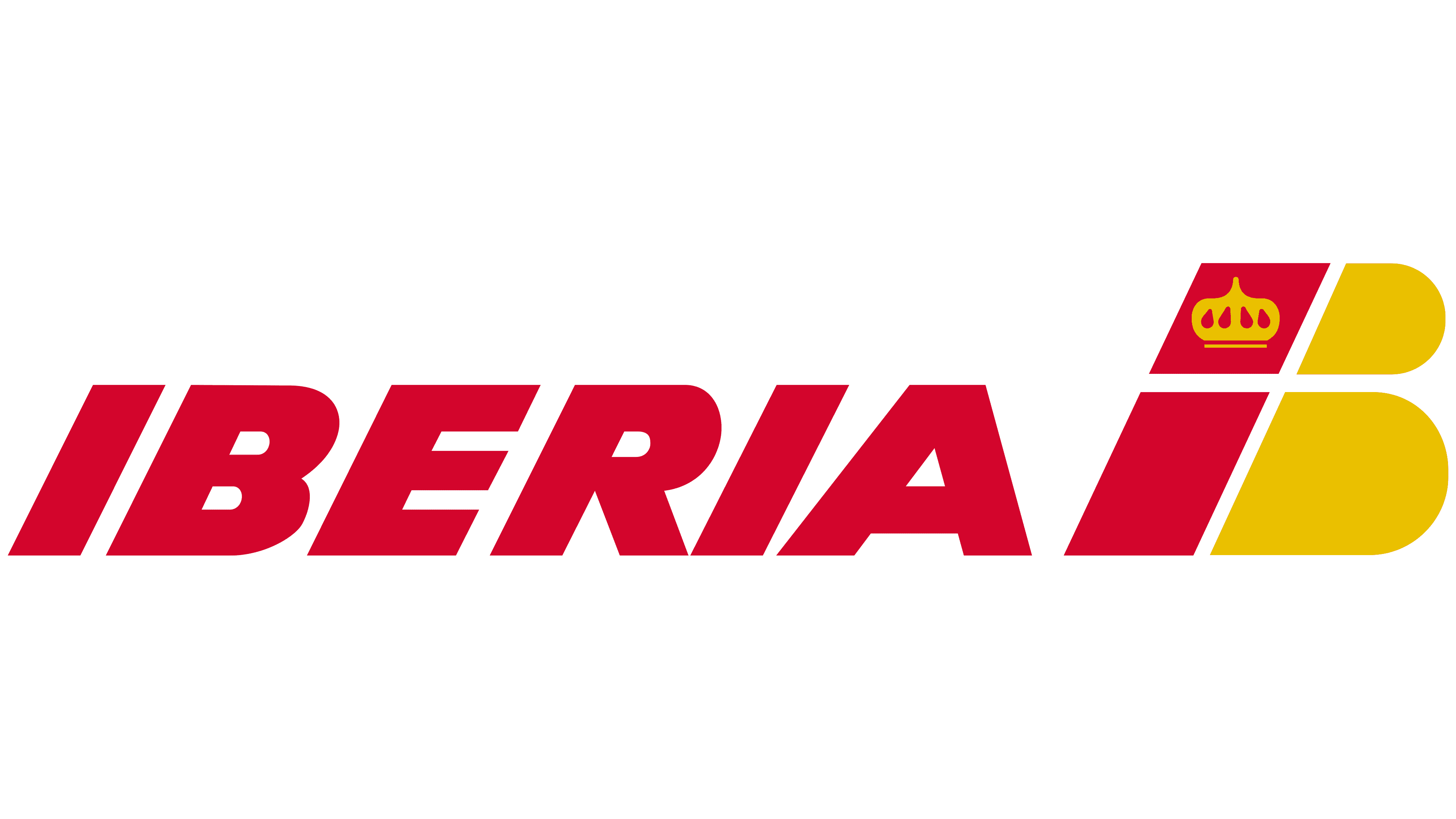
During this period, word and graphic designations swapped places: the full name became the main element in the design, and the abbreviated version was moved to the end.
2013 – today
The modern emblem is minimalist: the word “Iberia” is written in a simple, thin font, and the “IB” sign is depicted as leaves.
Font and Colors

The development of individual symbolism began with a simple form and took a long journey, eventually returning to simplicity. After several stages of complex design, the choice returned to a minimalist logo. Leaving behind the globe with parallels and meridians, ribbons, aviation signs, wide letters, and geometric shapes, the company leaders chose a textual version with a small icon. Interbrand develops the corporate style and logo. The emblem consists of two leaf-like strokes formed from the letter “B,” now positioned to the right of the word “Iberia.”
The logo’s custom font is a sans-serif typeface with serifs. The letters are convex, more precisely, curved to the sides, as seen in the example of the letter “I,” which has a barrel-shaped form. The color palette uses a gradient transition from dark to light. It consists of several shades of red and yellow.