


 Air Gabon Logo PNG
The Air Gabon logo is authentic and easily recognizable. It combines elements of the country’s fauna with the themes of flight and transport. The emblem’s design reflects the company’s connection to local traditions and lifestyle. Like exotic birds, the planes fill the sky over Gabon and have become integral to life in the region.
In 1951, the airline Territoires Associés pour l’Aviation Nationale (ATAN) started in Gabon, a French colony. It began with a small fleet of piston-engine aircraft, including the De Havilland Dragon Rapide and the Douglas DC-3, serving major regional cities.
After Gabon’s independence in 1960, ATAN became Air Gabon Internationale, and the airline expanded its fleet with the Fokker F27 turboprop. This period marked a new phase of development for the airline.
In the 1960s and 1970s, Air Gabon Internationale expanded its international routes, adding flights to Cameroon, Congo, and Equatorial Guinea. Newer jet aircraft, including the Boeing 707 and Boeing 737-200, supported this expansion.
On December 15, 1977, the airline changed its name to Air Gabon. By then, its fleet included a variety of aircraft, allowing flights to cities across Gabon, other regional capitals, and distant destinations in Europe, North America, and the Middle East.
Libreville, Gabon’s capital, became Air Gabon’s central hub, with other bases, such as Port-Gentil, strengthening the network. This setup significantly improved Air Gabon’s passenger and cargo transportation.
However, the 1990s brought economic challenges, rising fuel costs, and stiff competition. Despite efforts to attract investors and restructure during the 1990s and 2000s, the airline struggled. By 2005, only four older aircraft remained in operation.
Due to safety and financial issues, the Gabonese government withdrew Air Gabon’s license on February 24, 2006, ending its operations. This was a significant setback for Gabon’s transportation network.
Subsequent efforts to revive Air Gabon failed because of a lack of substantial investment, and the remaining assets and aircraft were eventually sold or transferred to other carriers.
From its founding in 1951 to its closure in 2006, Air Gabon helped connect Gabon domestically and internationally, marking an important chapter in African aviation history.
Meaning and History

What is Air Gabon?
It was Gabon’s former national airline, based in Libreville. The company provided regular passenger and cargo services to various destinations in Africa and Europe. The company operated a mixed fleet of narrow-body and wide-body aircraft, including Boeing 737, Boeing 767, and Fokker 100, serving key routes and connecting Gabon with important regional and international destinations.
1951 – 2006
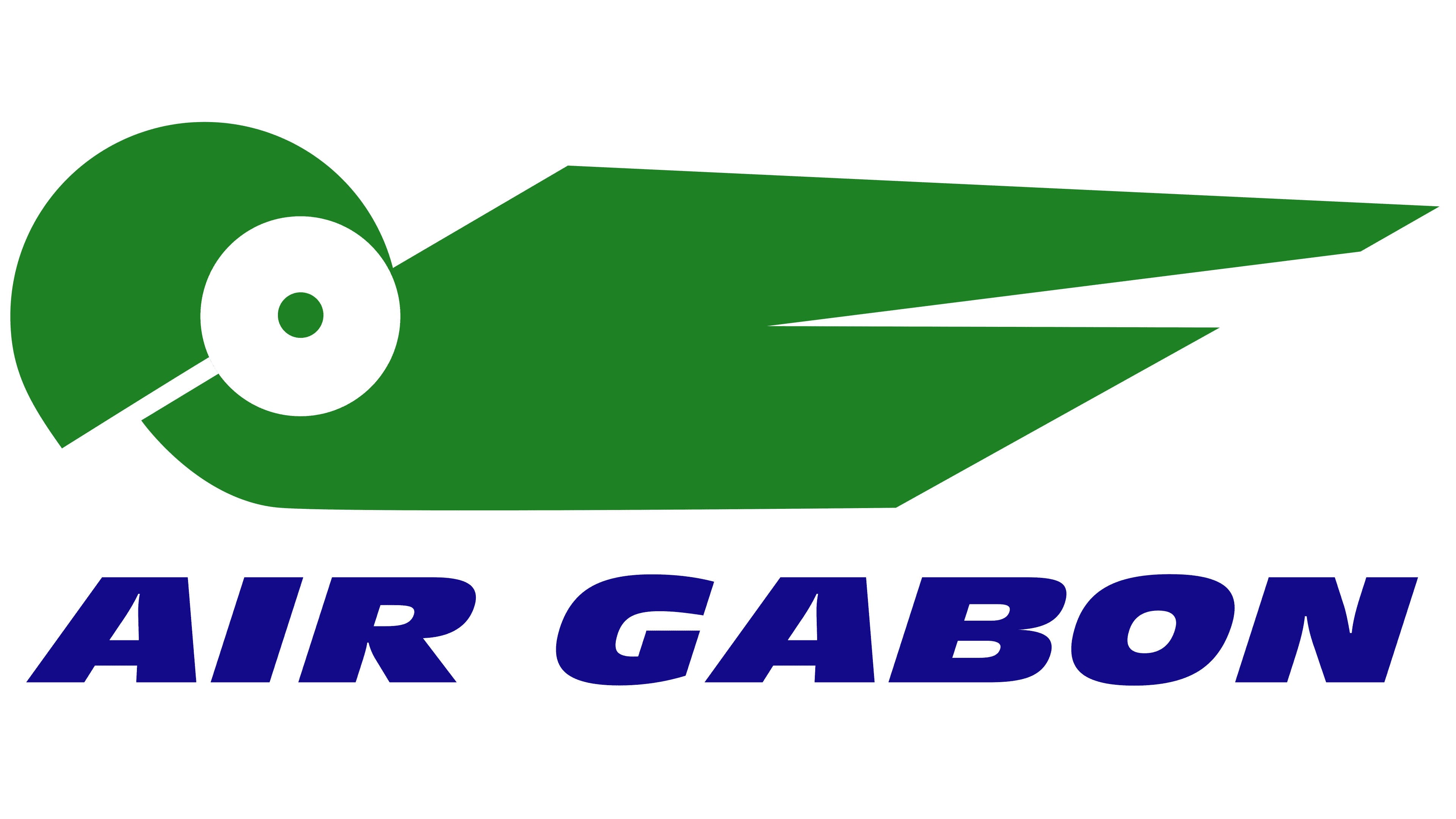
Air Gabon, a small African airline, was recognizable for the whimsical green parrot that adorned its planes. The bird’s silhouette on the emblem consisted of several polygons and a circle. The characteristic beak shape and large eye, encircled by a thick white ring, made it clear it was a parrot. The brand name uses a cursive version of the Antique Olive Nord font, obviously borrowed from the Air France logo. The lettering is blue, a color traditionally associated with the sky, flight, and spaciousness.
Using polygons and circles to create the parrot silhouette gives the traditional plot a modern feel. The whimsical green parrot attracts attention and adds a unique cultural flavor to the airline. Borrowing elements, such as the Antique Olive Nord font, from well-known airlines like Air France was strategic, evoking reliability and heritage. At the same time, the blue lettering emphasizes the airline’s core aviation business.