


 Akron Zips Logo PNG
Although the Akron Zips logo is a lettermark, it depicts an animal. It’s a kangaroo, the mascot of the university faculty that the emblem represents. Designers have condensed it into a single symbol. It’s filled with dynamism and internal energy, ready for a rapid leap forward, taking the form of lightning.
The Akron Zips trace their origins to the University of Akron, founded in 1870 in Ohio, a city shaped by the rubber industry and companies like B.F. Goodrich. The early teams were known as the Buchtelites and Hillbillies before adopting the Zips identity in the 1920s.
The name came from a popular locally produced rubber overshoe called Zipper. In 1925, student Margaret Hamlin proposed “Zips,” and the nickname stayed. A kangaroo mascot named Zippy later became part of the program’s identity.
For decades, Akron competed at a regional level, facing programs like Ohio State and Kent State within a competitive state landscape. A key shift came in 1976, when the university joined the Mid-American Conference, gaining access to Division I schedules and national pathways.
Football broke through in 2005 with a MAC championship and a GMAC Bowl win over Northern Illinois. Under Terry Bowden, the program built a more stable structure.
In 2017, Akron won the MAC East Division and reached the conference title game against Toledo, later appearing in the Bahamas Bowl against Florida Atlantic.
Basketball developed more gradually. The team reached the NCAA Tournament for the first time in 2009 and returned in 2013 and 2022, including a MAC title under coach John Groce.
Today, Akron fields 20 varsity teams across multiple sports, including soccer, wrestling, and rifle in the Great America Rifle Conference, maintaining a multi-conference presence within NCAA competition.
Meaning and History
What is Akron Zips?
Akron Zips is a sports division based in Ohio associated with the University of Akron. It is represented in several conferences, including the NCAA (Division I) and the MAC (East Division), and is also part of the FBS. The university’s program includes 17 student teams.
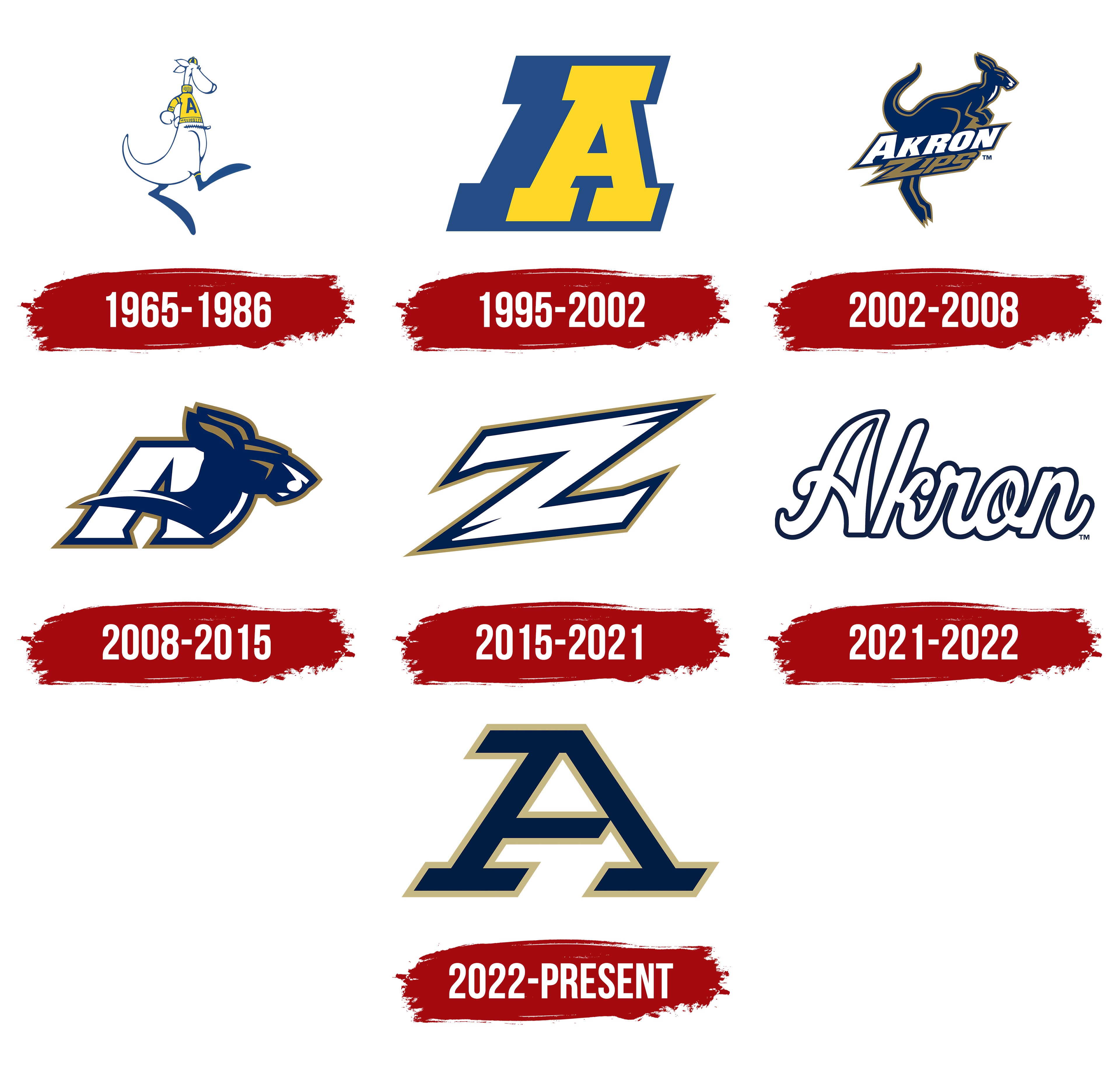
1965 – 1986
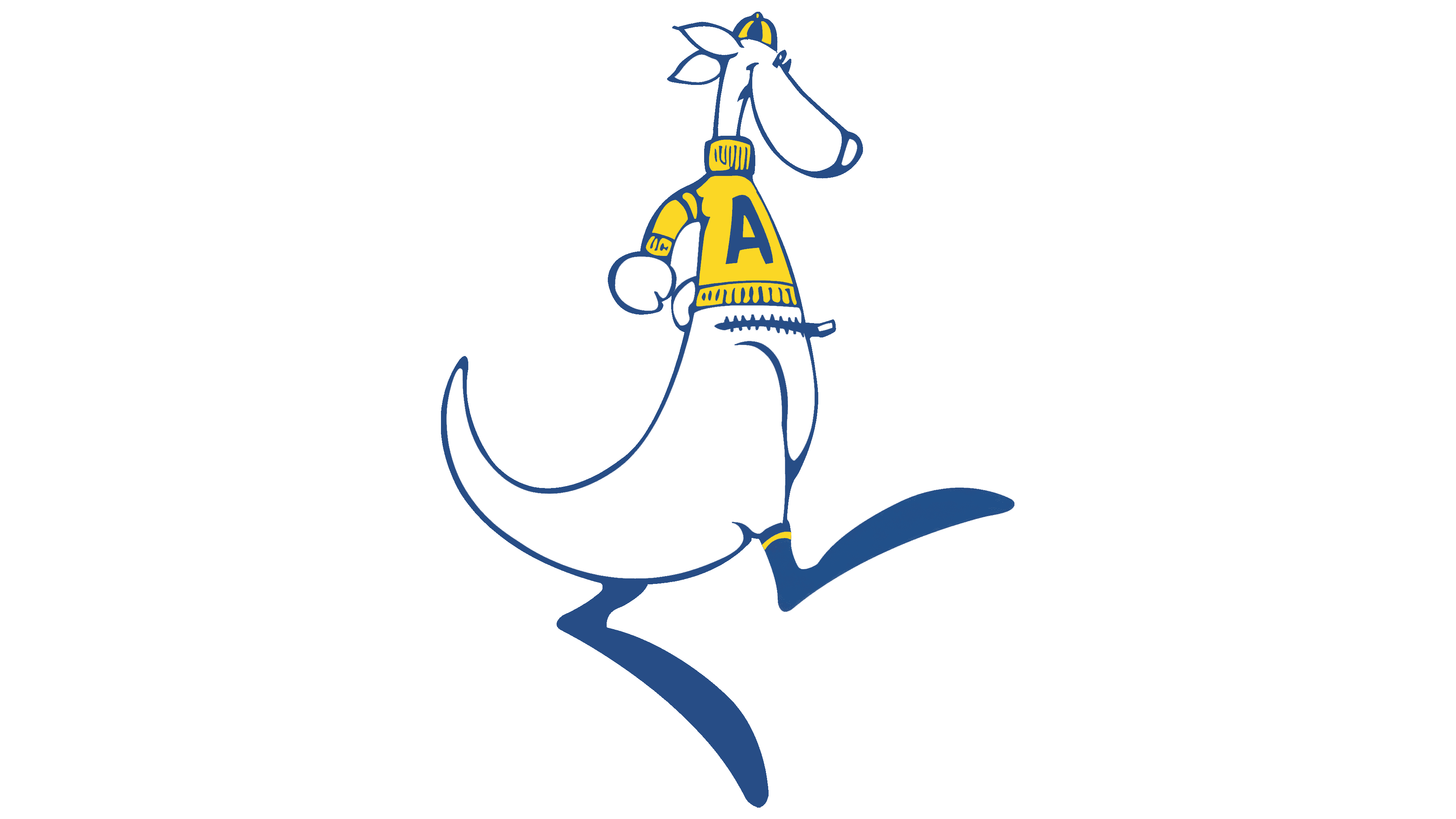
Zippy the kangaroo represented the University of Akron’s athletic teams in Ohio on the Akron Zips emblem from 1965 to 1986. The team name has roots in the local rubber industry and zippered footwear. The animal joined the university’s identity later, and the zipper on its pouch referenced the nickname’s history.
The university traces its origins to 1870, when it opened as Buchtel College, named for industrialist and philanthropist John Buchtel. In 1913, the college came under city control and became a municipal university. The name Akron reflected that connection, while the team nickname emerged from a 1920s contest. Student Margaret Hamlin proposed Zippers, borrowing the name from B. F. Goodrich’s Zipper rubber overshoes. Introduced in 1923, the footwear was fastened with a metal zipper, and its name echoed the brief sound of the zipper closing. Hamlin received $10, and Goodrich allowed the university to use the product name. In 1950, athletic director Kenneth “Red” Cochrane approved the shortened form, Zips.
Student council adviser Dick Hansford proposed the kangaroo as the mascot. One source of inspiration was Kicky, a fighting kangaroo from a comic strip. Supporters saw the animal as an embodiment of an athlete’s speed, agility, and strength. The kangaroo was approved on May 1, 1953, and its first illustration was created by student Joseph “Joe” Dick, who would graduate in 1956. His entry was one of three finalists in a 1953 contest and won the student vote. Dick contributed to The Buchtelite student newspaper, drew comics, and edited the university yearbook.
Dick drew the kangaroo with boxing gloves and a zippered pouch. The zipper referenced the name Zippers. The character was initially called Mr. Zip, but the pouch later provided the basis for identifying Zippy as female. The name Zippy had appeared in a 1965 football brochure. On September 24, The Buchtelite used it in a caption beneath a photo of the cheerleading squad.
The emblem used from 1965 to 1986 showed Zippy’s full body, with her muzzle extending to the right and her long tail curving to the left. One leg was raised in front of her body. Thin blue lines outlined the white figure and defined the face, ears, and paws. A small blue-and-yellow cap accompanied a yellow sweater bearing a blue “A,” with the pouch zipper visible below its hem. The illustration resembled a college cartoon. Clothing bearing Akron’s initial connected the kangaroo to student life and the university.
1995 – 2002
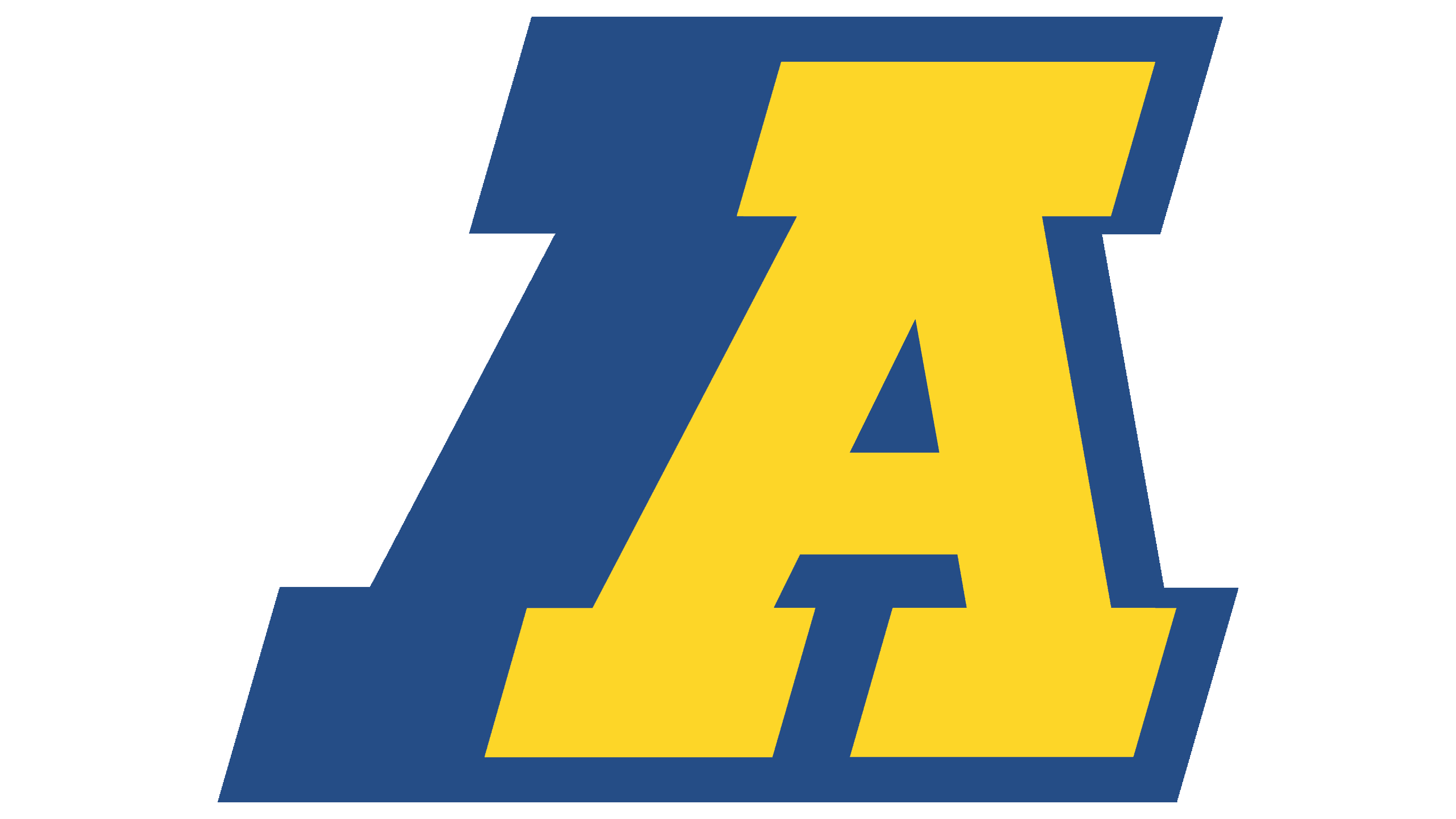
Letter-based emblems appeared alongside the mascot in the Akron Zips identity. In 1986, the Moving A, a slanted “A” with horizontal stripes, debuted on the football helmets. Its introduction coincided with Gerry Faust’s first season as head coach.
The version used from 1995 to 2002 removed the stripes but retained the rightward slant and heavy rectangular serifs. A thick blue shadow extended to the left of the yellow letter. Offsetting the two flat shapes created depth.
The university later revisited the original Moving A for throwback uniforms. In October 2017, it placed the emblem on gold helmets for Homecoming, bringing the 1986 letter back into the athletic identity.
2002 – 2008
In summer 2002, Akron introduced a unified athletic identity built around a family of marks from Pennsylvania-based Joe Bosack Graphic Design Company. Work began in November 2001, with the unveiling scheduled for July 1, 2002. Joe Bosack’s studio developed kangaroo illustrations, letter-based emblems, custom lettering, and versions for individual teams.
The update also changed the colors. Bright yellow gave way to the metallic gold used before the 1995–96 season, paired with dark Akron Blue. In the primary logo used from 2002 to 2008, gold outlined the blue silhouette of a leaping kangaroo. It filled the word ZIPS on the lower line. White AKRON lettering crossed the animal’s body, joining the university’s name to its mascot.
Both lines rose diagonally, with the letters slanting to the right. Heavy strokes, pointed terminals, and an elongated “Z” gave the lettering an angular form that differed from the rounded illustration of the early Zippy. The kangaroo had extended hind legs and a raised tail, with white areas defining its face and chest. The sweater and cap were gone, while the animal’s silhouette preserved the connection to the mascot.
2008 – 2015
In 2008, the A-Roo emblem, also known as Head A, became Akron’s primary logo. It had been part of the 2002 identity as a secondary mark and had already appeared on football helmets. The existing kangaroo illustration remained unchanged when the emblem became the primary mark.
A combination of the university’s initial and the mascot’s profile replaced the full Akron Zips name. A blue kangaroo head overlapped the right side of a white, slanted “A.” Long ears extended above the letter, while the curve of the neck crossed its lower half. A shared gold outline united the letter and animal.
2015 – 2021
As part of its IMPACT 2020 initiative, Akron changed its primary emblem in May 2015. A standalone “Z” replaced the head ” A to help the athletic department build national recognition. The letter came from the existing identity system, where it had served as a secondary mark since 2002.
In the white version, blue and gold outlines surrounded the “Z.” Its upper-right and lower-left terminals extended into long points along the letter’s diagonal. Interior notches continued the angular treatment of the outer edges. A single letter replaced the combination of an initial and a kangaroo head.
The basketball floor at James A. Rhodes Arena was among the first places to feature the updated identity. A large blue-and-gold “Z” was installed at center court in May 2015, while kangaroo images remained beneath the baskets. The mascot continued to appear in the secondary Kanga and Fear the Roo marks. Fear the Roo featured a front-facing kangaroo head.
The men’s soccer team had a version of the “Z” with a star. It was added after the team won the 2010 NCAA national championship, before the letter became the primary emblem. Following soccer’s tradition of using stars to mark championship titles, it connected the team’s logo to its national title.
2021 – 2022
A script Akron wordmark became the primary emblem in late June 2021, replacing the standalone initial with the city’s full name. It had first appeared in fall 2016 and remained the primary logo until the 2022 update.
The connected letters slanted to the right. The uppercase “A” began with a loop and rose nearly the full height of the logo. At the same time, the lowercase letters that followed continued the flowing script. A dark blue outline surrounded the white interior. The design used only white and dark blue.
2022 – today
By the time of the 2022 update, Akron was using eight different athletic logos. The university needed to align its team identities and again commissioned Joe Bosack & Co. Development and discussions with members of the university community took eight months. On May 9, Akron unveiled a new “A” and a version paired with an Akron wordmark, retaining the Zips name and Zippy mascot.
The design combined the initials of Akron and Zips. A gold border surrounded the dark blue “A,” which retained a triangular interior opening and gained heavy serifs at its base. The upper projection, slanted left stroke, and crossbar formed an embedded “Z.” The color arrangement differed from the “A” of the 1990s. Blue now filled the letter, while gold traced its outer edge. The offset shadow was removed. Custom uppercase lettering was created for the AKRON and ZIPS wordmarks.
The color standards specified Pantone 282 blue and Pantone 4525 gold, paired with white. Separate versions of the emblems and wordmarks were prepared for blue backgrounds. Their outlines were adjusted to compensate for the apparent expansion of light shapes against a dark surface.
The logo’s release coincided with the replacement of the football field’s playing surface and the start of a transition to Nike uniforms. The new identity was introduced as equipment and athletic facilities were updated, tying the rollout to work already scheduled.