


 Animal Crossing Logo PNG
The Animal Crossing logo takes the user to a rural world. The emblem’s symbols connect to wooden buildings, paddocks, and green gardens. Creating your ideal world takes time, but building will be a lot of fun.
Animal Crossing grew from Katsuya Eguchi’s personal experience. After joining Nintendo in 1986 and working on Super Mario Bros. 3, Star Fox, and Wave Race 64, he moved from Chiba to Kyoto, where he felt isolated. That experience shaped the themes of family, friendship, and community. The project was first planned for the Nintendo 64DD, a disk system with writable storage suited for real-time play. When the device failed to gain traction, development shifted to a standard Nintendo 64 cartridge.
The first version, Dōbutsu no Mori, was released in Japan on April 14, 2001. Later that year, it was updated for GameCube, then localized for North America in 2002 and Europe in 2004, with Western holidays replacing Japanese ones. At the time, the concept stood apart from Square Enix’s titles and Maxis’s simulation games. It offered no fixed goal or ending, which made it unusual within the market.
Animal Crossing: Wild World launched on the Nintendo DS on November 23, 2005, adding portability and online play via the Nintendo Wi-Fi Connection. City Folk followed on the Wii in 2008 and featured a larger shared environment. New Leaf launched on Nintendo 3DS in 2012 and made the player the village mayor, giving them greater control over development. It sold over 12 million copies.
Spin-offs include Happy Home Designer (2015) and Pocket Camp (2017). New Horizons launched on Nintendo Switch on March 20, 2020, introducing island building, crafting systems, and multiplayer for up to eight players. The game sold over 44 million copies, and by 2021, total series sales exceeded 81 million units.
Meaning and History
Gameplay isn’t just about gathering; it’s also about studying the area. The character moves from one settlement to another and can stay in them indefinitely. But the game’s heroes have no specific goals – they live in a parallel world because all events take place in real time.
At the same time, the gamer is engaged in a variety of work:
- Planting trees and plants.
- Contacting residents.
- Collecting items is the series’ central theme.
He can collect anything: fossils, tree fruit, discarded items, shells, and more. The character sells the mined items for the local currency – Bells. With the proceeds, he buys clothes and furniture, pays off the loan, invests in stocks, and purchases special tools. With their help, the hero can collect even more things to sell and earn money.
At the same time, during the game, the gamer’s appearance, like his home, can change. He can change his hairstyle, buy or sew new clothes, wear accessories, furnish and expand the house, repair it, re-glue the wallpaper, and so on. At the same time, the terrain type, the inhabitants’ image, and the locations of the buildings are generated randomly at the start of the game. Other locations are also generated randomly at the start of the game.
But in some versions of the simulator, the main character chooses the location where his “life” will take place (from 4 planned locations). In any case, all the noted aspects resonate well with the Animal Crossing logo. They are conveyed harmoniously in it as a calm “home” design. International editions use two logo types, whereas Japan uses a different format.
What is Animal Crossing?
Animal Crossing is a series of video games with non-linear gameplay developed by the Japanese company Nintendo. It has been released since 2001. The game is a life simulator set in a village where players do everyday activities such as interacting with neighbors, hunting, fishing, and buying necessities. Anthropomorphic animal characters, soothing music, and beautiful graphics create a whimsical atmosphere.
2002 – today
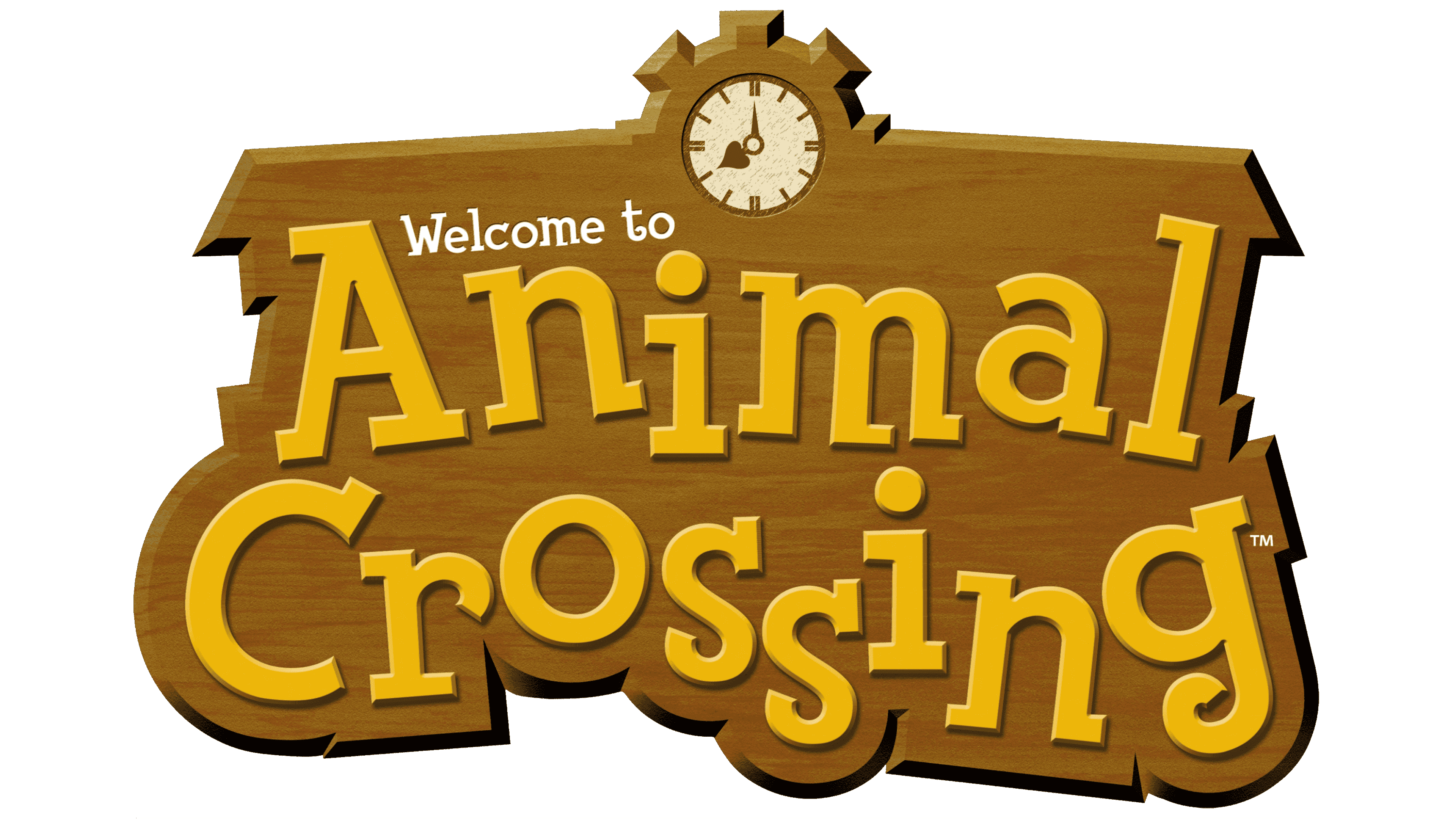
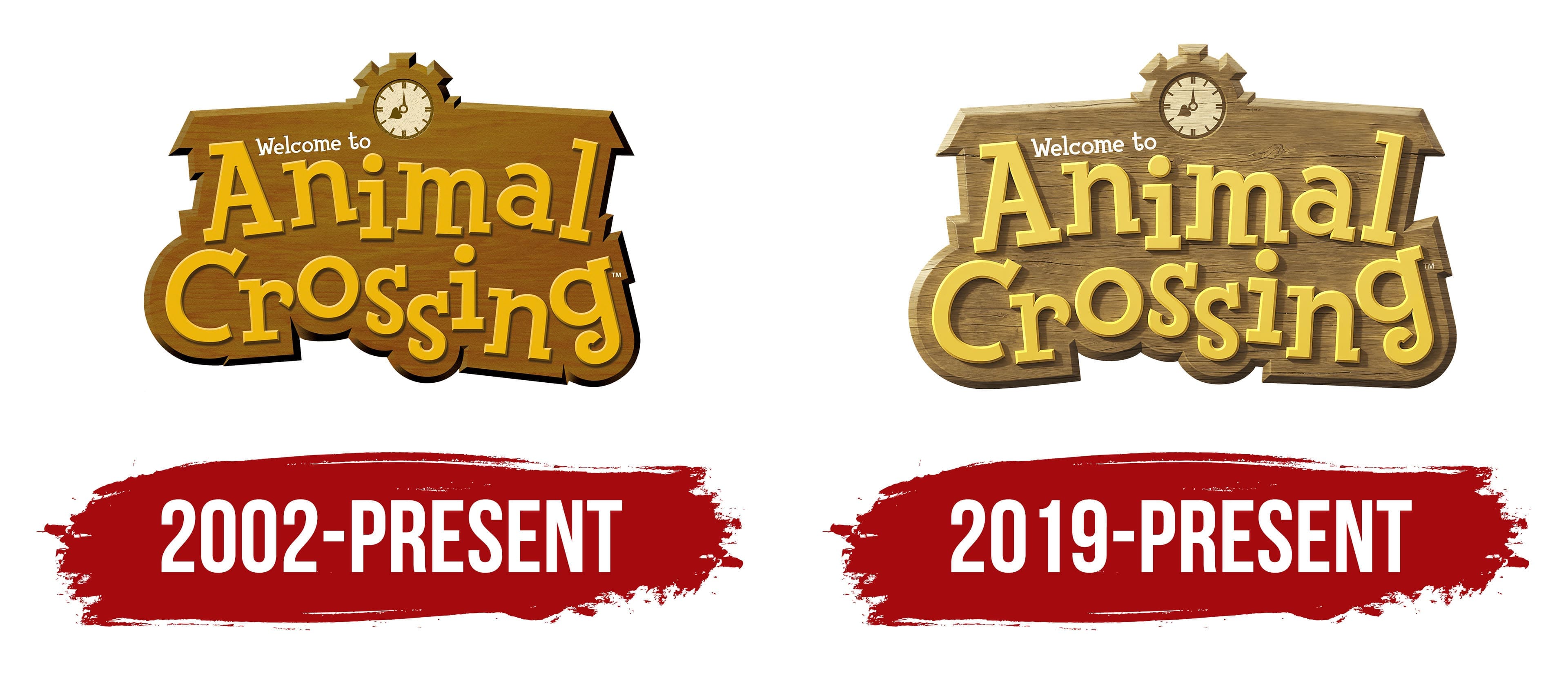
The game got an interesting logo style from the very start. It conveys peace and confidence, which perfectly matches the main concept. The series title is written on a surface that resembles wood. This is evident in the background’s texture and color. It imitates a door sign. The “Welcome to” reinforces this impression, greeting in a thin serif typeface.
The figured plaque appears carved from wood, and its upper outline resembles the roof of a long building with a clock at its center. They say that time spent in the life simulator is infinite and runs in parallel with the outside world. Black shadows are drawn below and to the right of the logo, giving it a volumetric look.
2019 – today
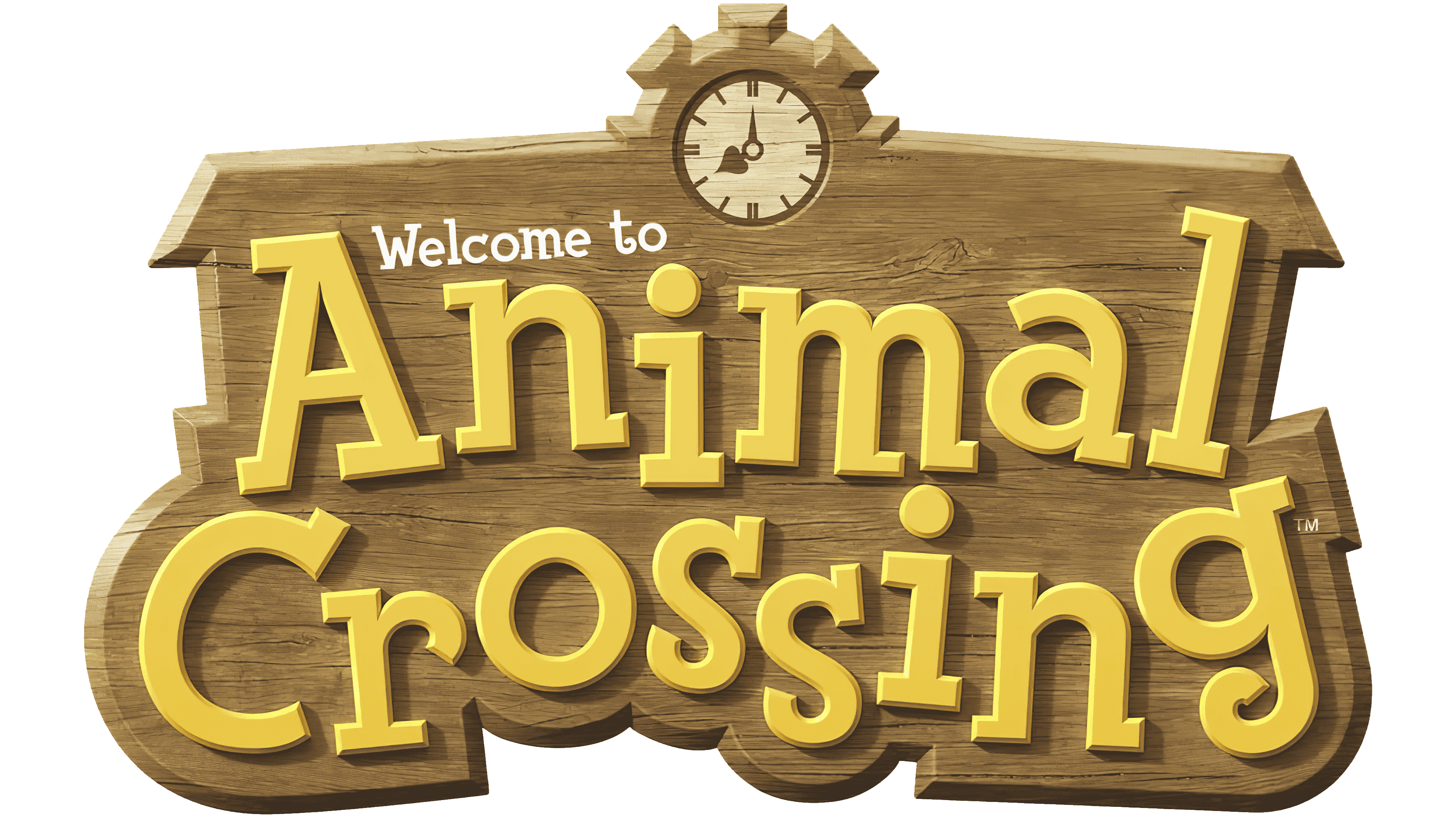
The updated emblem was first used in the Nintendo Switch release of Animal Crossing: New Horizons. It looks almost the same, with minor changes. Horizontal lines, cracks, and visual roughness enhance the woody texture. Dark beige shadows complement the yellow letters, making the inscription appear convex. The mechanical clock-and-gear remained the same. The designer lightened the logo’s color.
Font and Colors
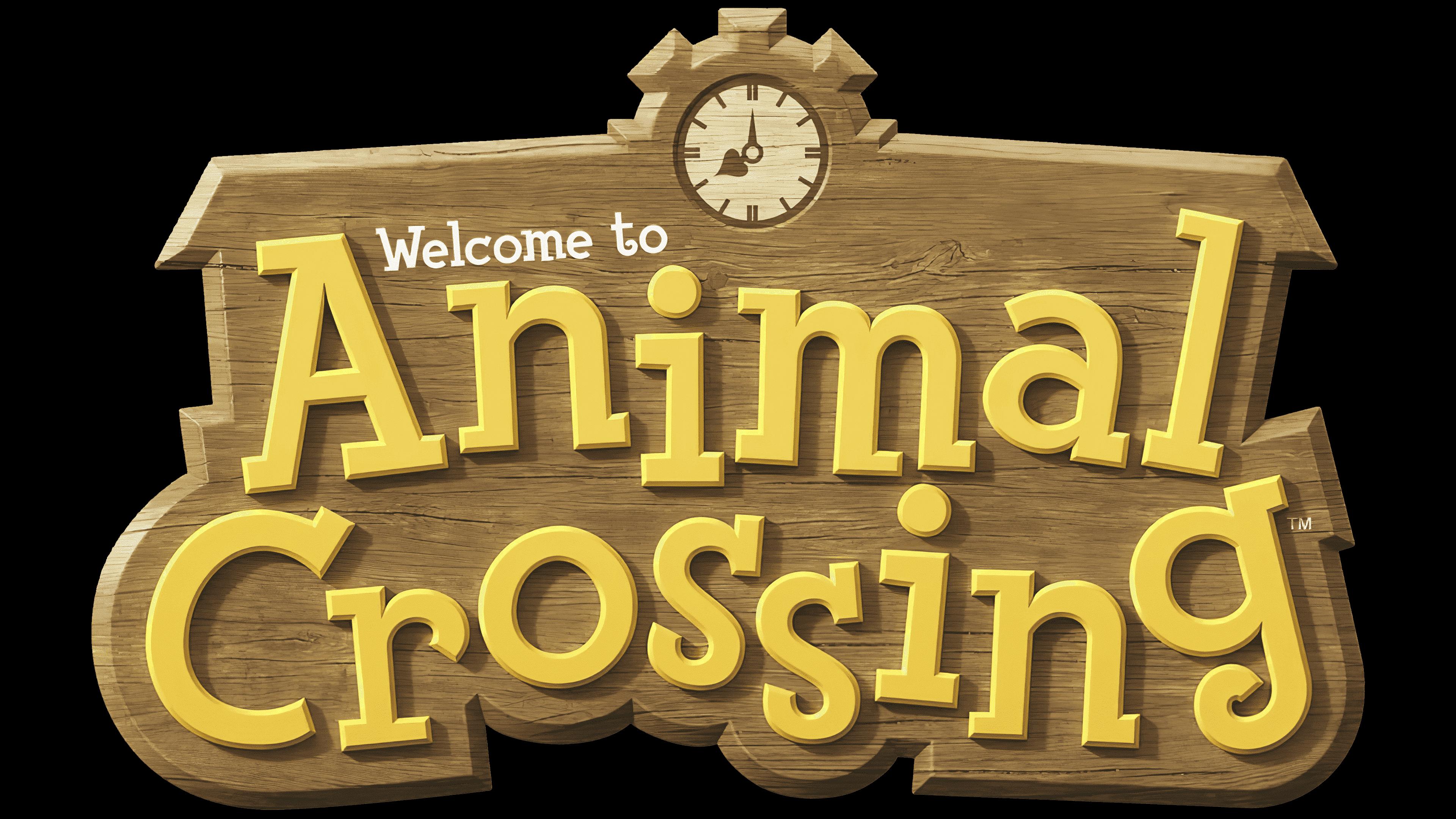
The simulation game’s individual mark remained almost unchanged. In the second version, some adjustments were made, but they are so minor they don’t catch the eye at first glance. Most of the fixes focus on enhancing the wood texture and color.
The emblem uses a typeface reminiscent of Fink Heavy, a comic book font designed by House Industries. It is part of the RatFink family and consists of “jumping” letters with large serifs.
The color palette is calm and restrained, with a predominance of beige tones that closely match the wood tone. These include brown, olive, yellow, and black or gray for outlines.