


 Asian Cup Logo PNG
The Asian Cup logo symbolizes the passion and diversity of Asian soccer, representing a tournament that unites countries and cultures, filled with fans’ emotions and intense team competition.
The Asian Cup began after the AFC was founded in Manila in 1954. The first tournament took place in Hong Kong in 1956 with South Korea, Israel, Hong Kong, and Vietnam in a four-team round-robin format. South Korea won every match and retained the title as host in 1960. Israel became champion in 1964, but political disputes later made its position in Asian football untenable, and the country left the confederation in 1974.
Iran started its leading period with victory in 1968, then won again in 1972 and 1976 to complete three consecutive championships. Kuwait ended that run by taking the 1980 title in Kuwait City. Saudi Arabia followed with victories in 1984 and 1988, then added a third crown in 1996. Japan entered the winners’ list in 1992 and later triumphed in 2000, 2004, and 2011.
Australia moved from the Oceania confederation in 2006 and entered the competition in 2007. That edition was staged across Indonesia, Malaysia, Thailand, and Vietnam. Australia reached the quarterfinals, while Iraq defeated Saudi Arabia in the final and secured its first title during a period of war at home. Australia later won the championship on home soil in 2015.
The field expanded from 16 to 24 teams in 2019. Qatar, preparing to host the 2022 World Cup, beat Japan 3-1 in the final. It retained the trophy at the next edition, played in January and February 2024 after the 2023 tournament was relocated. The hosts defeated Jordan in the final to claim a second consecutive championship.
Meaning and History
What is Asian Cup?
The largest football tournament determining Asia’s strongest national team is held every four years. Organized by the official regional football association, the tournament also serves as a qualification for global championships. Teams showcase diverse playing styles, from technical to physically strong football. The competition includes a group stage and knockout rounds. The winner earns recognition as the continent’s football leader.
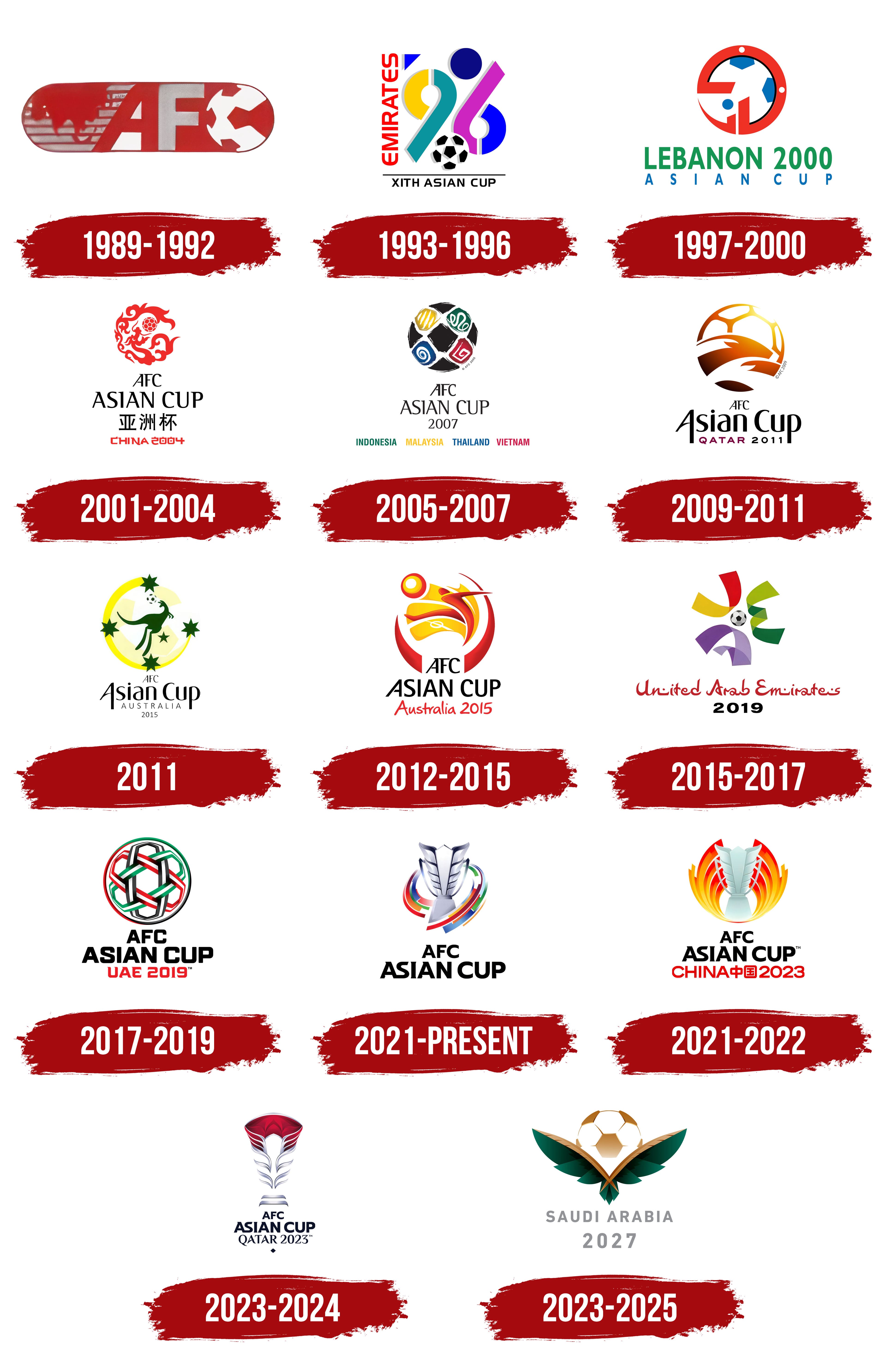
1989 – 1992

The first things that come to mind when seeing the initial logo version are soccer and Asia. Designed for the 1989 Asian Football Cup, the style reflects the simplicity of the sporting event.
The letters “AFC” represent the Asian Football Confederation. The stylized soccer ball integrated into the letter “C” highlights the tournament’s core sporting idea. The letters are angular and massive, set in a simple typeface.
The color palette is limited to red and white. Red, traditional in Asian symbolism, emphasizes the tournament’s geographic identity.
1993 – 1996
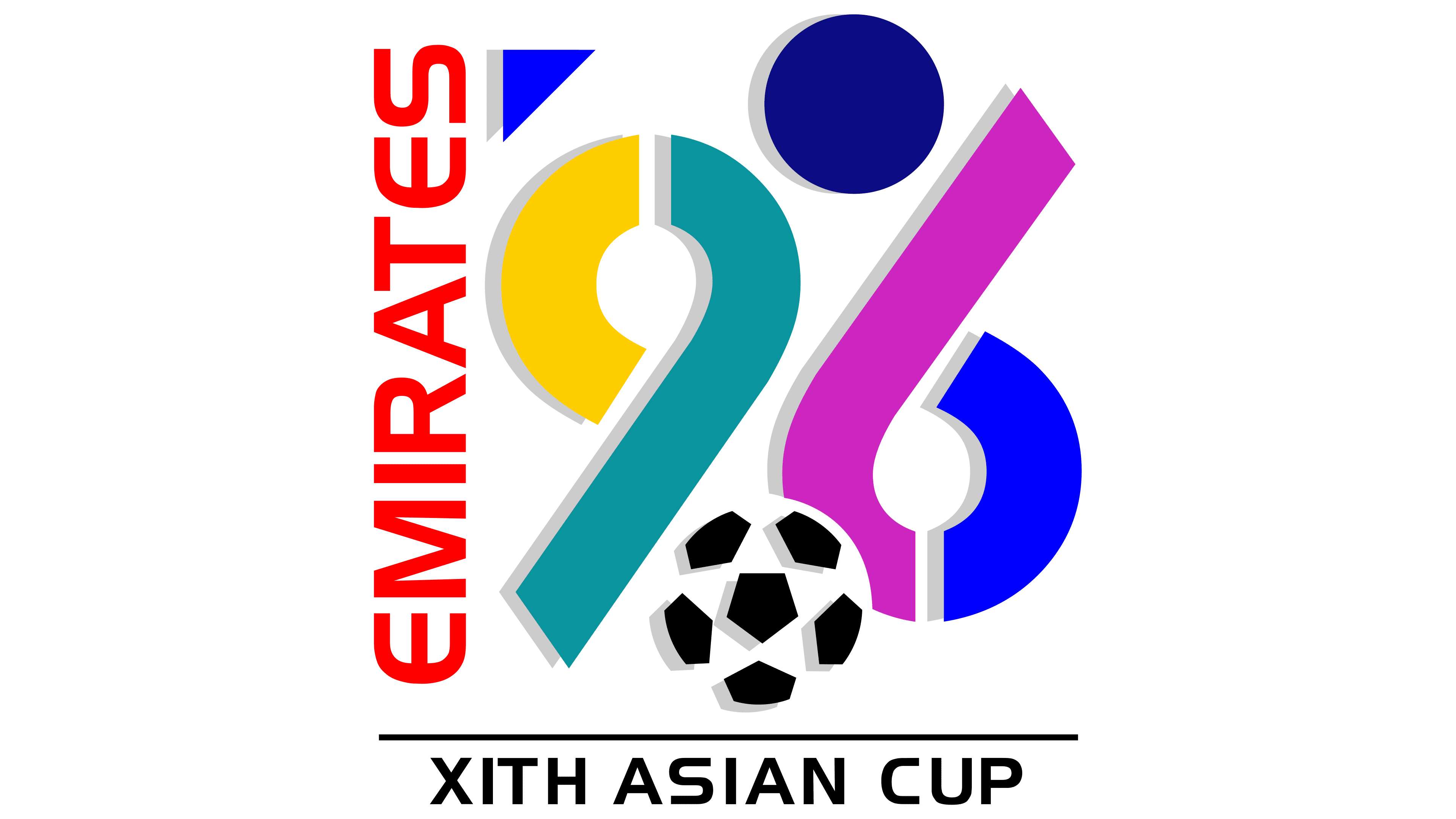
The number “96” in this Asian Cup logo represents a bright event in Asian soccer. The style reflects mid-1990s graphic design trends popular in sports graphics.
Multicolored elements in the numbers underscore the tournament’s international nature. Yellow, green, pink, and blue represent the cultural diversity of Asia. The black-and-white ball emphasizes the event’s soccer focus.
A vertical “EMIRATES” inscription on the left highlights the host nation, the United Arab Emirates. The simple sans-serif font appears modern. Below the numbers, “XIth ASIAN CUP” indicates the tournament’s sequence and status.
Pop art aesthetics influenced the design, characterized by large, bold shapes, contrasting colors, and clear geometric lines.
1997 – 2000
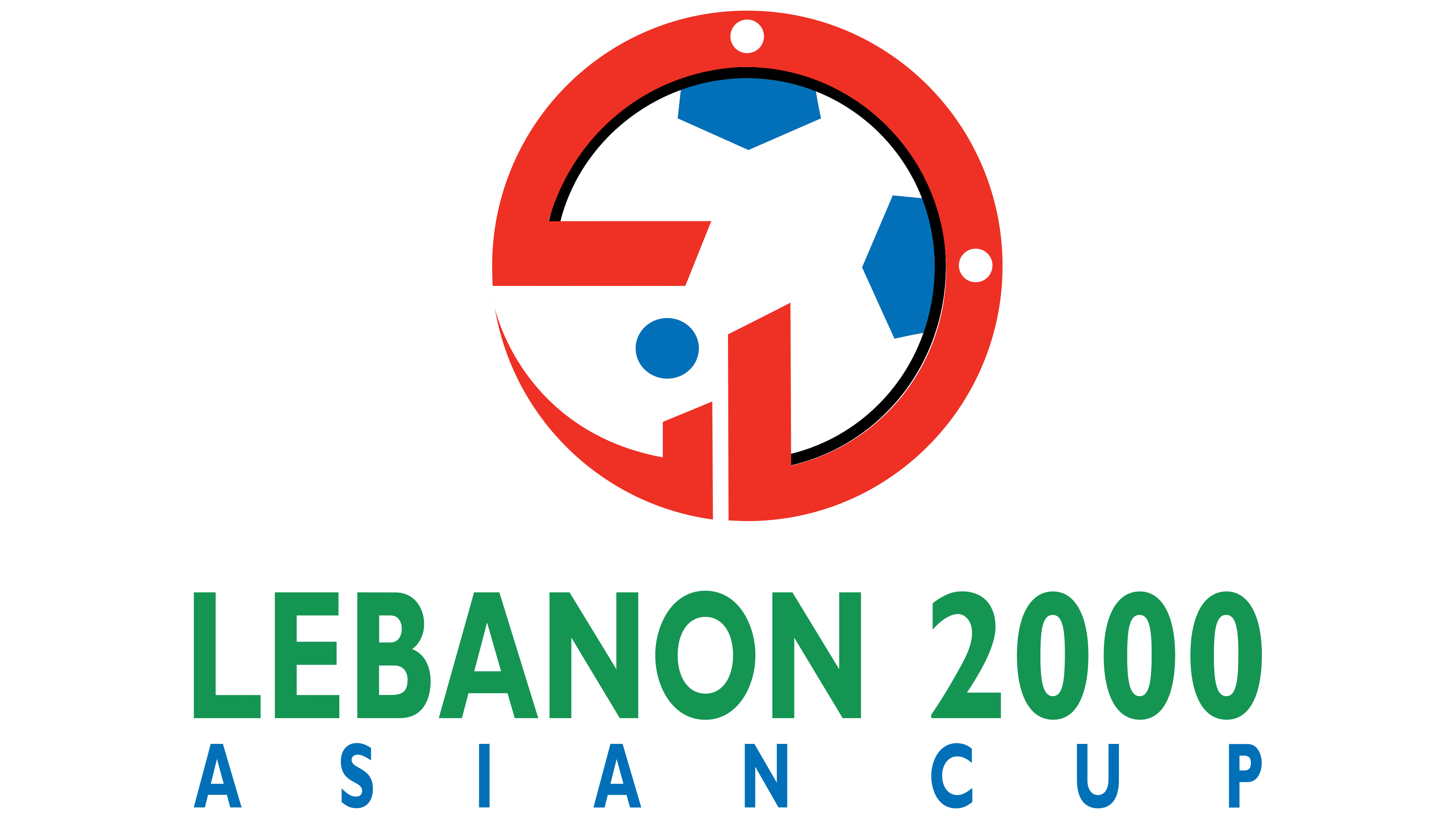
The football celebration at the start of the new millennium was marked by a vivid design from the organizers of the 2000 Asian Cup in Lebanon. The style reflects the era’s trends: clarity, flatness, and minimalism.
A red contour surrounds an abstract representation of a soccer ball. The contour subtly forms a letter “C,” symbolizing unity in confederation. The blue and white colors inside the ball convey a soccer atmosphere.
The palette references Lebanon’s flag: red signifies national importance, and green symbolizes the Lebanese cedar. The green “Lebanon 2000” inscription uses a modern sans-serif font. The “Asian Cup” in concise blue letters below emphasizes the tournament’s calmness.
2001 – 2004
The fiery breath of a dragon aimed at a soccer ball expressed the Asian Cup 2004 concept, developed by Interbrand for China.
Red represents Chinese tradition. In China, dragons symbolize luck, power, and strength, reflecting a competitive spirit that is deeply ingrained in the culture.
The soccer ball in the composition signals the tournament’s soccer identity. Below is the event’s title, “AFC Asian Cup,” in simple typeface. Chinese characters and the stylized red phrase “China 2004” complement it, referencing Chinese calligraphy.
The design shows Asian soccer’s connection to Chinese culture. Interbrand successfully merged cultural symbolism and sporting identity.
2005 – 2007
An artist’s brush united four host nations in a symbolic soccer ball for the 2007 Asian Cup, designed by Landor Associates.
Four ball segments represent the host countries’ colors. Yellow with wavy patterns signifies Malaysia. Green with a spiral represents Indonesia, blue with swirls symbolizes Thailand, and red with geometric patterns depicts Vietnam’s culture.
Each country is labeled below the logo. The font is strict and classic, not distracting from the image.
Designers opted for a painterly style that emphasizes each country’s uniqueness, symbolically representing Asian unity in soccer during a major championship.
2009 – 2011
An Arabian oryx, Qatar’s desert antelope, confidently moves over a ball in the 2011 Asian Cup logo designed by international agency Lambie-Nairn.
The orange color references Qatar’s sunsets, dunes, and deserts. The ball appears as a simple outline complementing the oryx’s smooth lines.
The elegant sans-serif inscription “Asian Cup” appears below. The host country’s name, Qatar, is highlighted in maroon, matching the national flag.
Designers emphasized the event’s uniqueness by linking its regional nature with soccer themes. Lambie-Nairn harmoniously reflected the tournament location.
2011
A kangaroo juggling a soccer ball expresses Australian humor in the 2015 Asian Cup emblem, designed by Australian agency WiteKite.
A green kangaroo appears against a symbolic yellow crescent and stars, referencing the Australian flag. Green represents the Socceroos, the national team’s official color, reinforcing Australia’s global recognition.
Stars surround the figure, marking the tournament’s continental scope. The event’s name is set in a traditional serif typeface in black.
WiteKite’s lightweight design conveys the championship’s sporting atmosphere and Australian symbolism.
2012 – 2015
A fiery player in motion symbolized Australia’s 2015 Asian Cup. The previous logo was redesigned by WiteKite, which had designed logos for other major sporting events.
The abstract player figure features shades of red and yellow reminiscent of Australian sunsets. A gradient from red to yellow represents Australia’s climate. The ball’s silhouette uses thin lines, omitting a traditional shape.
The tournament’s name is in a black sans-serif typeface. The contrasting red inscription “Australia 2015” emphasizes the location.
2015 – 2017
Colorful Arabic letters swirl around a soccer ball in the 2019 Asian Cup logo, created by Australian agency The Works for the UAE event.
Four stylized letters form “UAE,” emphasizing the host country. Red, green, purple, and yellow represent Asia’s cultural diversity.
The tournament’s name appears in red Arabic calligraphy. The year “2019” is displayed in a concise font.
The Works conveyed harmony between sports and regional cultural traditions. The unconventional solution highlighted Asian openness and diversity.
2017 – 2019
Interwoven ribbons in the colors of the UAE formed the main theme of the 2019 Asian Cup, created by the Australian studio The Works.
The ball’s shape consists of interlaced green, red, white, and black lines, matching the colors of the UAE flag, and emphasizing the host country’s importance.
Below the graphic, “AFC ASIAN CUP” appears in black sans-serif font. The country’s name and year are in red.
The design effectively conveyed the essence of the tournament through cultural symbolism and visual simplicity, emphasizing unity in soccer and Emirati traditions.
2021 – today
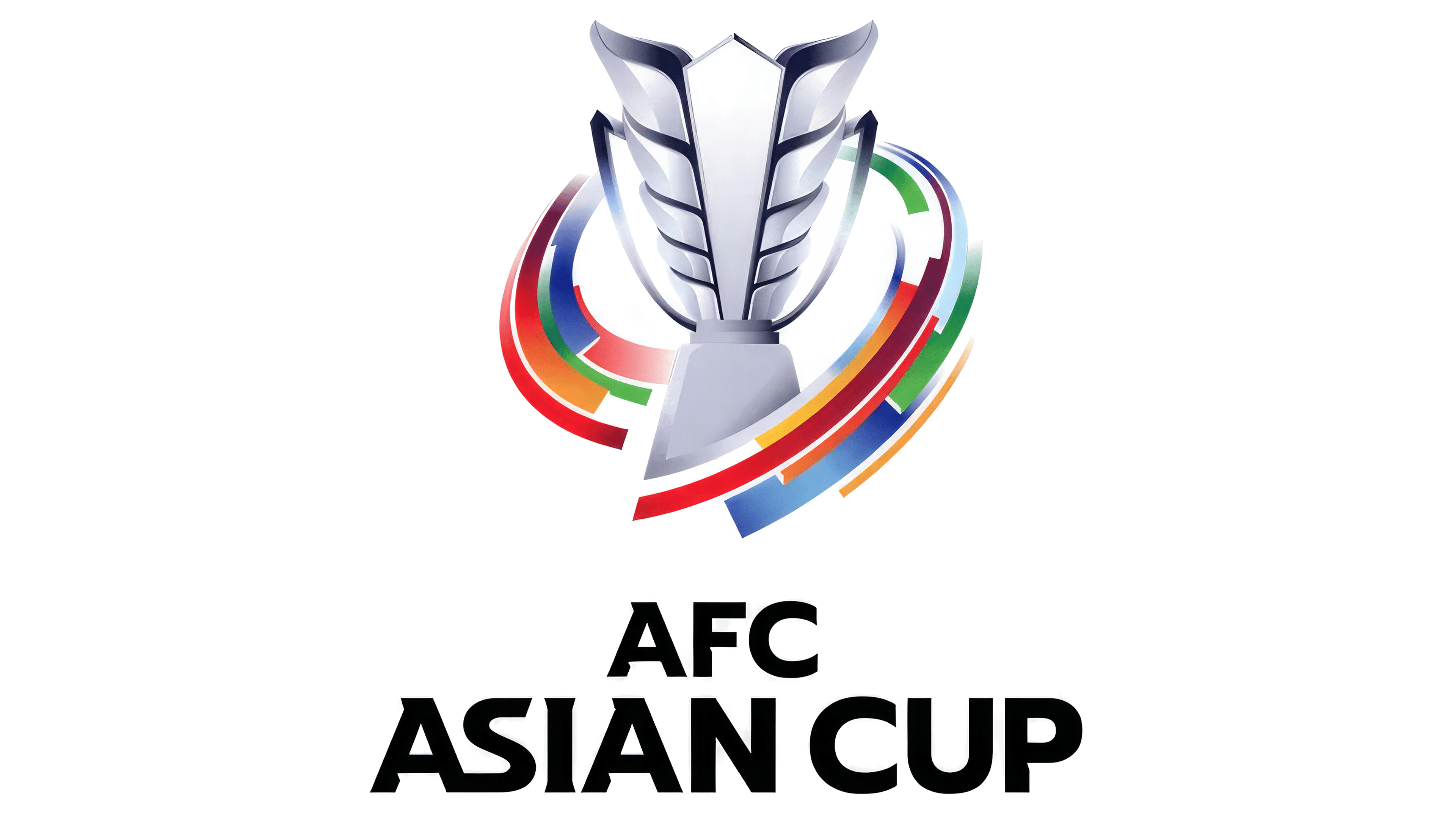
The AFC Asian Cup logo, introduced in 2021, is the official symbol of the tournament and is used on an ongoing basis. Its visual concept was unified for the first time across all Asian Cup tournaments, regardless of the host country. This approach is similar to the global emblem adopted by international football organizations such as FIFA and UEFA, while still retaining distinct local emblems for each specific tournament.
The upper part of the logo features a stylized graphic representation of the actual AFC Asian Cup trophy, first unveiled to the public in 2019. The cup is depicted with prominent symmetry, metallic gradients, and volumetric elements, creating a three-dimensional effect.
Surrounding the central image of the trophy are dynamic, colored ribbons that form a spiral-like motion, metaphorically conveying interaction and unity among Asian cultures.
Red symbolizes East Asia, blue represents Central Asia, green corresponds to West Asia, orange signifies South Asia, and yellow denotes Southeast Asia. The visual diversity highlights the competition’s continental significance and its extensive geographic reach.
The typographic composition of the logo utilizes a strict, bold geometric sans-serif typeface. The font choice emphasizes the event’s official nature and reinforces the brand’s perception as a serious international organization.
The logo was developed by Elmwood Studio, which took a non-standard approach, focusing on the trophy itself rather than traditional elements such as soccer balls. As a result, the AFC Asian Cup brand gained an identity conducive to global recognition and awareness.
In addition to the global symbol, AFC creates separate emblems for each tournament, reflecting the specifics of the host country, including its culture, traditions, and national symbols. An example of this approach is the emblem for the 2023 tournament in Qatar. The combined use of a unified logo and local tournament emblems strengthens the brand’s identity across all interactions with audiences and media.
This strategy helps maintain brand consistency and recognition globally while allowing local organizers to highlight national specifics. A similar approach is followed by UEFA and FIFA, each with permanent logos such as UEFA EURO or FIFA WORLD CUP, alongside individual tournament emblems like EURO 2024 in Germany or FIFA World Cup Qatar 2022.
2021 – 2022
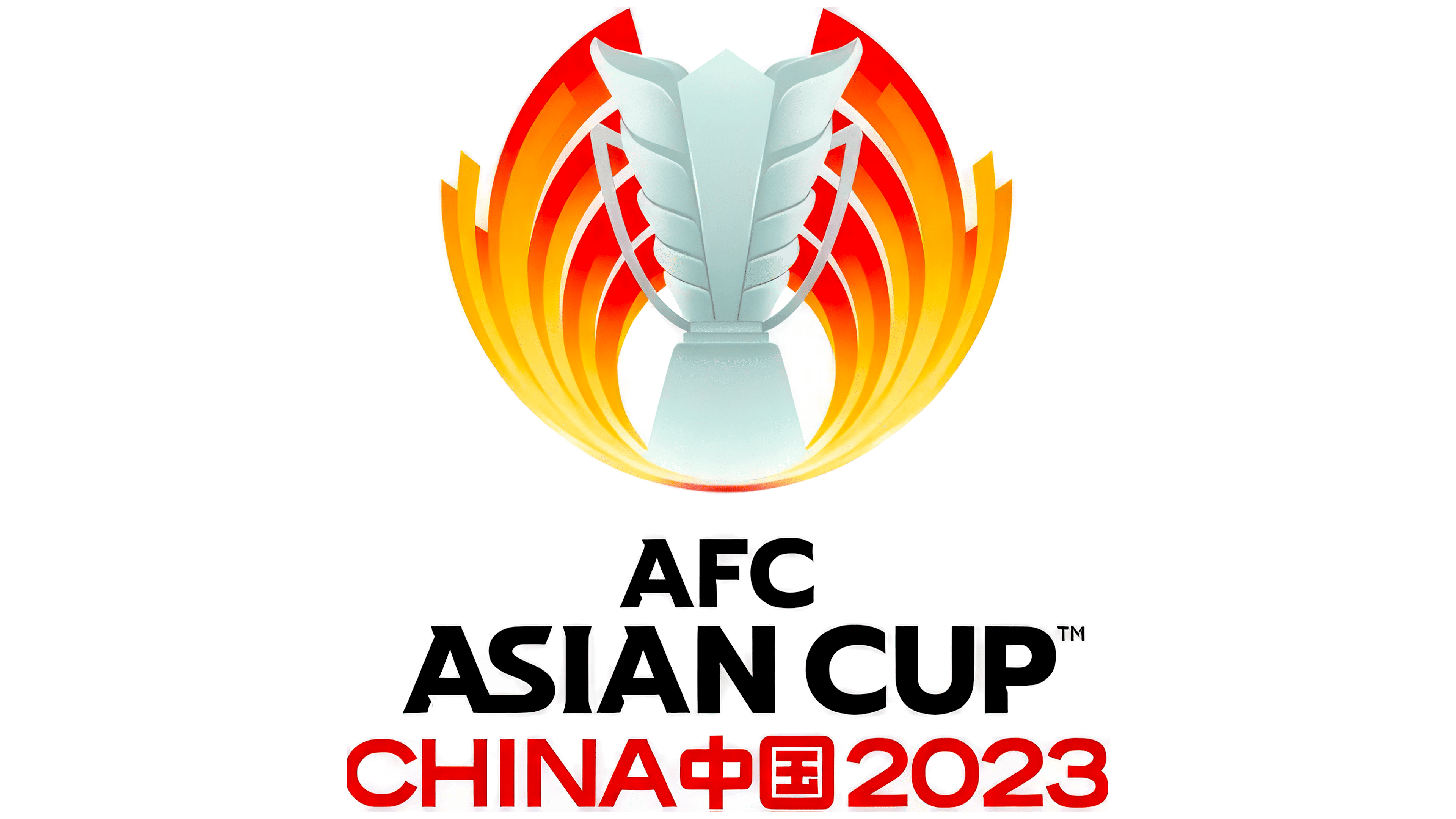
A fiery vortex surrounds the Asian Cup trophy in the 2023 logo designed by Shanghai-based agency Dragon Rouge. Designers expressed tournament speed and Chinese cultural spirit through flame-like lines.
Red and gold are traditional Chinese colors, with gold symbolizing prosperity and red signifying good luck. The silver trophy anchors the composition, reflecting the importance of victory.
“AFC Asian Cup” is in black sans-serif lettering. “CHINA 中国 2023,” in red below, indicates the host country.
Dragon Rouge combined modern aesthetics with Chinese heritage symbolism.
2023 – 2024
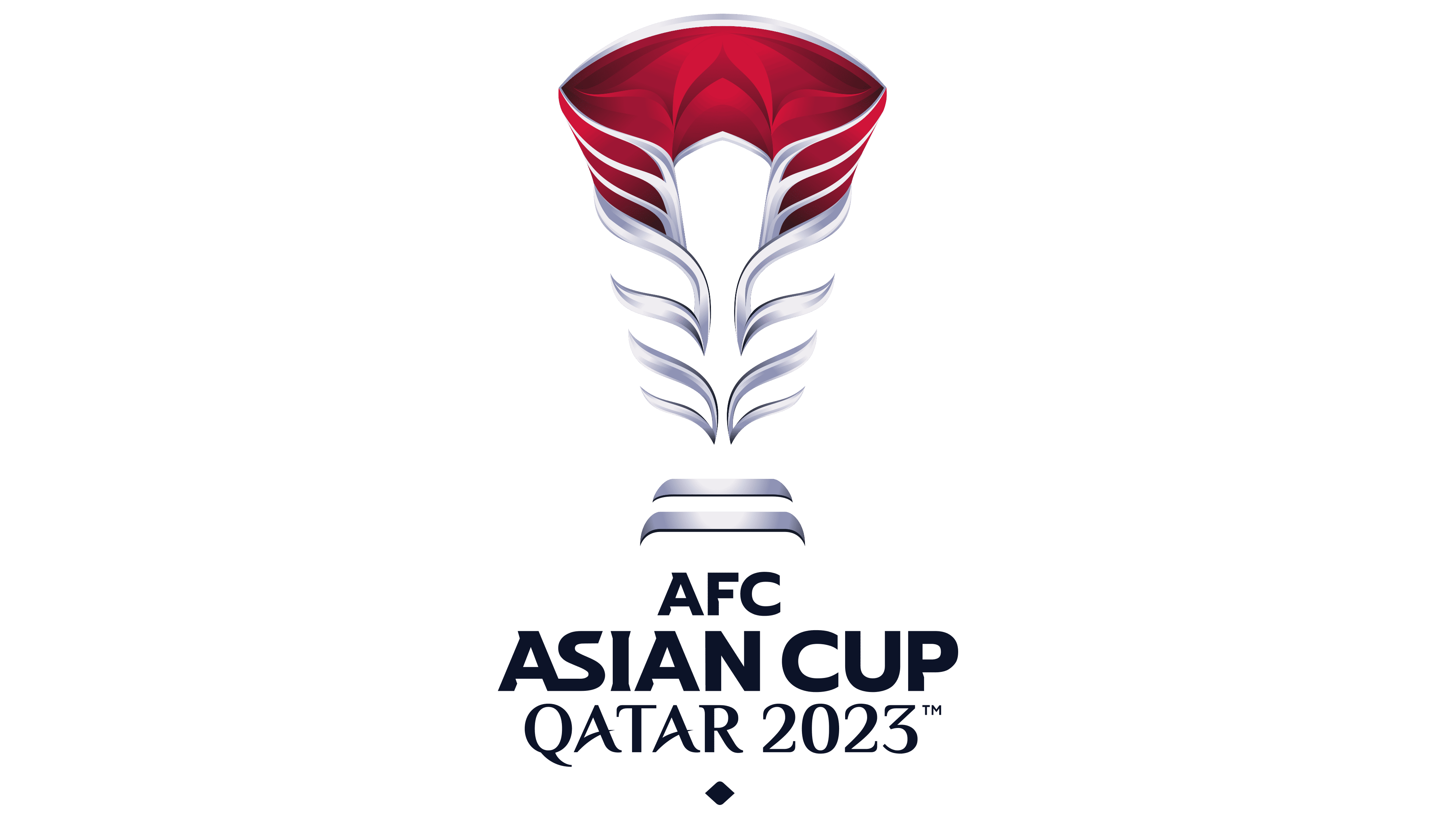
An elegant, bowl-shaped logo resembling an open desert hibiscus flower became the focal point of the 2023 Qatar Asian Cup. FutureBrand incorporated regional natural motifs to connect heritage and modernity.
Maroon matches Qatar’s national flag, enhancing local color. Silver accents add prestige and significance.
Harmonious, curved lines highlight the dynamism of soccer and the softness of Eastern art. At the bottom, a neat inscription reads “AFC Asian Cup Qatar 2023” in a sans-serif typeface similar to Effra.
The design reflects tournament restraint and host-country elegance, delicately blending sports and local culture.
2023 – 2025
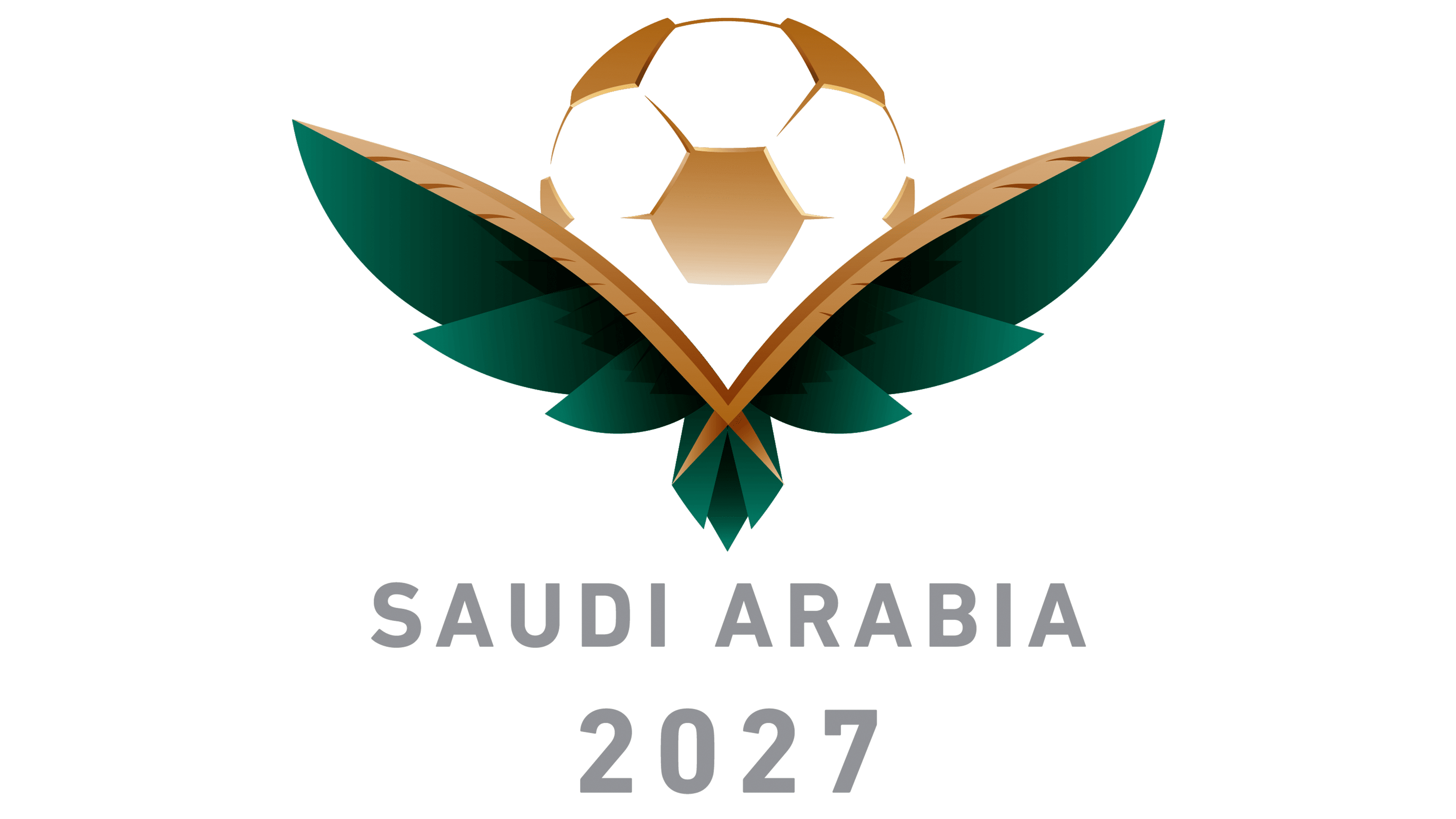
The logo for the AFC Asian Cup 2027 in Saudi Arabia was introduced in 2023 as the first official element of the tournament’s future visual identity. Unlike the universal AFC Asian Cup branding, this emblem was designed specifically for the 2027 championship to reflect the host country’s cultural and national characteristics.
The composition is built around a stylized depiction of a golden football positioned above two symmetrical green elements that spread outward. The lower part of the composition resembles the extended wings of a falcon, referencing a significant national symbol of the kingdom associated with statehood, strength, and authority. The overall V-shaped structure symbolically portrays a bird in flight poised to strike or the tip of a spear, emphasizing dynamics and aspiration for victory.
The logo’s color palette features only two primary colors, green and gold, both closely linked to Saudi Arabia’s national symbols and history. Green is traditionally associated with Islam and the country’s national identity, while gold was chosen to reflect the region’s wealth, natural resources, and desert landscape. This combination highlights the tournament’s status and ceremonial importance.
The football depicted in the logo lacks additional details or texture, instead being simplified to a geometric abstraction, making it universally recognizable. This minimalist approach underscores the design’s premium, concise nature, harmoniously integrating it into the overall concept of restrained expressiveness.
The text element of the logo, “SAUDI ARABIA 2027,” is set in uppercase letters using a modern geometric sans-serif font. Closely resembling Gotham Bold, this typeface features expressive boldness and balanced glyph proportions, ensuring high readability and adaptability across various media formats, from merchandise to digital graphics.
The emblem was created by a design team at Landor & Fitch as the first step in implementing a comprehensive visual identity program for the tournament, including stadium branding, uniforms, digital interfaces, and related materials. The designers deliberately moved away from traditional football symbols, focusing instead on Saudi Arabia’s cultural uniqueness and strategic positioning as the host nation.
Font and Color
The 2027 Asian Championship inscription utilizes a calm, expressive sans-serif typeface reminiscent of Gotham Bold or Montserrat Bold, known for its balanced simplicity and straight lines.
The logo’s palette includes shades of green and gold, symbols of Saudi Arabia’s national identity that reflect its flag, desert culture, and religious and natural traditions. Gold symbolizes regional wealth, and the rich green “wings” represent Islam and the country’s natural heritage.
Font and color unite the tournament’s sporting atmosphere with Arab traditions, underscoring the event’s global significance in sports.