


 Uefa Logo PNG
The UEFA logo symbolizes major sports with its unstoppable dynamism and vibrant energy, filling hearts with enthusiasm and invigorating the body. At the same time, it is a strict emblem that underscores the importance of sports in human life.
UEFA was founded in Basel on June 15, 1954, by representatives of 31 European football associations. Danish official Ebbe Schwartz became its first president and shaped the structure. The organization launched the European Champion Clubs’ Cup in 1955, later renamed the Champions League, and staged the first European Nations’ Cup in France in 1960, won by the Soviet Union.
The Cup Winners’ Cup began in 1961, the Super Cup in 1971 and the UEFA Cup in 1972. After the 1985 Heysel disaster, stadium safety rules were tightened, and English clubs were temporarily banned from European competition. In 1992, the leading club tournament adopted a new format, and the 1995 Bosman ruling reshaped player transfers. Belgium and the Netherlands jointly hosted Euro 2000.
Michel Platini became president in 2007 and introduced financial fair play rules. The UEFA Cup became the Europa League in 2009, Euro 2016 expanded to 24 teams, and the Nations League began in 2018. A third club competition was announced in 2019 and started in 2021, giving clubs from lower-ranked associations another route into continental football.
Euro 2020 was postponed to 2021 and played across 11 cities. In the same year, UEFA opposed the proposed European Super League, prompting most clubs to withdraw. New financial rules followed in 2022, alongside record attendance at the Women’s Euro in England. In 2023, UEFA approved a larger club format for 2024–25 and expanded VAR, anti-racism measures and digital fan services.
Meaning and History
What is UEFA?
This is one of the most important sports organizations in the world: the Union of European Football Associations, which oversees football in Europe. The organization organizes competitions for its 55 member countries, including the European Championship, the Europa League, and the Champions League. The union plays a key role in professional football by implementing financial fair play rules and promoting the use of video assistant referees (VAR). The top clubs and national teams use the organization’s tournaments to showcase their skills and create stories of rivalry and success that attract millions of fans. In addition to top-level football, the organization actively supports women’s football, grassroots association development, and anti-discrimination campaigns in sports.
1954 – 1995
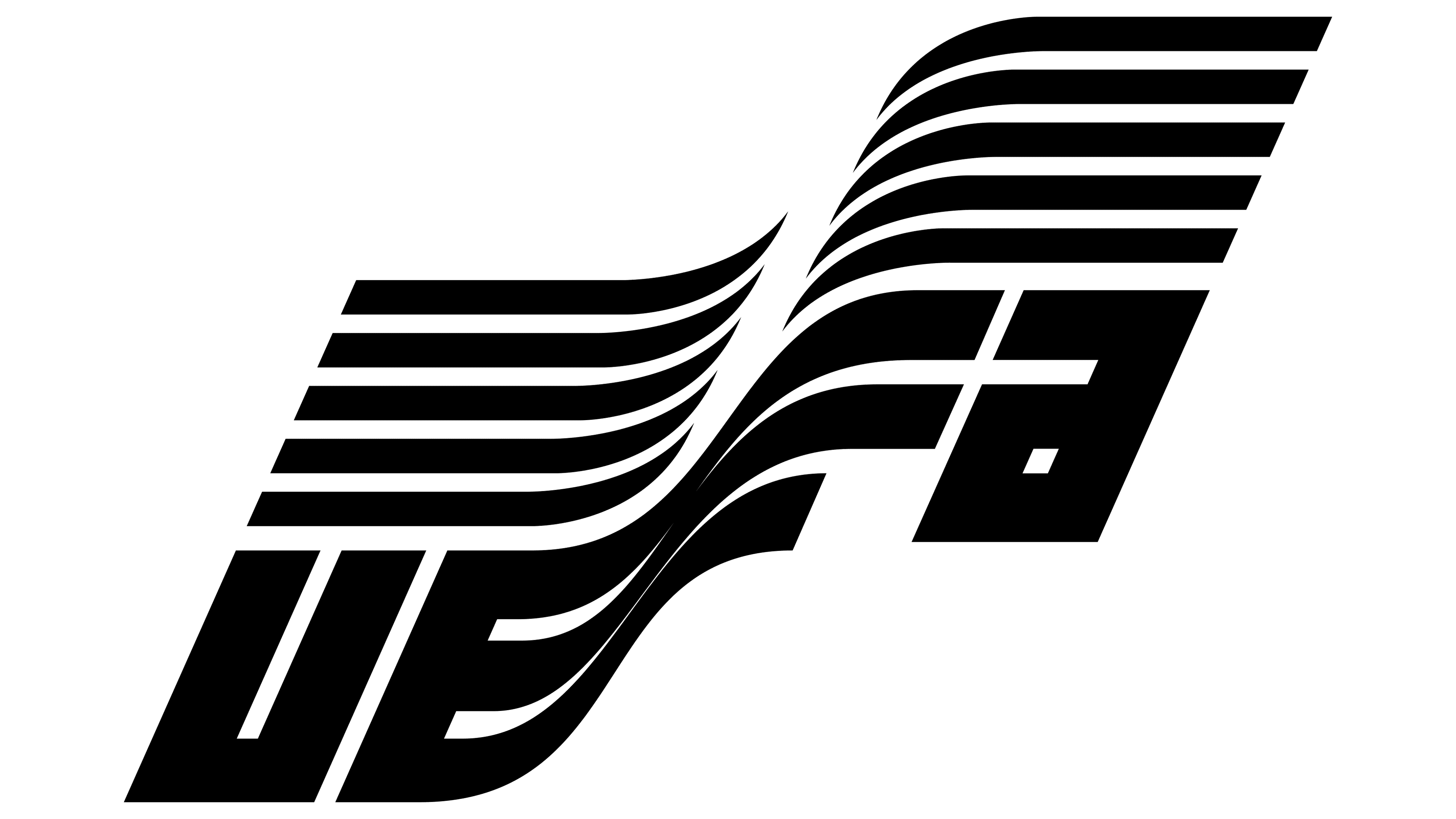
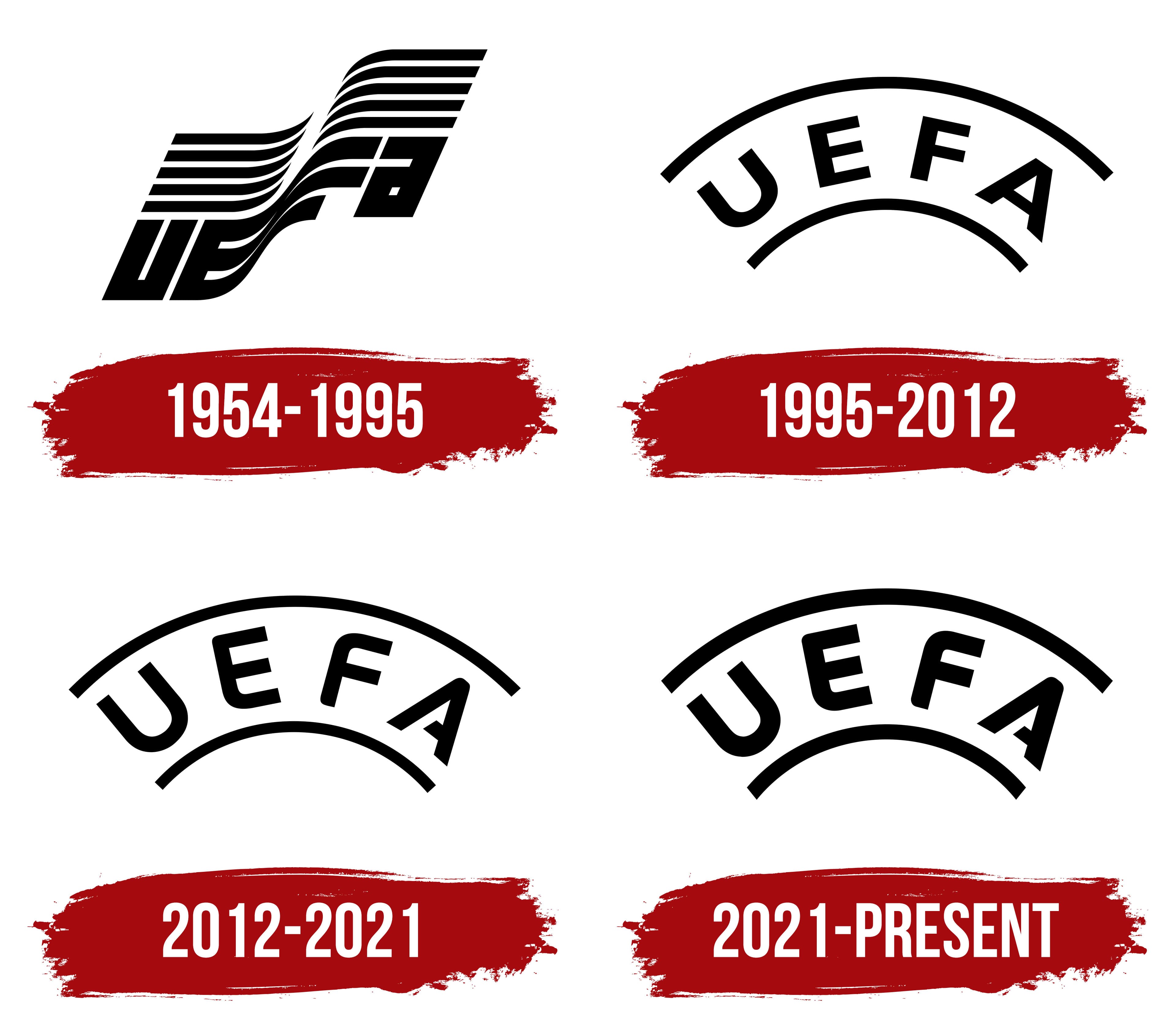
The UEFA logo of this period remarkably intertwines dynamics and grace. Sports, in essence, are a blend of limitless human potential, both physical and spiritual, requiring inner focus to shine outwardly with skills. This emblem embodies that energy, bursting like a wave, like a light flag fluttering in the free wind.
The visual identity of the world’s most renowned sports association closely resembles a flag, featuring two parallel, wavy lines. They effectively convey movement, a key principle for athletes. The symbol is horizontally divided into two zones:
- Alternating black and white stripes (on top);
- The stylized name of the organization (on the bottom).
There are five black lines. Due to their narrow, upward-curving ends, they resemble classic skis. This applies only to the strokes on the left because the stripes on the right have the narrow side pointed downward. This created a light wave effect as the flag rippled in the breeze. The wide black bands also resemble speed lines, a traditional sports logo element that conveys dynamics.
In the lower zone, the abbreviation is formed from the phrase “Union of European Football Associations.” The word “UEFA” is stretched extensively to ensure a smooth transition from the lower to the upper zone, concealing any height difference. Designers achieved this by emphasizing the similarity between “E” and “F.” These letters are so similar that they flow seamlessly into one another, preserving all horizontal stripes. This continuity creates the visual effect of a flag waving in the wind.
Interestingly, the glyphs in the inscription are mostly uppercase except for one. If you look closely, you’ll notice a lowercase “a” modestly positioned at the end of the word. It looks like a vertical rectangle. This choice was driven by the need for the text to fit perfectly within the flag’s format, and because the uppercase “A” has large internal openings, it didn’t align with the artistic concept. Therefore, the lowercase “a” was selected. This way, the unique, bold sans-serif text is easily transformed into a flag.
1995 – 2012
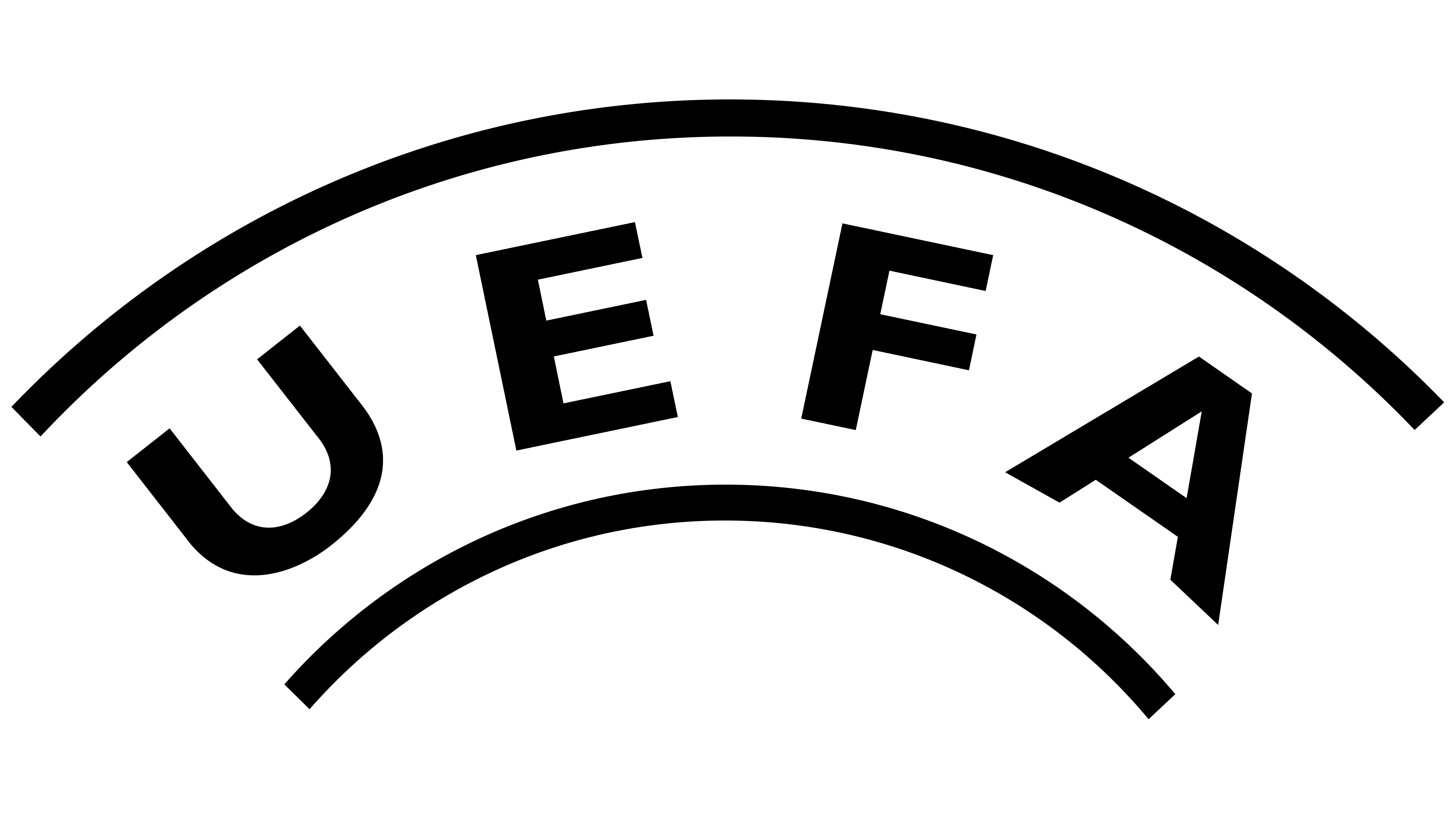
This was when the arc emerged, marking a new era in the history of the UEFA logo. Thanks to its rigid shape, it gained strength, durability, and stability, which are crucial for athletes on their path to victory. The visual identity’s determined character is expressed through two arched lines, with the international organization’s name positioned between them. The upper line is longer than the lower one, giving the emblem the appearance of a fragment of something round, a seal, a ball, or a globe.
Placing the text within a solid framework significantly shifted the logo’s concept: it began to convey the determination, focus, and steadfastness of those within the sports association. The logo is depicted in a flat 2D style. This approach best suits the organization’s inner nature, as this identity requires clarity, strictness, and specificity. Ambiguity is excluded.
Naturally, the new design choice also brought a different font, a more harmonious, rigid, and principled one. It is Arial from the neo-grotesque sans-serif class. In this case, it’s bold and wide, making the letters appear compressed at the top and bottom. However, this is only an impression: in reality, the letters are light and airy due to their large internal openings. The glyphs are also spaced far apart, which positively affects text readability.
The curved flat inscription gained ample space, stretching freely along the arches. This gave the UEFA emblem a modern, professional look, as the glyphs are positioned like football players in front of the goal during a penalty kick. This composition proved so successful that it remained almost unchanged.
2012 – 2021
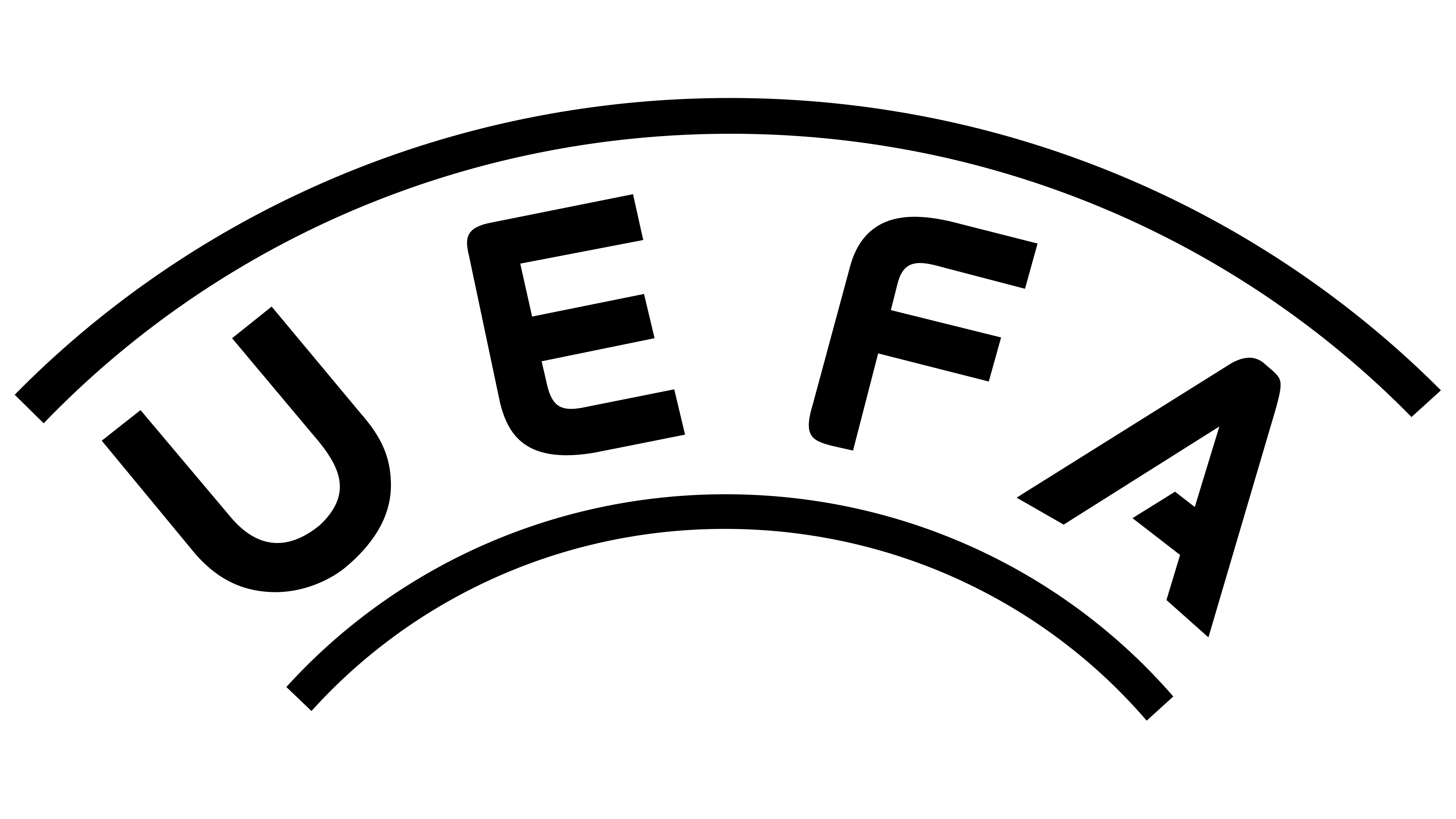
After the redesign, the UEFA logo became sharper and more stylish, though this is less noticeable in smaller formats. Changes indeed took place, and they are genuinely significant. This is evident when looking closely at the lettering. The updates have positively impacted the visual identity of the globally recognized organization, making the icon clearer to everyone. However, the composition and concept remained unchanged, as they were already a perfect match.
The most noticeable changes occurred in the font of the arched inscription: it was transformed, becoming unique. It now features:
- Smooth curves
- Rounded corners
- Tall glyphs
- Diagonal cuts
- An open contour
The last item in this list refers to the letter “A,” where the horizontal bar no longer reaches the opposite side. It is cut almost halfway and does not touch the adjacent stroke. The new font style is well received, with far fewer sharp angles; the lines are mostly smooth and soft. Exceptions are only in a few areas: the slanted cut and the inner peak of the “A,” as well as a couple of straight angles in the “E” and “F.”
The font changes, of course, affected the placement of the inscription. Previously, it was centered and far from the edges; now, the tall glyphs are almost aligned with the arches. The letters have become more refined and appear elegant, framed by two curved lines. Compared to the previous UEFA logo, the new version has a more modern look and stands out for its increased dynamism, thanks to the effective combination of straight and rounded angles. The asymmetrical elements in the “A” and “E” also enhance their energy.
The black-and-white palette reflects the football association’s seriousness, high standards for teams, sincerity, openness, honesty, and the pursuit of truth. The monochrome scheme grants the organization flexibility, as designers often color the emblem in different ways.
2021 – today
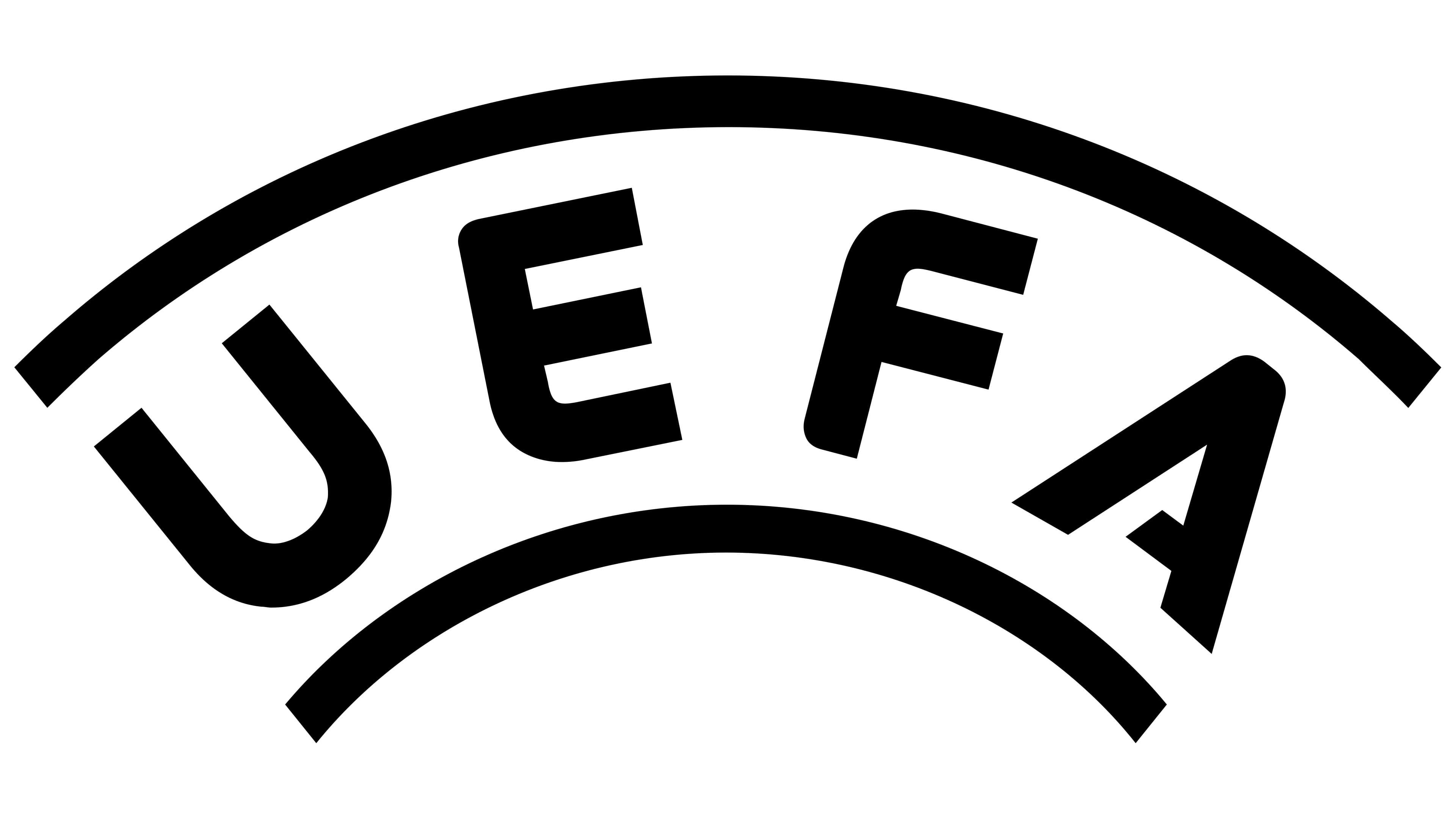
At first glance, it may seem that the UEFA logo from this period hasn’t been updated and is identical to the previous one. However, that is only at first sight, as the logo’s composition, color scheme, and structure truly remained untouched. Yet, there are differences. They may be subtle, but they exist.
The first noticeable change is the font’s weight. In this case, the letter strokes are much thicker than before; they can be described as extra-bold. This has improved the logo’s scalability, ensuring clarity at any size, whether enlarged or reduced. Thanks to this graphic technique, the inscription appears sharp on all screens, regardless of size.
With its thick glyphs, the bold text also conveys an atmosphere of determined ambition, strength, reliability, and even an unyielding spirit. It embodies a strong desire for victory, a demand for strict adherence to rules, and fair refereeing. The soft curves reflect a readiness to welcome new, talented participants and a drive to expand horizons, reminiscent of a round ball’s natural shape.
The UEFA logo symbolizes absolute dedication to football. Its shape resembles a ball or globe fragment, emphasizing the sport’s global reach. Football is understood worldwide, played globally, and brings together athletes and fans, making the emblem iconic and all-encompassing.