


 BabyFirstTV Logo PNG
The BabyFirstTV logo is bright, cheerful, and friendly. It’s designed to attract little ones’ attention and engage them in conversation. The emblem is filled with vibrant colors that immediately transport you into the world of childhood and uplift your mood.
BabyFirst was announced in 2004 in Los Angeles by entrepreneurs Guy Oranim and Sharon Rechter. They planned to create a 24-hour television channel for children ages 6 months to 3 years. The idea appeared during the rise of Baby Einstein, the toddler-focused DVD brand bought by Disney in 2001.
The channel launched on May 11, 2006, on DirecTV as a paid premium service priced at $9.99 per month. In June 2006, it also became available on Dish Network, which EchoStar then owned. At launch, BabyFirst offered about 250 hours of looped content, with around 80 percent made in-house. Most segments lasted three to five minutes and focused on colors, shapes, sounds, and basic concepts.
BabyFirst quickly became part of a wider debate about screen time for infants. The American Academy of Pediatrics has advised against television exposure for children under two. At the same time, the Campaign for a Commercial-Free Childhood has filed a complaint with the Federal Trade Commission over the channel’s advertising claims. The FTC reviewed the complaint but did not impose sanctions.
The channel expanded through Time Warner Cable in 2008, then through SingTel and HBO Asia across Asian markets. In 2011, it reached BSkyB, Sky Mexico, Cablevision, and CanalSat. BabyFirst Americas launched with Comcast in 2012 for Spanish- and English-language viewers, followed by a YouTube Premium channel in 2013. By 2014, BabyFirst reached 81 million homes in more than 33 countries and competed with Baby TV, owned by Fox International Channels. In 2019, the brand shifted to lowercase styling under First Media.
Meaning and History
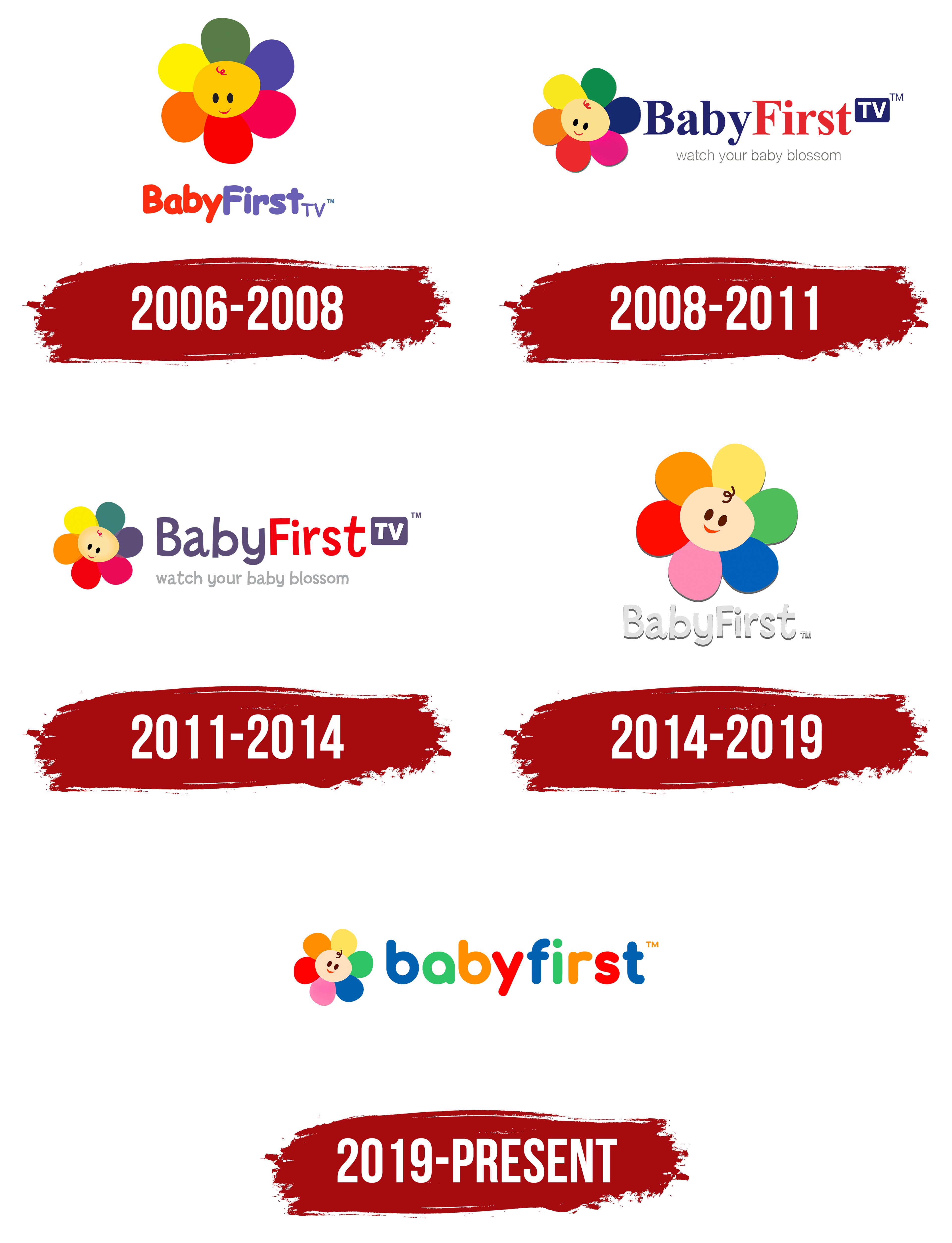
From the get-go, the company established its main symbol, which has remained consistent in all logos since its inception. The symbol is associated with plants, resonating with themes of life and growth. A bright flower represents diversity, early childhood, and the program’s primary goal: to blossom and reveal children’s talents and potential. Major logo changes mostly involve the style and color of the letters. Rebrandings are associated with expanding the broadcasting area. Each transformation of the inscription underscores BabyFirstTV’s niche specialization.
What is BabyFirstTV?
It’s an American developmental channel for toddlers up to three years old, featuring songs, cartoons, and games. Popular shows include VocabuLarry, Harry the Bunny, Tillie Knock Knock, and others. It operates an online platform with on-demand shows, educational games, and videos. Available in 33 countries.
2006 – 2008
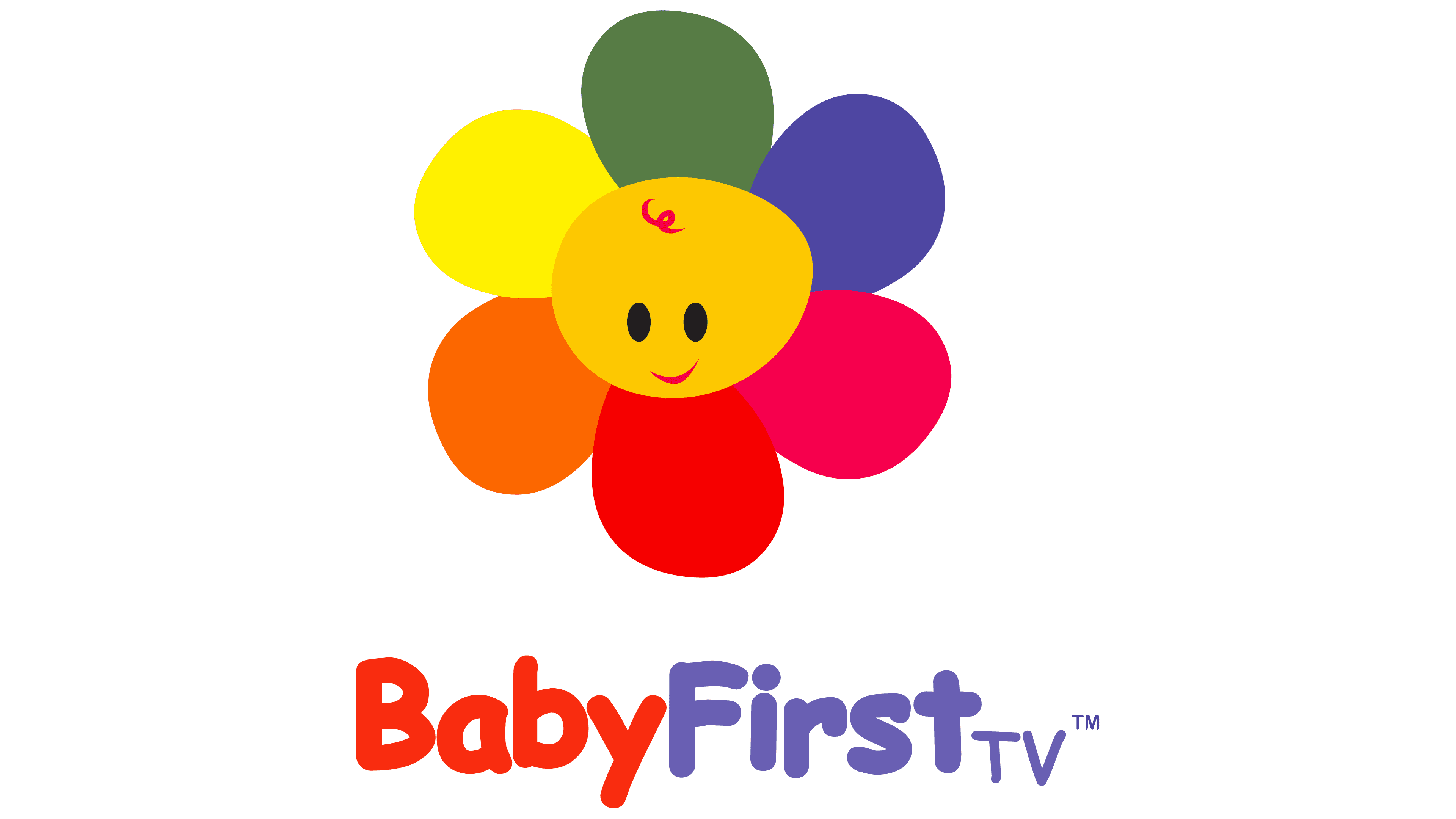
The channel’s first logo, launched in 2006 on DirecTV, consisted of a six-petaled flower with a centerpiece stylized as a baby’s head. The shades of the petals corresponded to the colors of the rainbow. This design represented:
- Educational direction of the programs. Simple lessons taught children colors and shapes, and expanded their vocabulary.
- A variety of programs: cartoons, songs, tasks, and games.
- Comprehensive development. The information covered nature, art, language, mathematics, physical education, etc.
At the center of the petals is an infant’s face. The idea of associating children with flowers has two origins. The first is tied to a phrase by Maxim Gorky, and the second to the German educator Friedrich Fröbel. He invented kindergarten and compared children to flowers growing in a garden.
The image at the center of the logo communicates that the child is the main focus. The development process is individual and should be tailored to the learner’s unique traits. This also emphasizes the need for comprehensive development. A child is like a blank slate and requires a diverse range of activities and knowledge.
Beneath the image, the channel’s name is written in a two-color cartoon style. The letters seem to dance and, like children, can’t sit still. The red color of the word ‘Baby’ represents love, energy, constant movement, and the child’s central role in the learning process. The purple word ‘First’ symbolizes development.
2008 – 2011

In 2008, the channel’s broadcast expanded to China, Korea, Africa, and Latin America. A rebranding marked this expansion.
The label and the flower were positioned on the same level. The head of the inflorescence was slightly tilted to convey curiosity and interest. This technique emphasized the theme of children’s development and interesting content. The tilted image also encouraged viewers to interact.
The title received a stricter, larger-font, serifed treatment. ‘Baby’ was painted in dark blue, evoking the process of growth and intellectual development. ‘First’ was rendered in red tones to indicate leadership, expansion into new niches, and rapid worldwide proliferation.
Below the name, the channel’s slogan appeared for the first time: ” Watch your baby blossom.
2011 – 2014
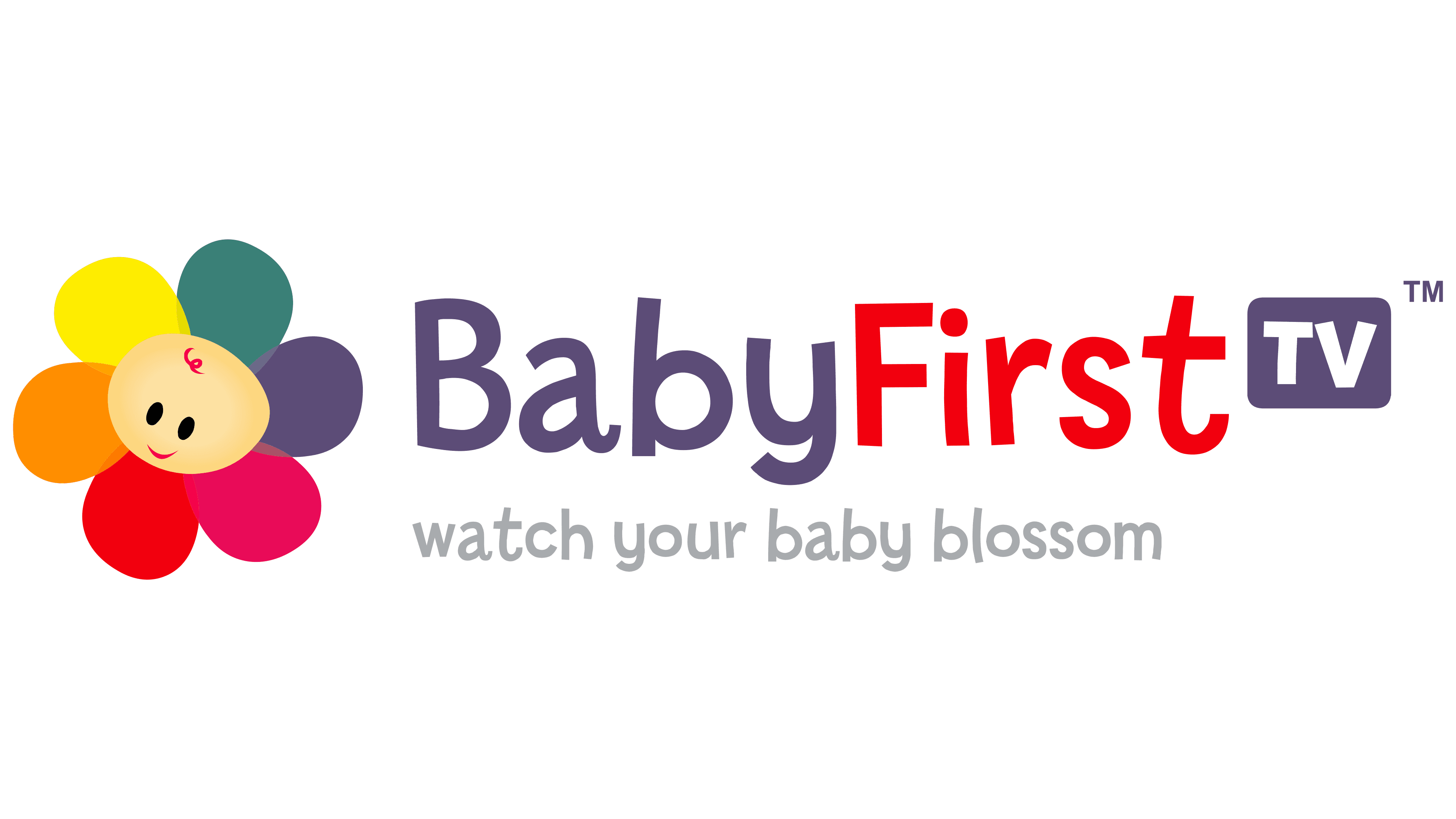
In 2011, the BabyFirstTV channel became available in all European countries. A change in the logo underlined the development and distribution. The main transformation concerned the inscription’s font and its shades. The name was set in a childlike cartoon font of thin, rounded sticks, with the letters tilted slightly in different directions. The shades were made more pastel, changing the dark blue to purple. The rebranding gave the logo playful intonations.
2014 – 2019
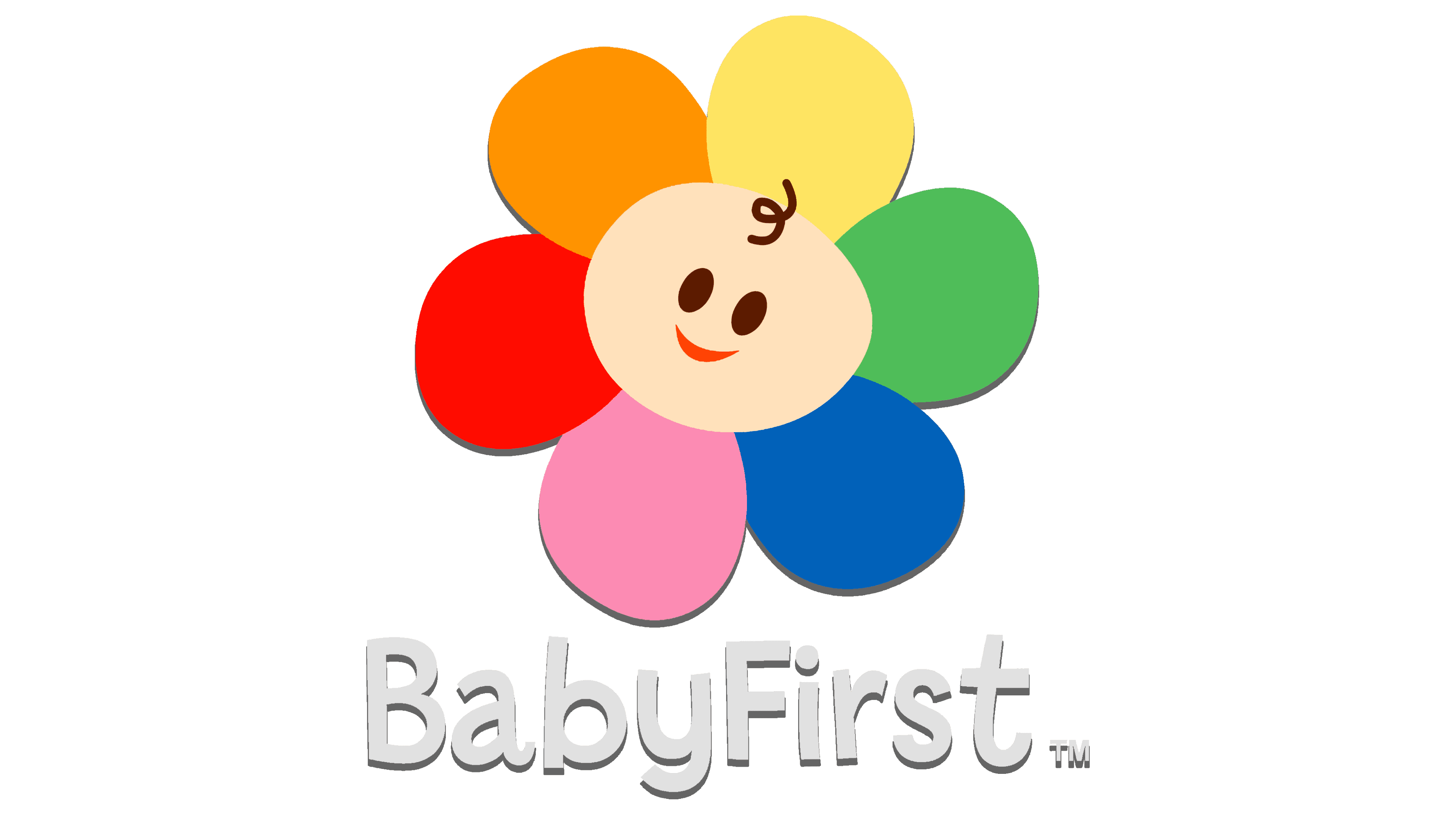
By 2014, the board of directors had changed, which contributed to the release of a mobile application, the debut on YouTube, and the rebranding.
The emblem’s overall look took on a more tender tone, a nod to the viewers’ youth. The flower’s color palette was revised. The purple petal was changed to light blue, and the lilac to pink. The other shades were also lightened. The white inscription with the channel name emphasized the theme of the beginning of life, infancy. Placing the name on two levels added to the sign’s compactness.
2019 – today
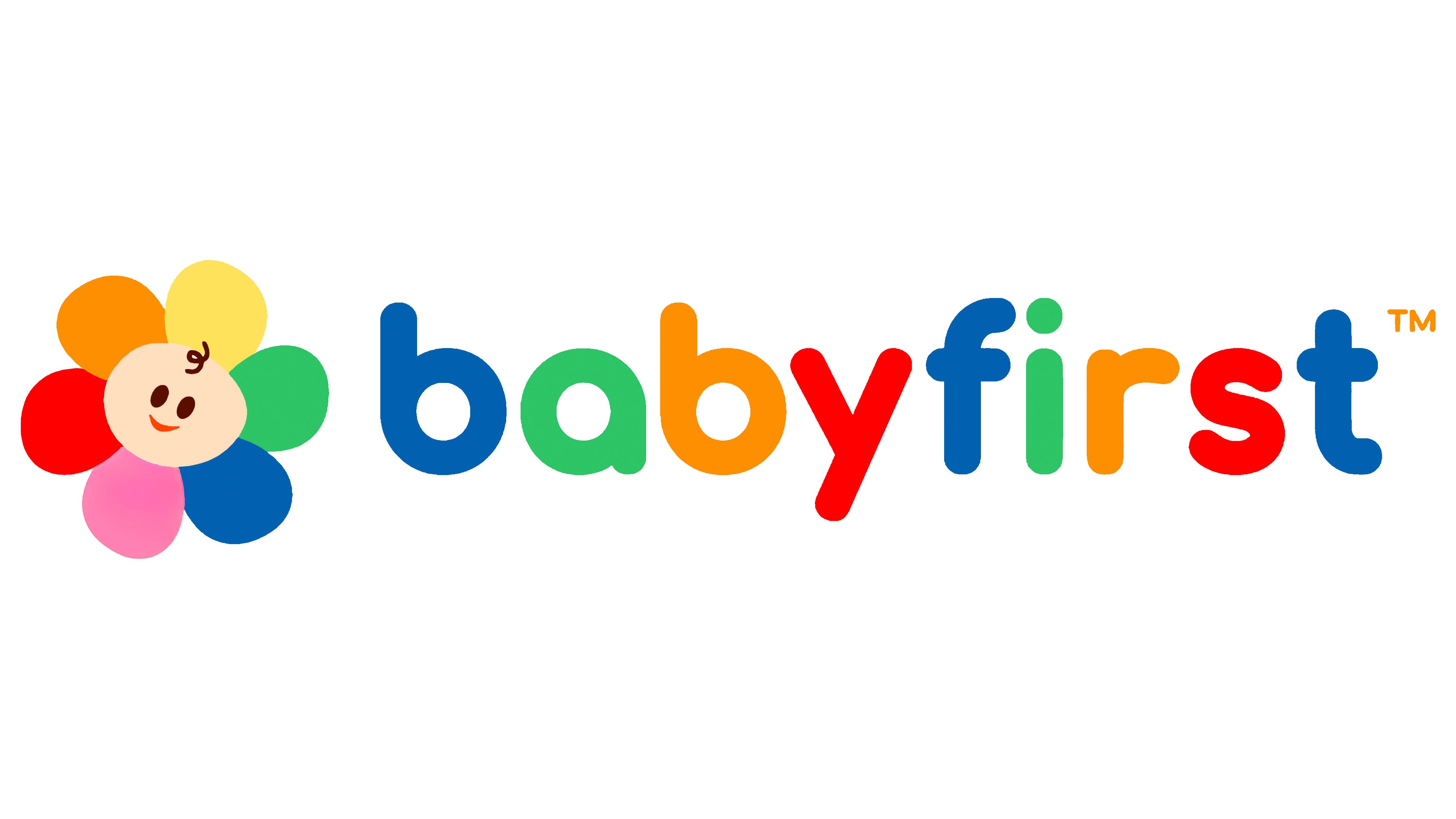
The latest rebranding simplified the logo even more. The shadow disappeared. The image began to resemble a two-dimensional children’s drawing. Lowercase letters in the title brought the inscription closer to the young audience. Each element received coloring in sync with the petals.
Font and Colors
The emblem is multicolored. For the elements, bright, vibrant colors are used, which resonate with the world of childhood, when everything around seems amazing. Each shade reflects one aspect of development and is dedicated to broadcasts on BabyFirstTV.
- Orange embodies communication, warmth, and family.
- Yellow is a sunny color, indicating a good mood, joy, and laughter.
- Red speaks of individuality, mother’s love, and development.
- Green is the color of life, growth, and maturing.
- Blue is the shade of intellect, logic, and speech.
- Pink is the color of tenderness, self-understanding, and self-identification.
The inscription is made in rounded letters. The font is similar to Torus Bold. The absence of corners speaks to the simplicity and accessibility of the content.