


 Barnes & Noble Logo PNG
The Barnes and Noble logo is simple in design and easy to remember. The emblem evokes associations with a visit to an old 19th-century bookstore, where the enchanting world of paper books unites different generations.
Barnes & Noble grew out of two separate book-selling lines. In 1873, Charles M. Barnes began selling books from his home in Wheaton, Illinois. In 1886, Gilbert Clifford Noble joined Arthur Hinds & Company in New York after graduating from Harvard. By 1894, he became a partner, and the store was renamed Hinds & Noble.
In 1917, Noble bought out Hinds and partnered with William Barnes, son of Charles Barnes. The store became Barnes & Noble. During the Great Depression, its flagship location opened on Fifth Avenue near 18th Street and built a reputation as a major academic bookstore. In 1964, after John Barnes died, the company was sold to Amtel, while its publishing division went to Harper & Row.
Leonard Riggio shaped the modern Barnes & Noble. In 1971, he bought the name and the remaining Fifth Avenue store for $1.2 million after earlier running Student Book Exchange near NYU. In 1974, Barnes & Noble became the first US bookstore chain to advertise on television. In 1975, it began discounting New York Times bestsellers by 40%. Riggio then bought rivals, including B. Dalton Bookseller in 1987, as well as Doubleday Book Shops, Scribner’s, and BookStop.
In the 1990s, Barnes & Noble developed the superstore format with large spaces, cafes, reading areas, and author events. In 1997, Barnesandnoble.com launched against Amazon. In 2009, the Nook e-reader challenged the Amazon Kindle, but the Kindle and the Apple iPad weakened its position. Elliott Investment Management bought Barnes & Noble in 2019 for $683 million and appointed James Daunt, known for Waterstones. Leonard Riggio died on August 27, 2024, at 83.
Meaning and History
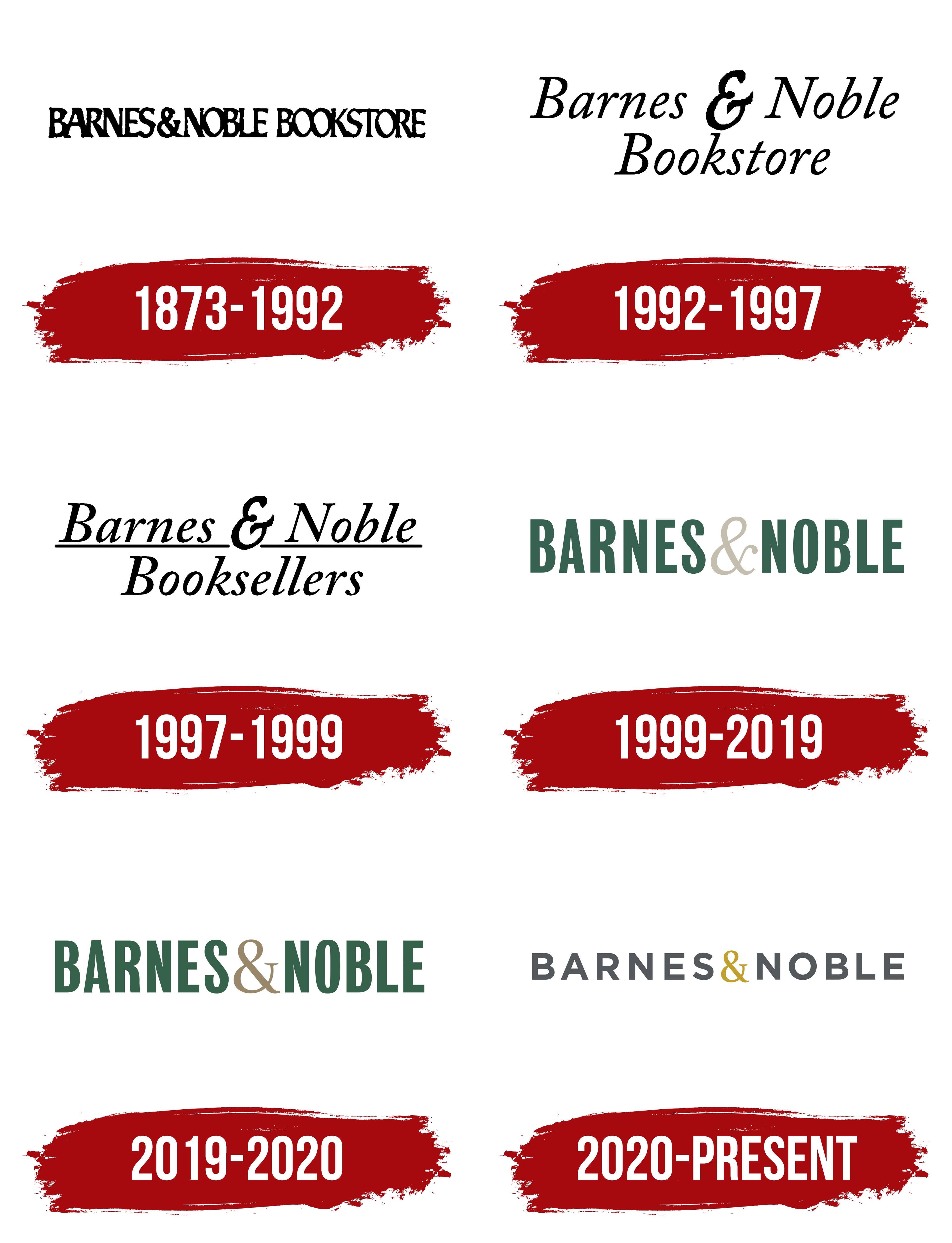
Over the company’s more than 100 years, its emblem has remained unchanged, with only minor changes to fonts and color schemes. The emblem reflects the company’s commitment to books as its core product. The logo is moderately conservative, referencing the company’s past. Just as a small emblem preserves a store’s history, books convey stories and tales of the past.
Barnes and Noble is actively developing its online platforms and audiobooks to keep up with current needs and trends in the book industry. This allows the company to stay connected to tradition while adapting to the changing world of reading.
What is Barnes and Noble?
Barnes & Noble is the largest bookstore chain in the United States, with the most locations in every state and $38 million in revenue. The Riggio family played a key role in the company’s formation and growth, running it from 1971 to 2010. In addition to printed books, the stores offer e-books, audiobooks, stationery, and toys. The company is headquartered in New York City.
Barnes and Noble is active in the community, organizing events such as author meet-and-greets, literary clubs, and children’s programs, and supporting and promoting reading as a valued pastime and cultural heritage.
1873 – 1992

Not surprisingly, the bookstore chose a word emblem logo for its identity. The emblem contains the company name and the explanation ‘bookstore.’ As a result, the emblem turned out quite long, and the letters had to be placed close together.
The name Barnes & Noble is derived from the founders’ surnames, although they were not the business’s founders. Arthur Hinds originally opened the store. In 1886, Hinds was joined by Gilbert Noble, who later bought the store in 1917. It was then that William Barnes stepped in, occupying the first place in the logo. The beginning of their cooperation was marked by the renaming of the store to Barnes & Noble, a name that has endured to this day and appears on all logos.
It is interesting to note that the year of foundation indicated by the company, 1873, is not quite accurate. In that year, a book printing firm owned by Barnes’ father was founded, which was not directly related to Barnes & Noble. The original placement of the Barnes surname on the emblem is due to Noble eventually selling his share to his son, William, and the store becoming fully owned by the Barnes family.
At the time of the Barnes & Noble merger, despite the store’s nearly 30-year history, retailing was not yet widely known and popular, so the emblem needed to indicate what was being sold. Therefore, the word “bookstore” appeared in the emblem. The black letters in the name associated the company with printed books.
The black color of the emblem also emphasizes the company’s seriousness and stability, proclaiming its reliability and dedication to literature for decades. It reflects respect for books and their authors, as well as for readers and their preferences.
1992 – 1997
1997 – 1999

1999 – 2019
2019 – 2020
2020 – today

The 2020 update is due to the retailer’s revitalization, which came just as the retailer was on the verge of bankruptcy a few years ago. However, there have been no significant changes to the logo; it is still a word logo.
Noble sold his stake in 1930, and the Barnes family ended ownership of the company in 1964, but the founders’ names remained in the emblem. The explanation “bookstore” was removed because the company name had become common and well-known throughout America.
The new emblem is strict, with even capital letters without serifs in gray. Each of them resembles a separate book on a shelf. There is ample space between the elements, symbolizing the diversity of book categories.
The logo shows elegance and order, indicating a well-organized online store. The golden “&” symbol has several meanings:
Reflects the birth of a popular retail chain through the union of two partners. Noble originally sold only academic literature, but later partnered with Barnes & Noble to open a store offering a variety of products.
- Symbolizes renewal and transformation. Due to the COVID-19 pandemic, 2/3 of the company’s stores were closed and later renovated.
- Embolizes a “gold mine”. Between 2020 and 2022, sales of picture books grew 500%.
- Signifies the development of a new version of the Nook 10″ HD e-book, released in 2021.
The gold symbol also emphasizes the enduring value of printed books, preserved through the ages. It emphasizes the company’s respect for literature and its commitment to keeping the tradition of reading alive in today’s world, overcoming the challenges of the times.
Font and Colors
The logo’s color palette includes gray and gold, symbolizing the company’s best-selling books and rich history.
- Gray represents constancy, persistence, and hard work. In the logo, it is associated with book bindings and covers, loyalty to tradition, and the continuous process of reading.
- Gold – emphasizes value, significance, and rarity. Compares books to precious metals, emphasizing that knowledge extracted from books is as valuable as gold.
The Organetto Bold font is used in the logo. Its smooth lettering reflects the dedication to the simple pleasure of reading.