


 Black Panther Logo PNG
The film’s iconic symbols convey the plot’s poignancy and the danger of the stunts. The Black Panther logo promises exciting adventures and battles against villains that only the main character, with superpowers, can defeat.
Marvel Comics writer-editor Stan Lee and artist Jack Kirby created Black Panther, first appearing in Fantastic Four #52 in July 1966. Both later disputed the exact origin of the idea. Lee said he wanted a Black superhero free of racial stereotypes, while Kirby’s early concept was called Coal Tiger. The name Black Panther appeared before the political party was founded in Oakland in October 1966. However, Marvel briefly used Black Leopard to avoid associations.
In his debut, T’Challa ruled Wakanda, a hidden African nation built around advanced technology and vibranium. His power came from combat training and a sacred heart-shaped herb. In 1968, Black Panther joined the Avengers. In the 1970s, Don McGregor’s Jungle Action gave the character a darker political edge, including a story that took on the Ku Klux Klan. Jack Kirby launched a solo Black Panther series in 1977, but it was short-lived. For years, T’Challa remained a secondary Marvel figure. At the same time, DC Comics held a wider reach with heroes such as Superman and Green Lantern.
In 1998, Christopher Priest revived the character through Marvel Knights, making T’Challa a political strategist and introducing the Dora Milaje. Reginald Hudlin’s 2005-2008 run married T’Challa to Storm from X-Men. In 2016, Ta-Nehisi Coates explored internal conflicts inside Wakanda.
Chadwick Boseman brought T’Challa to the screen in “Captain America: Civil War” (2016) and “Black Panther” (2018). Ryan Coogler’s film earned over $1.3 billion and became the first superhero film nominated for Best Picture at the Oscars. After Boseman’s death on August 28, 2020, Shuri, played by Letitia Wright, took the mantle in Wakanda Forever (2022).
Meaning and History
The film crew focused on the plot components and visual identity, intending to present Black Panther in a favorable light and set it apart from other superhero films. The movie logo combines two striking elements. The first is the studio symbol, which owns the rights to the film and all the characters, including the main character.

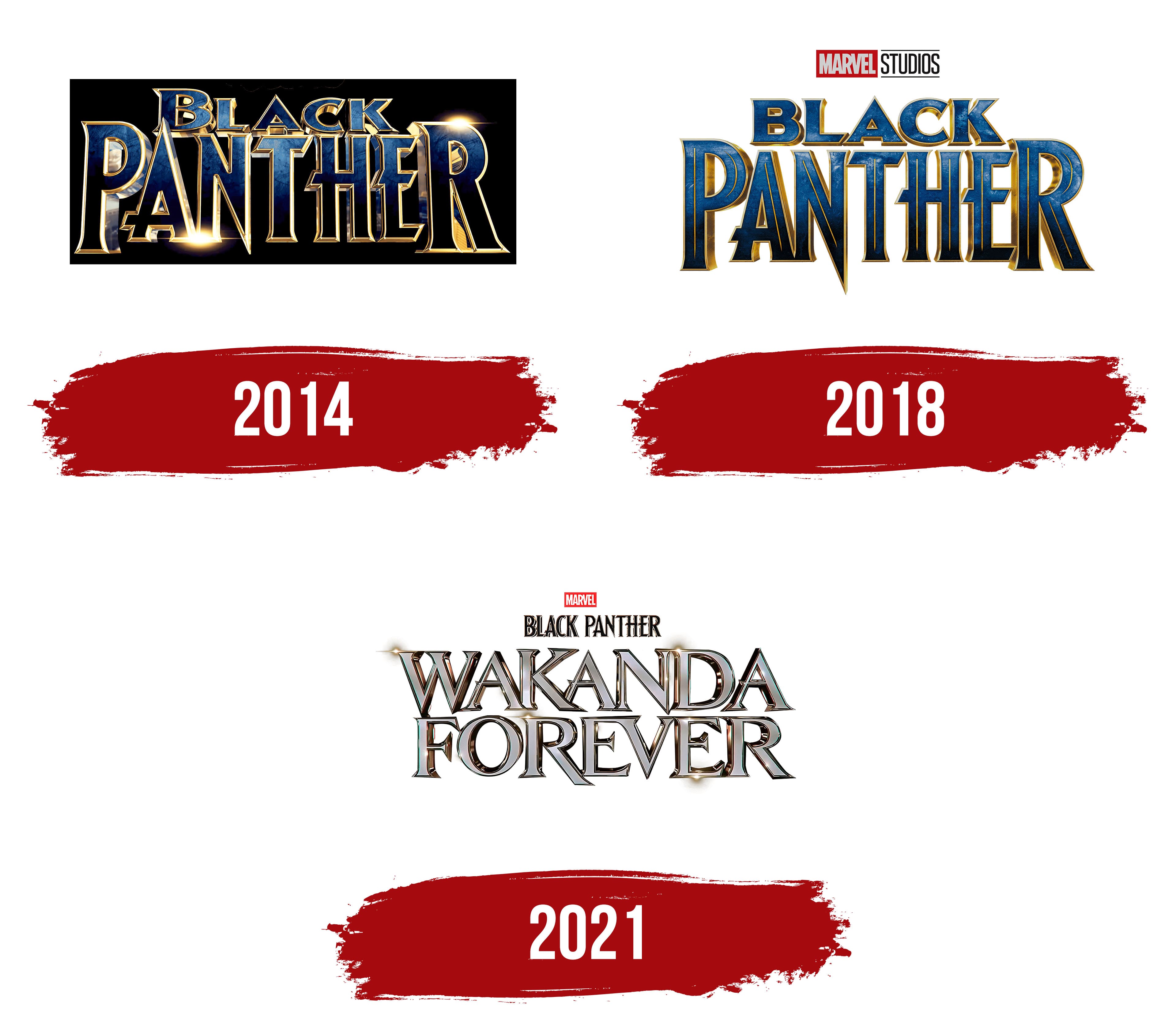
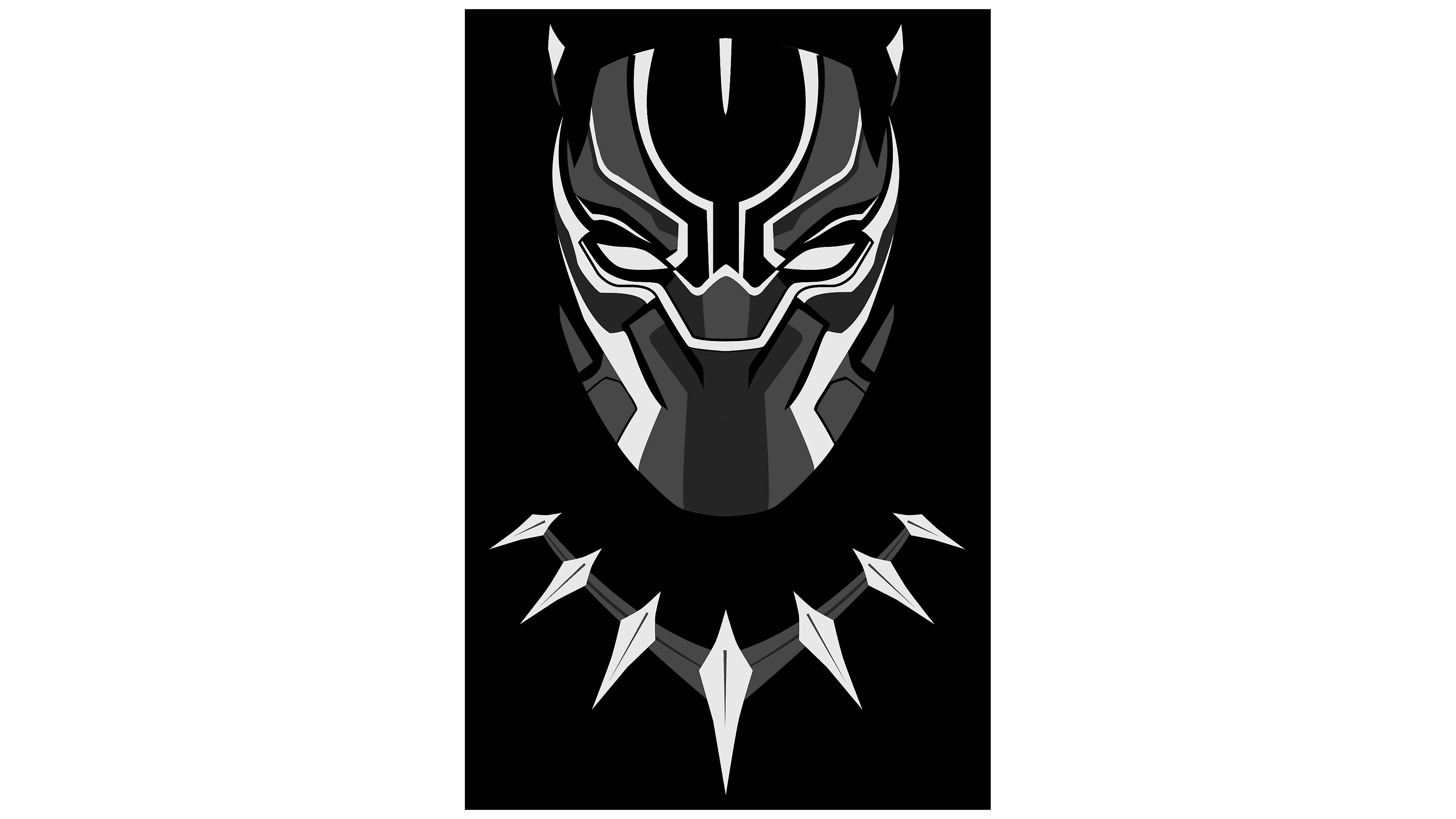
The symbol of the superhero Black Panther and the film is an image of a mask with cat ears, a W-shaped nose, and large slits for the eyes. This icon resembles the main character’s mask but differs in several ways. First, it is a simplified version, with elements presented schematically. For example, the mouth has two short vertical lines that look like a pause in the media. The eyes are exaggeratedly enlarged and have an uneven, elongated shape. The nose only vaguely resembles a cat’s; it looks more like a stylized letter “W.”
Wide white stripes cross the black mask at different angles, reflecting the facial expressions. They are located strictly symmetrically: what is on the right is always on the left. Two horizontal lines run across the forehead. This is not an attempt to imitate a panther’s color, but rather the joints of the plates on the superhero’s mask. The intricate curves above the eye sockets resemble menacingly drawn eyebrows. Two stripes on the cheeks denote sunken cheekbones and ritual drawings on the warrior’s face.
What is Black Panther?
Black Panther is a superhero from Marvel Comics. Based on his adventures, a film of the same name was made (2018), and an animated series was created (2010). Screenwriter Stan Lee and artist Jack Kirby created this character. He was conceived as the patron saint of a fictional East African country.
2014 (pre-release)
A blue gold-edged inscription with dazzling highlights shines brightly on a completely black background. The sides of the letters are mirrored and have a chrome finish, as if they were made of their mega-strong metal. This adds three-dimensionality to them. Massive spikes at the ends of some letters and pointed serifs complement the aura of impregnability and great power. Together, they create the right atmosphere for action movies and superhero movies. This Black Panther emblem design also suggests a predatory association with the feline world, where merciless claws and sharpened fangs are paramount. The font is in all caps, with uneven glyph heights and diagonal cuts.
2018

This emblem looks traditional: on the left is the white word “MARVEL” inside a red rectangle, and on the right is the black “STUDIOS,” underlined above and below with thin lines. The brand name is scaled down and moved to the top, so all attention focuses on the film’s title.
Most of the space is reserved for the blue “BLACK PANTHER” lettering. The designers put the word “BLACK” on the first line and made it compact. “PANTHER” is located in the lower half of the logo and is larger than the other elements. The phrase is colored dark blue and has a gradient. Another decoration technique is light highlights, which create depth and resemble reflections on the water.
The film’s title looks monolithic and impressive because the letters are set against a wide golden border. Unlike the top lettering, “MARVEL STUDIOS,” this contour makes the letters appear three-dimensional. The non-standard “fairytale” logo design matches the fantasy genre. Acute-angled letters with protruding spikes and serifs personify another motion-picture direction: the action movie.
2021 (pre-release)

In this version of the logo, the emphasis is on a separate film rather than the franchise’s name. Therefore, the line with the words “Black Panther” is small and inconspicuous, but the inscription “Wakanda Forever,” is large and catchy. The letters are voluminous, metallic, and shiny. The side parts on each glyph add three-dimensionality. They are mirror-like, so they also shine. At the very top is the action movie’s producer and distributor. The company name is traditionally painted white and placed in a red rectangle. All three rows of text are center-aligned.
Font and Colors
The top of the Black Panther logo looks like a classic Marvel Studios wordmark. It uses two fonts: Benton Sans Compressed Black by Cyrus Highsmith and Kenyan Coffee Regular by Ray Larabie. The film’s title is in a custom typeface with short serifs, wide stripes, and asymmetry. Based on this design, user Gene Buban created the Panthera font family.
Like the typography, the logo colors vary. The developers combined several shades of blue into a gradient, added white reflections, and outlined the letters with golden lines, using a tone transition. This helped revive the words “BLACK PANTHER” and emphasize the action movie’s fantastic direction. The top of the logo is completely different. It combines three colors: red, white, and black. The mask emblem is completely black, with a single white element.
FAQ
Does Black Panther have a logo?
Yes, both the movie and the superhero have unique logos. The film’s logo is a stylized version of its title, used in promotional materials and merchandise. The superhero logo is a black-and-white mask with small cat ears that convey the character’s essence. This simple design is well-known to fans and appears in various comics, merchandise, and other media. This helps maintain a consistent image across different platforms.
What does the movie Black Panther symbolize?
The film explores what it means to be Black in America, Africa, and around the world. It explores race and the real challenges facing Black communities today.
Wakanda, a technologically advanced African country, challenges common negative perceptions of Africa. Wakanda represents the potential of African countries if they had not faced historical failures and colonialism. The main character, T’Challa, grapples with whether to keep his country’s progress a secret or share it with the world. This reflects a broader debate about whether countries should look inward or engage more broadly with the world. The film explores the differences and connections between Africans and African Americans, highlighting their shared roots and distinct experiences.