


 Canadian Pacific Air Lines Logo PNG
The Canadian Pacific Air Lines logo is a classic, embodying a rich history and a commitment to reliable service. It conveys the airline’s extensive experience and expertise, symbolizing its reliability. This logo suggests a focus on efficiency and effectiveness, reflecting humility and confidence. It portrays the airline as seasoned and dependable, dedicated to fulfilling its role effectively.
Canadian Pacific Air Lines began in 1942, when Canadian Pacific Railway entered aviation by combining ten small regional carriers into a single company. Among them was Canadian Airways, one of the country’s larger regional operators at the time. The airline inherited work in remote northern settlements, mining camps, and areas with weak or absent rail or road links.
From the start, the company worked in a market shaped by Trans-Canada Air Lines, later Air Canada. The state-backed airline held the strongest position on Canada’s main domestic routes. At the same time, Canadian Pacific Air Lines was pushed toward thinner regional services and international flying. This limited its access to the most profitable internal routes for many years.
Unable to rely fully on the domestic market, Canadian Pacific Air Lines built a wider international network. It launched transpacific services linking Canada to Tokyo, Hong Kong, and other Asian cities, and developed routes to South America and across the North Atlantic to Europe, including Amsterdam. In 1968, the airline adopted the shorter CP Air name while remaining part of the Canadian Pacific group.
Under the CP Air brand, the fleet changed from Douglas DC-4 and Bristol Britannia aircraft to Douglas DC-8 jets and Boeing 737s. In the 1970s, Lockheed L-1011 TriStar and McDonnell Douglas DC-10 wide-body aircraft were added for long-haul routes. CP Air also competed with Wardair, while early-1980s market liberalization opened up more domestic opportunities. In 1986, the airline returned to its former name, Canadian Pacific Air Lines. In 1987, it merged with Pacific Western Airlines to create Canadian Airlines International, the country’s second-largest carrier after Air Canada.
Meaning and History
What is Canadian Pacific Air Lines?
It was a major Canadian airline that operated from the mid-20th century. It was part of the Canadian Pacific Railway Company and served a wide network of domestic and international destinations. Known for its distinctive orange-and-red livery, it connected Canada with Asia, Europe, and the Americas. The company merged with several other airlines to form Canadian Airlines International, which Air Canada later acquired.
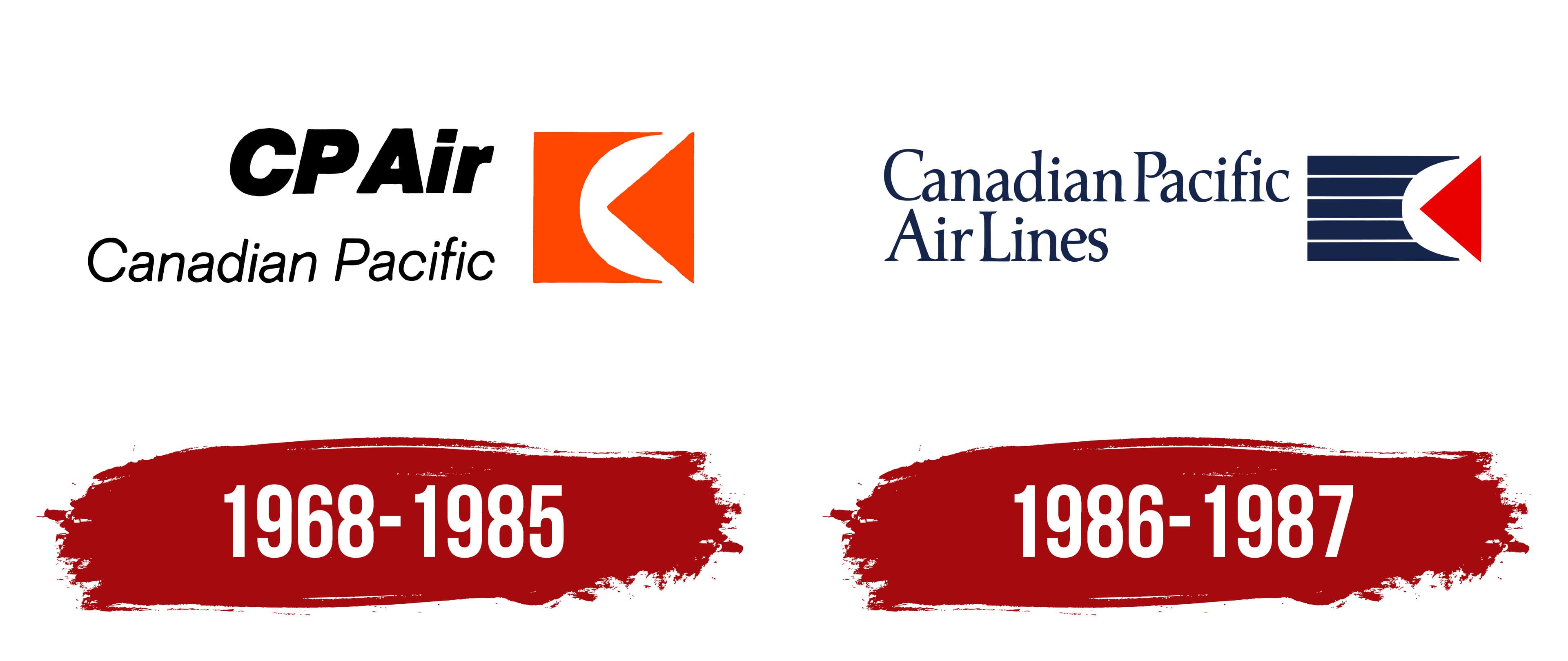
1968 – 1985

Canadian Pacific Air Lines, which operated from 1968 to 1985, introduced its first logo, skillfully using geometric symbols to represent its identity. The logo features an orange square encompassing a white circle, seamlessly integrated with a triangle. Each geometric shape carries symbolic meaning.
Part of the square forms the capital letter “C,” the initial letter of “Canadian.” This design highlights the airline’s national identity and enhances the visual impact. Adjacent to it, the triangle is stylized to represent the letter “P” from “Pacific” and a soaring airplane. This element highlights the airline’s primary service flights and its focus on long-distance connectivity.
The white circle within the square represents the polar sun and snowy environments typical of the regions the airline serves. This element reflects the airline’s routes to remote, challenging locations and emphasizes its readiness to face harsh Arctic conditions. This symbol underscores the airline’s adventurous spirit and that of its passengers.
The bold black letters “CP Air” convey authority, reliability, and resilience, essential traits for an airline operating in the north’s severe climate. The orange accents add warmth and comfort, suggesting that travel with CP Air will be comfortable and welcoming despite the cold destinations.
1986 – 1987
The Canadian Pacific Air Lines logo is designed to convey seriousness and responsibility. It includes both text and an illustrated icon. The icon features five dark blue stripes and an orange-red triangle, creating a flag-like pattern. This design suggests trust, professionalism, and dynamism.
The company name appears to the left of the icon, set in a two-level format. Clear spacing separates the words, ensuring readability. The font is smooth and rounded, with thin serifs that add a subtle decorative touch.
The dark blue stripes symbolize trust and professionalism, which are essential in aviation. The orange-red triangle adds contrast and symbolizes dynamism and progressive values. This combination highlights the company’s commitment to reliability and forward-thinking.
The flag-like design represents the company’s global reach and international aspirations. Separating the words in the company’s name emphasizes clarity and directness, reflecting its focus on transparent, effective communication.