


 Cincinnati Bengals Logo PNG
The Cincinnati Bengals’ club name honors a former team and reflects the local zoo’s distinctiveness. The team’s modern logo symbolizes its forward-looking nature, its embrace of new in-game tactics, and its respect for its history.
The Cincinnati Bengals are a professional football team that competes in the National Football League’s AFC North division. After Art Modell was fired as head coach of the Browns in 1963, team founder Paul Brown wanted to establish another NFL franchise in Cincinnati but was denied because the city’s stadium was too small.
In 1967, a group of owners led by Paul Brown acquired an American Football League franchise. Brown named the team “Bengals” to “give it a link to Cincinnati’s past professional football.” Another team, the Cincinnati Bengals, already existed in the city and had played in three American Football League seasons from 1937 to 1942.
However, Brown chose the same shade of orange used by his former team, possibly as an insult to Art Modell or a tribute to his start as a head coach at Washington School. He added black as the primary color.
After Paul Brown died in 1991, his son, Mike Brown, inherited the team’s controlling share. In 2011, Mike Brown acquired shares in the team from co-founder Austin Knowlton, who is now the team’s primary owner.
Meaning and History
The Cincinnati Bengals’ tiger stripes are a timeless classic. The team’s logos are orange and black; most feature parallel vertical lines. The exception is the emblem from the 1970s-1980s, which features an orange helmet with the black inscription “Bengals.”
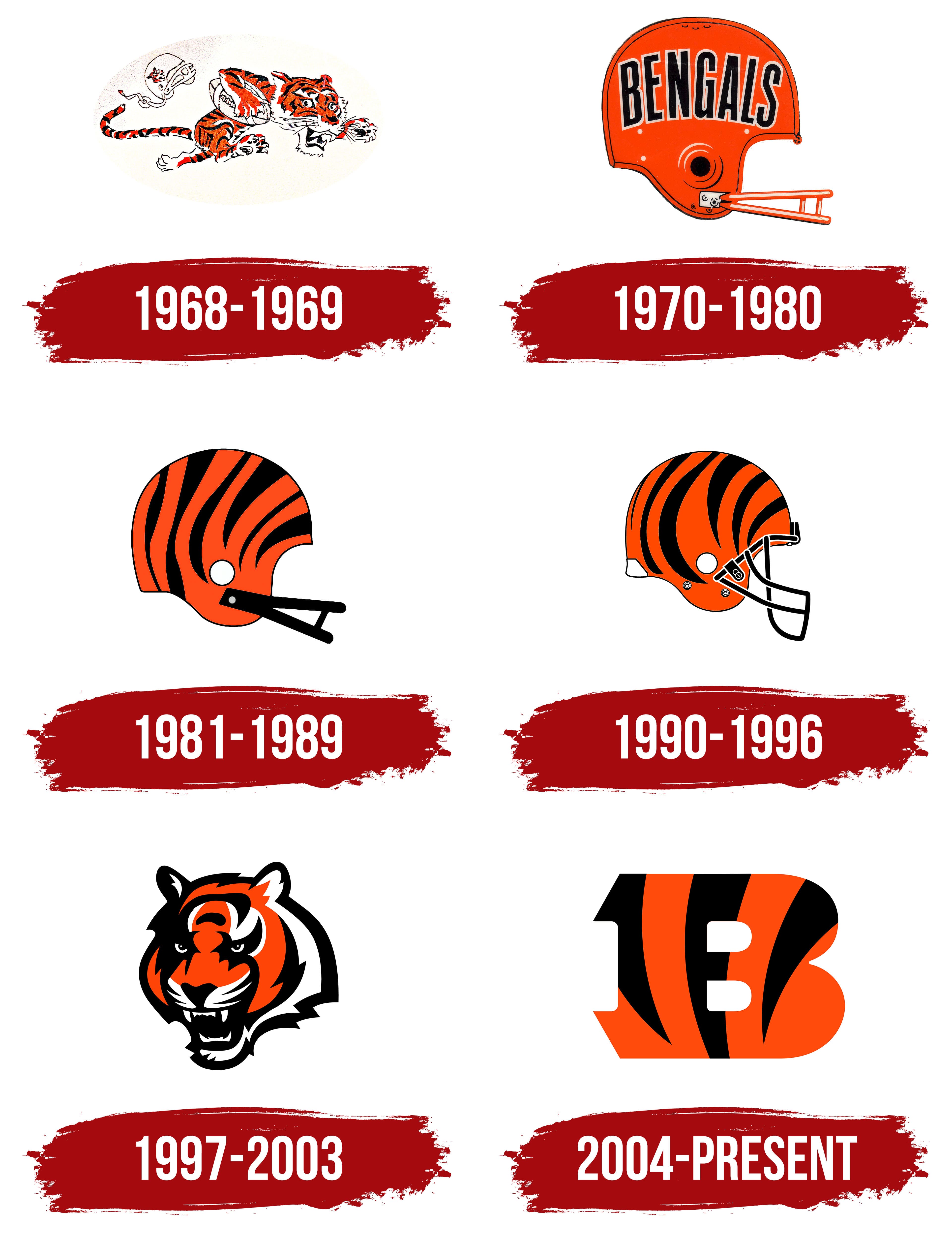
The club used a running tiger as its symbol in its first year. Then came a long period of helmets in various shapes, as artists adapted their designs to contemporary trends. In 1997, the animal-based emblem returned and remained relevant until it was replaced by a stylized letter “B.”
What are the Cincinnati Bengals?
The Cincinnati Bengals are a team in the National Football League’s Northern Division (American Football Conference). The club was founded in 1966 and played its first season in 1968. As of 2021, Mike Brown is the club’s primary owner. The Cincinnati franchise is the only NFL or AFL team to have won a championship and is one of twelve teams that have failed to win the Super Bowl.
1968 – 1969
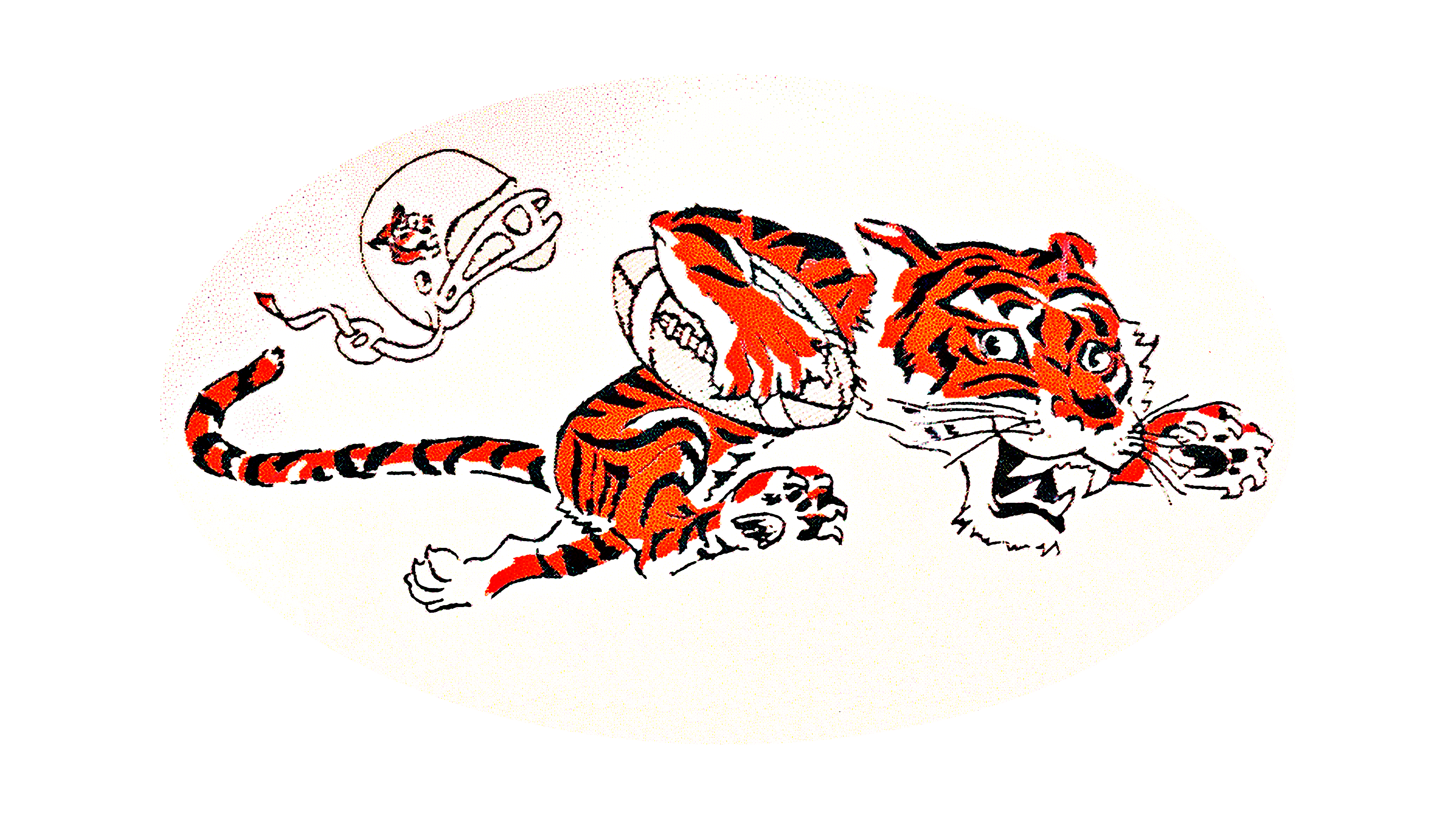
As its first logo, the Cincinnati Bengals chose a caricature of a Bengal tiger running with a football under its right arm. The animal is detailed, and the angle reveals its mouth and sharp fangs. In the top-left corner, a white helmet with the head of another tiger drawn on its side is displayed. The helmet’s chin strap is unfastened.
1970 – 1980
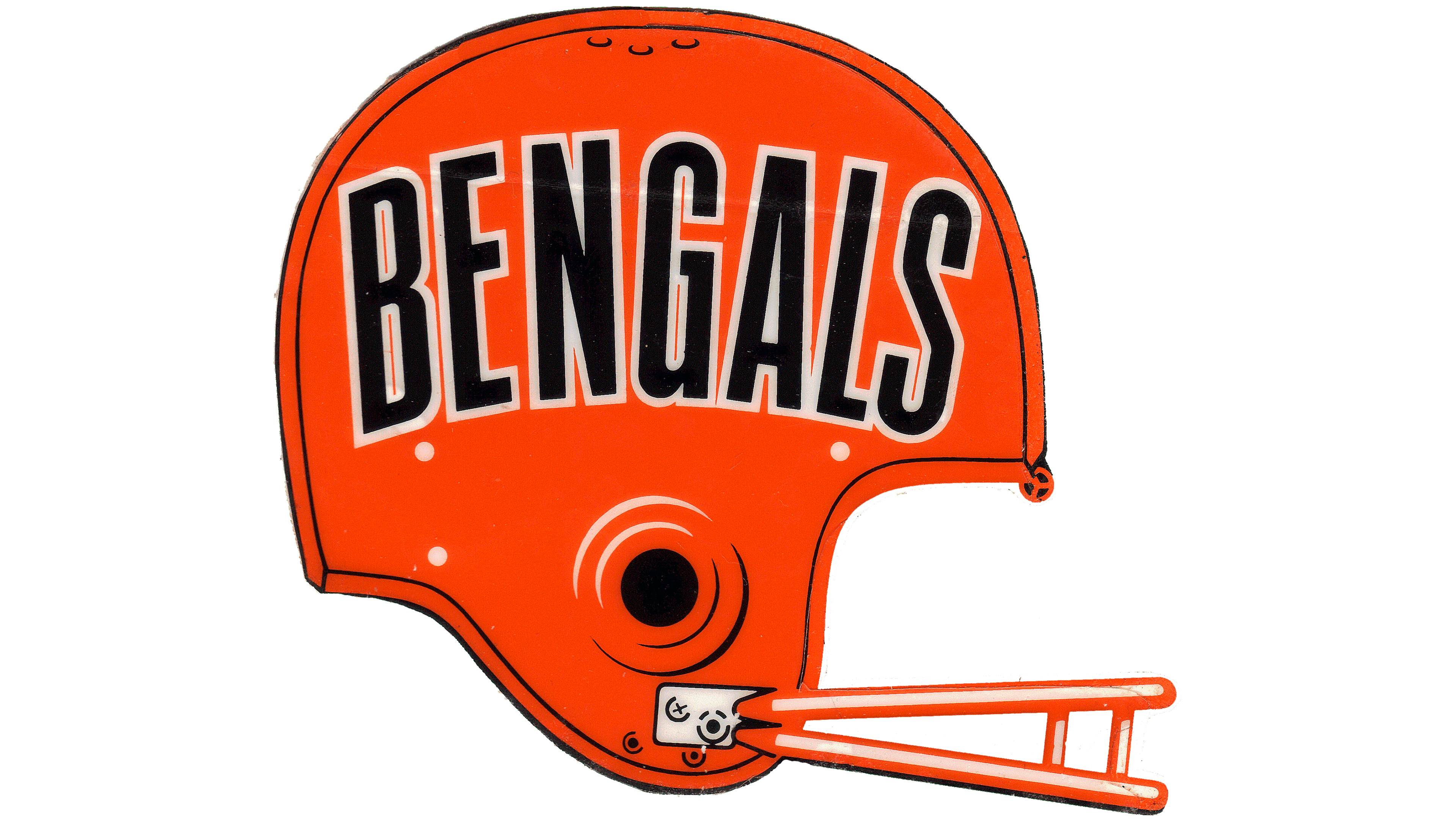
After joining the AFC Central division, the club changed its logo. They removed the cartoon tiger and replaced it with a two-dimensional helmet with the inscription “Bengals” in print letters. The letters are black with a white outline. The font is sans serif. The helmet is orange: Paul Brown chose the same shade as the Cleveland Browns to insult his former colleague Art Modell. The logo’s shape matches the rival team’s emblem.
1981 – 1989

In 1981, the Cincinnati Bengals introduced a new logo. The word “Bengals” disappeared, the front side grew, and the contours became more distinct. The color scheme was also changed: the orange became significantly darker. Wavy lines appeared on the helmet, imitating a tiger pattern. Six black stripes of different lengths and thicknesses stretch from the top, slightly curling at the ends.
1990 – 1996
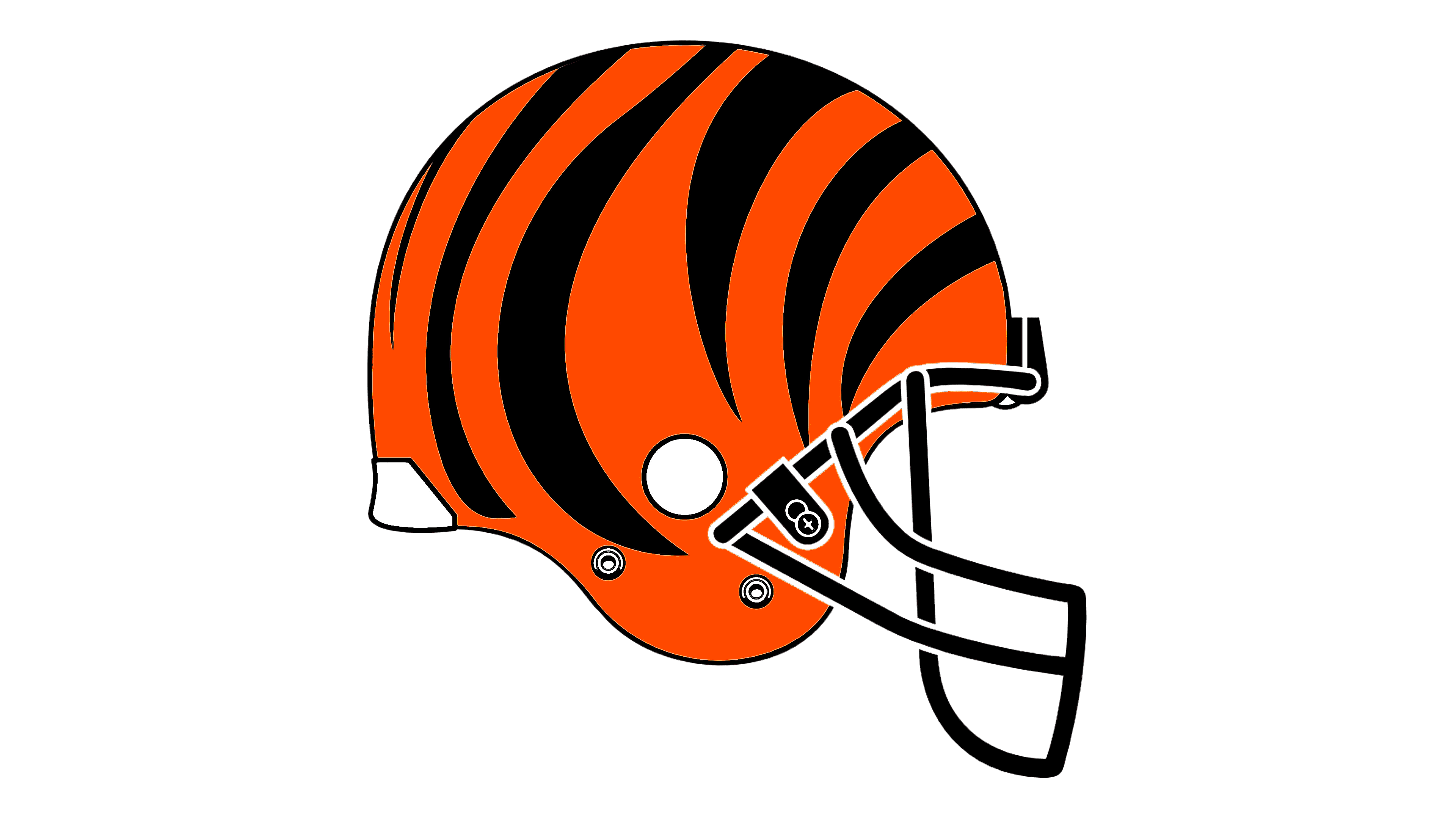
In 1990, the Cincinnati Bengals changed their logo again, including the shape of the wavy stripes on the helmet.
1997 – 2003

In 1997, the Cincinnati Bengals used a Bengal tiger and their name on the logo. The tiger is jumping and about to land on its front paws. The animal is aggressive, as indicated by its bared claws and fierce face. A white outline around the tiger separates it from other elements.
The wordmark “Cincinnati Bengals” is arranged in two lines. The first word is lowercase white, and the second is uppercase orange with a white outline. The word “Bengals” is written in a serif font. This font features rough geometric shapes, large serifs, and an angular feel. The wordmark sits on a black background.
2004 – today

The Cincinnati Bengals adopted its current logo in 2004. Verlander Design developed it, choosing simplicity and using the first letter of the football club’s nickname as the main element. They removed the tiger and long words, leaving only a short orange letter “B” covered with three black tiger stripes. The font matches the previous version: a slab serif without serif bends. The “B” looks short. Designers made the top and bottom symmetrical, thereby achieving harmonious proportions.
Three black lines with pointed ends cross the orange letter from the top. The tiger pattern reminds me of the striped helmet on the 1981 logo. The Cincinnati Bengals’ new emblem debuted on April 22, two days before the NFL draft.
Font and Colors

The letter “B,” which begins the word “Bengals,” reflects the Bengal tiger’s character. Because of its pointed corners and orange-and-black palette, it looks “predatory.” The pattern uses traditional stripes, so recognizing tiger motifs will be easy, even for those unfamiliar with the team’s name. The emblem was presented at an official event on April 22, 2004.
The designers did so without inscriptions, limiting themselves to a stylized letter “B.” No fonts were used in its development: specialists at Verlander Design Studio created the design from scratch for the Cincinnati Bengals. They also tried to preserve the original palette, including the traditional club colors: black and orange. Long ago, the original franchise owner, Paul Brown, chose orange as the primary shade and added black as a secondary one.
FAQ
What does the Cincinnati Bengals logo represent?
The Cincinnati Bengals logo features the stylized letter B in a bold font with large triangular serifs. It uses the colors of the Bengal tiger: orange and black stripes.
When did Mike Brown take over the Bengals?
In 1991, Mike Brown inherited the Bengals’ shares from his father, Paul Brown. In 2011, he bought out Austin Knowlton’s share and became the team’s primary owner.
Why “Cincinnati Bengals”?
Paul Brown named the football club this. He chose it for the black-and-orange color scheme, which matches the Bengal tiger’s coloring. Additionally, the American coach wanted the fourth version of the AFL, like the two previous ones, to have a Cincinnati Bengals franchise.
Where did the name Cincinnati Bengals come from?
The current Cincinnati Bengals are not the first team to use this name. It inherited the name from the previous Cincinnati Bengals team, which participated in two AFL iterations.