


 Clorox Logo PNG
The Clorox logo is bright and soft. It speaks of the cleanliness and order that come with the company’s products. The emblem warns that the contents of the bottles must be handled with caution and that skin must be protected.
Clorox began on May 3, 1913, in Oakland, California, when Edward Hughes, Charles Husband, William Hussey, Rufus Myers, and Archibald Taft invested $100 each and founded Electro-Alkaline Company. The idea was to turn brine from San Francisco Bay into sodium hypochlorite, a liquid bleach, using an electrolytic method. Early deliveries went to breweries, dairies, and laundries in five-gallon returnable cans.
The company struggled until William and Annie Murray provided financial and commercial support. William restructured the business, while Annie promoted diluted bleach to household customers through her grocery store. The name Clorox appeared in 1914 from “chlorine” and “sodium hydroxide.” In 1916, a weaker version for home use was launched. In 1922, the firm became Clorox Chemical Corporation, and in 1928, it went public.
National expansion followed the opening of plants in Chicago and Jersey City in 1921. In 1957, Procter & Gamble acquired Clorox, but an antitrust case led by regulators lasted ten years. In 1967, the US Supreme Court ordered P&G to divest. On January 1, 1969, Clorox returned as an independent public corporation listed on the New York Stock Exchange.
After independence, Clorox diversified. It acquired Liquid-Plumr in 1969, launched Clorox 2 in 1970, added Hidden Valley Ranch in 1972, and acquired Kingsford in 1973. Later came Tilex, Brita rights in 1988, Pine-Sol in 1990, First Brands with Glad and Handi-Wipes in 1999, wider Brita rights in 2000, a Glad venture with P&G in 2002, and Burt’s Bees in 2007.
Meaning and History
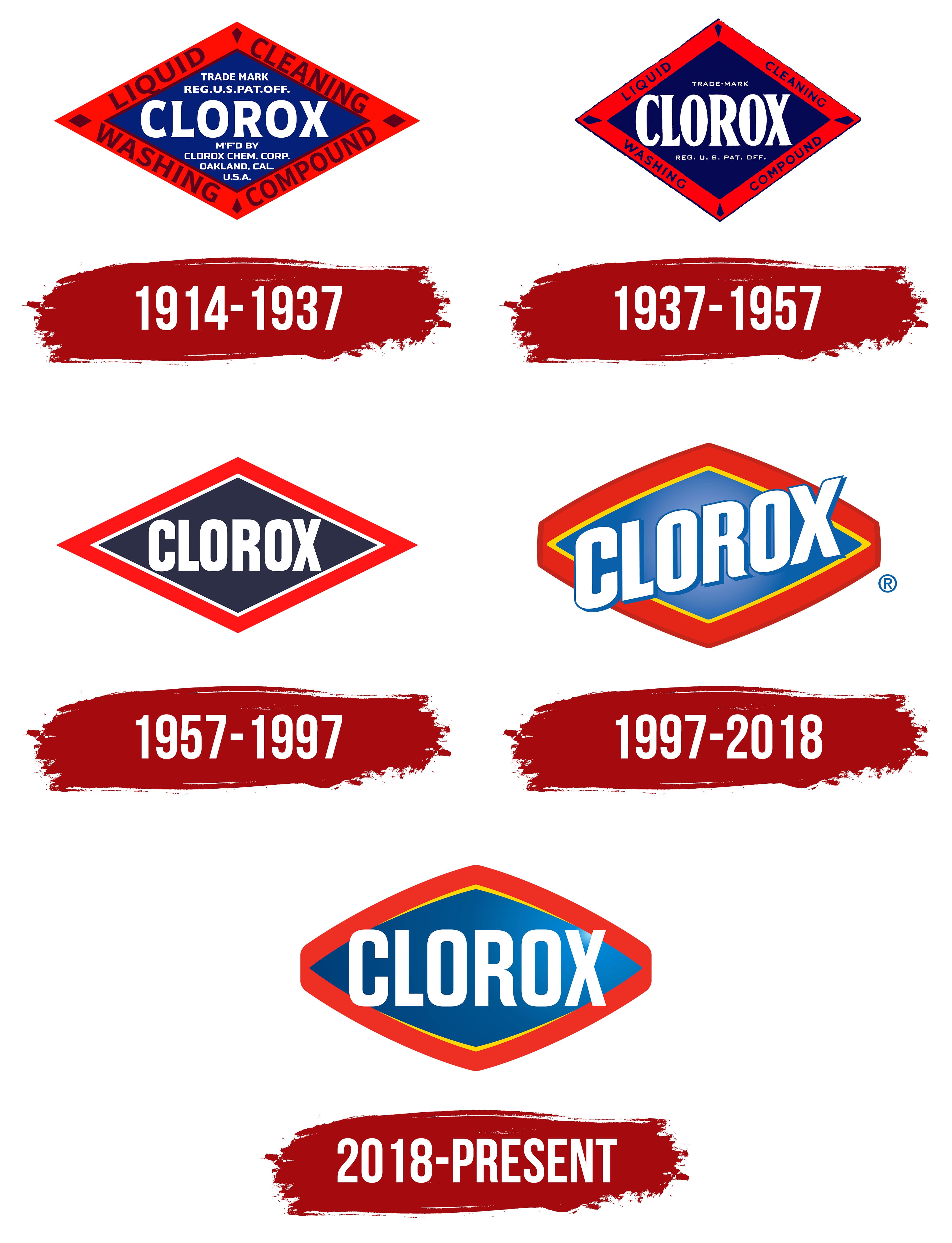
The brand’s emblem has changed several times, but some elements chosen at the very beginning have been preserved throughout its history: the diamond shape, red stripe, and large white name in the center. The composition’s consistency indicates the brand’s correct positioning since its inception. Minor adjustments to the details are due to management changes and a desire to look more modern.
What is Clorox?
A brand of household products with chlorine: bleach, toilet cleaner, stain removers, and disinfecting wipes. It ranks 7th on the list of the 100 most sustainable companies in the US. Net profit amounts to $2 billion.
1914 – 1937
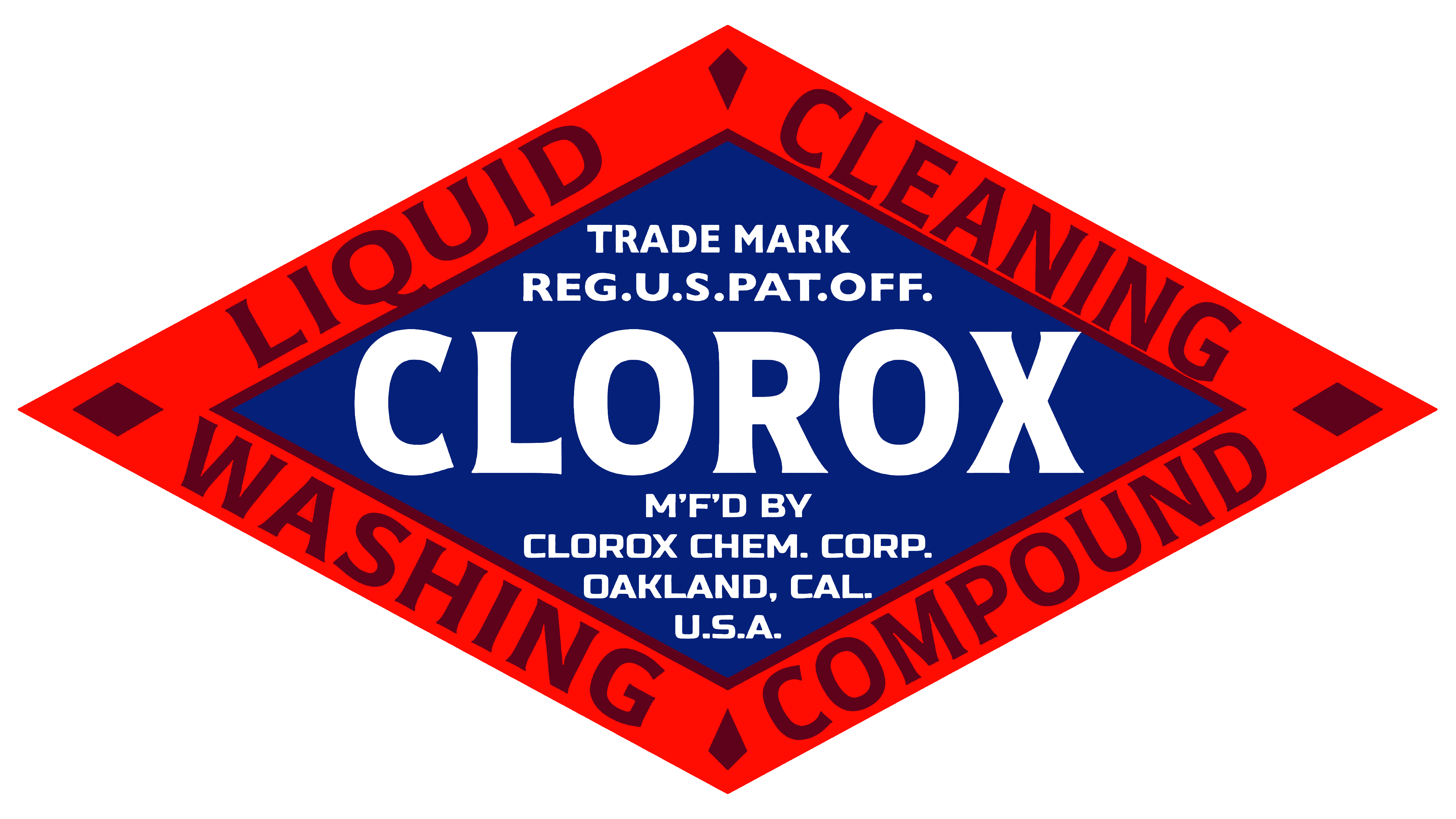
The brand’s first emblem is highly informative and conveys as much as possible about the product.
The diamond shape and red border are reminiscent of special chemical product labels that carry caution warnings. The red edging is a symbol of danger. The technique says, “Attention!”
The Clorox name, centered, indicated that it was a chlorine-based cleaning product. Chemical compounds containing this element require special handling and should be handled with gloves. Therefore, the buyer had to read the information carefully.
The name Clorox was derived from the words chlorine and oxide, which were components of bleach.
The white color of the name and the internal text in the diamond also indicate the product’s whitening properties. Stains and dirt are removed after adding chlorine liquid.
Within the red border is a full description of exactly what is being sold: a cleaning and washing liquid.
Above the name, it is indicated that Clorox is a trademark patented in the United States. Below are the manufacturer’s details: Clorox Chemical Company, located in Oakland.
Thanks to the scrupulous approach to creating the logo, the buyer immediately knew what they were purchasing and from whom.
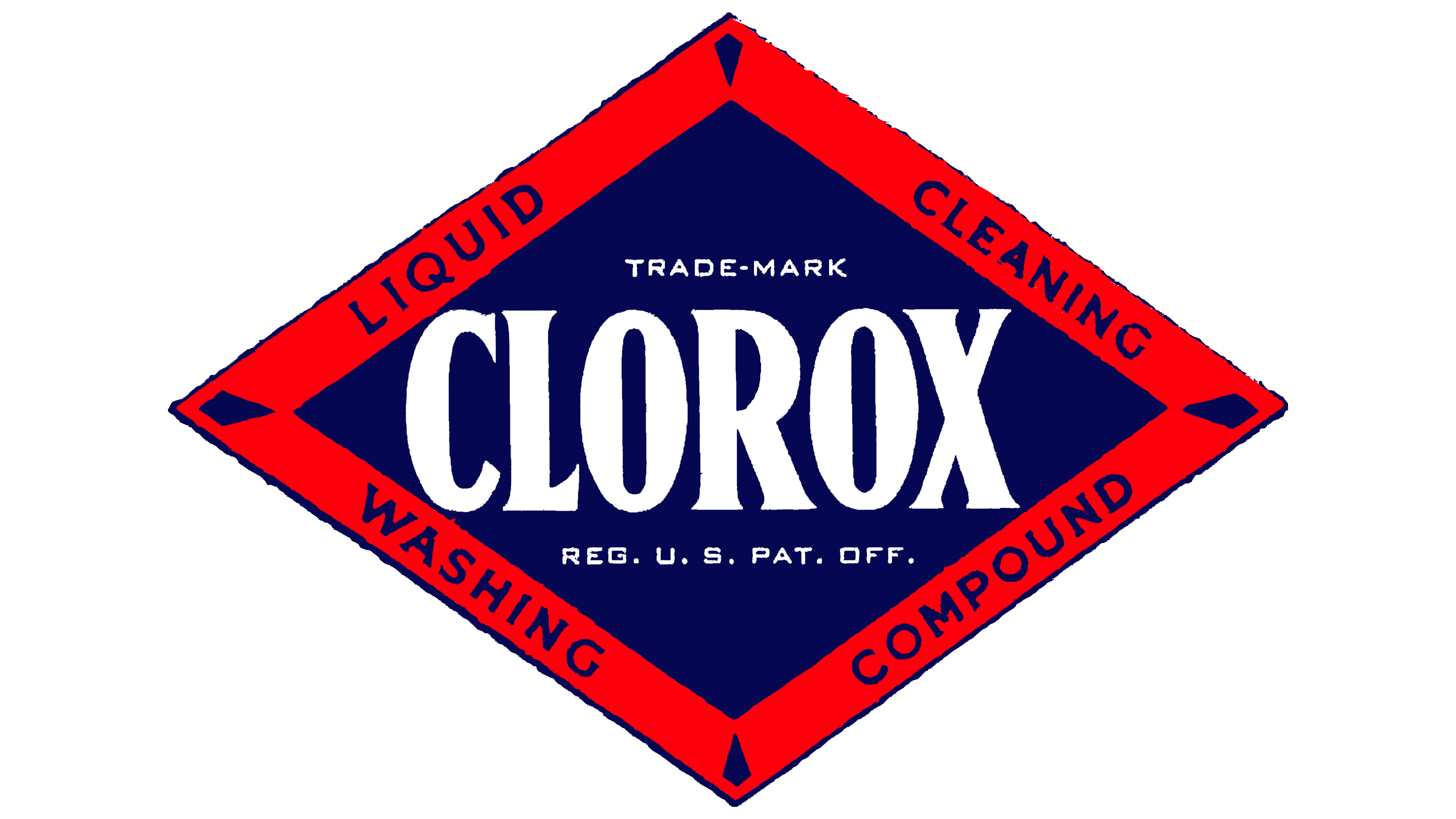
1937 – 1957
1957 – 1997
1997 – 2018
2018 – today
In 2018, the company expanded its horizons and acquired Nutranext Business, a manufacturer of medications and supplements. The achievement is reflected in the new logo.
A hundred years after the first variation, the logo looks freer and more artistic. The diamond shape has more rounded corners, and the red border seems casually thrown onto the blue background. The yellow base peeks out from underneath in places. The Clorox inscription takes center stage and the foreground, extending beyond the background onto the red part.
The main meaning is preserved, evoking an association with a liquid that requires careful handling. However, the casual, slightly cartoonish lines create a friendlier, more comradely feeling. The image also resembles a pill, which the corporation now manufactures. In this interpretation, the red ribbon embodies the beauty and health that arise after taking vitamins and minerals.
Font and Colors
The brand’s logo is bright and colorful. It includes a whole range of colors:
- Red is the color of danger. Draws attention. Highlights the main points. It is the color of beauty and attractiveness.
- Blue is the shade of water and chlorine-containing substances. Indicates the liquid form of the bleach.
- Yellow, a symbol of joy and pleasant emotions, is obtained from the product’s results.
- White, the color of purity, a hint of snow-white fresh laundry. The color of health. Indicates an emphasis on eco-friendliness: the company is actively working to reduce its carbon footprint.
The font of the inscription is OPTIAkrogroteskBold-Cond. Capital letters indicate the scale of the corporation, which, in addition to the Clorox brand, produces goods under a dozen brands.