


 Crackle Logo PNG
“Sit down like this, the viewing begins,” says the Crackle logo. The logo features a wide selection of films and shows on various topics, available in several languages. As a result, the platform can hold viewers’ attention for a long time.
Crackle began in 2004 as Grouper, a startup founded by Josh Felser, Dave Samuel, Mike Sitrin, and Aviv Eyal. The platform appeared during the early online video boom, when YouTube was still gaining users. Grouper combined file sharing, messaging, and media streaming, giving users a place to post and watch videos.
In August 2006, Sony Pictures Entertainment bought Grouper for $65 million. In July 2007, Sony renamed it Crackle. She turned it into a free, ad-supported video network with films and TV series from the Sony Pictures library. By late 2008, the service had moved from San Francisco to Sony’s Culver City headquarters, with Eric Berger taking over leadership.
Crackle expanded in 2011 through PlayStation 3, Roku, Sony Blu-ray players, Bravia TVs, Xbox 360, iOS, and Android. In 2012, it added Animax for viewers in the United States and Canada. The service invested in original projects, including Jerry Seinfeld’s “Comedians in Cars Getting Coffee,” which later moved to Netflix, as well as “The Art of More,” “StartUp,” “SuperMansion,” “Extraction,” and “Joe Dirt 2: Beautiful Loser.”
In 2018, Sony renamed the service Sony Crackle, but in 2019, it sold a controlling stake to Chicken Soup for the Soul Entertainment, restoring the Crackle name. Sony sold its remaining share in 2020. In 2023, Crackle Connex launched its advertising analytics platform. In 2024, Chicken Soup for the Soul Entertainment filed for bankruptcy after debt tied to Redbox and Crackle defaulted. By June 2025, the platform had shut down completely.
Meaning and History
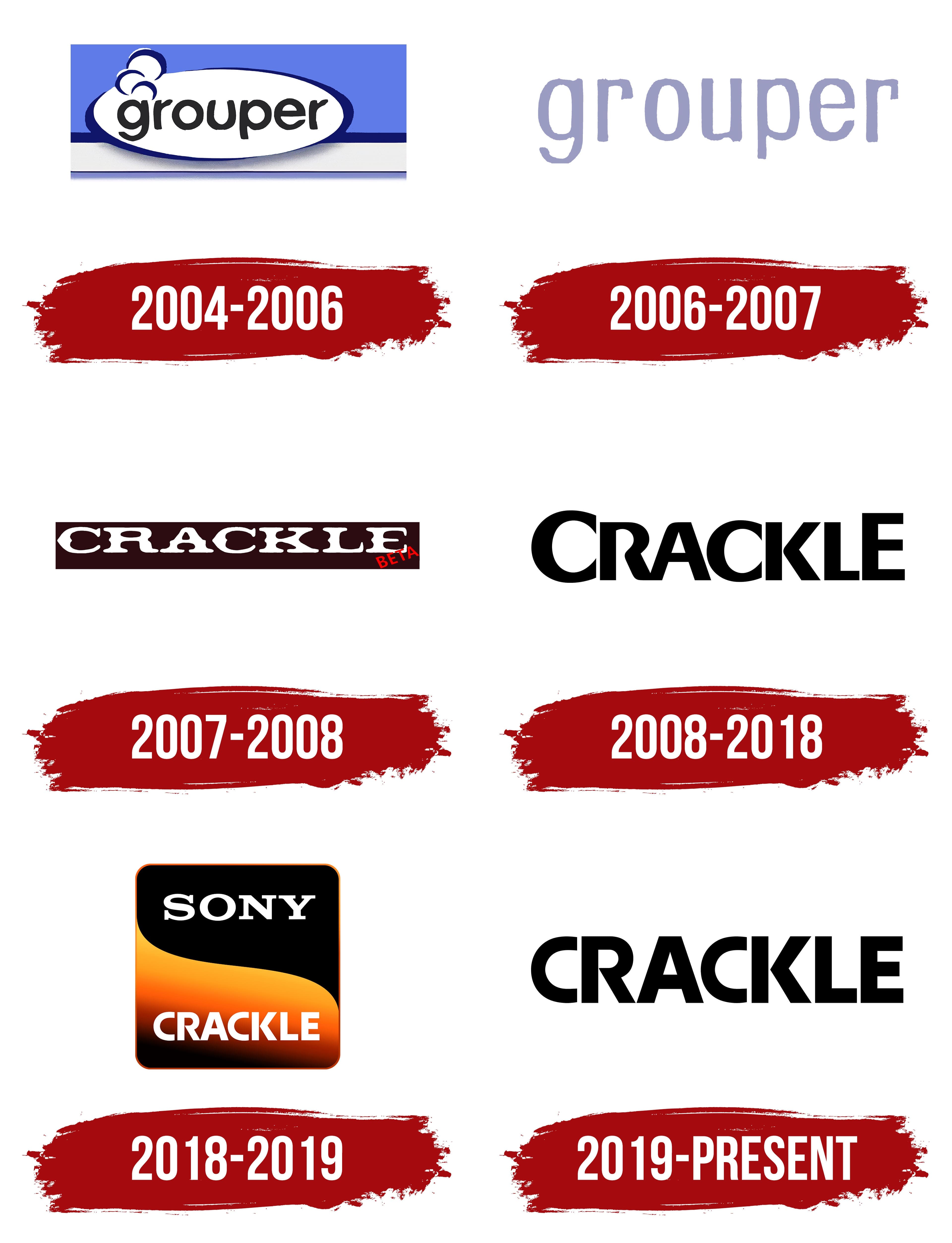
It began as an independent firm called Grouper. It existed only online, as a simple video-streaming service. After two years in that format, Sony Pictures took over and turned it into a multiplatform entertainment service with a personal network, renaming it Crackle.
The main focus was to present TV shows, films, and programs from Sony’s portfolio, and to produce and distribute unique content of its own design. The site later became available on some TVs, players, and set-top boxes (2011). Gradually, the company grew and added more apps, for example, on Android and iOS. It also collaborated with Xbox Live, BlackBerry, Apple TV, and many other services.
In early 2018, the platform was renamed Sony Crackle. However, a year later, Chicken Soup for the Soul acquired its controlling stake and immediately reverted to its previous name. Now, this service offers programming across several genres, including sci-fi, action, horror, drama, crime, and comedy. Throughout its existence, the video site has changed its name and logos several times. It has had six in total.
What is Crackle?
Crackle is a streaming video service that features movies and TV shows across various genres. Four developers launched the platform in 2004: Josh Felser, Dave Samuel, Mike Sitrin, and Aviv Eyal. It moved to Sony Pictures two years later and was later acquired by Chicken Soup for the Soul Entertainment. The service is headquartered in Culver City, California, USA.
2004 – 2006
The debut logo’s design focused on geometry, with a horizontal rectangle divided into several color-coded zones. The lower part was a wide gray-blue line, while the middle part was a thin dark blue line. The top zone was a large blue stripe and took up 2/3 of the background space. On top was an oval figure with the then-service name in the center. It had a white background and a dark blue border. The frame was of uneven thickness, with extensions to the right and left. On the side were three bracket-like curls of mini clouds of steam that went upward. The inscription was typed in a half-bent grotesque lower register, with smooth, rounded corners.
2006 – 2007
After Sony Pictures took over Grouper, the logo underwent a major redesign. First, the new owner gave it a minimalist look and removed what he saw as unnecessary elements, focusing on the name. Secondly, he changed the font, making it more serious and stylish. In the end, the emblem left only the service name on a white background. It retained only two features from the previous version: lowercase and rounded corners. Everything else is a thing of the past. The letters were repainted gray and stretched upward.
2007 – 2008
After being renamed Crackle, the multiplatform naturally changed its logo. It then had a rectangular black background with white lettering in the middle. The new name was typed in an Old English-style font with spiky letters, large serifs, and irregular lines. Bumpy protrusions, typical of Western or even silent-movie-style headpieces, sat in the middle of each leg.
2008 – 2018
Two accented letters appeared in the logo lettering during this period: the first “C” and the last “E.” They were much larger than the others, although all went to uppercase. The name was rendered in bold characters with wide, uniform-thickness feet. The “R” was left open; its right side did not meet the left vertical element. As a result, the space inside the letter looked like a keyhole, and I wanted to look inside to ask: what’s going on? The “R” was connected to the “A,” so they looked like an exception among the other characters, set apart from the others. The other letters were geometrically proportional, made of angles and flat lines, while the “R” and “A” had rounded corners.
2018 – 2019
After the video content platform was renamed, its visual identity changed. It was a major change. The developers completely redesigned the logo while keeping the old writing style. They balanced the letters in “Crackle” by removing the rounding on the “R” and “A” and aligning the “C” and “E” to the same height. So the text was straight, with bold letters of equal size. But it was still grotesque. The inscription was at the bottom. The second part of the name was “Sony” in a large serif font, the style the company usually uses. Both inscriptions were painted white and were placed on different backgrounds, black and yellow, combined in a square with rounded corners and a gradient.
2019 – today
The current logo is essentially a continuation of the 2008-2018 version, but in a 2018-2019 design. The authors combined the two styles: they took the general characteristics of the first version and the private details from the second. The result is single black lettering on a white background, with all the letters having the same size and identical structure. Everything is the same: the width of the feet, the straight lines, the sharp angles, and the lack of serifs.
Font and Colors
Crackle’s modification of the streaming service logo moves from minimalism to minimalism. Complex shapes and multi-component elements appeared in between, but they gradually disappeared. This reflects a desire for simplicity in the service’s identity, so it is not perceived as overly complex and can attract as many visitors as possible. The color scheme also remained simple.
The search for a marketing logo design led the streaming service to change its text style frequently. In particular, it used several typefaces that shared only one thing: no serifs. Otherwise, they were different: monumental and bold, thin and Old English, translucent and rounded. The color palette, by contrast, was stable. It consisted only of double combinations. In the early versions, it was a blue-and-white palette; in the later ones, a black-and-white range.