


 Czech Air Force Logo PNG
The Czech Air Force emblem is powerful, reflecting the national identity and the organization’s commitment to airborne defense and excellence. It conveys a sense of indomitable spirit, heritage, and excellence. The emblem clarifies that this organization is rooted in tradition but fully prepared to meet modern challenges.
The history of the Czech Air Force began in 1918, following the creation of an independent Czechoslovak Republic after the collapse of Austria-Hungary. Early aviation units were formed from pilots who had served in the Czechoslovak Legions during World War I, including forces active in Russia and Italy. During the interwar period, domestic aircraft manufacturers such as Avia, Aero, and Letov supported the development of a national aviation industry.
The German occupation after 1938 marked a major disruption. Many Czech pilots left the country and continued to serve in the Allied forces during World War II. Notable contributions came from Czechoslovak squadrons within the Royal Air Force, including the 310th and 312th fighter squadrons. Czechoslovak pilots also served in units such as the 303rd Squadron during the Battle of Britain in 1940.
After 1945, the air force was rebuilt, but following the 1948 political shift, it was fully aligned with the Soviet military structure. As a member of the Warsaw Pact from 1955, it operated Soviet aircraft, including MiG-15, MiG-19, MiG-21, MiG-23, and MiG-29 fighters. This structure remained in place throughout the Cold War period.
Following the 1989 Velvet Revolution and the 1993 dissolution of Czechoslovakia, the air force was divided between the Czech Republic and Slovakia. The Czech Air Force was reorganized into a unified command in 1997. After joining NATO in 1999, it underwent modernization and in 2004 leased Saab JAS 39 Gripen fighters from Sweden, replacing older Soviet-era MiG-21 aircraft and forming the basis of its modern fleet. Parallel modernization processes took place in other Central European NATO members, including Hungary, which acquired Gripen aircraft, and Poland, which acquired F-16 fighters.
Meaning and History
What is Czech Air Force?
The Czech Air Force, known in Czech as Vzdušné síly, is the air force of the Army of the Czech Republic. Established in 1993 after the dissolution of Czechoslovakia, they have become a modern, combat-ready unit with inherited traditions and experience. Since then, they have undergone significant restructuring and modernization while retaining their primary duty of maintaining the sovereignty of Czech airspace. Over the years, this military institution has made significant progress. After the country’s accession to NATO in 1999, it harmonized its standards and procedures with the alliance’s, further enhancing its capabilities and effectiveness.
1993 – today
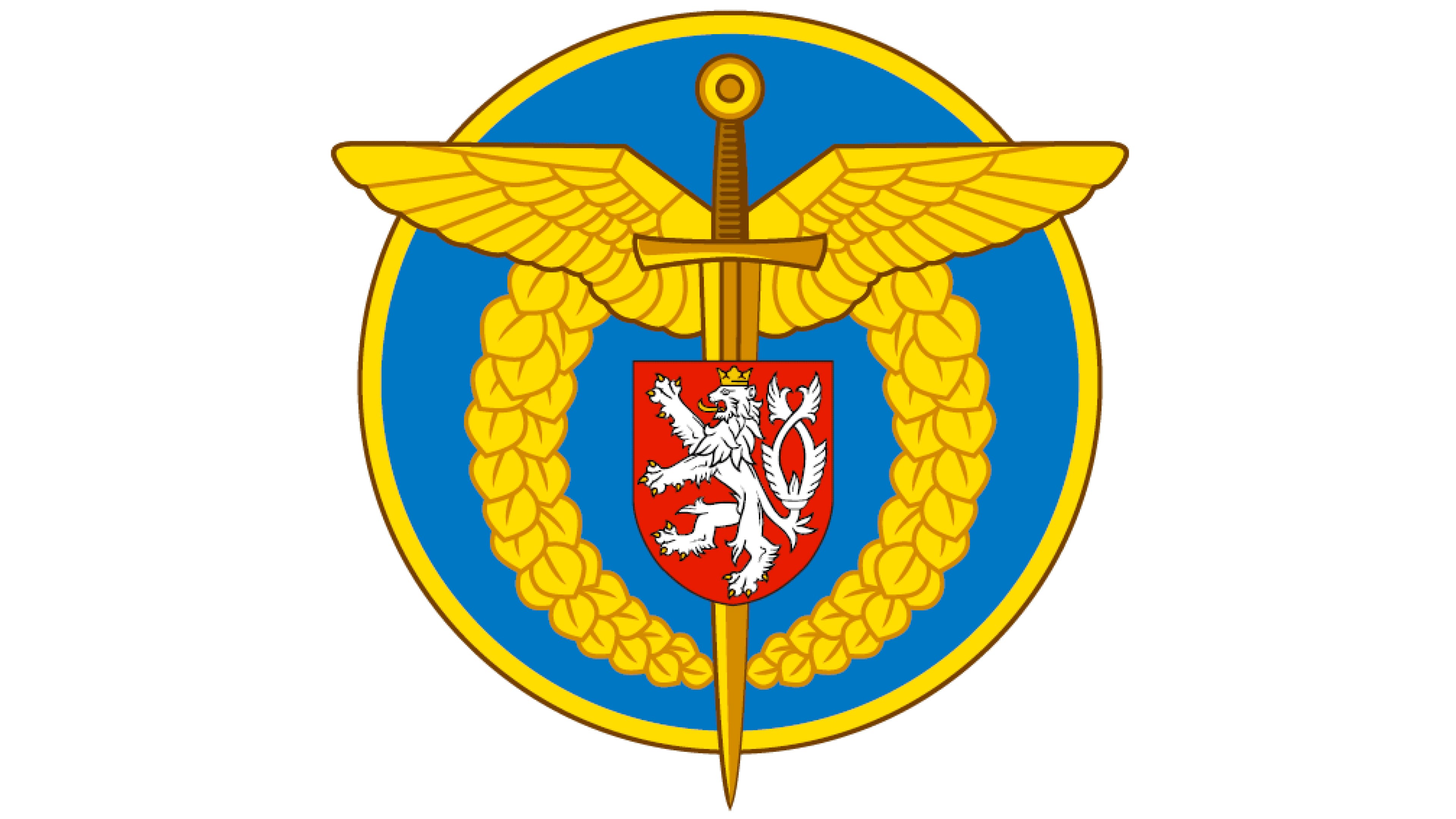
The logo of the Czech military aviation is a true symbol of strength, tradition, and pride. At its center is a heraldic lion crafted in a strict classical style. The animal’s white color on a red shield emphasizes its significance and highlights every detail. The golden crown on the lion’s head adds a sense of status and reflects the country’s historical heritage.
The red shield is placed over a vertically running sword. The blade points downward, symbolizing calm, authority, and protection. The sword’s hilt is adorned with wide wings spread to the sides. These are rendered golden with precise black lines outlining the feathers. This gives the wings additional depth and structure while the entire element seems to hover, evoking its aviation connection.
From the sword’s hilt, a golden laurel wreath descends. The upper part of the wreath features large details, underscoring power and confidence, while the lower part transitions into smaller elements, symbolizing precision and tradition. The composition is completed by a circle painted in a rich blue color. A double border around the circle’s edges unites all the elements into a cohesive whole, emphasizing their interconnection.
The emblem’s elements are deeply tied to the Czech Republic’s military history. The lion embodies bravery and national spirit, while the sword represents strength and readiness to defend. The wings evoke aviation, and the laurel wreath symbolizes respect for achievements and remembrance of the past. The composition conveys tradition and a forward-looking aspiration, reflecting the core values of Czech military aviation.