 Deezer Logo PNG
Listen to music, enjoy, and dance. This is the emblem’s main motto. The Deezer logo promises access to your favorite songs and new tracks you’ll love. The portal considers users’ tastes and always offers music that matches the mood.
Deezer began in Paris in 2006, when programmer Daniel Marhely created Blogmusik, a free MP3 streaming site with no licenses or label agreements. After SACEM forced the site to close over copyright issues, Marhely partnered with ESSEC student Jonathan Benassaya to rebuild the project legally. On August 22, 2007, Deezer launched as France’s first fully legal web music streaming service, with agreements involving SACEM, Sony BMG, and Warner Music.
Traffic grew fast: 773,000 visitors in the first month, 2.75 million monthly users by May 2008, and seven million by the end of 2009. Revenue lagged behind audience growth. In 2009, Deezer introduced subscriptions at €4.99 and €9.99, but only 15,000 of 12 million registered users paid. The turning point came in August 2010, when Orange bundled Deezer Premium with mobile plans in France, raising new paid subscriptions from 6,000 to 100,000 per month.
Spotify expanded more quickly globally after 2008, while Apple Music launched in 2015. Deezer leaned on telecom partnerships and sound quality. In 2012, Access Industries invested $130 million, helping Deezer expand to 160 countries. By December, it had about two million paid users.
Deezer HiFi launched in 2014 with FLAC audio. Access Industries took control in 2016, followed by new funding in 2018 and a 2020 partnership with Grupo Salinas in Latin America. In 2022, Deezer was listed on the Paris Stock Exchange through a SPAC deal. By 2025, it reported its first operating profit.
Meaning and History
The French platform Deezer has fewer active users than Apple Music and Spotify, but it is not afraid of competition. Even the recent rebranding wasn’t meant to bypass successful streaming services, but to serve listeners. According to Austrian entrepreneur Stefan Günther Tweraser, one of the project leaders, the new design is comfortable, human, and attractive.
This approach stems from the fact that Deezer employees are, in part, music lovers themselves. At a young age, Daniel Marhely, the company’s co-founder, wanted to listen to any music freely without worrying about copyrights. To do this, in 2006, he teamed up with entrepreneur Jonathan Benassaya and created the Blogmusik web platform, which let users share pirated tracks.
In 2007, the site was shut down as illegal, but that didn’t stop Daniel. He decided to negotiate with distributors and music creators to stay legal. This is how Blogmusik became Deezer and continued to operate as a legal streaming service, sharing ad revenue with all stakeholders. At first, the catalog was limited because the company did not immediately sign contracts with major labels. Over time, the repertoire expanded, and Deezer made it into the top 10 Google searches.
In the wake of this success, the owners changed the design of the PC and mobile apps. The update changed the interface and logo to match the brand’s identity. The redesign isn’t global, as the developers retained the old structure, leaving the inscription and equalizer in place.
What is Deezer?
Deezer is a streaming multimedia service for listening to music. It has a vast library of tracks in various genres, including jazz, electro, classical, rock, and pop. It also offers radio stations and podcasts. One advantage of the online service is its personalized recommendations, which create individual playlists based on the user’s listening history. The brand was launched in 2007 in France and gradually expanded worldwide.
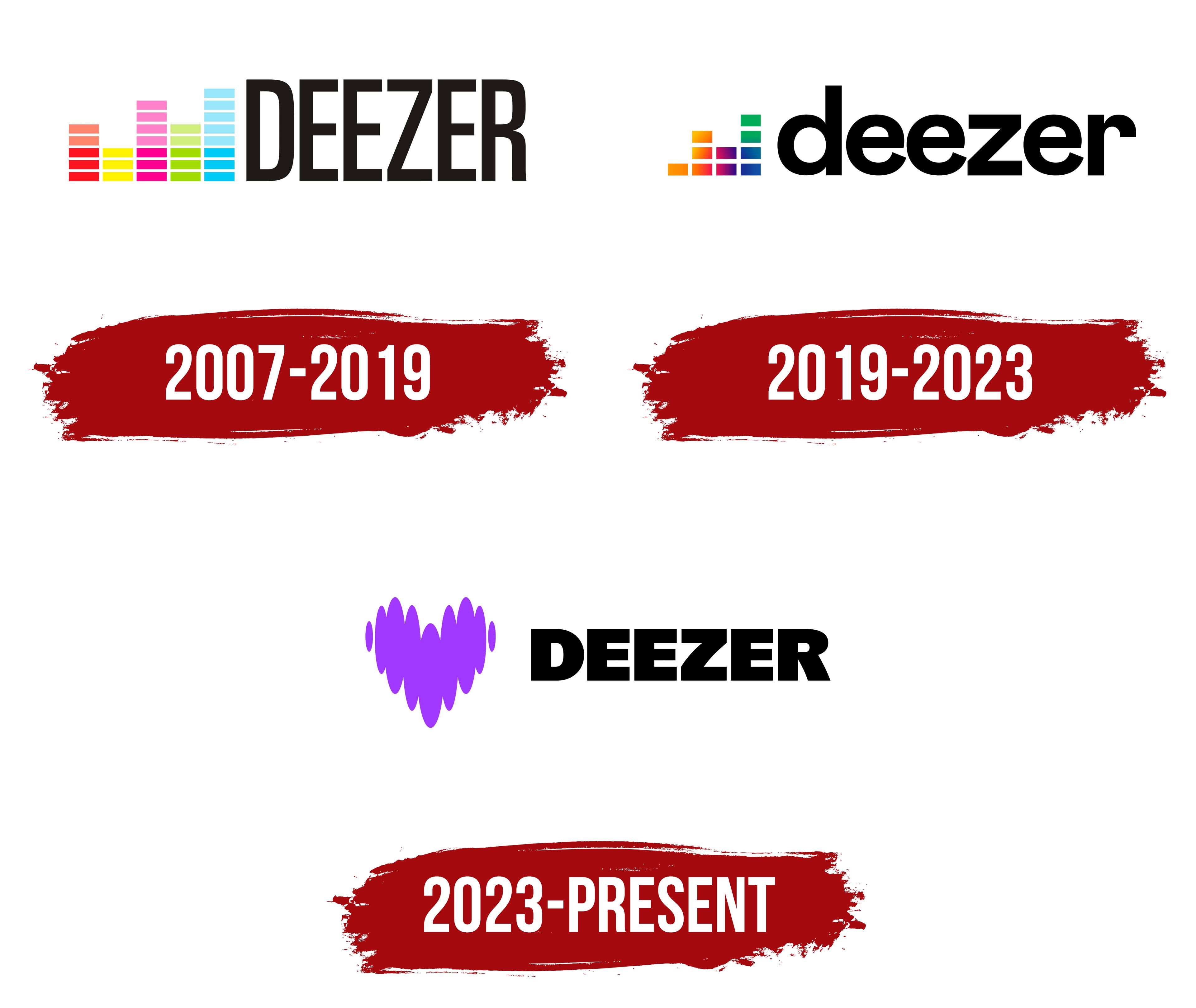
2007 – 2019

When Blogmusik was relaunched as Deezer, it introduced an equalizer logo. This equipment controls tone and pitch and is directly related to the music industry. The designers depicted five multi-colored frequency bands: red, green, orange, light green, and blue. They differed in the number of constituent elements (rectangles) and, accordingly, in height.
On the right side was the big black word “DEEZER.” It was bold, in all caps, and stretched vertically. The lack of serifs, right angles, and uniform line thickness made the inscription feel unified.
2019 – 2023

In early May 2019, the service updated the app interface to make navigation easier. As a result, the text became much smaller, while the number of visual effects increased. Specialists at the Base Design agency worked on the design. They wanted to create a consistent brand that can be easily adapted to users’ cultures in 180 countries. But they needed to leave Deezer recognizable – the way music lovers used to see it. Therefore, the logo has hardly changed.
The iconic equalizer now contains only four frequency bands. There is no standard color scheme: the rectangles are painted haphazardly in several shades. A gradient from orange to blue runs through them, and the two top quads are completely green. The service name is written in lowercase black letters. The font is more rounded than before. There are still no serifs. The letter spacing remains very narrow, as before.
The new icon follows the app’s design. It looks simple and modern, takes up little space, and consists of simple geometric shapes. In the context of Deezer, the equalizer symbolizes the digital age, and in music, it is one of the main tools for sound correction. Neither professional nor household audio equipment can do without it.
The color scheme conveys a personal touch. It combines a palette of shades, including yellow, orange, pink, purple, blue, and green. In contrast, the rainbow EQ is aligned with the black lettering.
2023 – today
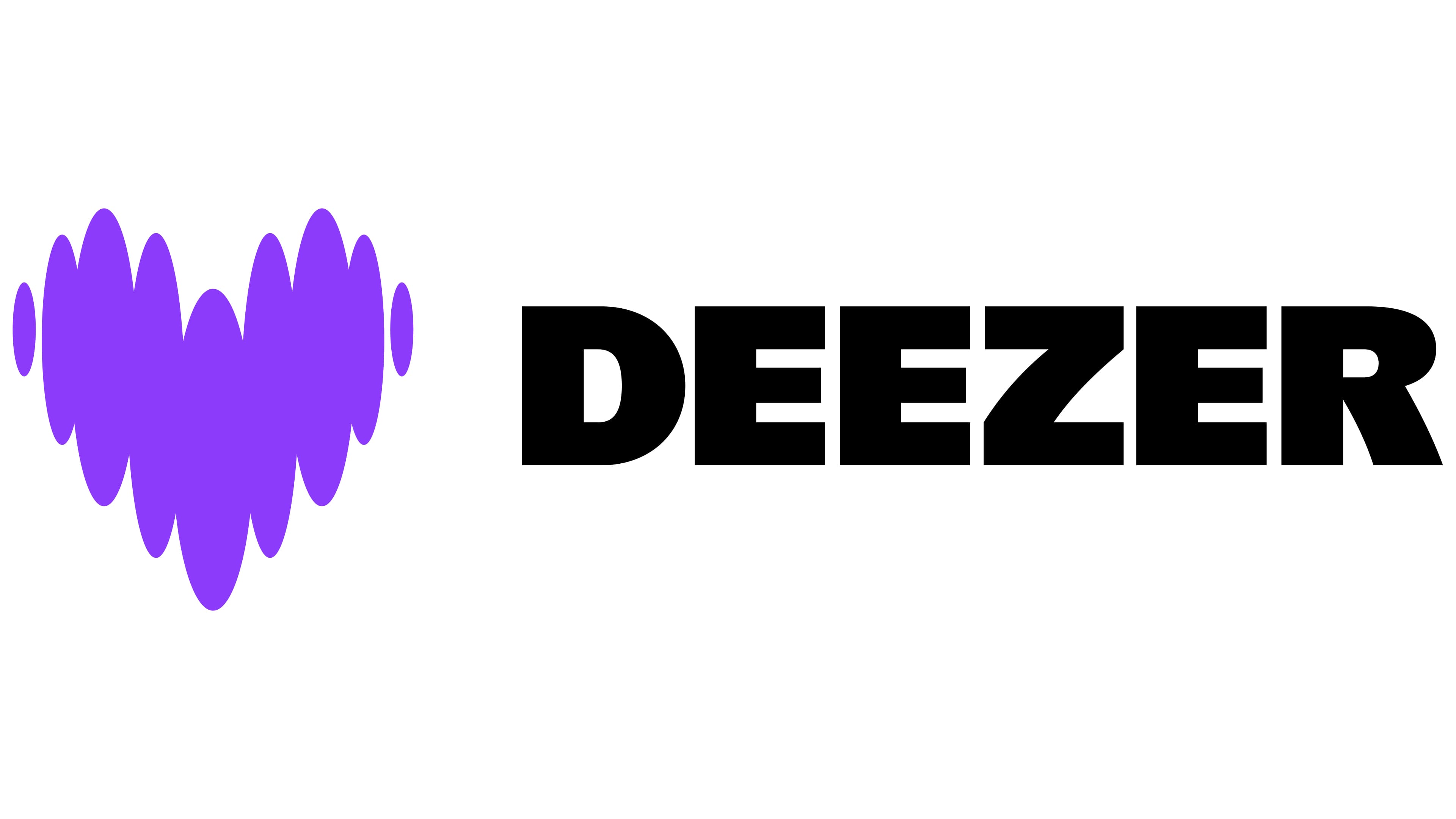
The new heart-shaped logo symbolizes the company’s shift in focus toward creating a more immersive, emotionally rich music experience. The rebranding is part of the company’s efforts to become more than just a music service provider. Instead, the company aims to become a platform that fosters relationships and artistic expression for artists, their fans, and collaborators.
The updated corporate identity, designed by renowned design agency Koto, exudes energy and enthusiasm. It reflects a deep passion for music and a sense of community among music lovers. One of the most distinctive aspects of this rebranding is the introduction of a new color, dubbed “Deezer Purple.” The company hopes this unique hue will become recognizable and help it stand out in a crowded market, much like Netflix’s iconic red or Spotify’s signature green.
Central to the new branding is the heart-shaped logo. It features a dynamic design that changes shape and mimics music’s pulse and rhythm. The logo symbolizes two key themes:
- The human factor
- Representing the beating of the heart and the musical factor
- Representing the rhythm and flow of music
This innovative design reflects music’s transformative power and its ability to touch human emotions.
Font and Colors

The first logo’s typography used capital letters from the Gotham Narrow Book font, designed by Hoefler & Co. Since 2019, the wordmark has looked new. The designers converted the lettering to lowercase and chose the Mabry Pro typeface. It appeared in 2018, based on the NG Grotesque font, which was created specifically for the American retailer Nasty Gal. It blends two grotesque styles. According to Deezer executives, it looks friendly and matches the service’s friendly interface.
The popular music brand has introduced a new font style to match its new look. This font is part of a broader change in the brand’s visual identity, including the launch of a new color called “Deezer Purple.” The goal is to make this color as synonymous with the brand as Netflix’s red or Spotify’s green.
The new font style is bold and modern, blending seamlessly with the rejuvenated, dynamic brand image. The font is integral to the brand’s refreshed identity, reflecting its ambition to be more than just a music service. It aims to be a place where music, experiences, and emotional connections come together.