


 Fandango Logo PNG
The Fandango logo encourages people to buy tickets to entertainment shows and enjoy the performance. The emblem indicates ticket distribution through a clear, convenient payment system.
James Michael Cline and Art Levitt founded Fandango in 2000. Major U.S. theater chains, including Regal Cinemas, Cinemark, Carmike Cinemas, Loews Cineplex Entertainment, Edwards Theatres, and Century Theatres, backed it. The company was created in direct response to MovieTickets.com, which was already trying to dominate online and phone ticket sales. For theater chains, Fandango was a way to retain control of a market moving online.
The first years were difficult. Many customers still weren’t used to buying movie tickets online, and smaller theater chains were slow to join the platform. In 2003, Fandango raised $15 million from Technology Crossover Ventures, which enabled it to improve its technology and expand its theater network. By the mid-2000s, Fandango had become the leading online movie-ticketing service in the United States.
On April 11, 2007, Comcast bought Fandango for about $200 million and planned to connect it with the digital entertainment portal Fancast.com. In 2008, Comcast acquired Movies.com from Disney. After Comcast acquired NBCUniversal in 2011, Fandango became part of a larger media group. In 2012, Fandango partnered with Yahoo! Movies, and Paul Yanover became the company’s president.
In 2015, Fandango bought Brazilian ticketing platform Ingresso, its first international acquisition. In 2016, it acquired M-GO, renamed it FandangoNOW, then bought Flixster and Rotten Tomatoes from Warner Bros. Entertainment. Warner Bros. received 30% of the combined company, while Rotten Tomatoes moved Fandango beyond ticket sales into film ratings and discovery. In 2017, Fandango acquired longtime rival MovieTickets.com. In 2020, it bought Vudu from Walmart and later renamed it Fandango at Home in 2024.
Meaning and History
Fandango is headquartered in Beverly Hills. The firm operates primarily online, where customers can use its services at no cost. Warner Media, LLC, owns 30% of the service. The American multinational conglomerate acquired its stake in 2016 in exchange for Rotten Tomatoes and Flixster. Diversified company NBCUniversal Media, part of Comcast Corporation, owns the remaining 70%.
Fandango is not only a ticket office. On the media service’s website, you can explore movie descriptions, read reviews from other viewers, watch interviews with actors, watch trailers for new releases, and enjoy video clips. At the same time, the online resource differs from its competitors through its original design, built around a single visual identity system. Its most important part is the logo: a stylized orange badge with blue lettering.
What is Fandango?
Fandango is an American ticketing company. It has tools of the same name: a website and a mobile application. It also offers multimedia resources for television and streaming. It was founded in 2000. The head office is located in Beverly Hills, California.
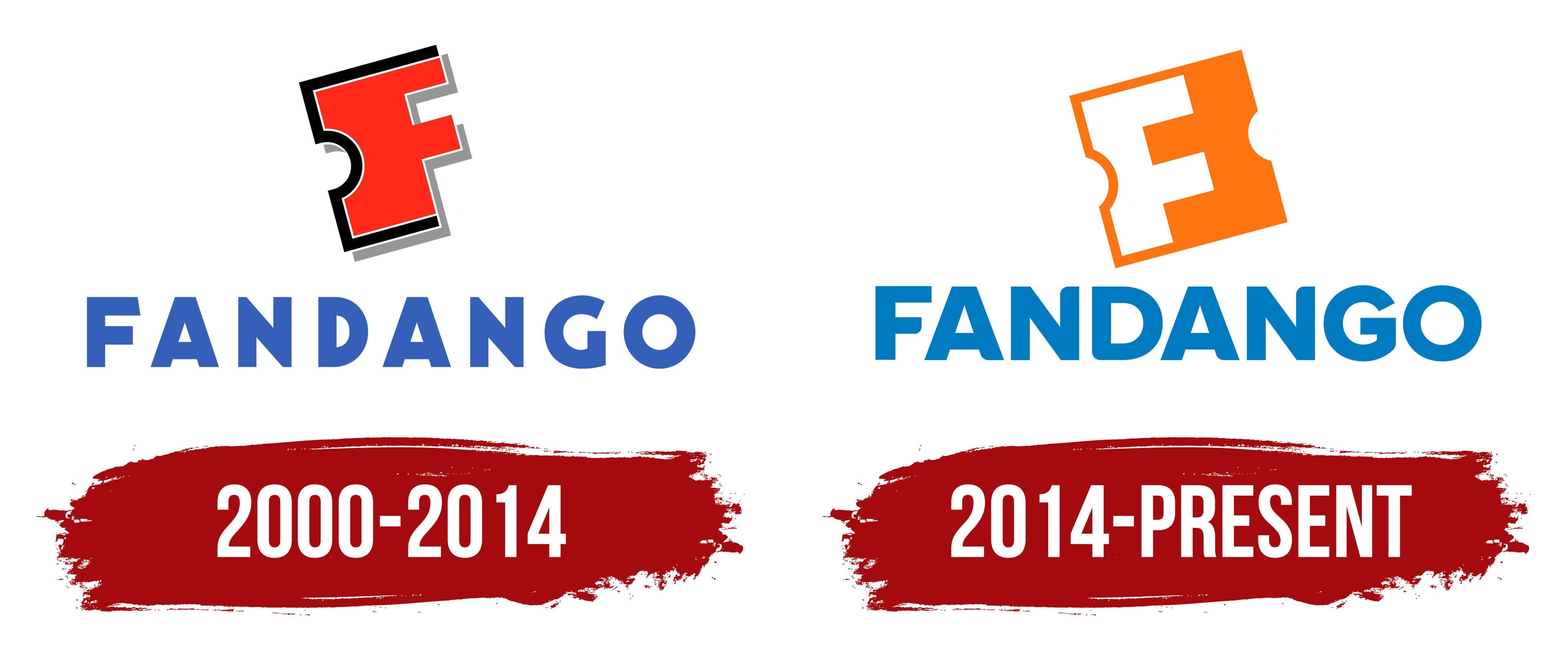
2000 – 2014
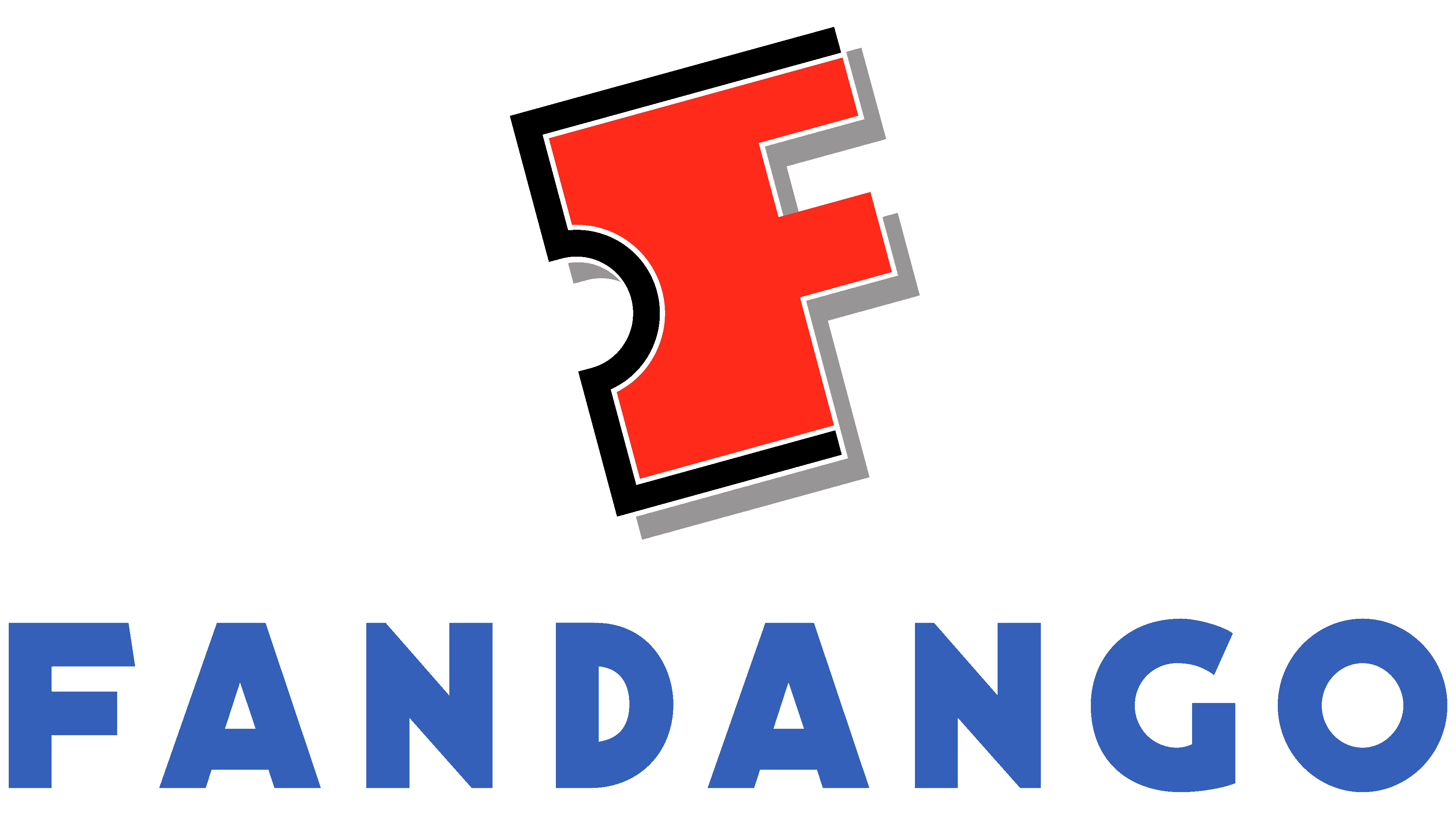
Fandango was founded in 2000 in California. Its first emblem was shaped like a puzzle piece, with a notch on the left and two ridges on the right. It looked like a big F (the first letter of the word Fandango) and a half-torn movie ticket spine. The element isn’t a single piece, as shown by a wide black outline interrupted at the top and bottom. It also has a narrow white outline and a gray shadow that creates volume. The “F” itself was completely red-orange.
Beneath the emblem was the blue word “Fandango,” written in a disproportionate, upward-looking sans-serif font. It echoed in design with a stylized letter at the top.
2014 – today
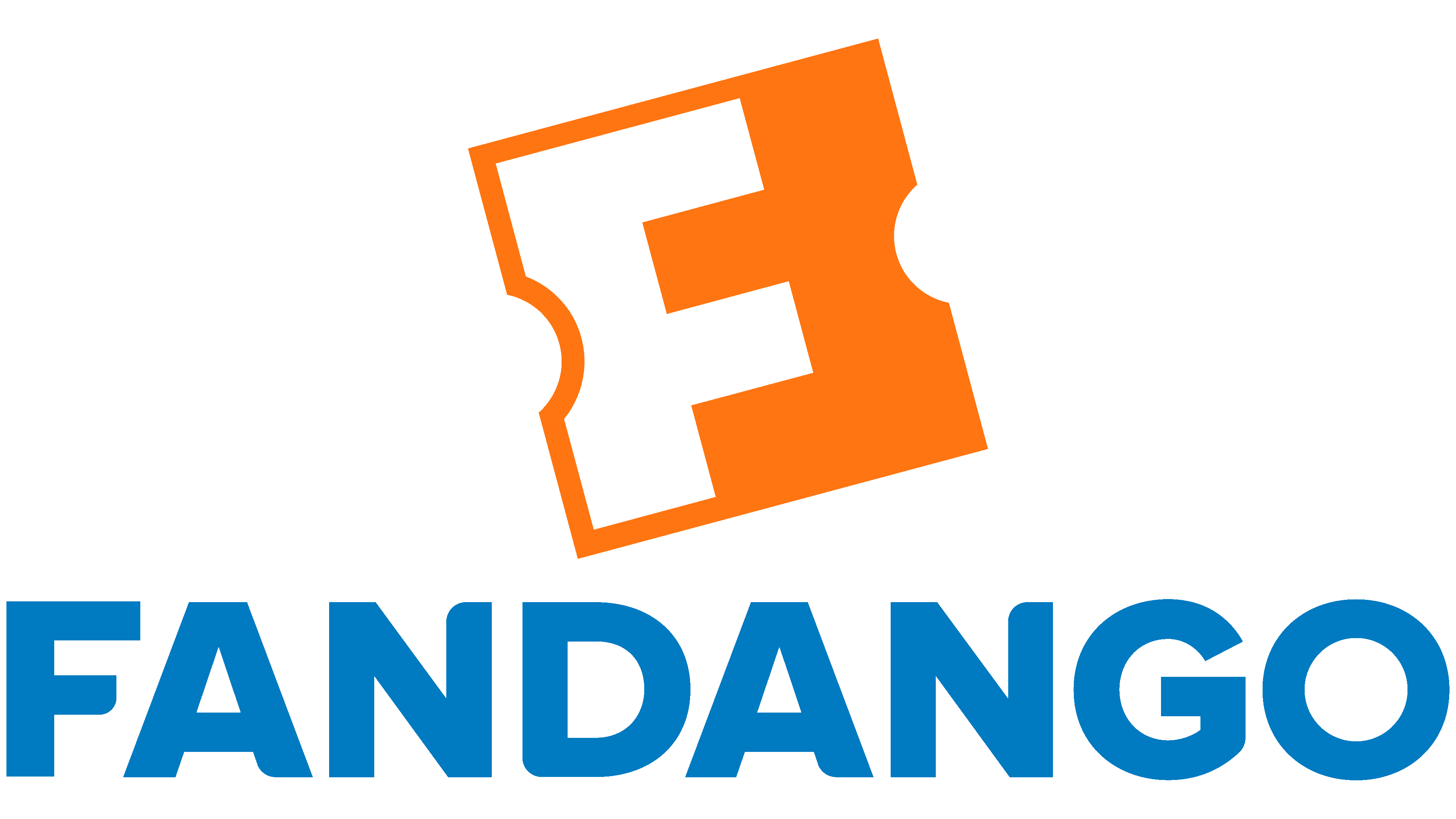
After the 2014 redesign, the graphic no longer looks like a ticket stub. Now, it is two capital “F” s turned toward each other by the protruding sides and connected like a puzzle. The first “F” is white, and the second is orange, formed by negative space. I removed the black outline because it is no longer needed; the element is already integral and no longer associated with a torn movie ticket.
The inscription has also noticeably changed. Its color is slightly lighter, and the letters are rounder and wider. Because the characters have been enlarged, the spacing between them has decreased.
Font and Colors

When the emblem lost its classic shape, it took on a new meaning. The two Fs look very simple and balanced at the same time. They balance each other through perfect symmetry. They connect to the ticket spine only by side notches, but there isn’t enough rectangular shape for complete reliability, unlike a square one. The spirit of the old logo has been preserved, though presented in a completely new way.
The wider font and reduced letter spacing make the Fandango text mark better than it was originally. The latest innovations have made it clear, visible, and easy to read. The typeface is Galeb Black by Tour de Force Font Foundry, which looks similar. The logo’s lettering differs in that some corners are rounded.

The graphic symbol, a connected FF, uses two colors: bright orange (# F3751E) and white (#FFFFFF). The word “FANDANGO” uses a light, slightly muted shade of blue (#297ABE).
FAQ
What is Fandango used for?
It is a platform for movie and television lovers, offering a range of services to enhance their entertainment experience. The brand provides detailed information about movies and TV shows, including synopses, cast and crew details, reviews, ratings, and trivia. Users can buy tickets to more than 31,000 U.S. movie theaters, reserve tickets in advance, select seats, and avoid lines.
The platform provides information on digital downloads, Blu-ray releases, and streaming options, making home entertainment easier. The website and mobile apps are user-friendly, allowing visitors to navigate, find information, and make purchases hassle-free. This digital network for film and television fans provides information, facilitates ticket purchasing, offers engaging videos, and meets the home entertainment needs of more than 45 million monthly visitors.
How do I access Fandango?
Account access and management are straightforward. Here’s how to do it:
Web Access:
- Open your web browser and go to the Fandango homepage. The site is user-friendly, making it easy to find what you need.
- Login:
- Click the “Login” button in the upper-right corner of the main page.
- Enter the email address and password associated with your account.
- Click “Login” again to access your account.
Once logged in, click your name or profile icon in the top-right corner. Select “My Account” from the drop-down menu to go to the account management page.
On the account management page, you can:
- Update your profile information, including your name, email address, and contact details.
- Add or update payment methods.
- View your order history, including ticket bookings and digital downloads.
- Set your notification and newsletter preferences.
- Change your password and manage security settings, such as two-factor authentication.
Mobile Access:
- Download the Fandango app from the App Store (iOS) or Google Play (Android).
- Open the application and click “Login.”
- Enter your email address and password, then click “Login.”
- Tap your profile icon to manage your account settings.
After these steps, you can access and manage your account for a personalized, secure experience watching movies and TV shows.
What do the symbols mean on Fandango?
Various symbols on Fandango’s Rotten Tomatoes website indicate the popularity and quality of films and TV shows. These symbols help users quickly understand the content’s overall perception. Here’s what each symbol means:
- Red Tomato: The red tomato icon means the movie or TV show is critically acclaimed.
- Green Tomato: The green tomato icon indicates a low rating.
- Certified Fresh: The Certified Fresh badge is awarded to highly rated films and TV shows that meet certain criteria for consistency and quality.
Popcorn Icons: These symbols represent audience ratings:
- Bucket Full of Popcorn: The audience rating is positive, with a score of 60% or higher, suggesting that most viewers enjoyed the content.
- Spilled Popcorn Bucket: Indicates a negative audience rating below 60%, indicating the content was poorly received.
TV Icons: Specific symbols for different seasons of TV shows:
- Fresh Season: Highly rated seasons are marked with a red tomato icon.
- Rotten Season: A season with a low rating is marked with a green tomato icon.
- Certified Fresh Season: This badge is awarded to television seasons that consistently meet high ratings and quality criteria.
These symbols help guide users by giving a quick, clear sense of how critics and audiences receive films and TV shows.
What is the font of the Fandango logo?
The logo uses a classic sans-serif font, known for its simplicity and functional design. The letters have straight, clean lines, giving it a balanced and pleasing appearance. Each letter is the same size, increasing readability. A unique feature of this font is the subtle curve at one end of each letter.
The grotesque sans-serif font used in the logo works well due to its modern appeal. Clean, straight lines and a minimalist design give the logo a contemporary look that appeals to today’s audiences. The uniform letter size and proportions make the logo easy to read at a glance, which is crucial for brand recognition. This versatile font works well across various sizes and formats, whether on a website, in a mobile app, or in printed materials. Its simplicity keeps it clear and legible across different media.
What does the Fandango logo mean?
The logo’s square shape and jagged sides resemble movie tickets, immediately evoking the act of purchasing them. This visual element signals to users that the platform is for buying movie tickets.
The logo features a prominent white “F” on an orange background. This choice makes the logo stand out and increases brand recognition. Negative space cleverly forms an inverted “F” shape, adding depth to the design.
The movie ticket shape and the letter “F” blend harmoniously to create a cohesive design. The white “F” stands out against the bright orange background, making the logo easy to recognize. Orange suggests energy and excitement, reflecting the enjoyment of watching movies.