


 Fannie Mae Logo PNG
The logo of Fannie Mae, the Federal National Mortgage Association, reflects its history and core mission of providing affordable housing financing. Its concise and modern design combines simplicity of form with an expressive font. The emblem’s details reflect the company’s key areas of activity and its role in supporting a stable, accessible housing market.
Founded in 1938 during the New Deal era, Fannie Mae began work with federally insured mortgages and entered the bond market within its first years. Early activity helped expand access to housing finance, and by the late 1940s, the organization added loans backed by the US Department of Veterans Affairs. Growth continued through the 1950s, leading to a shift toward mixed ownership.
In 1968, Fannie Mae became a fully private corporation while remaining under federal oversight. In 1970, its mandate expanded to include conventional mortgages, and, in parallel, a new institution, later known as Freddie Mac, emerged in the same sector. During the 1980s, Fannie Mae shifted to a model based on mortgage-backed securities, transforming pools of home loans into investment vehicles.
By the early 2000s, the balance sheet expanded to hundreds of billions of dollars, leaving the company exposed when the US housing market turned downward. Heavy losses in 2007 and 2008 pushed Fannie Mae into federal conservatorship in September 2008. Over the following years, the enterprise transferred all profits to the US Treasury, eventually repaying sums that exceeded the public funds injected during the crisis.
Debate over long-term reform continued through the 2010s, with officials discussing options for reshaping the secondary mortgage market. In 2025, the administration of President Donald Trump outlined plans for a return to public markets, targeting an initial offering by year-end. Proposals involved capital raising to strengthen the balance sheet while maintaining Fannie Mae’s role in US mortgage finance.
Meaning and History
What is Fannie Mae?
The Federal National Mortgage Association is part of the United States housing finance sector. It is a government-sponsored enterprise that buys and insures mortgages from lenders on the secondary mortgage market. Liquidity in the mortgage market increases through this process, allowing banks and other financial institutions to offer more home loans to borrowers. The agency operates behind the scenes to maintain a stable and reasonably priced housing market rather than directly providing mortgages to buyers. Mortgages are bundled into mortgage-backed securities for the company’s investors, helping distribute risk and attract foreign capital to the US housing market.
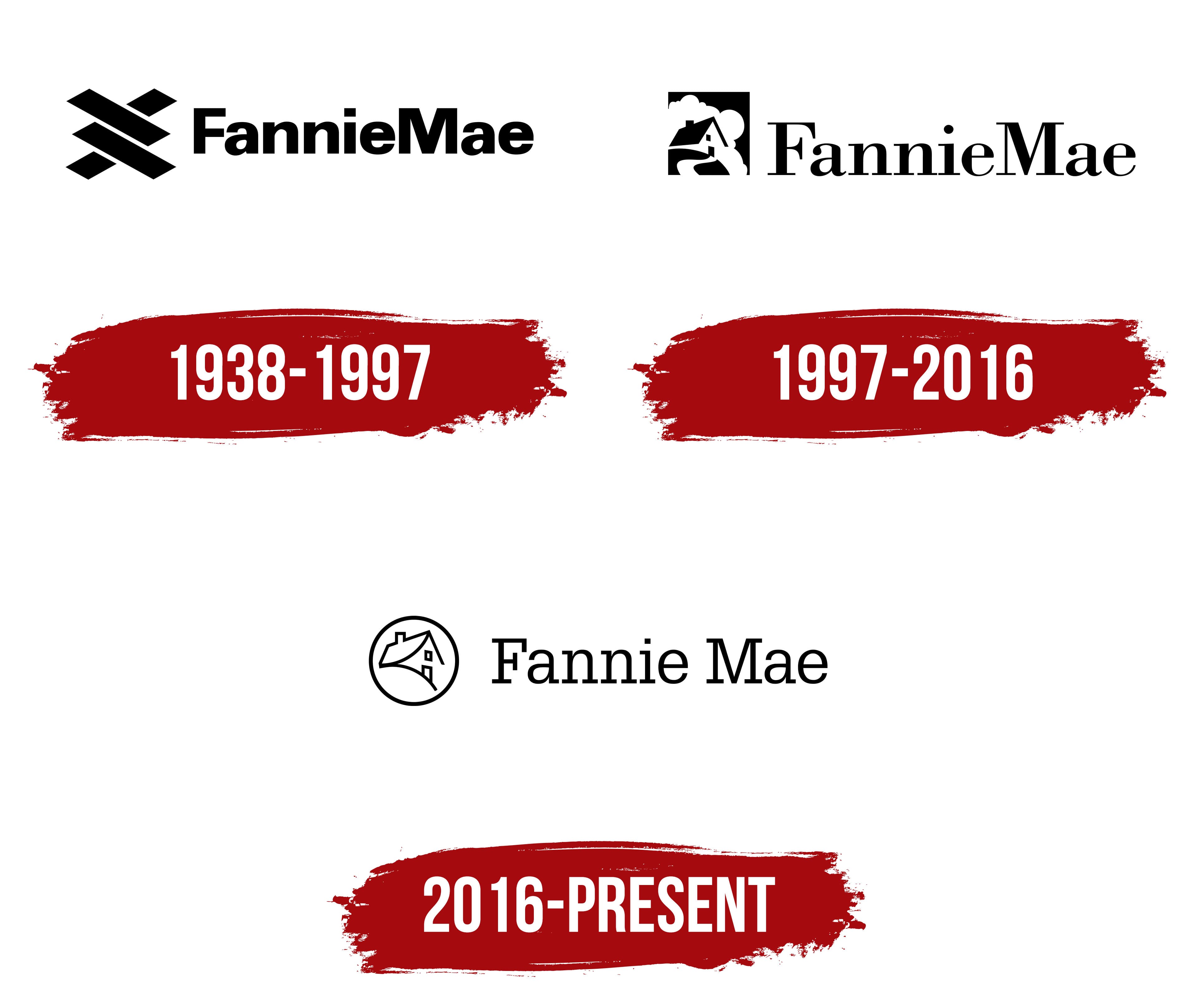
1938 – 1997
The early-period logo appeared impressive and solid. Its design conveys a sense of reliability, stability, and resilience. The broad, massive letters embodied confidence and were associated with a strong foundation on which the Federal National Mortgage Association operates.
At the center was a neat yet expressive symbol. It was positioned to the left of the text block, close to the keywords “Fannie” and “Mae.” Against a light background, the elements stood out with a thoughtful shape. The emblem symbolized unity and emphasized the organization’s dependability and commitment to collaboration. The symbol depicted an interweaving of elements resembling chain links or rope strands, forming a sturdy cord. Both visual images represented the joining of efforts toward a common goal and symbolized strong connections.
The text portion was carefully balanced to harmonize with the symbol. The proportions created a sense of balance and symmetry, enhancing the overall impression. The wide and even letters appeared reliable and well-balanced. Each of the two words, starting with a capital letter, highlighted their importance, while the font style added weight and significance to the text block.
1997 – 2016
The logo introduced years later became visually rich while maintaining informativeness and appeal. The new design appeared multilayered and meaningful. Its foundation was a complex graphic pattern that added detail and context to the company’s activities.
The color palette emphasizes the company’s stability and resilience. Monochromatic shades of black and white conveyed confidence in achieving goals. A minimalist approach modernized the logo, simplifying its perception while adding style and elegance.
To the left of the text block, on a white background, was a graphic element: a square banner. The black background in this figure highlights a white-rendered house, symbolizing the company’s line of business. This element represented the Federal National Mortgage Association’s assistance and became a key focal point of the new identity.
The text design was updated. The company name was placed in an elegant font to the right of the graphic element. The new typeface was refined, and the serifs and rounded letterforms added aesthetic appeal to the text.
2016 – today
The updated logo, introduced for the third time, resulted from a successful rebranding effort that clarified and modernized the company’s identity. The new design stood out from previous versions with its simplicity and elegance. The changes brought a sense of completeness to the emblem while maintaining a focus on key aspects.
The element featuring a house remained, but its representation became more concise and straightforward. A small, detailed structure was depicted within a circle, conveying a sense of comfort and reliability. The white background added lightness, while black was used for sharp outlines and details, creating a striking contrast that allowed the logo to appear bold yet restrained.
To the right of the house image was a text block. The name was presented separately for the first time in the company’s history. The letters, rendered in a subdued black, appeared refined and expressive, while their static nature underscored the company’s stability and solidity.