 Fast Company Logo PNG
As expected, the Fast Company logo is text-based, since it is a magazine focused on text. To stand out from competitors, the company chose an unusual inscription. It serves several functions: as an emblem, a cover design element, the magazine’s concept, and the main point of its theme list.
Fast Company was founded in 1995 by Bill Taylor and Alan Webber, two former editors of Harvard Business Review. They wanted to create a business magazine for a new generation of managers, founders, and executives working during the rise of the digital economy. Instead of the formal style common in older business publications, the magazine focused on innovation, leadership, workplace culture, and companies changing traditional business models.
The launch was backed by publisher Mortimer Zuckerman, who already owned U.S. News & World Report and the New York Daily News. The first issue appeared in November 1995. Fast Company quickly stood out through its energetic visual style, use of infographics, and reporting on Silicon Valley, internet startups, and business leaders working outside the older corporate model.
In 1997, publishing rights moved to Gruner + Jahr, part of the Bertelsmann media group. In 2005, Fast Company and Inc. were acquired by Mansueto Ventures, founded by Joe Mansueto, the creator of Morningstar. Under the new owner, the magazine expanded its website. It continued covering innovation, design, corporate culture, technology, and social responsibility in business.
In 2008, Fast Company launched its annual Most Innovative Companies list, which became one of its best-known editorial projects. The magazine later added World Changing Ideas, focused on projects with social impact. In September 2022, its website was temporarily taken offline after hackers accessed its content management system and push notification system. Fast Company has long competed with Harvard Business Review for management coverage and with Forbes in the business media space, while maintaining a stronger focus on innovation and business transformation.
Meaning and History
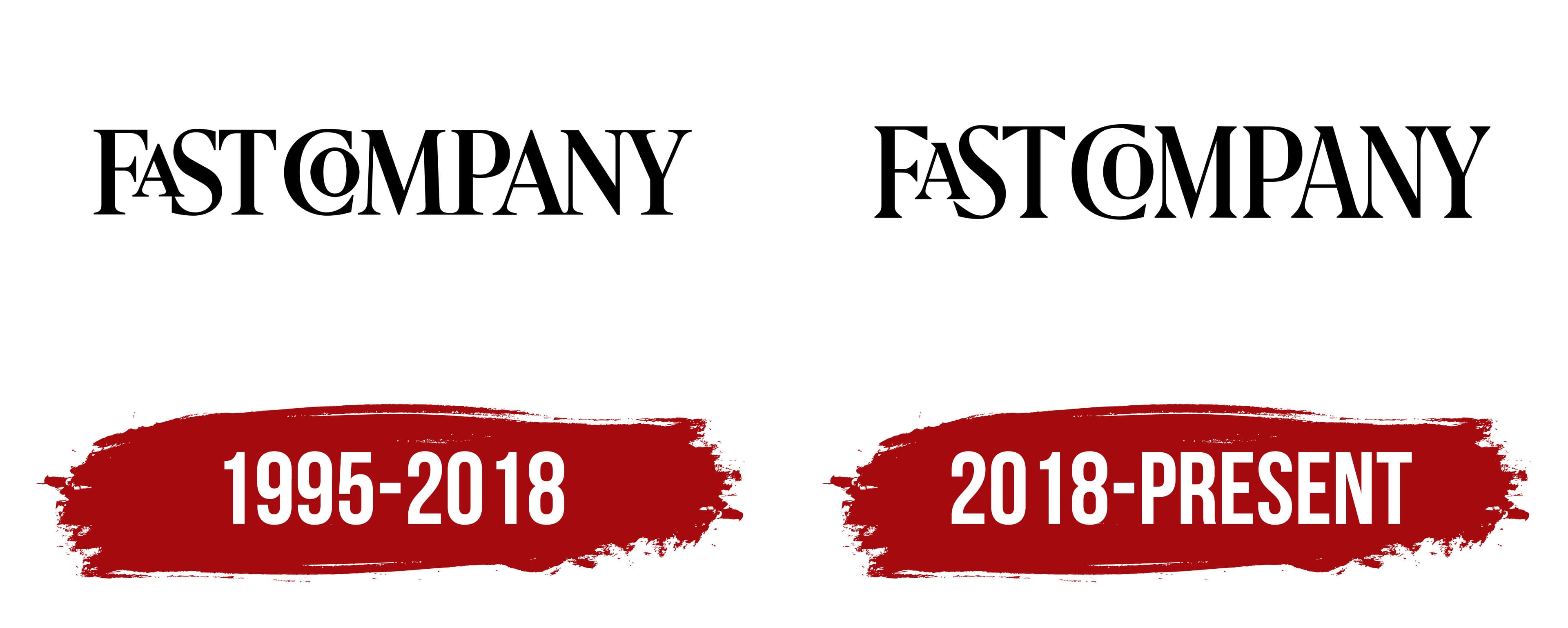
This magazine has experienced ups and downs, preserving not only its original concept but also its identity. The departure of the founding editors did not significantly affect it, as if Fast Company is an unshakeable pillar at the foot of which hundreds of bustling people pass without a trace. However, traces of those connected with it have remained in the form of honorary awards or, conversely, disappointments and financial risks.
The publication’s emblem is its specially designed name. It has always adorned the cover and was in the website’s header, opening the world of business, design, and technology to readers. With the simple inscription, those interested can immediately recognize the magazine, as it still occupies the top of the front cover. Of course, individual elements are used in the text, which helps it stand out among competitors. At first glance, the Fast Company logo may seem simple. The unusual placement and size of the letters make them non-standard, bright, and memorable.
What is Fast Company?
Fast Company is a print and electronic magazine published in the US since 1995. It is dedicated to business, technology, and design, and is released every two months. The head office is located in New York City. The magazine was founded by Bill Taylor, Mortimer Zuckerman, and Alan Webber and now belongs to Mansueto Ventures.
1995 – 2018

The emblem was designed by the famous lettering artist and type designer Jim Parkinson, who specializes in logos for newspapers and magazines. He created a light, dynamic symbol that demonstrates the main point: the world’s changeability, the fact that it does not stand still but appears in different guises. The inscription looks elegant because:
- Sharp serifs are used.
- Glyphs have an elongated form;
- Capital “A” and “O” are reduced in size;
- Symbols are placed almost close together but not merged;
- Minuscule letters are harmoniously “hidden” among large ones;
- Despite the difference in size, the signs do not seem to jump;
- No glyph goes beyond the established border.
The black color adds elegance and classicism to the logo, which is necessary for the magazine to maintain its image as both old and new. This allows it to expand its readership, significantly covering representatives of different generations.
2018 – today
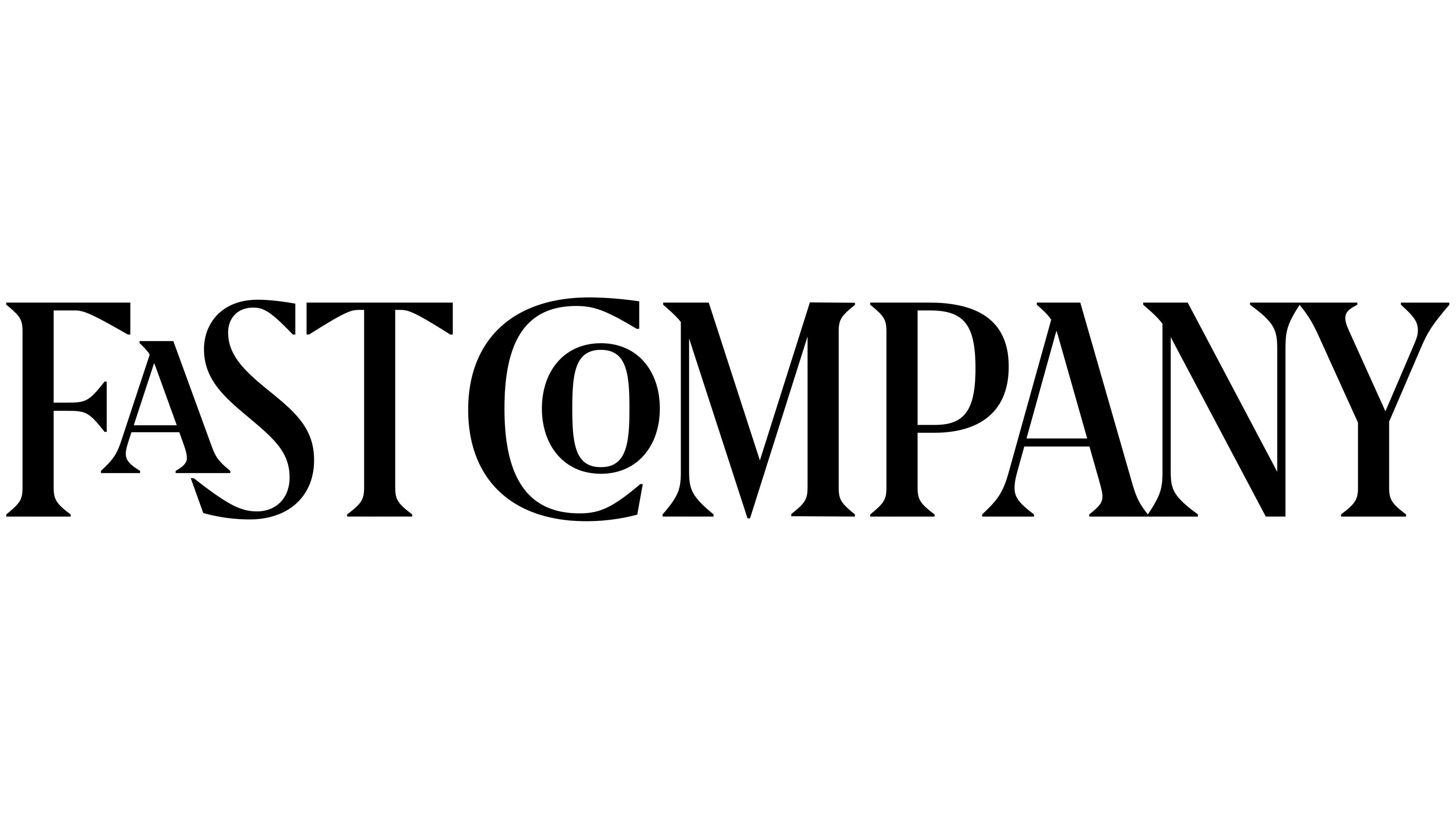
The inscription in the modernized Fast Company emblem is set in the Grifo font. It is also elegant but not as light because of its wide, dense serifs. With the same font weight, the letters appear massive. Designers chose this typeface for its versatility: depending on the surrounding text, the logo, set in this font, can look elegant, bold, or even radical. Moreover, the massive serifs live up to their name: they resemble a griffin’s claws.
The developer of the new version is Mike Schnaidt. He not only created the emblem but also proposed using the Grifo font for magazine headlines, which was named Grifinito. This means the typographer has almost completely reworked the periodical’s visual identity. He kept the symbol’s color monochrome.
Fonts and Colors

In all versions of the Fast Company logo, elegant fonts with tall glyphs have been used except for two. These are the “A” and “O,” reduced in size and placed among the other letters. Despite their small size, they are easy to read thanks to optimal character spacing. In one of the emblems, the signs are written in a condensed manner; in another, the font resembles Toledo Serial Medium. Grifo, on the other hand, is versatile, with a clear separation of letters.
The monochrome palette includes only two colors: black and white. But depending on the background (e.g., a magazine cover), it can be any other color.