


 Gacha Life Logo PNG
The Gacha Life logo is flawlessly smooth and nearly perfect. The emblem conveys harmony in the characters’ appearance, suggesting the player’s ability to assemble dolls and create their ideal, wholesome story.
Gacha Life grew out of the work of Lucas Lee, known online as Luni, an American creator with Japanese roots. After studying animation in college in 2014, he treated game development as a personal hobby rather than a formal career. His independent studio Lunime, based in Illinois, had early roots in projects such as Put The Record On, followed by Anime Gacha and Anime Arcade in 2014 and 2015.
Those early games tested anime styling and the gacha mechanic, a system inspired by Japanese capsule toy machines. In 2016, Luni released Gacha World, an RPG with characters, story, and battles. Gacha Studio and Gacha Resort followed in 2017. Across these projects, Luni worked as illustrator, programmer, and designer, using Adobe Animate as the main tool.
The breakthrough came in October 2018 with Gacha Life. The game combined character creation, social simulation, and a Studio mode for making scenes with up to eight characters, backgrounds, poses, and dialogue bubbles. Android came first, followed by PC in November and iOS later. Players used screenshots to create mini-movies, music videos, and fan series for YouTube and TikTok, turning the game into a tool for digital storytelling.
The popularity also brought criticism because some filters and poses were unsuitable for a 9+ audience. In January 2020, Luni removed problematic content from Android and PC. Gacha Club followed in June 2020 with more slots, 600 poses, and wider platform support. In 2023, Luni shifted from updating Gacha Club to Gacha Life 2, released on iOS, Android, and PC. By 2025, he mentioned Gacha Life 3, while later attention moved toward WonderEnd.
Meaning and History
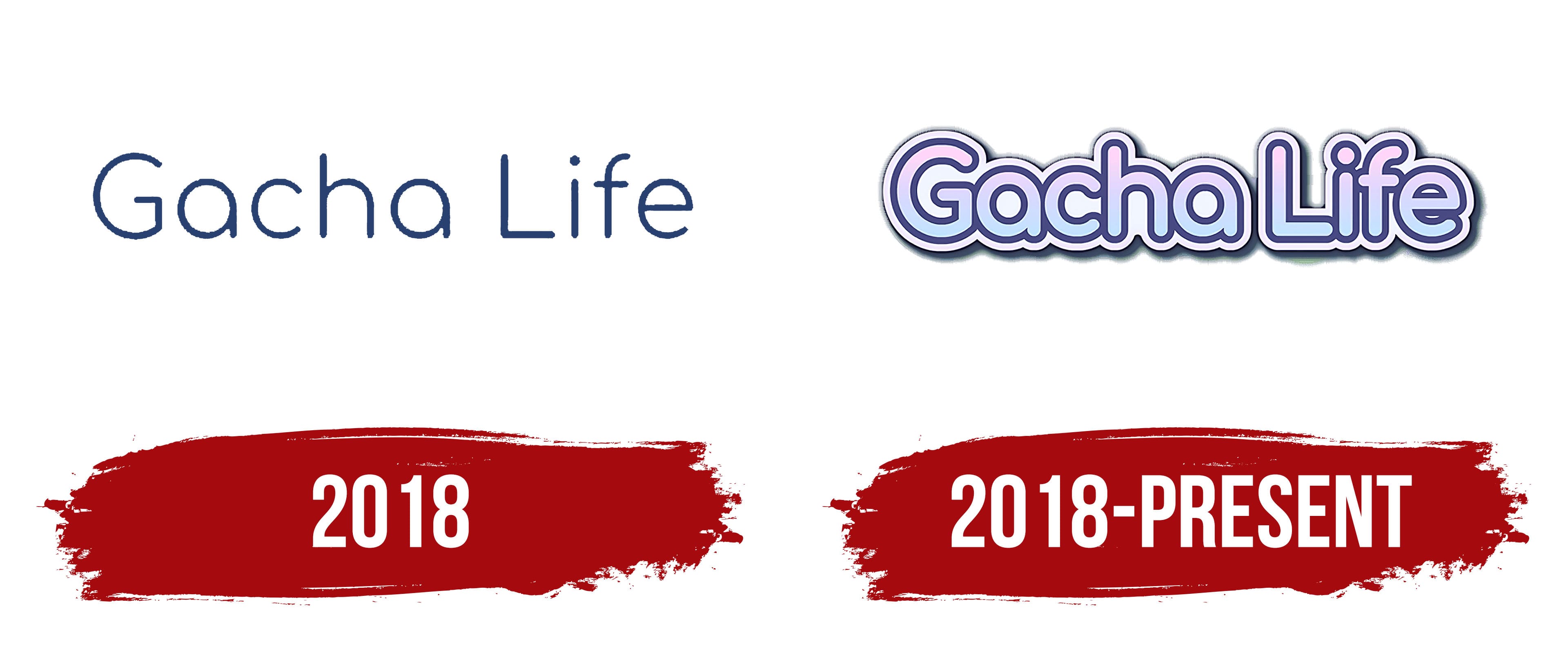
The game has a single constant logo used across all Gacha Life variations. The trial emblem stayed behind the scenes, unseen by users. The logo’s style resembles a cardboard cutout or sticker with carefully and harmoniously adjusted elements. The logo underscores the importance of appearance in games and hints at the Chibi style, with plump, short characters featuring large, prominent eyes.
What is Gacha Life?
It’s part of a role-playing game where one can dress up to 20 characters, create various scenes and dialogues with them, design the background and interior, interact with other characters, give them gifts, and participate in mini-games to earn gems.
2018

The first logo was designed before the game’s launch. It’s a simple, everyday name in black color, made up of thin, wide letters. It resembles a temporary work version used for material designation.
The letters’ width indicates spaciousness, maximum attention to individual characters, and staged scenes. However, the black color and simplicity of the glyphs did not match the game’s colorful nature. Therefore, the symbol was entirely changed by the time Gacha Life was released.
2018 – today
The current emblem is as colorful and iridescent as the game itself. The name is a sticker with multicolored, stylish letters. The gradient shows the ability to match the outfit and makeup in tone, combine different items, and create a cozy and interesting interior.
The deep shadow behind the inscription turns the emblem into theater decorations, showcasing staged scenes and embodying static volumetric characters that can be examined from different sides. The thick white substrate, in the form of letters, demonstrates the dolls’ connection to their environment.
Font and Colors
The logo is done in a lilac-pink gradient transitioning through light purple. The color palette speaks of creativity and talent, the ability to shape the character and image, and to express them through clothing and appearance. Pink shades appeal more to female audiences, who find the themes of outfits, decorations, and dolls more engaging.
The font is smooth and round, reflecting the game’s exuding peace and harmony. Characters maintain friendly relationships and strive to be friends. The multi-layered design of each character underscores the importance of ambiance and image. The close contact of the letters speaks of the dolls’ interaction in the game.