


 Holy Cross Crusaders Logo PNG
The Holy Cross Crusaders logo centers on a knightly theme and represents the college’s sports division, which has used it since 1884. The team’s colors, along with a knight with a raised sword and a white cross on the shield, symbolize courage, honor, the pursuit of victory, and loyalty to the team’s ideals.
The College of the Holy Cross in Worcester traces its athletic roots to the late 19th century. The nickname “Crusaders” was adopted in 1884 and formally adopted in 1925 after a student vote, replacing alternatives such as “Sagamores” and “Chiefs.”
Football began in 1890 and produced unbeaten seasons in 1911 and 1915. Basketball began in 1900, paused several times, and returned in 1939. The program peaked in 1947 under coach Alvin Julian, going 23 straight wins and winning the NCAA Tournament, defeating Navy, City College of New York, and Oklahoma in the final.
The team played home games at Boston Garden because there was no campus arena. The 1947 roster included freshman Bob Cousy, who later joined the Boston Celtics. In 1954, the program added an NIT title, while earlier seasons included a Final Four return and multiple Elite Eight appearances.
Baseball also reached a national level, winning the College World Series in 1952 against Missouri.
In 1980, the college declined an invitation to the Big East to prioritize academics. Football moved from Division I-A to I-AA in 1982. In 1986, Holy Cross became a founding member of the Patriot League, later expanding participation across all sports.
Within the conference, the program accumulated more than 50 titles and maintained a strong rivalry with Lehigh. Women’s teams began in 1974, and basketball reached the NCAA tournament multiple times, including a notable 1991 win over Maryland.
Meaning and History
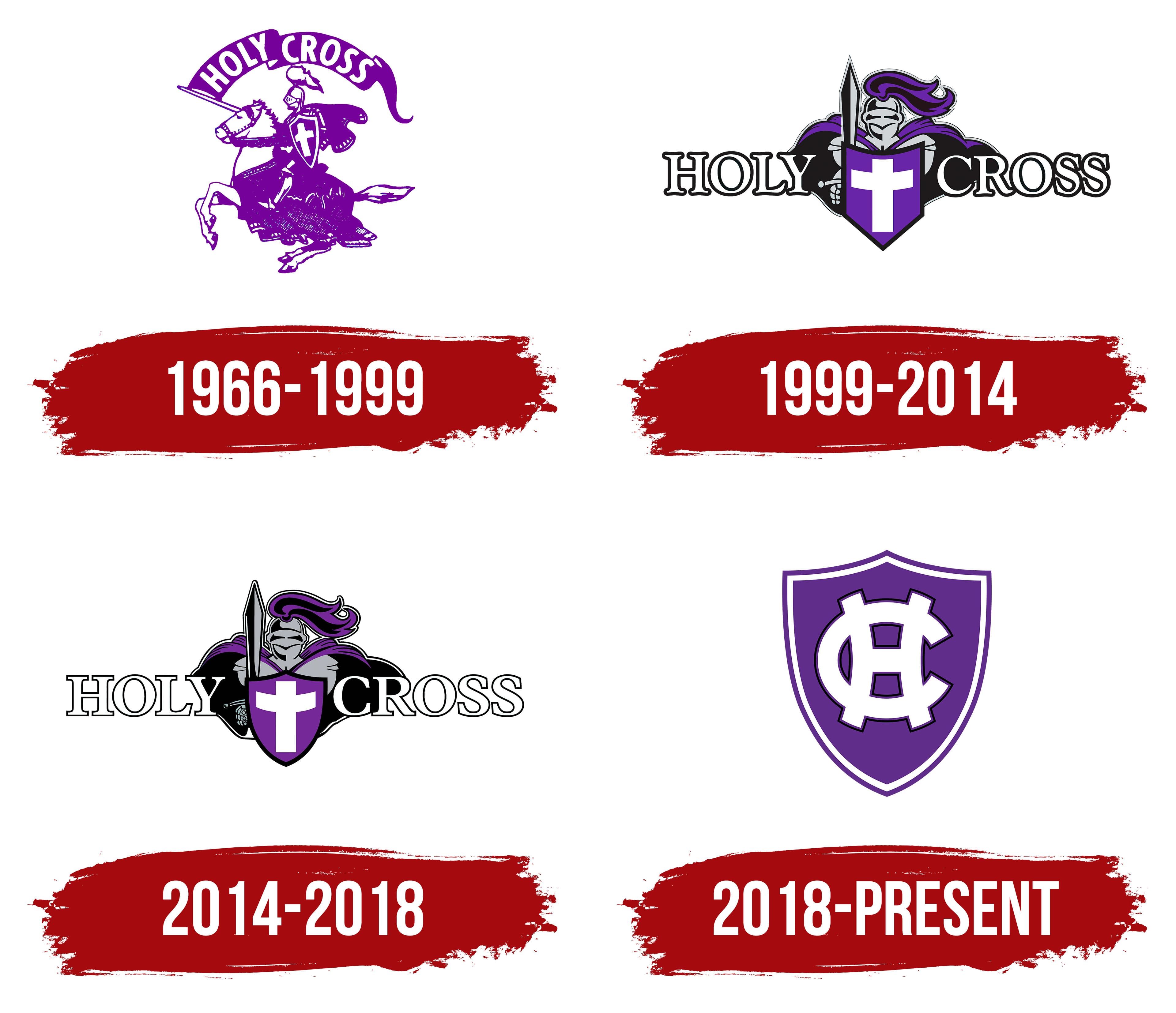
What is Holy Cross Crusaders?
The Holy Cross Crusaders are the athletic division representing the College of the Holy Cross in intercollegiate competitions. It includes 25 student teams competing in NCAA Division I and the Patriot League. The hockey teams play in the Atlantic Hockey Association (men) and Hockey East (women). Rowers compete in the Eastern Association of Rowing Colleges. The baseball team has won the NCAA championship twice.
1966 – 1999
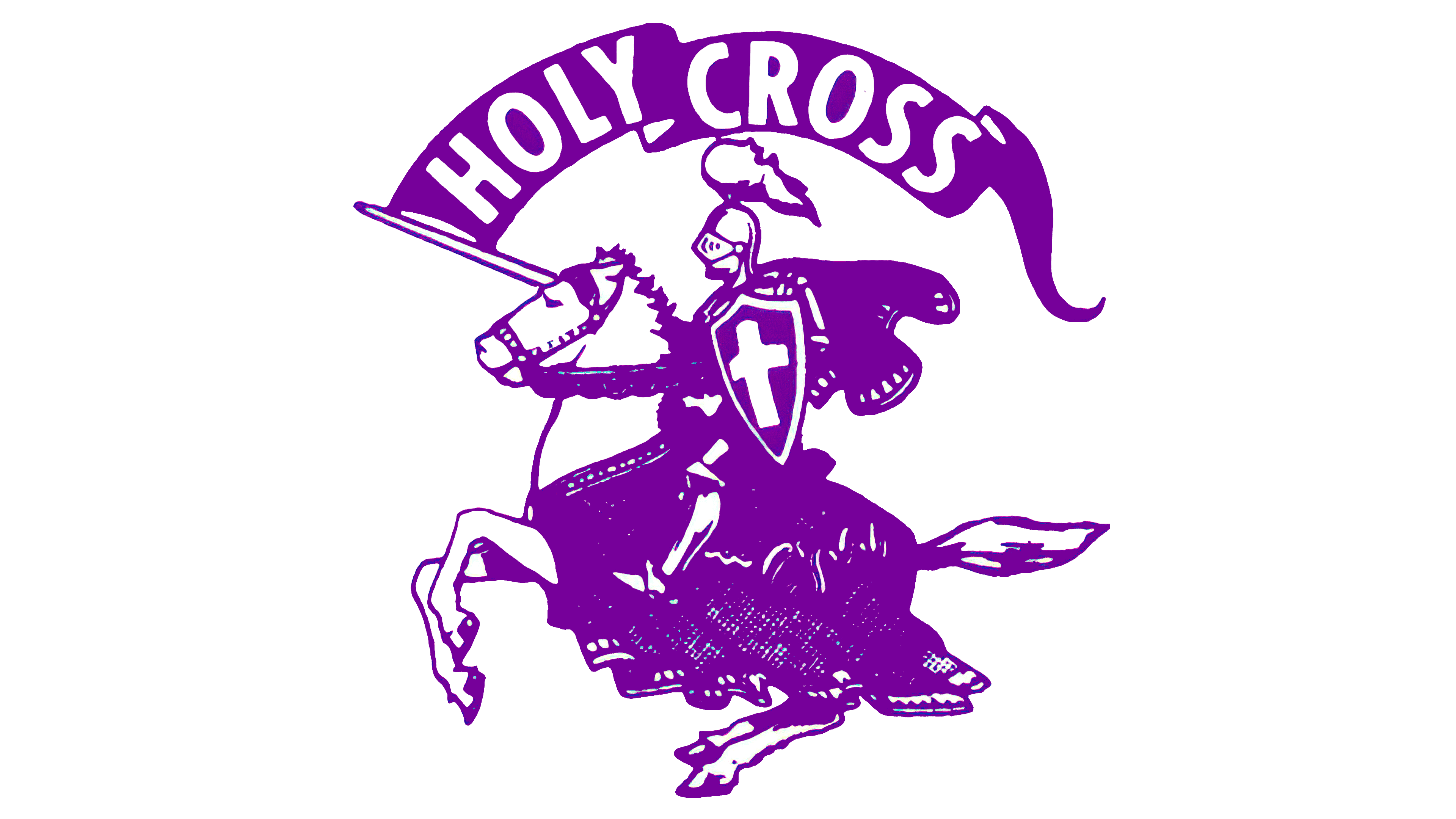
The mounted knight with a cross on his shield in the Holy Cross Crusaders emblem used from 1966 to 1998 connected the athletic nickname to the college’s religious roots. The College of the Holy Cross in Worcester, Massachusetts, was founded in 1843 by Boston bishop Benedict Joseph Fenwick, a Jesuit. He named it after Boston’s Cathedral of the Holy Cross. The cross, shield, and armed rider later became part of the college’s athletic identity. Its teams competed as the Holy Cross Crusaders.
Purple and white connected the emblem to the institution’s traditions. Two explanations have been offered for the purple. One traces it to Emperor Constantine’s purple banner and the motto “In Hoc Signo Vinces,” meaning “In this sign you will conquer.” The other links it to Fenwick’s episcopal purple. White accompanied purple in the athletic identity. In early knight illustrations, unprinted areas of paper contrasted with colored strokes to define armor, weapons, horse tack, and lettering.
The knight appeared in the college’s history before the athletic nickname. In 1884, an engraving of an armored rider adorned the menu for an alumni banquet in Boston. Holy Cross adopted the Crusaders name in 1925 after a vote organized by the student newspaper The Tomahawk. The choices were Crusaders, Chiefs, and Sagamores. Results published on October 6 recorded 143 votes for Crusaders, 17 for Chiefs, and seven for Sagamores.
Baseball players Owen “Ownie” Carroll and “Doc” Gautreau helped popularize the name. Boston Herald sportswriter Stanley Woodward recalled that the players asked him to call the team the Crusaders rather than the Chiefs. In his 1964 book Paper Tiger, he credited the players with the idea, disputing claims that he had coined it. Newspaper coverage brought the name into everyday use among fans.
The 1966–1998 logo depicted the knight and horse in full. The left-facing horse rears while the rider holds a long lance almost parallel to the ground and a small triangular shield bearing a white cross. A plume rises above his helmet, and a cape flows behind his shoulders. Numerous fine strokes define fabric folds, armor components, the mane, and the horse’s tack.
A curved purple ribbon bearing white HOLY CROSS lettering extends above the rider. Uppercase serif letters follow its curve, and its elongated right end turns downward. The ribbon completes the scene, with its detailed weapons, clothing, and riding equipment.
1999 – 2014
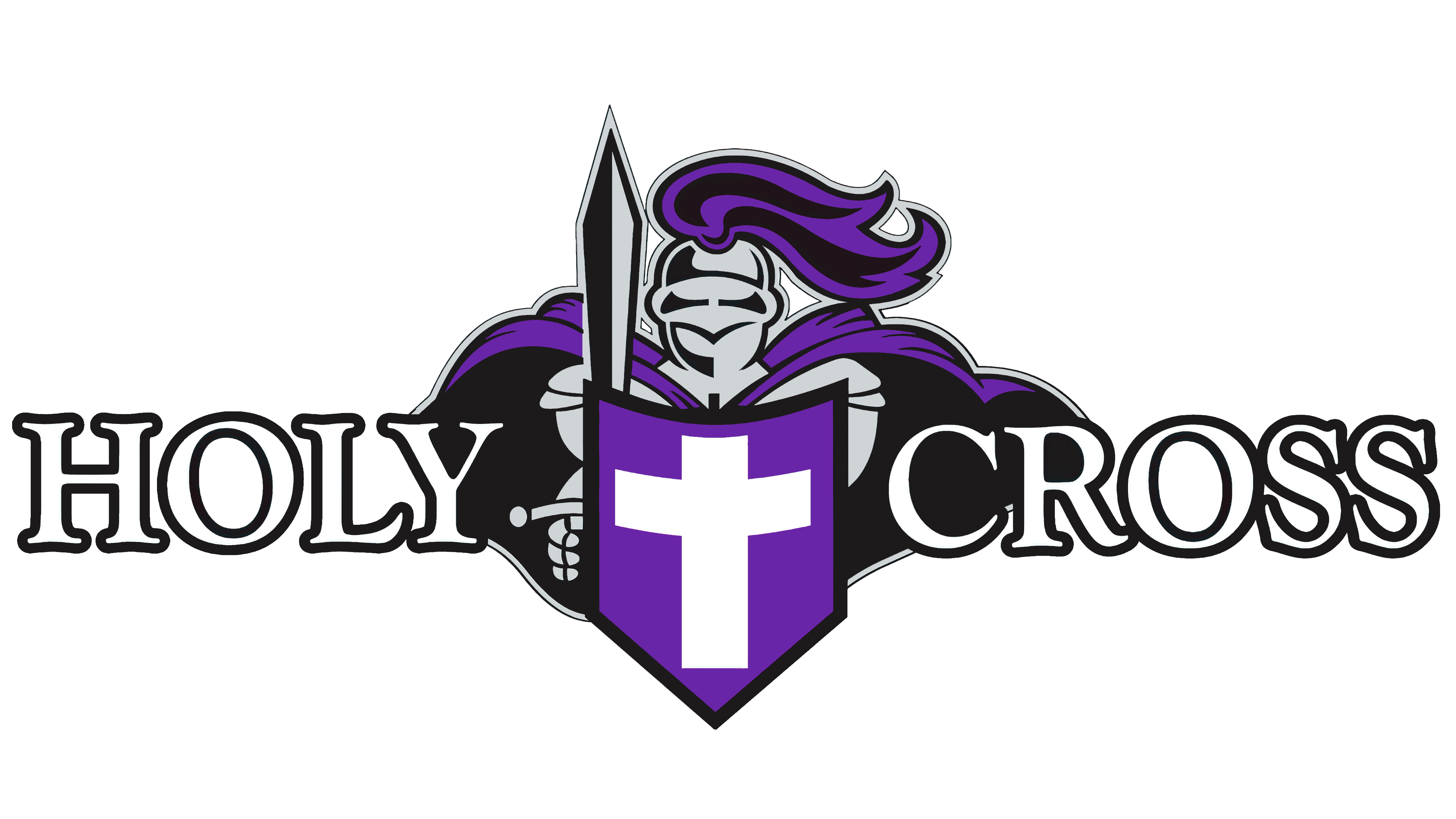
In the 1999 Holy Cross Crusaders logo, the name flanked the knight. HOLY appeared on the left and CROSS on the right, extending the design horizontally. A forward-facing, waist-up portrait of a crusader stood between the words, replacing the full mounted figure. The character became more compact, while the words formed a separate line.
The knight holds an upright sword on the viewer’s left. A square purple shield with a pointed base and a large white cross covers his chest. A closed helmet conceals his face, and a purple plume extends to the right. Gray areas suggest metal, while black lines separate the armor components and define the outer silhouette.
The white uppercase HOLY CROSS letters have serifs and black outlines. The two words sit at the same height on either side of the portrait, uniting the name with the crusader.
2014 – 2018
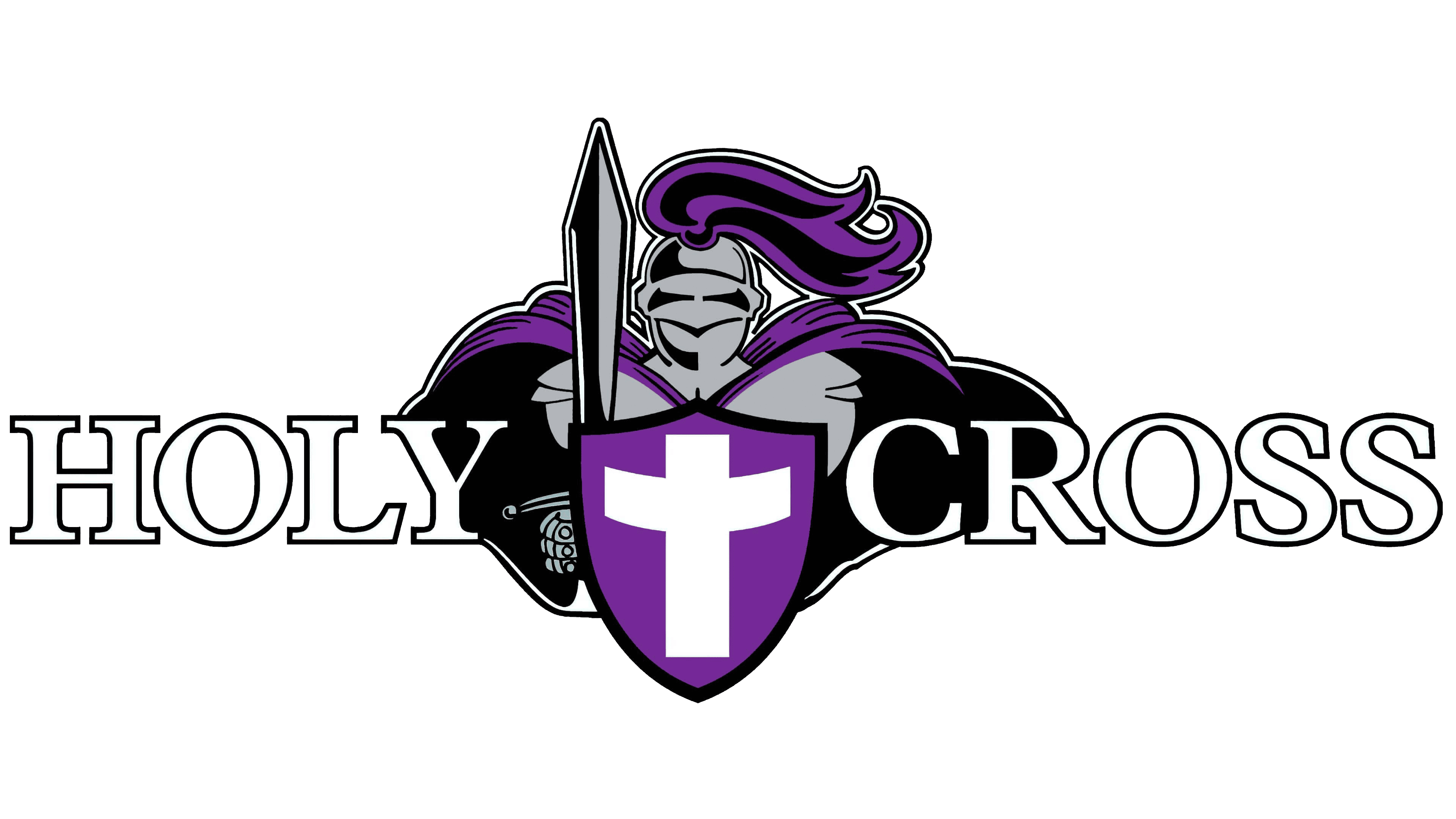
The knight remained in the Holy Cross emblem after the 2014 update, with changes to the proportions and selected details. Larger letters made HOLY CROSS extend farther relative to the figure between the words. The sword, closed helmet, and cross retained their positions. This knight version remained in use until 2018, when the college discontinued such imagery.
The shield returned to a triangular shape with a pointed bottom. Rounded lower sides softened its form, and a black-and-white outline was added. Purple remained dominant, though its shade changed.
The athletic emblem’s revision coincided with the introduction of shared identity standards for college departments. The 2014 documentation specified Pantone 2607 U and Pantone 268 C for purple, with the hex code #602D89 for digital use. HOLY CROSS in the knight logo retained custom lettering distinct from the typefaces used in the broader college identity.
2018 – today
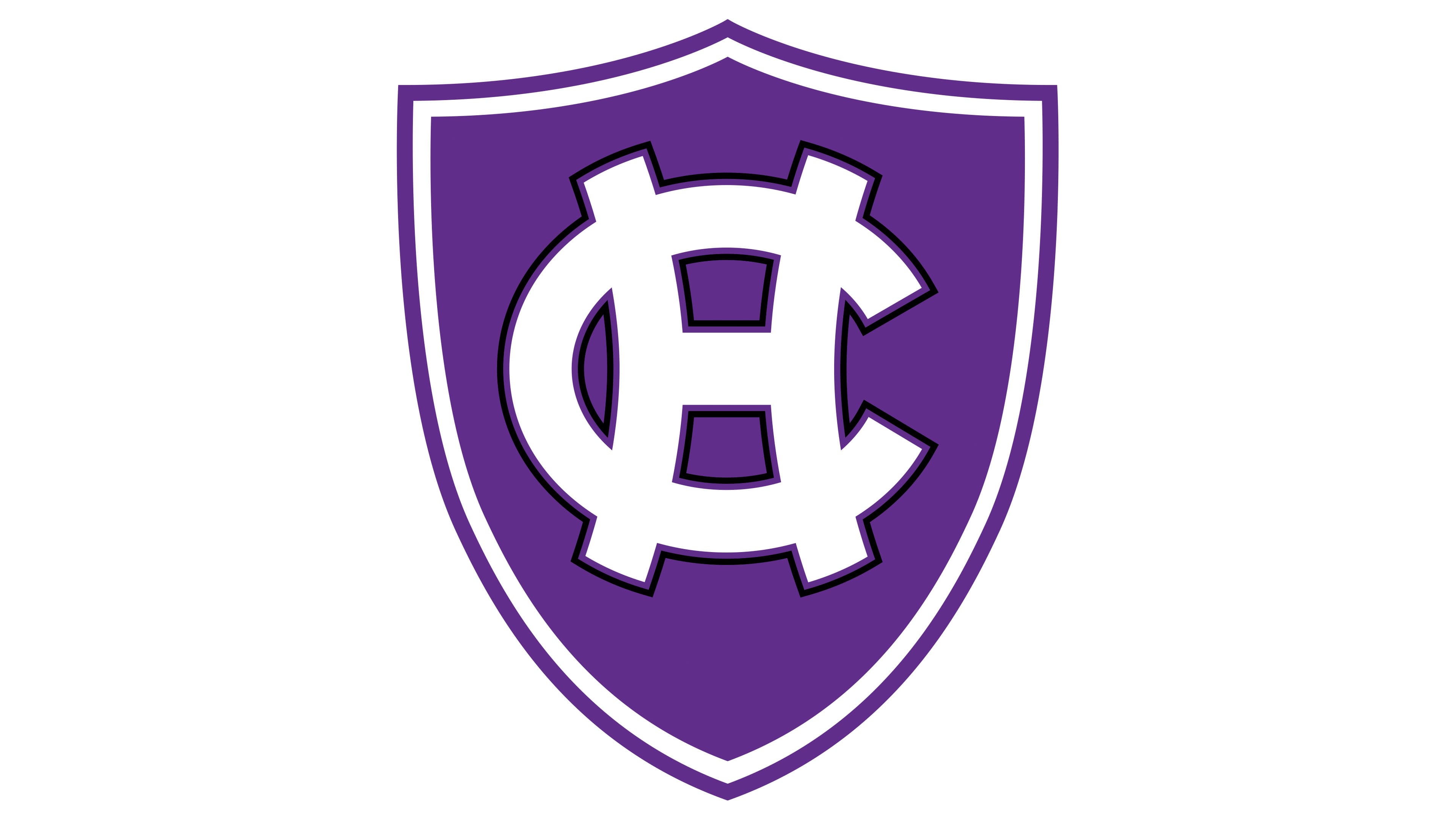
Holy Cross retained the Crusaders name in 2018 but reconsidered its connection to the athletic emblem. College leaders emphasized the modern English use of “crusader” to describe an active champion of a cause, particularly justice. The armed knight evoked the medieval Crusades, religious warfare, and violence. The college sought to move away from those associations while keeping the name and replacing the image.
The changes followed a discussion begun by a working group in fall 2017. Over eight weeks, students, alumni, faculty, and staff shared their views on Crusader. Two open forums were held, and approximately 1,800 responses were received. On February 3, 2018, the Board of Trustees approved retaining the Crusaders name. On March 14, college president the Rev. Philip L. Boroughs, S.J., announced that knight imagery and the costumed mascot would be phased out. A purple shield with interlocking HC initials became the primary athletic emblem.
The initials stand for Holy Cross. A white “H” interlocks with a rounded “C,” with thin dark outlines defining the letters. The shield’s upper edge rises at the center, while its curved sides converge at a pointed base. A white inner border separates the purple field from the outer outline. The warrior, weapons, and standalone cross were removed. The shield changed from an object held by the knight into a frame for the college’s abbreviated name.
The collection includes the primary shield, a standalone HC monogram, and combinations with wordmarks. The primary colors, Pantone 268 C purple and white, are supported by black and Cool Gray 5. The digital specification for purple is #582C83. Lettering within the marks uses the custom Crusaders typeface in regular, italic, and condensed styles.