HTV7 Logo PNG
The overall design of the HTV7 logo is not just visually appealing; it also encapsulates the channel’s brand identity and commitment to quality entertainment.
The HTV7 emblem, conceived in 1995, has been used on all subsequent versions. Its contemporary form consists of three parallelograms, each colored red, green, or blue. Each shape contains one white letter from the “HTV” channel’s moniker. All three parallelograms are encased in a common gray outline. A white numeral “7” is situated on the right, encased in a similar gray border. To the right of the number “7,” the letters “HD” appear in a smaller typeface.
With its distinct colors and design, the logo conveys a vibrant, dynamic image, signifying the variety and diverse content the channel offers. The three parallelograms symbolize the channel’s commitment to providing multiple perspectives and a variety of entertainment.
The letters “HTV,” which stand for the channel’s name, directly communicate the brand’s identity to viewers. The placement of these letters in the colored parallelograms indicates that the channel is at the heart of the entertainment it offers.
The white numeral “7” on the right indicates the channel’s name, “HTV7.” The gray outline that encircles the seven and the three parallelograms provides a uniform visual cue that binds all elements of the logo together. This signifies unity and consistency in the channel’s brand identity.
The “HD” inscription on the far right of the logo signifies the channel’s high-definition quality, indicating that HTV7 is committed to delivering high-quality visuals and an immersive viewing experience.
HTV7 is tied to the television infrastructure in Ho Chi Minh City, which was established before Vietnam’s reunification. Until January 27, 1973, the seventh VHF channel carried AFVN, the U.S. military television service in South Vietnam. After the Paris Peace Accords, AFVN stopped broadcasting. On April 30, 1975, Vietnamese forces took control of the station’s facilities. After reunification in 1976, it became part of Ho Chi Minh City Television, or HTV.
HTV7 began taking shape in 1986 during the Doi Moi reform period. The seventh VHF band was used experimentally in the PAL color system, while HTV9 still used NTSC. At first, HTV7 mainly served a technical role in the transition to color broadcasting, carrying announcements, advertising, and city information. On January 1, 1987, it began regular broadcasting.
A major event came on August 23, 1987, when a fire destroyed much of the HTV television center. Broadcasting resumed the next day, and HTV completed its move to color television. In its early regular years, HTV7 aired mainly from 6 p.m. to midnight, while sharing morning content with HTV9. In the 1990s, HTV7 gradually moved toward entertainment, while HTV9 focused more on news and public affairs.
In 1995, HTV7 expanded to 14 hours a day and received its own red, green, and blue logo. In May 1999, it launched Nhịp cầu âm nhạc, Vietnam’s first live-music request program. In December 2003, HTV7 entered DVB-T digital broadcasting with VTC and BTV, then moved to satellite through Measat in 2005 and Vinasat-1 in 2008. HTVC introduced HDTV for the channel in 2008; HTV7 moved to terrestrial HD on May 19, 2013, adopted Full HD 1080i in 2016, and ended analog broadcasting on June 15, 2016.
Meaning and History
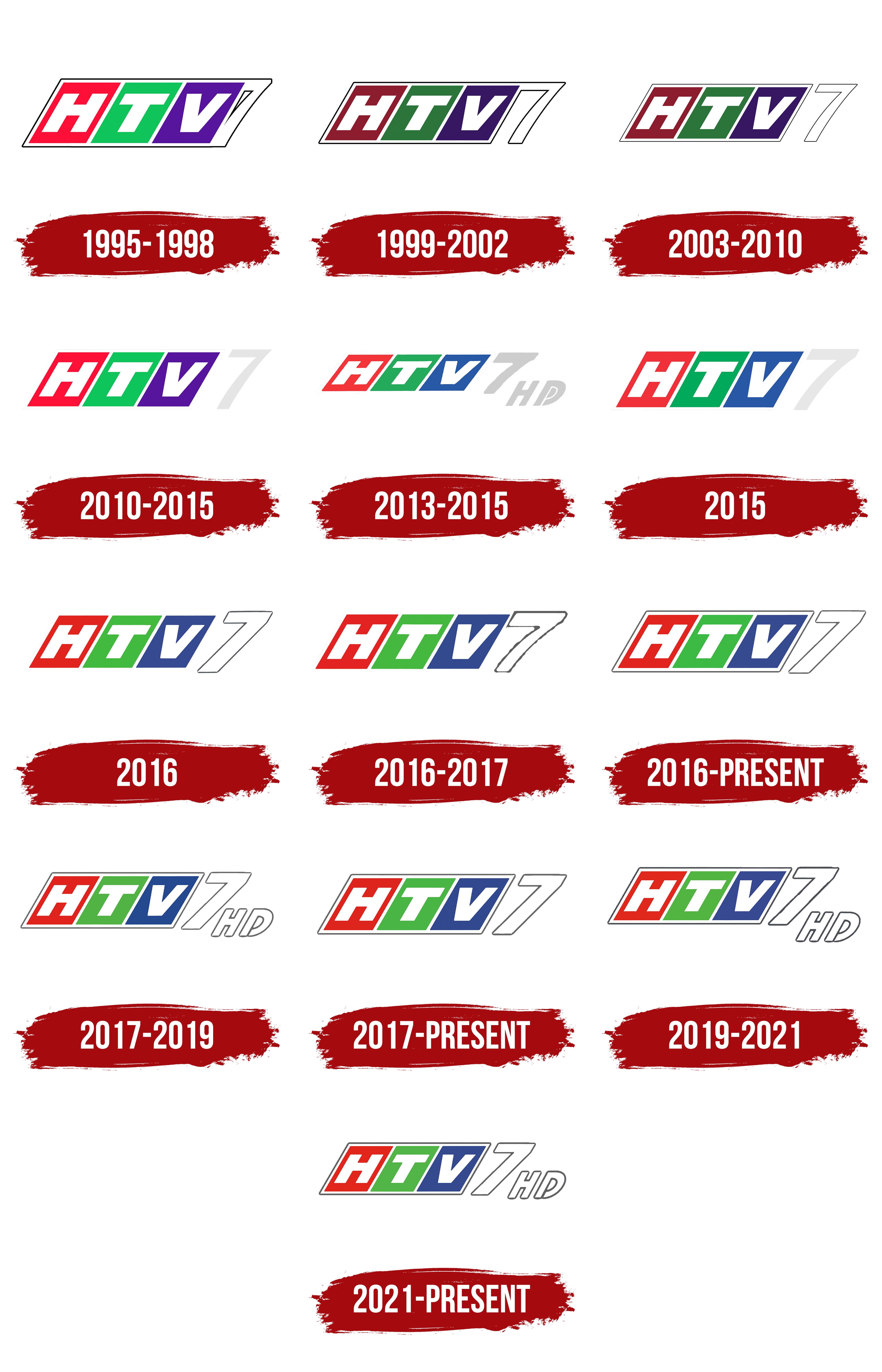
The corporate identity of HTV7 is deeply rooted in its commitment to delivering high-quality, diverse content. This commitment is reflected in everything the channel does, from its programming choices to the way it interacts with viewers. This devotion to quality and diversity helps the channel connect with a broad audience and sets it apart in the competitive television market.
The channel’s branding blends modern and traditional elements, mirroring the eclectic mix of programming it offers. Its logo, a distinctive design featuring a channel number, exudes modernity while also hinting at tradition through colors significant in Vietnamese culture. This harmonious blend of modern and traditional elements gives the brand a unique, easily identifiable look that resonates with viewers.
The channel’s interactive nature, through audience participation in many of its shows, embodies its brand identity as a viewer-centric platform. This emphasis on viewer involvement reinforces the channel’s reputation as an entertainment provider that values its audience and strives to make them a part of the entertainment experience.
What is HTV7?
HTV7 is a television channel of Ho Chi Minh City Television (HTV), the largest local television station in Ho Chi Minh City, Vietnam. Founded in 1987, HTV7 offers a diverse range of programming, including news, sports, films, dramas, and talk shows, all with a strong focus on domestic content. The channel is widely accessible throughout Vietnam and plays a significant role in the country’s media. HTV, and by extension HTV7, is recognized for its contribution to promoting Vietnamese culture, entertainment, and information to audiences nationwide.
1995 – 1998

1999 – 2002

2003 – 2010

2010 – 2015

2013 – 2015

2015

2016

2016 – 2017

2016 – today

2017 – 2019

2017 – today
2019 – 2021

2021 – today