 Icade Logo PNG
“By investing, the company sees the future of the building and the return that investors can expect,” says the Icade logo. The emblem’s elements combine two sectors of the corporation’s work: private and public. The organization gets the most out of each.
Icade originated on June 11, 1954, when François Bloch-Lainé created SCIC within Caisse des Dépôts to address postwar housing shortages in France.
During the 1950s–1960s, SCIC built large-scale residential districts, including Sarcelles with over 10,000 units, followed by projects in Créteil, Massy-Antony, Épinay-sur-Seine, and Gagny. By 1962, construction reached 110,000 rental units, and by the late 1980s, the portfolio exceeded 200,000 apartments.
The company also expanded into public infrastructure and commercial projects, including the Rungis wholesale market and the Méridien hotel in Paris, reflecting close ties with state-led development.
In the 1990s, SCIC introduced property management services and entered the office real estate market, moving away from a purely social-housing role as public asset policy evolved.
In 2003, SCIC was renamed Icade, marking a shift toward a market-oriented structure. In 2005, social housing assets were transferred back to Caisse des Dépôts. On April 12, 2006, Icade went public on Euronext Paris with a valuation of €2.64 billion and, in 2007, gained SIIC status.
From 2007, the company restructured, sold residential assets, and focused on commercial and healthcare real estate, competing with Unibail-Rodamco and Gecina. On December 31, 2013, Icade merged with Silic, strengthening its office portfolio in the Paris region. In 2017, it acquired ANF Immobilier for €400 million, expanding beyond Île-de-France. Between 2018 and 2019, the company entered Italy and Germany through healthcare properties. In 2023, Icade agreed to sell its healthcare portfolio, Icade Santé, for about €1.4 billion.
Meaning and History
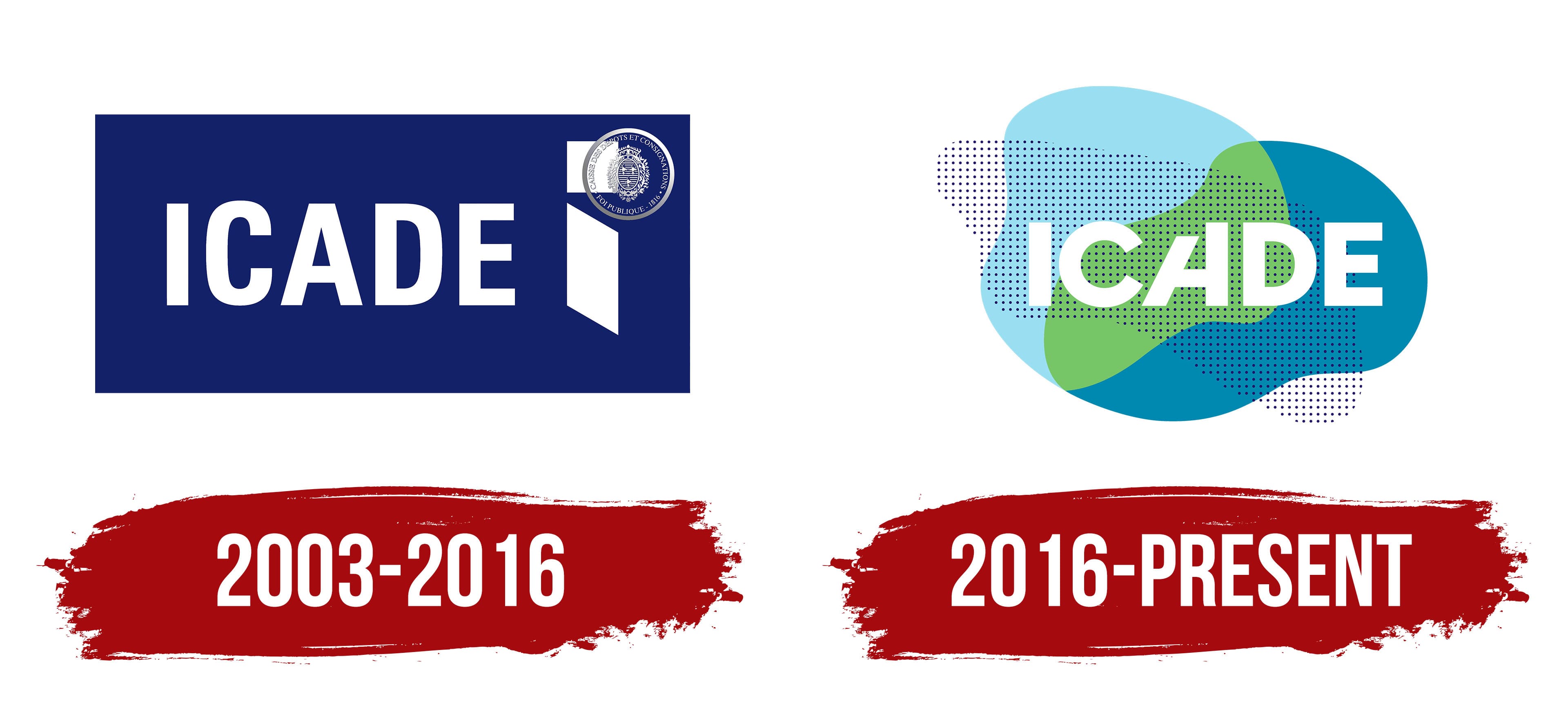
Throughout its history, Icade has changed its logo and emblem numerous times to reflect changes in its operations and visual style. Each emblem reflects a particular feature or concept of the company, making Icade easy to recognize among other companies in the industry.
What is Icade?
Icade is one of France’s biggest representatives in the real estate market. This company creates various commercial and medical facilities, including warehouses, shopping centers, business parks, offices, nursing homes, and clinics. It also invests in projects that make buildings energy efficient, environmentally friendly, and reliable.
2003 – 2016
The first investment company logo appeared in 2003, immediately after the SCIC group’s rebranding. Its main element is the “Icade” lettering in a strict sans-serif typeface. The name has no hidden meaning: it comes from Immobilière Caisse des Dépôts. On the right is a figure resembling the letter “i.” It consists of a square and a parallelogram. The color scheme is simple, white on blue.
2016 – today
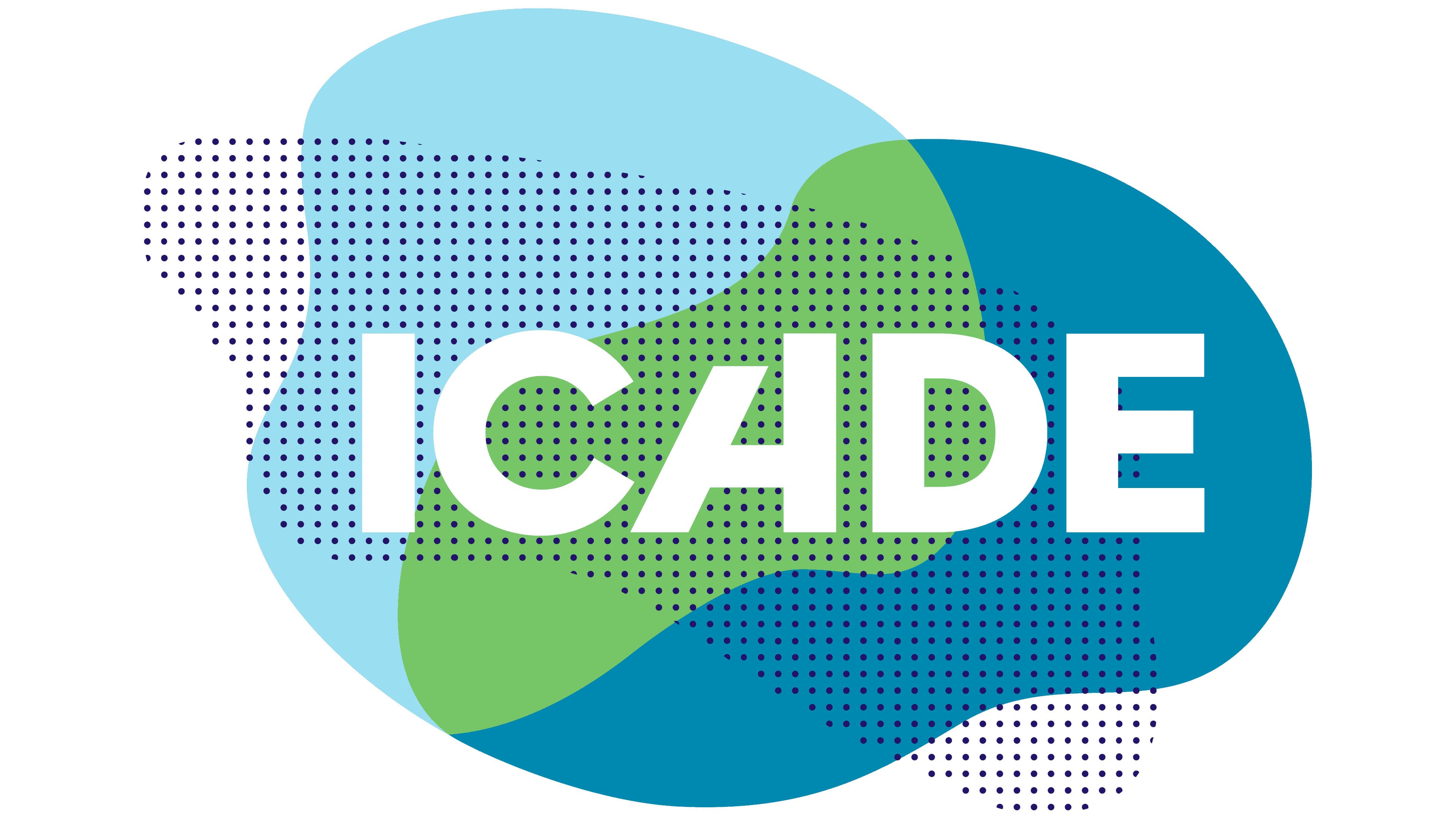
On February 13, 2016, the company introduced a different logo. As CEO, Olivier Wigniolle noted that the business had changed its strategy over the past 15 years, so it was necessary to modernize its visual identity. He believed the new style was more customer-centric and less institutionalized.
The modern logo also has the “Icade” inscription, but it looks completely different from the previous version. The top of the letter “A” is slightly cut off, a detail that has become part of the brand identity. The motto “L’immobilier de tous vos futurs” appears at the bottom, added after a partial rebranding.
Another feature of the graphic sign is the original background. The background features large, chaotic spots of different colors. The palette includes blue, cyan, and green. One “cloud” consists of many black dots lined up at equal intervals.
Font and Colors

The Icade logo font is a classic sans-serif typeface. These are wide sans-serif uppercase letters, chopped, smooth, and even. In this case, it is distinguished by strict geometry and the absence of the upper-left part of the “A.” It has half the top cut off, so the right side is slightly higher.
The color scheme consists of white (lettering), black (dots), blue (speckled cloud), green (another chaotic spot), and cyan (third cloud).