


 Klasky Csupo Logo PNG
The Klasky Csupo logo is done in a handmade style. The emblem reflects the studio owners’ creative nature and the imaginative ideas that fill their cartoons. The sign catches the eye and makes you look closely at each series.
Klasky Csupo began in 1982 in the spare bedroom of a Hollywood apartment Arlene Klasky and Gabor Csupo rented. The company took its name from its founders. Csupo, born in Budapest, had trained as an animator in Hungary before moving to the United States. At the same time, Klasky worked in production and art direction.
In 1987, the studio was hired to create animated shorts for Fox’s The Tracey Ullman Show. Matt Groening created the characters, but Klasky Csupo shaped key visual choices. Studio artist Gyorgyi Kovacs proposed yellow skin and Marge’s blue hair. The studio produced all 48 shorts, then animated the first three seasons of The Simpsons after its full half-hour launch in December 1989, winning Emmys in 1990 and 1991.
After The Simpsons moved to Film Roman in 1992, Klasky Csupo lost many animators. Still, Rugrats had already begun development for Nickelodeon. Klasky Csupo and Paul Germain created the series, which debuted in 1991 as one of the first Nicktoons. Its early ratings were modest, yet reruns lifted demand, and production resumed. Critics later called it a children’s counterpart to The Simpsons.
The studio expanded in 1994 under Terry Thoren, reaching about 550 staff. It produced Duckman for USA Network and Aaahh!!! Real Monsters. It also produced The Wild Thornberrys, Rocket Power, and As Told by Ginger. The Rugrats Movie passed $100 million in the US in 1998, followed by films in 2000 and 2003. After Nickelodeon’s ties weakened, the studio stopped producing work by 2008. Klasky and Csupo revived the studio in 2012, and the CGI Rugrats reboot premiered on Paramount+ on 27 May 2021.
Meaning and History
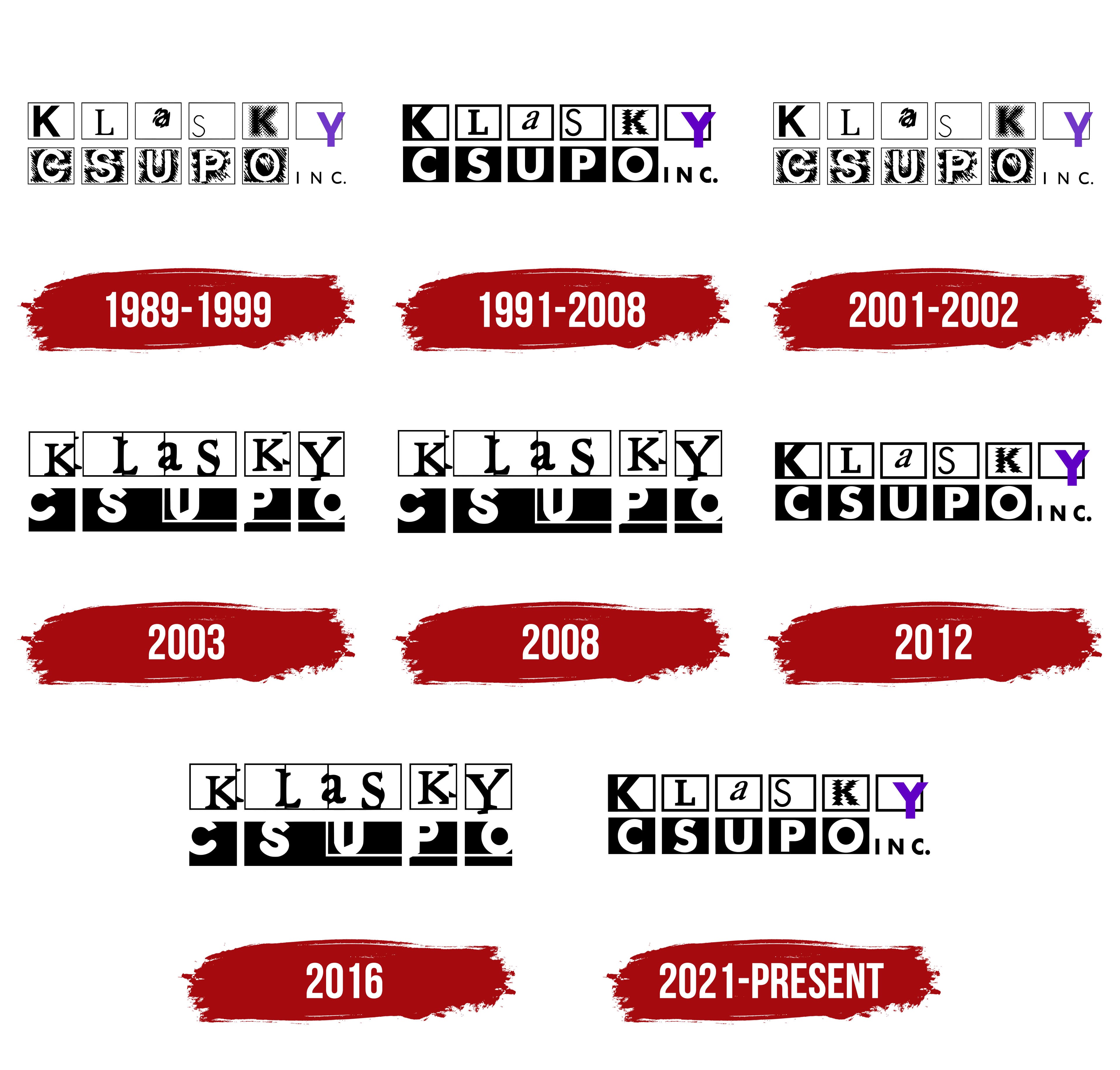
The studio was founded in 1982, but it didn’t get its first logo until 1989. Initially, the enterprise operated out of a married couple’s kitchen. Their early work didn’t involve cartoons. The newlyweds worked in advertising, designing names and signs. In 1987, they were asked to animate their first Simpsons cartoons, each one minute long.
The series’s immense popularity made the studio renowned and created the need for its own identity. The logo turned out to be original. It reflects the creative quirks and roles of Klasky and Csupo as partners. That’s why the founders didn’t aspire to radical changes to the emblem in the future. All rebrandings are merely minor variations of the first sign.
What is Klasky Csupo?
It’s an animation studio that produced the first three seasons of The Simpsons, the Rugrats and All Grown Up! series, about 300 commercials, five feature films, two web series, and dozens of smaller projects. It was created by the animator couple Klasky-Csupo, who divorced in 1995, but continued their creative collaboration. The headquarters are located in Los Angeles.
1989 – 1999

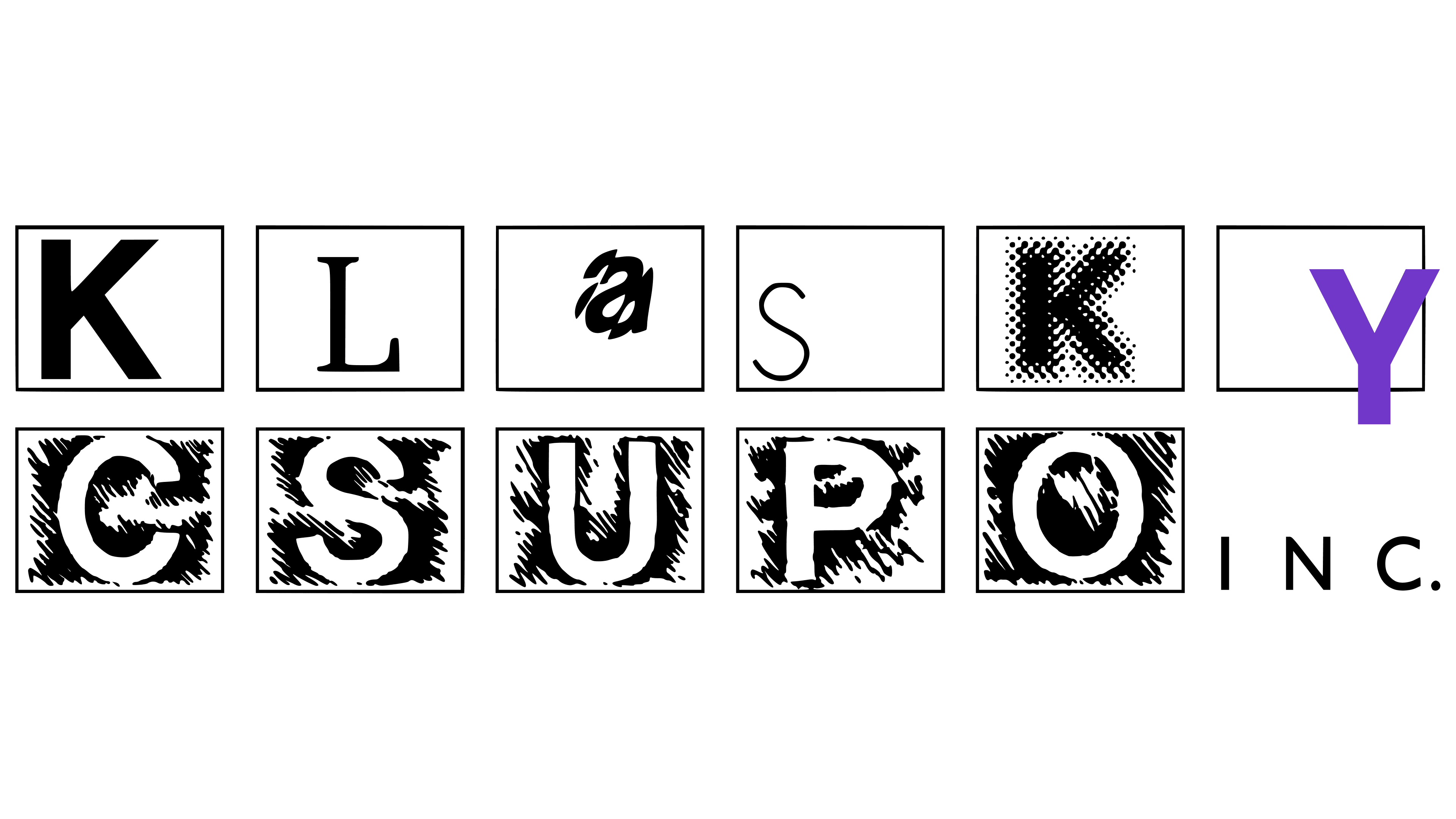
The couple chose the project’s name from their last names. The studio’s logo consists of squares arranged in two levels: white for the woman’s surname at the top and black for the man’s surname below. Inside each element is one letter.
Together, the dark and light levels embody the union of two opposites, harmony. The squares’ shapes at the top and bottom suggest commonality, like a married couple.
The letters of the male name are confident and strong. The symbols are uniform in size and fill the full height of the squares. The inscription’s placement in the lower part and uniformity indicate Gábor Csupó’s stability. In the pair and joint team, he plays the anchor role, a reliable foundation. In the first setup, the designer was named the main director and executive producer.
The white letters in the name Csupó suggest interesting ideas, highlight the main point, and reflect the screenwriter’s personal kindness.
In contrast, the Klasky inscription stands out for its unique creativity. Each symbol appears in different places on the squares and is rendered in a particular way, bold, thin, hatched, prickly, etc. It’s as if each letter represents a character trait of Arlene Phyllis, her versatility, or her changing moods. This method demonstrates the animator’s developed imagination and the ideologist’s role. Klasky drew ideas for Rugrats episodes from observations of her own sons.
Throughout the composition, only one sign is colored: the letter Y at the end of Klasky. The woman in this family and studio creates the atmosphere, sets the tone, and makes life festive and animation unforgettable.
Interestingly, another studio in American media has a logo very similar to the Klasky Csupo emblem. It’s Cartoon Network: the same two levels, black-and-white squares with letters in each. The two emblems differ by only three years. Therefore, even though different people worked on the signs, CN shows a sense of plagiarism.
1991 – 2008
In 1991, Klasky Csupo began working with Nickelodeon on Rugrats. They updated the logo for this new project. The sign’s elements became thicker and more confident. The letters are clearer. The squares’ toning became more even. In general, the inscription is easier to read and looks more professional. By this time, the studio was already famous, based in Hollywood, and had received a Primetime Emmy Award for The Simpsons. The emblem reflects these changes. The logo was used for all seasons of Rugrats until the contract was terminated.
2001 – 2002
In 2001, shooting began for a new series, All Grown Up!, as a continuation of Rugrats. For the infant show’s tenth anniversary, Klasky Csupo aired an episode in which the babies turned ten. The premiere was so popular that Nickelodeon decided to develop the idea.
While developing the new series, the studio returned to its first logo. This move showed a return to roots, a search for inspiration in the past, and the start of a new global project.
2003
In 2003, Klasky Csupo and Nickelodeon had disagreements. Production of Rugrats was halted, and other shows were put on hold. Although All Grown Up! had already begun airing, Klasky Csupo began collaborating with Cartoon Network and other studios.
The period’s emblem became even more creative. Elements seemed to double, with twin pieces visible behind them. A rectangle was separated from the inscription by straight lines. The figure split the top A in half and cut off “upo” from Csupo.
Fragmentation and doubling demonstrate:
- saying goodbye to usual work,
- the team’s cooperation with new clients,
- the simultaneous creation of music, clips, and movies.
The sign seems to carry pain, a hint of a broken heart, and a loss of footing. Nickelodeon’s producers hinted that they were tired of the team’s monotonous style. Moreover, new projects turned out to be short-term, and the studio did not complete the big movie The Way the Dead Love, which it decided to participate in in 2003.
2008
In 2008, the permanent contract with Nickelodeon was finally broken, and the studio closed for four years. The studio used the 2003 logo for programs already released.
2012
In 2012, the owners got their second wind, and work resumed. The idea of computer animation for Rugrats and other projects appeared. For the “second take,” they used the most successful 1991 logo for good luck.
2016
In 2016, the premiere of the digital webcomic RoboSplaat! marked a new genre for the studio. For the new animation, they chose the 2003 logo, which the studio used for projects outside Nickelodeon.
2021 – today
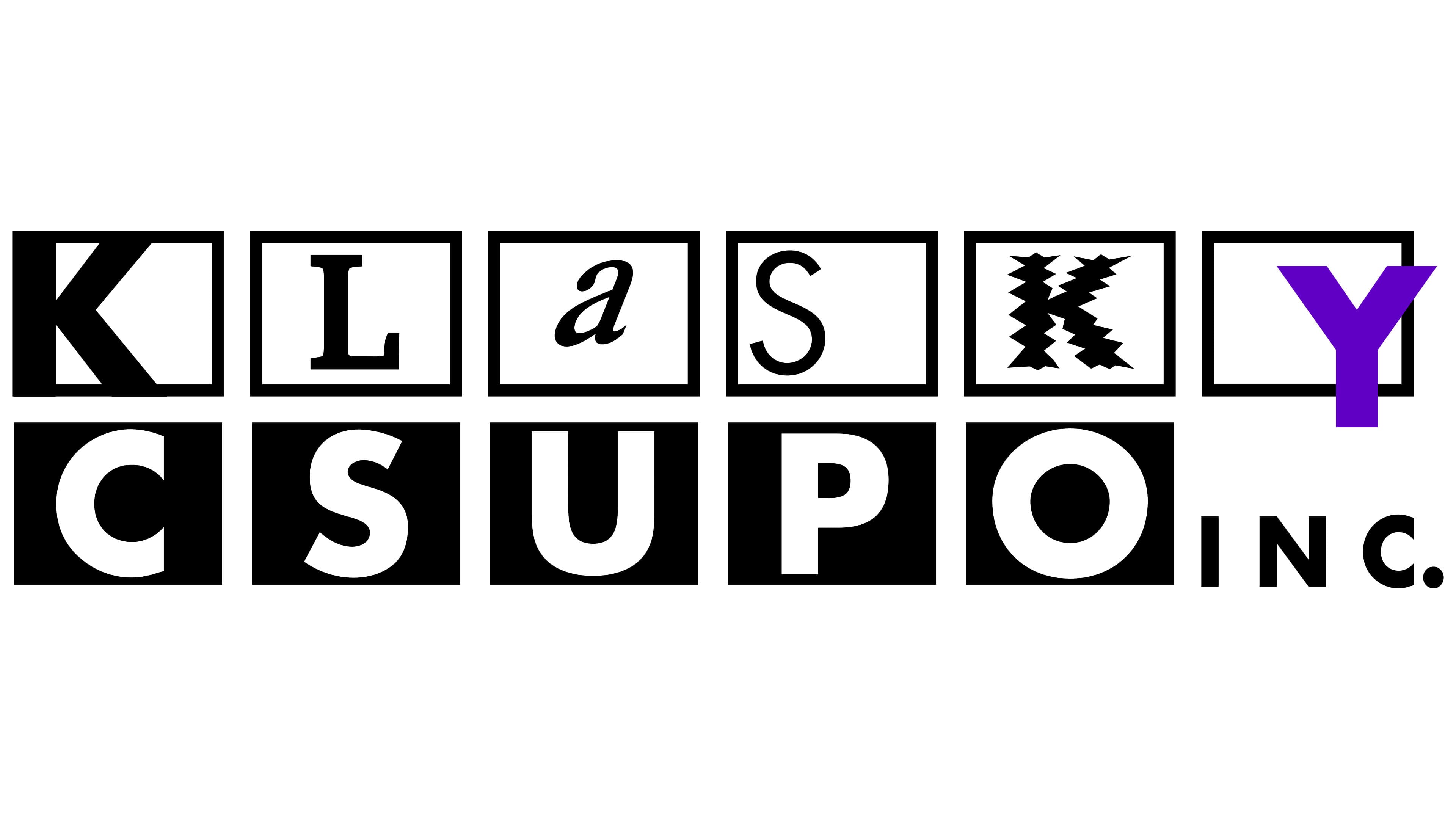
In 2021, the updated Rugrats finally debuted with their classic, consistent 1991 logo and a colorful Y. This marked the beginning of a new life for the famous duo.
Font and Colors
All company logos are built on the contrast of black and white. The colors represent masculinity and femininity, yin and yang, creativity, and order. The logo’s only color accent is purple. The shade speaks of creativity.
The inscription’s font is unique. Each element is a work of art. It demonstrates the variety of styles the team uses.