 Las Estrellas Logo PNG
The Las Estrellas logo embodies the channel’s identity. It presents an image of unity in diversity and reflects its dynamic, inclusive content.
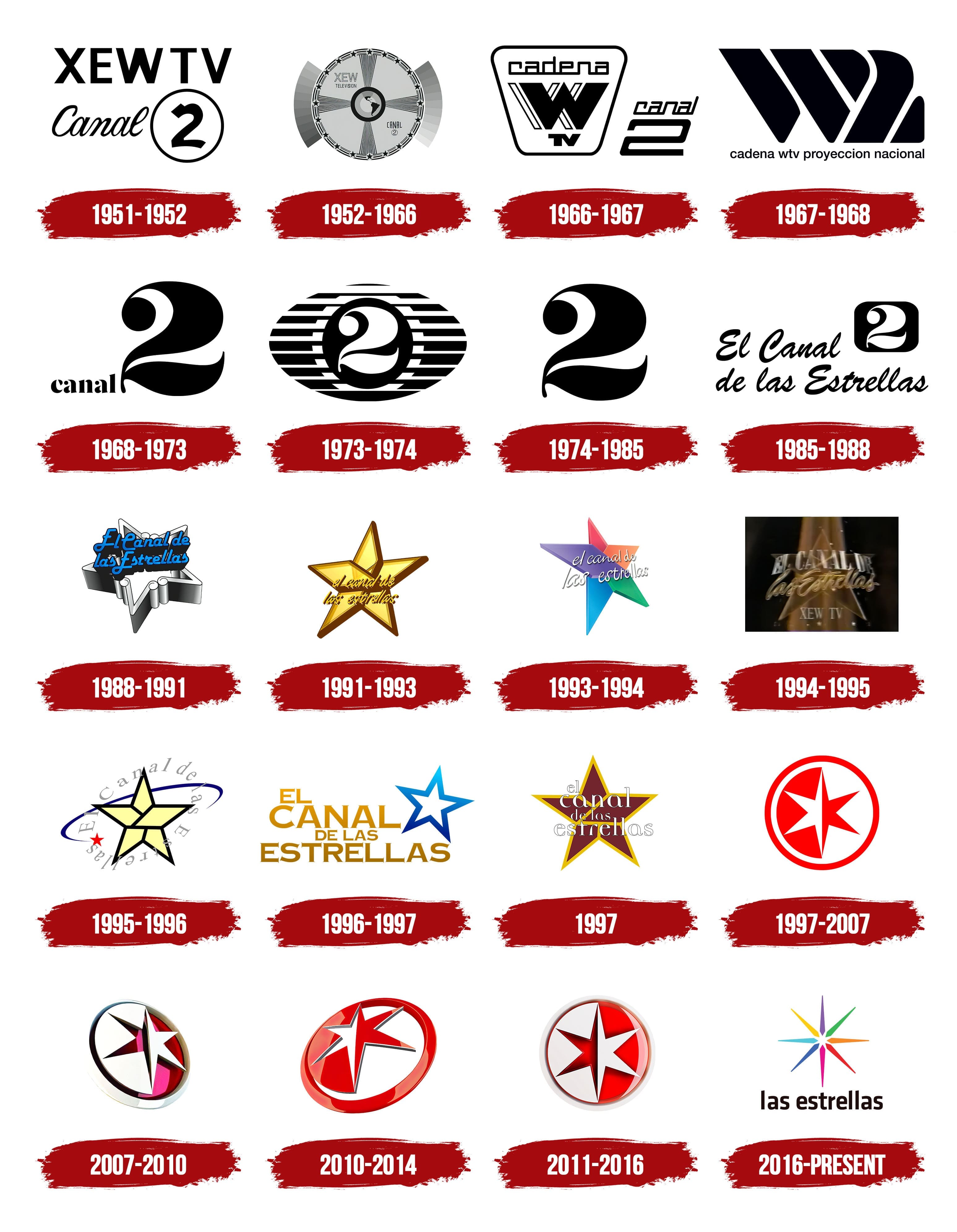
Las Estrellas’ emblem was introduced in 2016 as part of a significant rebranding strategy that reduced the channel’s name and completely transformed its visual identity. The modernized logo is distinctive, featuring an eight-pointed multicolored star and a minimalist, lowercase sans-serif inscription below it.
The channel’s logo tells a story through its design. At its core, the eight-pointed star, crafted from eight vibrant lines of various colors, directly reflects the name, ‘Las Estrellas,’ which translates to ‘The Stars’ in English. It symbolizes diversity and unity, with each colored line representing different kinds of content and audiences the channel caters to, converging to form one harmonious star.
As for the text beneath the star, choosing a lowercase sans-serif typeface in black adds a touch of modern simplicity. This design choice encapsulates the channel’s forward-thinking ethos, while the black color contrasts with the multicolored star, reinforcing the channel’s name and making it memorable.
Las Estrellas began on March 21, 1951, when XEW-TV went on air in Mexico City. Emilio Azcárraga Vidaurreta, a key figure in Mexican radio and television, founded the channel. It had received its broadcast license in October 1950. It opened with a live baseball broadcast narrated by Pedro Septién, who had worked at XEW-AM.
The first years were marked by technical limitations, as the Televicentro studio complex on Chapultepec Avenue was still under construction and would not open until January 1952. XEW-TV aired sports, films from the golden age of Mexican cinema, and live concerts. In 1958, it broadcast Senda Prohibida, directed by Rafael Banquells, the first Mexican telenovela and the start of a genre that later defined the channel.
In 1955, Azcárraga merged XEW, XHTV, and XHGC into Telesistema Mexicano. After another merger on January 8, 1973, Telesistema joined Televisión Independiente de México to form Grupo Televisa. In 1985, before the 1986 FIFA World Cup, XEW-TV was renamed El Canal de las Estrellas, a name tied to its actors, hosts, and entertainment figures.
Competition changed in the 1990s, when TV Azteca appeared in 1993 after the privatization of two state channels. After Emilio Azcárraga Milmo died in 1997, Televisa restructured, and 24 Horas with Jacobo Zabludovsky ended in 1998. On August 22, 2016, the channel was relaunched as Las Estrellas. Later, Imagen TV increased pressure on the market, and in 2022, the Televisa-Univision merger placed Las Estrellas within TelevisaUnivision.
Meaning and History
Las Estrellas’ brand identity is tied to its name, which translates to “The Stars.” This celestial theme is reflected in the network’s brand strategy, which guides viewers through the vast entertainment universe. The strategy conveys a sense of wonder, exploration, and dedication to quality programs as diverse and far-reaching as the stars themselves.
This commitment to delivering diverse and engaging content is part of the network’s branding. It portrays a network that is not just a mere channel but a galaxy of entertainment possibilities. From drama that tugs at heartstrings to news programs that keep viewers informed, the brand stands as a beacon of quality and variety.
Moreover, the network’s strong brand identity is reflected in its ongoing commitment to upholding its audience’s values. It emphasizes stories that resonate with its viewers, thus nurturing a deep sense of connection and trust. This meticulous care in crafting and maintaining its brand image has made Las Estrellas a shining fixture, not just in Mexico but around the globe.
What is Las Estrellas?
Las Estrellas, founded on 21 March 1951 by Emilio Azcárraga Milmo, is one of the cornerstone channels of Televisa, the largest mass media company in the Spanish-speaking world. Headquartered in Doctores, Cuauhtémoc, Mexico City, Mexico, Las Estrellas is recognized for its wide range of programming, including telenovelas, news broadcasts, reality shows, and sports. Since its inception, the channel has played a significant role in shaping and reflecting Mexican culture and society, and its broadcasts reach audiences across Mexico, the United States, and many other countries worldwide.
1951 – 1952

1952 – 1966

1966 – 1967

1967 – 1968

1968 – 1973

1973 – 1974

1974 – 1985

1985 – 1988

1988 – 1991

1991 – 1993

1993 – 1994

1994 – 1995

1995 – 1996

1996 – 1997

1997

1997 – 2007

2007 – 2010

2010 – 2014

2011 – 2016

2016 – today