


 Magic: The Gathering Logo PNG
Like a blazing flame, the Magic: The Gathering logo is bright and fiery. The emblem symbolizes the power and strength the participants possess. The players have many trump cards, which they assemble independently to determine the strength of their decks.
“Magic: The Gathering” began in 1991, when Richard Garfield, a PhD student in combinatorial mathematics at the University of Pennsylvania, met Peter Adkison, founder of Wizards of the Coast. Garfield first tried to publish RoboRally, but Adkison saw the board game as too costly for a small company operating out of a basement near Seattle. He asked Garfield for a portable game suited to conventions and short breaks between events.
Garfield built the concept around his long interest in Dungeons & Dragons. He wanted players to feel like characters with individual powers, so he created a card game based on custom decks and personal play styles. The project was initially named Mana Clash, then renamed Magic: The Gathering due to trademark concerns. Because Wizards was facing a possible lawsuit from Palladium Books, Adkison used Garfield Games as a separate publishing shell.
Magic debuted at Gen Con in Milwaukee in August 1993. A first supply of 2.5 million cards, planned to last until the end of the year, sold out in days. By October, 10 million cards had been sold. Wizards held back on advertising because production could not keep up with demand. In 1994, Magic won the Mensa Top Five Mind Games and two Origins Awards, and Garfield left academia to join Wizards full-time.
The game created the collectible card game market. It drew competitors tied to Star Wars, Babylon 5, Marvel, and Pokémon Trading Card Game. In 1997, Wizards received a patent for collectible card game mechanics and bought TSR, publisher of Dungeons & Dragons. Hasbro acquired Wizards for $325 million in 1999. Magic: The Gathering Arena launched in 2019; Magic generated $1 billion in annual revenue in 2022 and, by 2023, had 50 million players worldwide.
Meaning and History
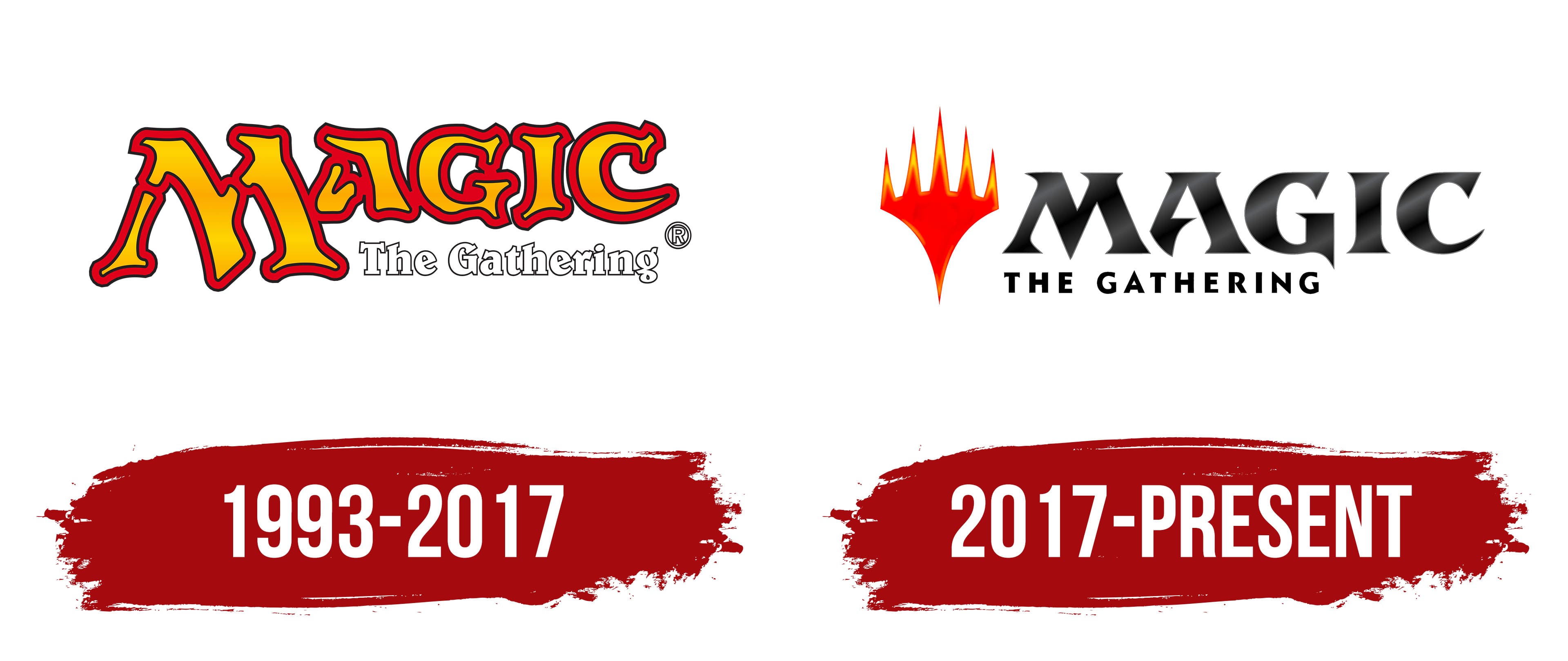
The game’s emblem unifies many decks from different worlds under its image. This diversity is reflected in the logo’s symbols. Elements of magic, the theme of spells and power possessed by each Planeswalker, emerge in the elements. Despite frequent deck updates, the emblem’s rebranding occurred once after Wizards of the Coast decided to update the game’s base set.
What is Magic The Gathering?
A card game in a fantasy style with complex rules. Based on battles of wizards, called Planeswalkers, they can move between multiverse worlds. Participants use artifacts, spells, and magical creatures depicted on the cards to win. Each world reflected in the deck of cards has its own story and its own creatures.
1993 – 2017
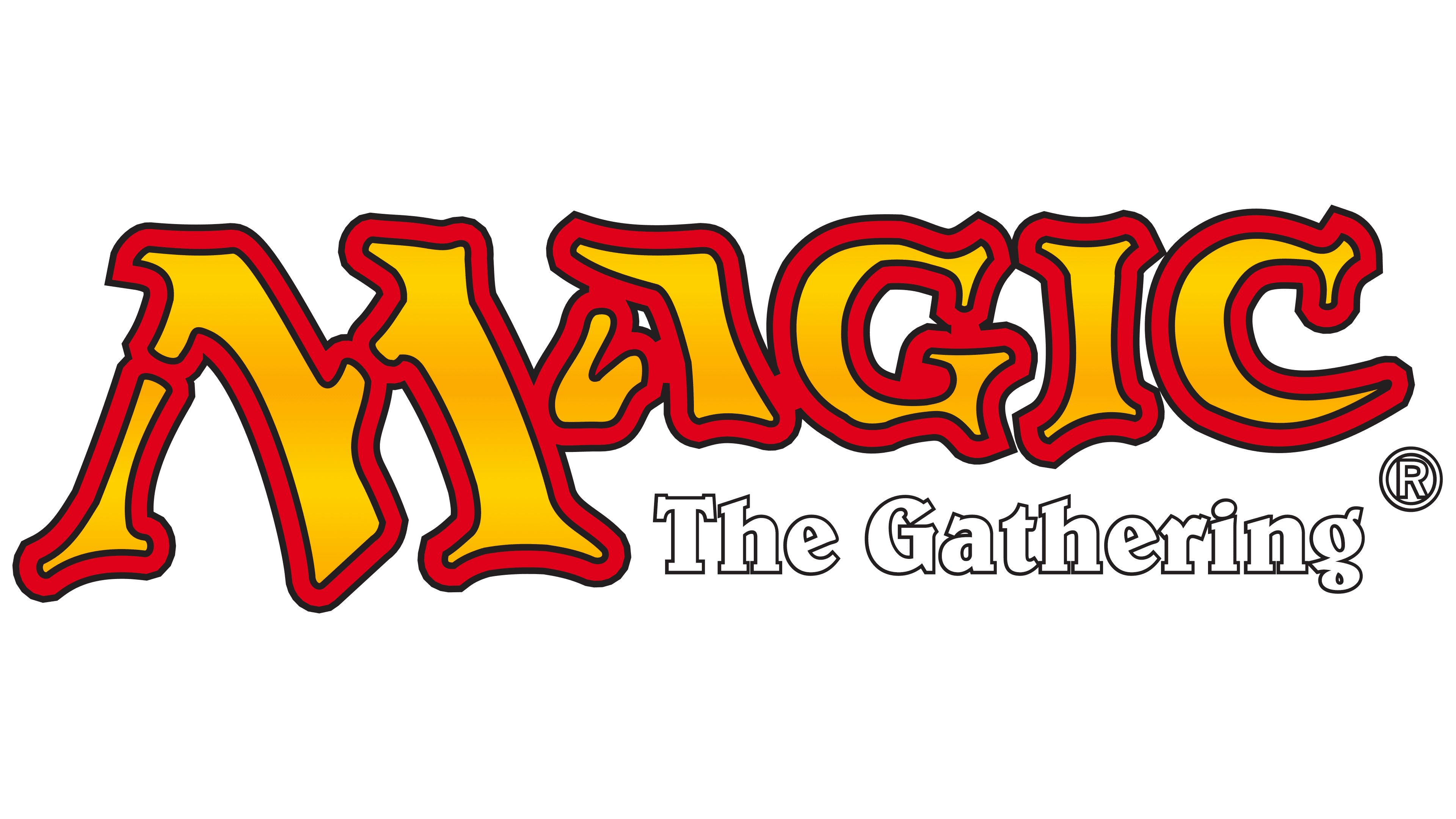
The first version of the game, Alpha, was released in 1993. Its logo is a stylized Magic: The Gathering inscription. The capital M is enlarged, and The Gathering is added under the rest of the word Magic. The game’s white elements, with a thin black outline, barely stand out against the large red-orange main level.
The word “Gathering” indicates the meeting of wizards for battle and hints at the collection of cards. Each card gives different abilities and powers in the game. Interestingly, The Gathering was chosen as the first additional title. It was planned to give secondary names to each deck in the future. For example, the next set was planned to be called Magic: Ice Age. But then they abandoned the idea, and The Gathering became a permanent part of the title.
The letters Magic are assembled from separate details, each surrounded by a red outline. As a result, the elements resemble bones forming the inscription. This technique creates a feeling of ancient rituals and magical rites. It is associated with calling the dead and spells on animal bones.
It’s worth noting that the game’s name, Magic, was not established immediately either. Mathematician Richard Garfield gave this name to his invention. But at Wizards of the Coast, after the purchase, it was decided that the word was too universal to become a trademark, and the name was changed to Mana Clash. However, they eventually returned to the first name.
The composite letters and the addition of The Gathering demonstrate that each player assembles their deck individually. The wizard’s strength and success depend on the cards’ contents. Therefore, some particularly valuable cards are bought by fans for hundreds, even thousands, of dollars.
2017 – today
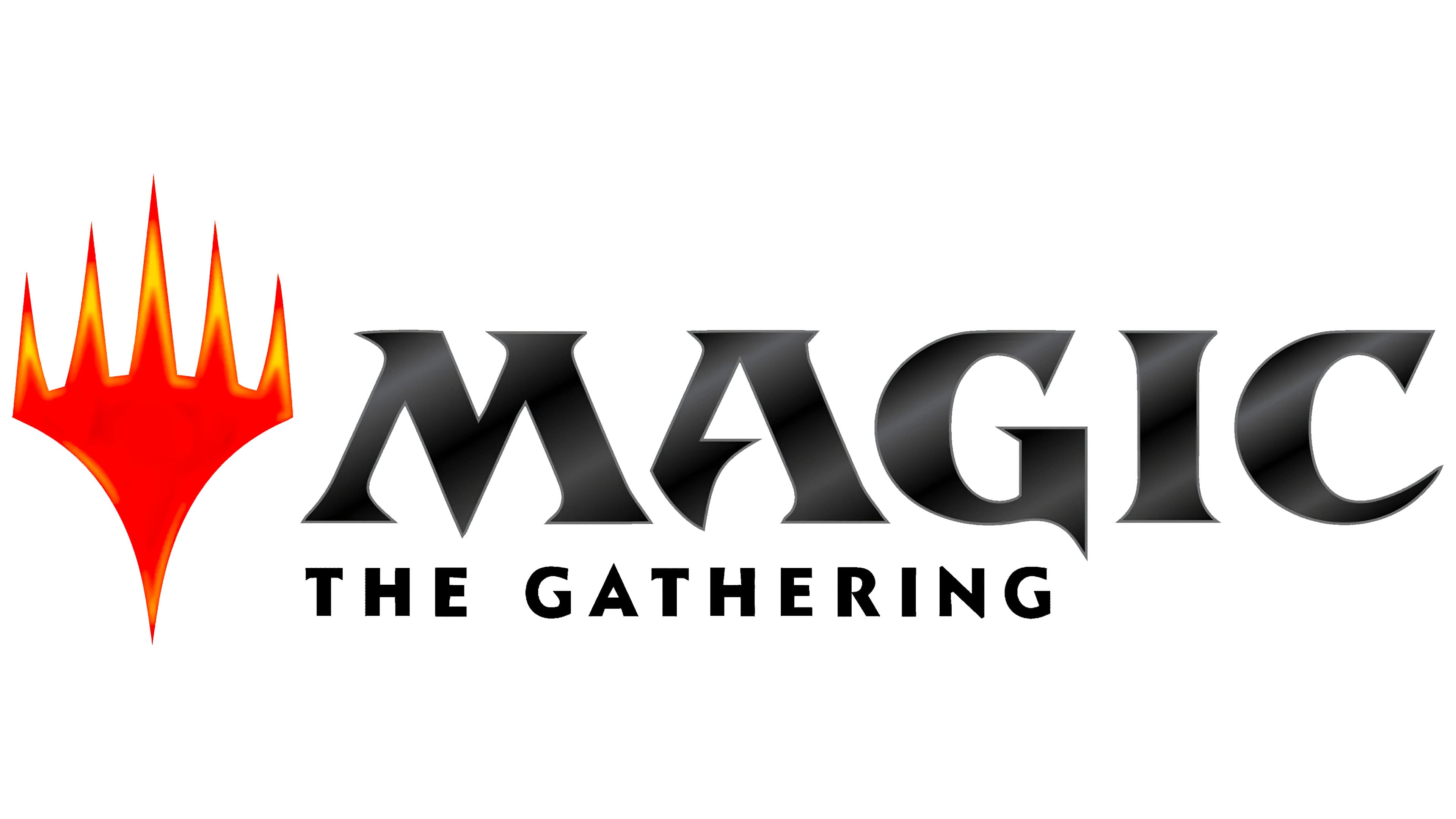
Deep transformations began in 2017 as the releasing company decided to update the base set. A new deck symbol marked the changes. The logo features a fiery, multi-pronged figure followed by the game’s name in two tiers.
Like a stroke of a magic staff, the symbol before the name changes the situation. Each card, landing on the field, shifts the balance and makes a strike or introduces a spell, transforming the layout. These transformations are what the figure conveys.
The symbol resembles a trident, as the game’s success is associated with three main elements invented by Richard Garfield: cards, mana, which gives power to spells of different strengths, and the color wheel, which defines the deck’s tactics and goals. Despite updates, these basic points maintain the game’s charm and individuality.
Harmony and precision are visible in the pronged figure. The game was developed by a mathematician and is built on logic and calculations. Therefore, the picture’s geometric beauty and symmetry are apparent. It supports fine-tuning each deck, allowing the player to create individual sets.
The five sharp spikes on the figure indicate the five colors: white, blue, black, red, and green. Each lends a strategy to the deck’s characters to achieve the goal. Therefore, the same card with different colored mana possesses different properties.
Font and Colors

MTG Logo
The emblem features red, yellow, and black.
- Red indicates the battle, the fight between the wizards. It shows the players’ shade, passion, and fascination with the game. Major tournaments gather hundreds of fans. It hints at the shade and unprecedented prices for cards. For example, the Black Lotus costs up to $1.2 million.
- Yellow tells of travels. Like a thin golden thread, the shade stretches behind the planeswalker as they move from world to world. The color also speaks of energy.
- Black is the shade of power that the participants might aspire to. It talks about the earth and mana obtained from different lands.
The logo’s font is unique. The elements contain magic, sharp teeth, like accurate spells, aimed at the opponent’s cards. The twist inside the glyphs A and G hints at the turn of land cards to make a move.