


 Mailfence Logo PNG
Designers developed the Mailfence logo to symbolize a close connection and reliable protection. Communication, in the sense that email connects people. The protection comes from the technologies used to safeguard sensitive data.
Mailfence traces its roots to ContactOffice Group SA, founded in Brussels in 1999 by Patrick De Schutter and Arnaud Juret. The company first developed ContactOffice, a cloud collaboration platform for universities and large organizations across Europe. It combined email, calendars, contact management, documents, and shared work tools long before privacy-focused mail services became a visible market.
By 2007, ContactOffice had passed 350,000 registered users. The company operated without venture capital and kept control over its product direction. Its corporate and academic clients gave it a stable base. At the same time, its servers, protocols, and code later became the technical foundation for Mailfence.
The major shift came in 2013, after Edward Snowden’s revelations about NSA surveillance programs, including PRISM. Reports on data access from Microsoft, Google, Yahoo, and other large providers changed the context of online communication. For a Belgian company with long experience in business communications, privacy became a product issue rather than a side feature.
Mailfence was developed in mid-2013 and officially launched in November 2013 as part of ContactOffice Group. It leveraged the parent company’s existing infrastructure. It added privacy features such as two-factor authentication, encrypted connections, and a transparent data policy. Under Belgian law, users had to submit data requests to a local court.
In March 2016, Mailfence released a public beta of OpenPGP end-to-end encryption with digital signatures. In 2020, it reported that Russian mail providers blocked SMTP after it refused Roskomnadzor’s request for user data. In January 2021, Mailfence launched a progressive web app and offered email, calendar, contacts, document storage, group workspaces, and XMPP messaging as an alternative to Microsoft 365 and Google Workspace in Europe.
Meaning and History
ContactOffice began developing mail in 2013 and released a public version three years later. The mail client includes paid and free services. The program code is open for inspection to ensure it contains no built-in tracking systems. All servers are located in Belgium, where privacy laws apply.
The visual sign was initially chosen correctly and conveyed the essence of the company’s offer. Therefore, the only update addressed the details.
What is Mailfence?
A Belgian email client with a particular concern for user privacy. Available since 2016. Works in 12 languages.
Old
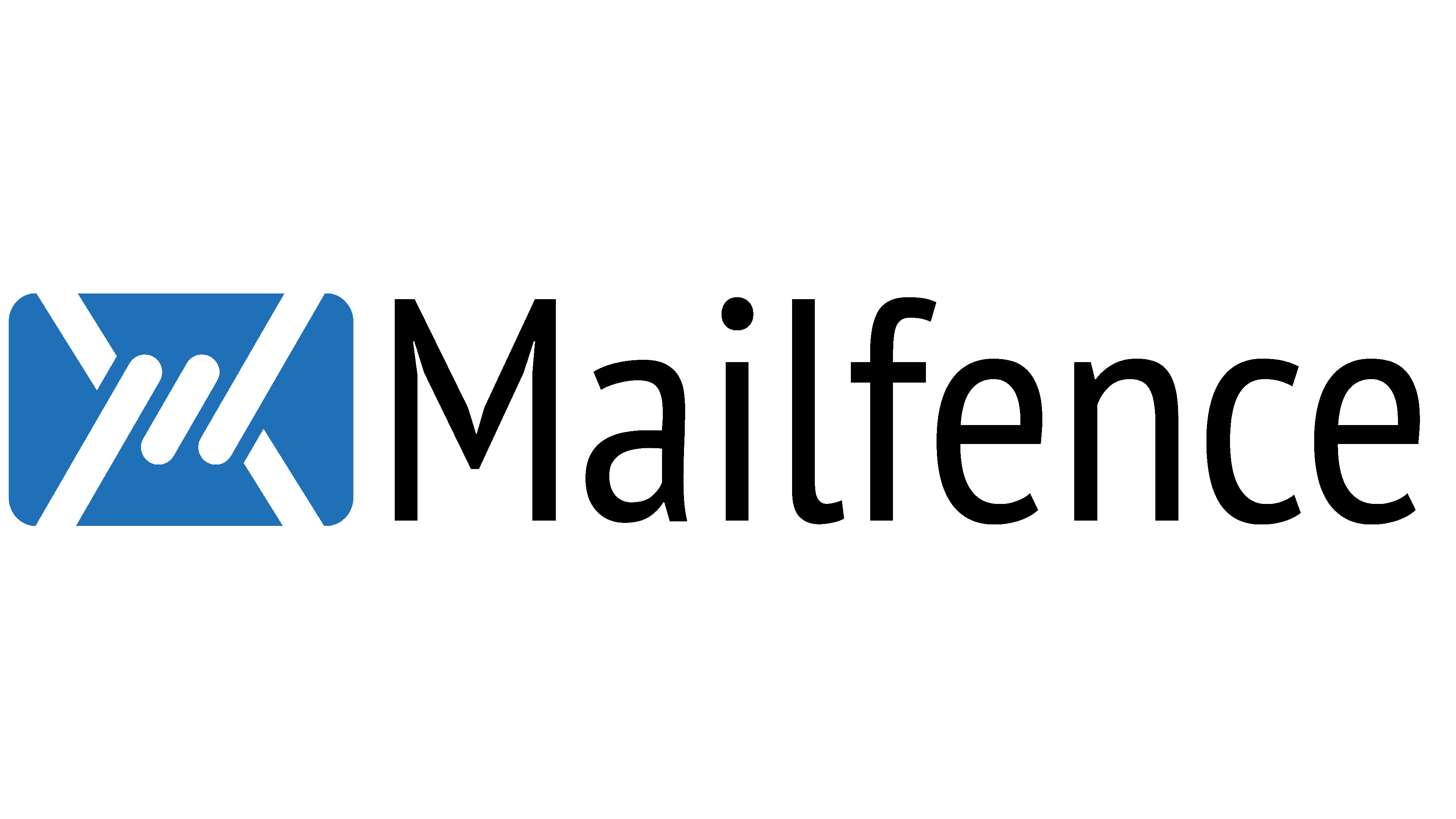
The logo consists of the mail service’s name and an image of an envelope. The idea of maximum protection is conveyed in several details:
- In the name. The translation of the word “Mailfence” is “mail fence.” Letters on this service are behind the “high fence.” It protects all site users and prevents attackers from accessing mailbox contents. The service protects against information collection; advertising does not study the client’s preferences, and it excludes government agency intervention. In Belgium, where the system’s power is located, government programs that collect information without users’ permission are prohibited.
- In the image of the envelope. On the reverse side, the sealing triangle forms a double helix that intertwines with the bottom of the envelope. This creates a feeling of maximum closure and a strong, thick wire that blocks access to correspondence. The helix indicates an end-to-end encryption system with block asymmetric key encryption (E2EE and AES-256). This provides a double layer of protection: emails are encrypted, and private keys are also encrypted. A passphrase protects access to encrypted keys. Key exchange occurs only between the sender and the recipient. Such a system is used for national security and online banking.
The envelope’s blue color represents calmness. Clients can feel calm about sensitive data.
Rounded corners signal friendliness and harmony. To protect customers, the service does not sacrifice their convenience and freedom. Users are not overloaded with complex access systems; working with the mail client is easy and convenient.
New
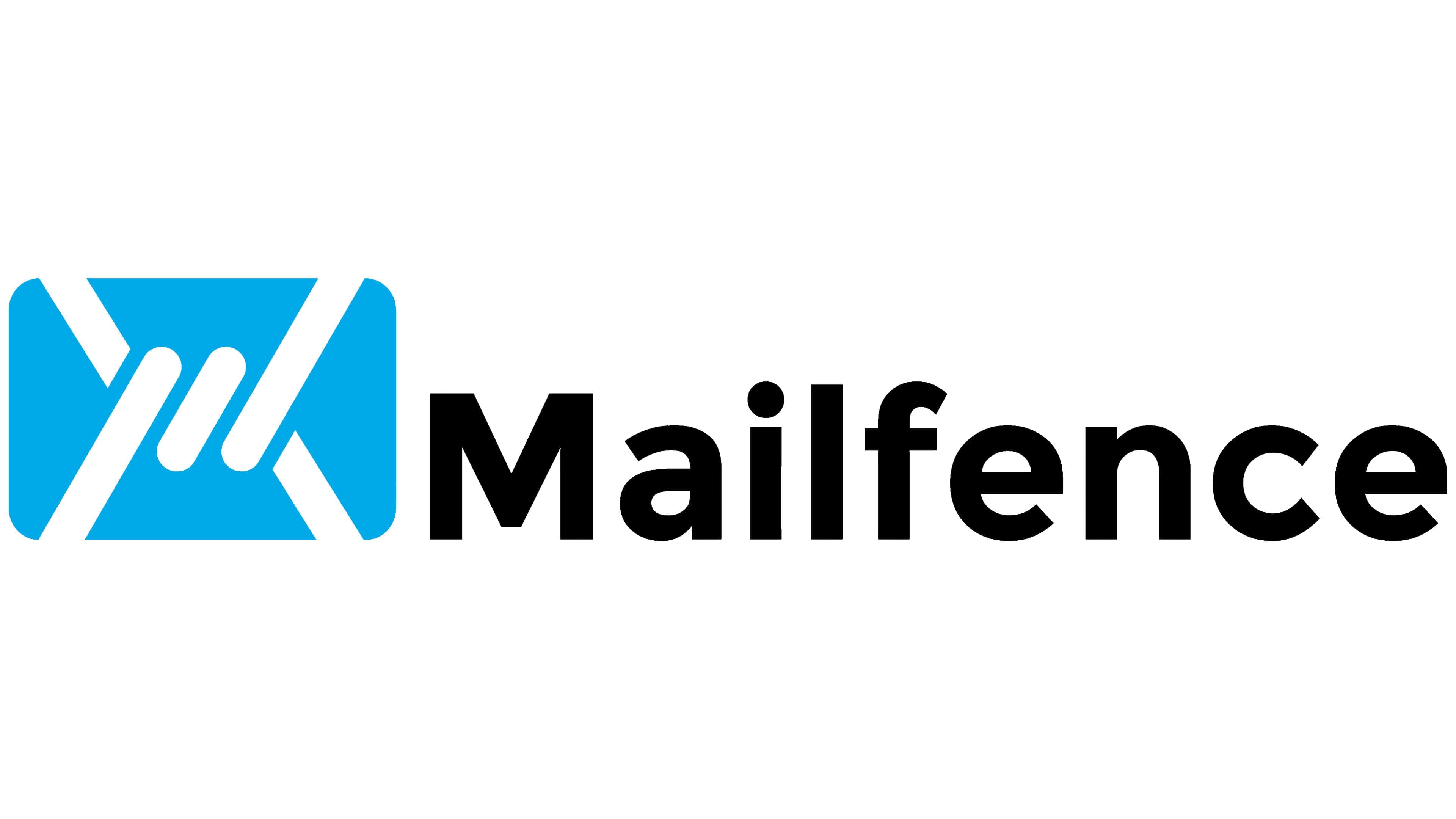
In the new logo, the accents have shifted slightly. The letters in the name are lower but more powerful. This emphasizes the word’s meaning. The bold font gives the impression of a wall, a powerful fence protecting the server. The letters are grouped, and the level of protection has increased.
The envelope also became larger. It is twice as high as the capital letter of the title. This emphasizes the importance of user emails. Customers’ interests are at the forefront of the company’s priorities.
The double helix remains unchanged, but the envelope is now a lighter blue. It resembles the transparency of the heavenly heights. The company provides users with special reports detailing which requests and user data the system received. This lets customers see who was interested in their data and whether the system rejected the request.
Font and Colors

The logo combines shades of blue, black, and white.
- The choice of cold blue shades is not accidental. They convey neutrality, indifference, and business relations. The colors indicate that the server owners are neither overly curious nor interested in the contents of the envelopes. For them, letters sent “to one person” are just packages to be delivered to recipients. The service does not have primary keys that allow you to “bypass” encryption and secretly read user messages. The password is not sent to the server; it is stored on the client’s computer. Changing the new logo’s color to a lighter shade suggests dissolution. Mailfence has a feature that limits the lifespan of messages, after which they are automatically deleted.
- Black represents reliability, confidence, and closeness.
- The white color of the closing wire shows that every new letter is protected with maximum security. White symbolizes honesty, transparent terms of use, and protection from fraud. The service base is not for sale. It protects users from their own and other people’s mailing lists to which the client did not subscribe.
The logo uses a harmonious geometric font, Typold Bold, presented by The Northern Block.