


 Menards Logo PNG
The Menards logo offers a way to refresh the interior and make it sparkle with new colors. Hypermarket products help address the premises’ shortcomings and create an attractive, eye-catching design.
Menards began in 1958, when John Menard Jr., a Wisconsin student, built farm structures to pay for college. Demand from Midwest farmers grew quickly, and by late 1959, he had hired extra crews and bought a used 1946 truck and an old Ford tractor.
The company was founded in 1960 and incorporated in Wisconsin in 1962, the same year Walmart and Target opened their first stores. In 1964, Menard opened its first retail location in Eau Claire as Menard Cashway Lumber. The format relied on cash payments, bulk lumber buying, and weekend sales for customers who wanted materials without waiting at traditional yards.
By the late 1960s, Menards had added its own truss plant, which later became the Menard Building Division, producing steel siding, roofing, doors, decking, and treated lumber. The stores looked less like old lumberyards and more like discount retail spaces, with wide aisles, tiled floors, and organized shelving. In the 1970s and 1980s, Menards expanded into Iowa, Minnesota, North Dakota, and South Dakota. By 1986, it had 34 stores and estimated sales of about $500 million.
WAXX/WAYY employee Bob Holtan coined the slogan “Save Big Money at Menards” in the early 1970s. In the 1990s, the chain entered Nebraska, Chicago, Indiana, and Michigan, while John Menard denied rumors of a Lowe’s takeover. The company paid a $1.7 million hazardous-waste fine in 1997, opened a major distribution center in Plano, Illinois, in 1998, and later built stores exceeding 200,000 square feet.
Meaning and History
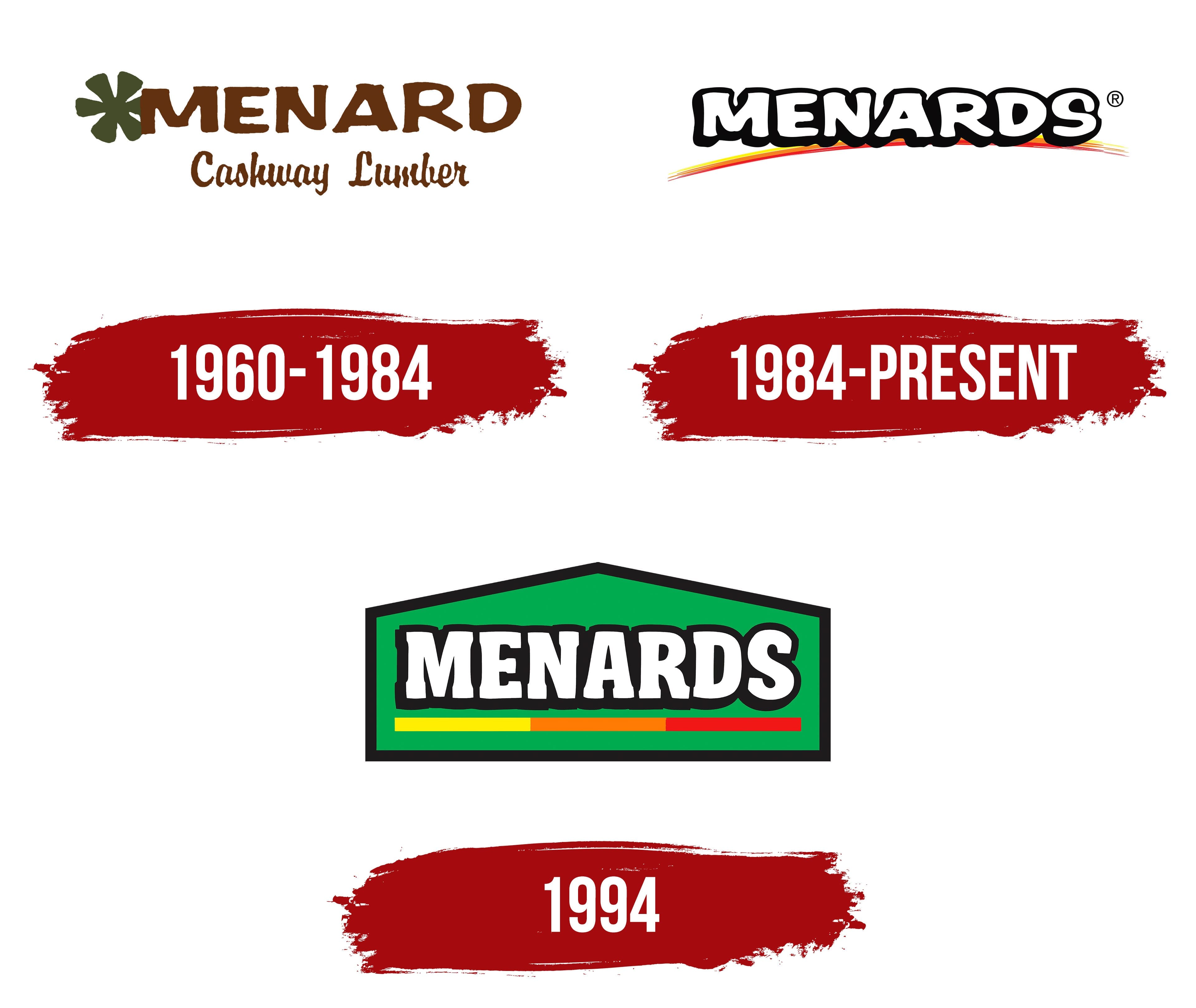
The business that made John Menard a billionaire began in 1958 with the construction of agricultural buildings. An enterprising young man assembled a team of builders and erected hangars to pay for college. Working in the suburbs earned money for studies and sparked a new business idea: residents needed boards. In 1960, John registered the Menard Cashway Lumber Company and, after graduation, devoted all his time to working in it. In 1964, he opened a sawmill with a store, which gradually grew into a network of 12 distribution centers.
The company logo was updated when the brand “grew” from the previous visual sign. This happened twice due to network growth and assortment expansion. However, after an unsuccessful attempt in 1994, the emblem was not changed again.
What is Menards?
John Menard’s is a major chain of construction hypermarkets located in the Midwestern United States. It includes 335 stores, each up to 10,000 sq. m, and employs 35,000 people.
1960 – 1984

The first logo was for a sawmill and lumber store. The company used its name: Menard Cashway Lumber, which is located on two levels.
At the top, in large letters, is the word Menard. Small private companies were often named after the founder’s last name. The business became a family business and passed from father to son. The surname was associated with a particular activity among residents. By the time the company was registered, Menard was already known in Wisconsin for his buildings, and his name was a kind of brand. People recognized the name and were more willing to buy the product.
Below the main name, in smaller letters, -Cashway Lumber is added in cursive. The inscription said exactly what the company was offering: lumber for cash. As suburban construction increased, Menard noticed the demand for building materials and responded by expanding its operations.
Next to the letter M, slightly hidden behind it, is a six-bladed green propeller. It symbolized woodworking, resembling the beams of a band sawmill wheel or a schematic saw blade. The blades seemed to crash into the letter M, plunging into it. The badge’s green color represented greenery, forests, and trees.
Three lines bordered the logo at the top and bottom: yellow, light brown, and brown. They symbolized processed and unprocessed boards, and wood of different species.
1984 – today
By 1984, the business had outgrown the previous logo. It had expanded, and its product list had changed. The company manufactured tiles, metal products, nails, and wood products. John registered a new company, Menards Inc., and his store turned into a popular do-it-yourself outlet at the time.
So the logo has been updated. A new visual sign is the large white Menards inscription. His brothers worked with John, and they added the plural to the name. They removed the mention of lumber. The three stripes at the top and bottom have shrunk to the bottom, arching the name. It consisted of three strokes: red, yellow, and orange in the form of a rainbow. The rainbow lifted the company, showing its heyday and rise.
1994 (unused)
In 1994, the company sold its construction division and focused solely on home improvement stores. In this regard, the company attempted to rebrand. However, it was not successful. The new logo did not catch on and is practically not used.
It was based on a green schematic house that resembled the large buildings of the company’s stores. He pointed out that retail outlets let you buy everything for the house. And the green color personified the new life and prosperity of the renovated housing. Inside the house, at the center, is the white name Menards, underlined by a line in three sections: yellow, orange, and red.
The white name symbolizes a renewal of the brand concept. The line symbolizes the boards the enterprise began with. The color changes represented the gradual development into an ever-larger network, from a home-country business (yellow section) to a major sales giant (red section).
Font and Colors

The logo’s main colors are white, black, red, orange, and yellow.
The white letters of the name symbolized the range’s renewal. They also symbolized a clean slate and white walls, alluding to home improvement from scratch, repairs, and in-store materials. Black bold strokes and shadow made the inscription voluminous. They showed Menards’ purposefulness: to provide everything the buyer needs for repair and improvement.
The colors of the rainbow indicated the principles of the company:
- Red – dedication to your work. Menard does his own business and is very demanding of his employees. Does not recognize trade unions and fires everyone who supports them. Employees should be dedicated to working and serving customers better, not going on strike and seeking benefits. To achieve the goal, the businessman breaks any rules.
- Orange – everything you need for home and comfort. The range of stores is constantly expanding so customers can buy what they need without looking at competitors.
- Yellow – the lowest possible prices to bring joy to customers. Thanks to its production and the absence of intermediaries, Menard can reduce the prices of most goods. Its managers constantly monitor competitors and lower prices, even by a penny.
Orange is obtained by mixing yellow and red. Therefore, their sequential arrangement in the rainbow also indicates the use of building paints, color choices, and materials for housing renovation.
The title font is similar to Summer Fling Regular but has individual, unique features.