


 Midwest Airlines Logo PNG
The Midwest Airlines logo was a model of impeccable aviation design, representing the high level of passenger service. The concise emblem beautifully showcased a commitment to flight, expressive dynamism, and a love for the sky.
Midwest Airlines began in 1984 in Milwaukee, Wisconsin, as an aviation unit of Kimberly-Clark. The paper company had used the fleet for corporate travel, then turned it into a commercial airline named Midwest Express Airlines. Its first commercial flight took place on June 11, 1984, using three McDonnell Douglas DC-9 aircraft from the former corporate fleet.
From the start, Midwest Express built its identity around a premium single-class cabin. Its aircraft had wide leather seats in a two-by-two layout instead of a denser economy configuration. The airline also became known for serving fresh chocolate chip cookies on board, a detail that stayed closely linked to the brand for many years.
In 1995, Kimberly-Clark spun off the airline as a separate public company. Based at Mitchell Airport in Milwaukee, Midwest Express expanded across the United States and added some routes to Mexico, Canada, and the Caribbean. It also created Skyway Airlines to support regional services. In 2003, the company shortened its name to Midwest Airlines.
In 2007, AirTran Airways made an unsolicited bid to acquire Midwest Airlines, but management rejected the bid. In 2008, control passed to TPG Capital together with Northwest Airlines. After Northwest merged with Delta Air Lines, the stake later moved through that structure. In 2009, Republic Airways Holdings bought Midwest Airlines after also acquiring Frontier Airlines. In April 2010, Midwest operations were merged with Frontier, and by November 2010, flights under the Midwest Airlines brand had ended.
Meaning and History
What is Midwest Airlines?
Midwest Airlines, formerly known as Midwest Express, was an American airline that held a significant position in the aviation industry. Headquartered in Oak Creek, Wisconsin, it operated flights from Milwaukee Mitchell International Airport between 1984 and 2010. The company began operations in the mid-1980s when the U.S. airline industry was experiencing significant growth. Throughout its 26-year history, the airline has expanded its route network, serving many domestic destinations and shaping air service in the Midwest.
1983 – 2002

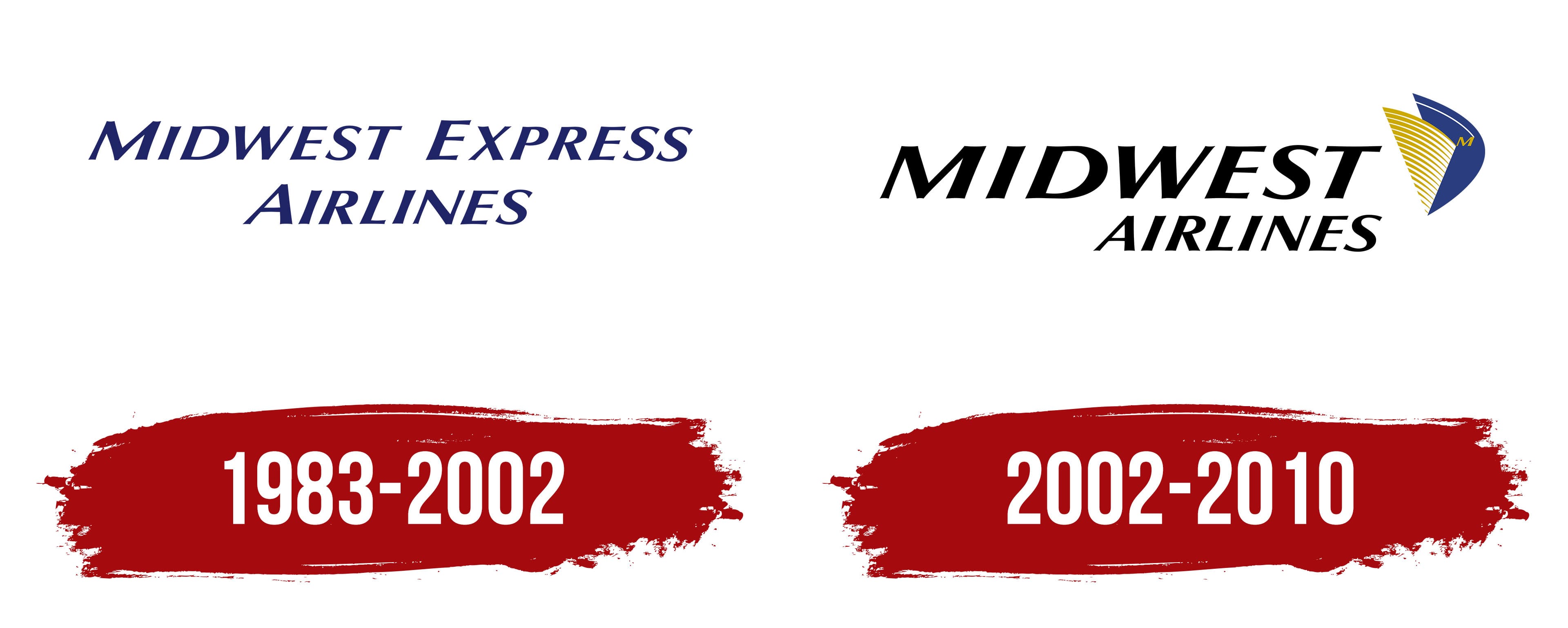
Initially, the Midwest Airlines logo was a model of minimalism, concealing a vast avalanche of vibrant energy that manifested in several factors not immediately apparent, yet created the desired impression. Specifically, these included:
- Expressive italics;
- Improvised serifs;
- Deep blue color.
The slanted font added energy to the emblem, showcasing the company’s commitment to rapid flight, tireless movement, and continuous development. The thickening at the ends of the letters visually infused the text with dynamism, smoothly transitioning from the narrow parts of the strokes to the wide parts without disrupting the harmony of the calm design. The rich blue color reminded viewers of the sky, altitude, and the swift passage through the air.
Although the name was divided into two parts, it was designed in a unified style to express the airline’s concept of impeccable passenger service. This design instilled confidence, demonstrated customer care, and showcased the company’s vast capabilities.
2002 – 2010
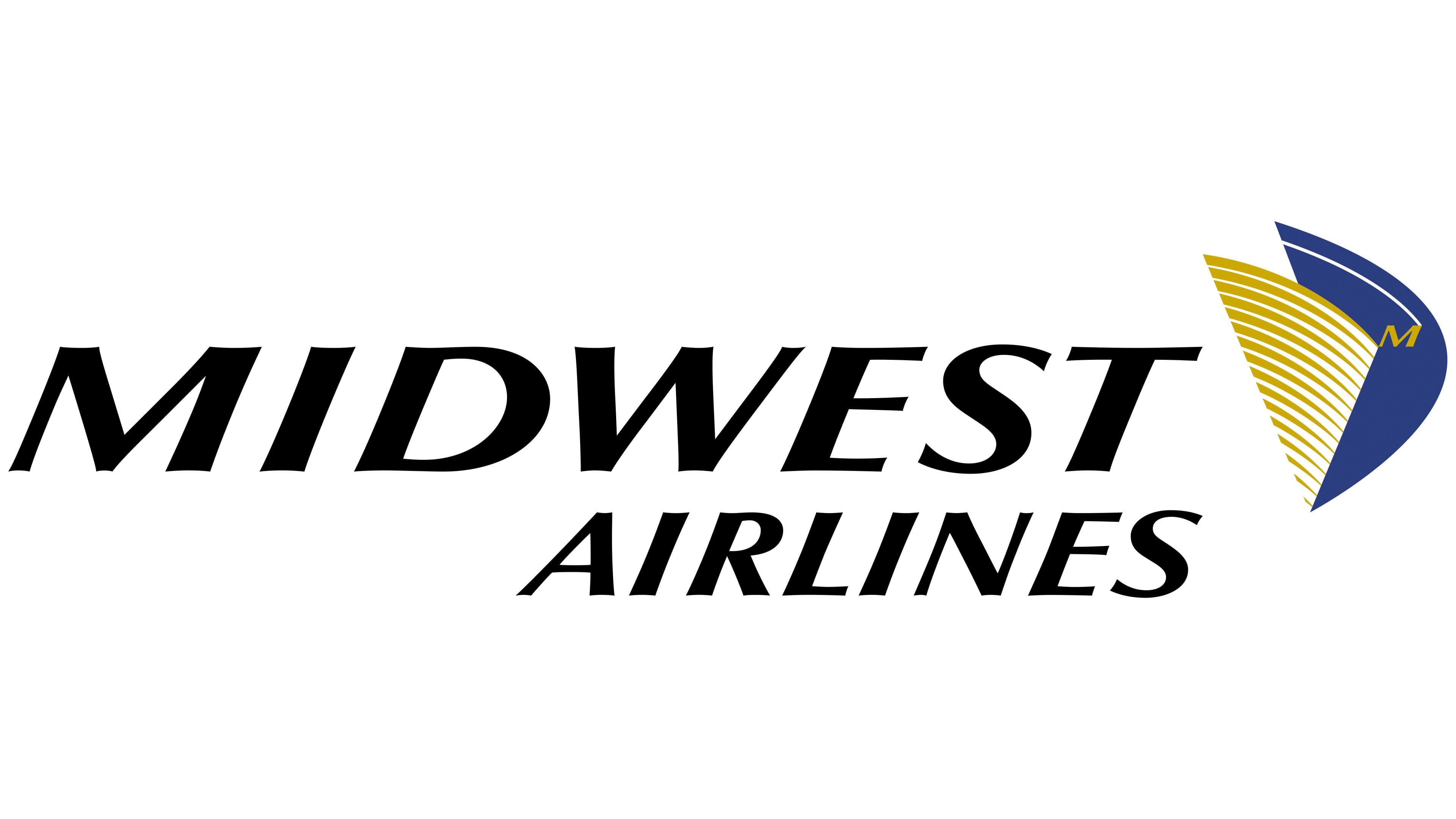
The Midwest Airlines logo combines graphics and text in a balanced design. The name “Midwest Airlines” is in bold, italicized black letters with small extensions at the ends, adding sophistication. Next to the text is the airline’s unique symbol, a pair of wings with an “M” inside. This “M” also reflects the Milwaukee Art Museum when viewed from the side, connecting the logo to Milwaukee, the airline’s home base.
The bold, italicized text is striking and readable. The small extensions on the letters give it a classic, elegant look. The wings and “M” symbol signify the airline’s origin and incorporate a local cultural element, making the logo memorable and deeply rooted in the community.
The black text provides a strong visual foundation, while the small extensions add a distinctive flair. The wings with the “M” denote the airline’s origin and pay homage to a significant local landmark, blending aviation with regional pride.
The reference to the Milwaukee Art Museum adds depth, connecting the airline to the cultural heritage of its home city. This design element makes the logo a symbol of local pride and architectural excellence.