


 Milky Way Logo PNG
The Milky Way logo is sweet and refreshing. The emblem tells a story of rejuvenation and increased energy, reflecting the candy bar’s core properties. The sign is a sea of chocolate, evoking pleasant taste associations and the desire to try the candy.
In 1923, Frank Mars introduced the Milky Way chocolate bar in the U.S. It was a hit, thanks to its creamy nougat center and milk chocolate coating. A few years later, in 1935, his son, Forrest Mars, Sr., took the bar across the Atlantic to England, where he made it lighter with a vanilla-flavored mousse, still wrapped in delicious milk chocolate. This version let people enjoy a sweet treat without worrying too much about calories. The slogan “The sweet you can eat between meals” helped make it a favorite by suggesting you could enjoy it anytime.
Throughout the 1960s and 1970s, the Milky Way grew more popular in the UK and across Europe. It was appealing because it was a lighter snack option. They started making it in different sizes, including minibars, which people liked.
Ads in the 1980s and 1990s showed people enjoying Milky Way daily, which helped make the bar even more popular. The red packaging and logo became well-known symbols of the brand.
In the 2000s, the Milky Way evolved with new flavors, such as Crispy Rolls, which added a bit of crunch. Later, in response to people’s demand for healthier options, they introduced bars with less sugar and smaller sizes.
Today, the Milky Way is still loved across Europe for its light texture and great taste. It stands out from other chocolate bars and has fans of all ages. The bar’s success shows how adapting to local preferences can pay off. Even though it differs from the American version, it has become a key part of European snack culture.
Meaning and History
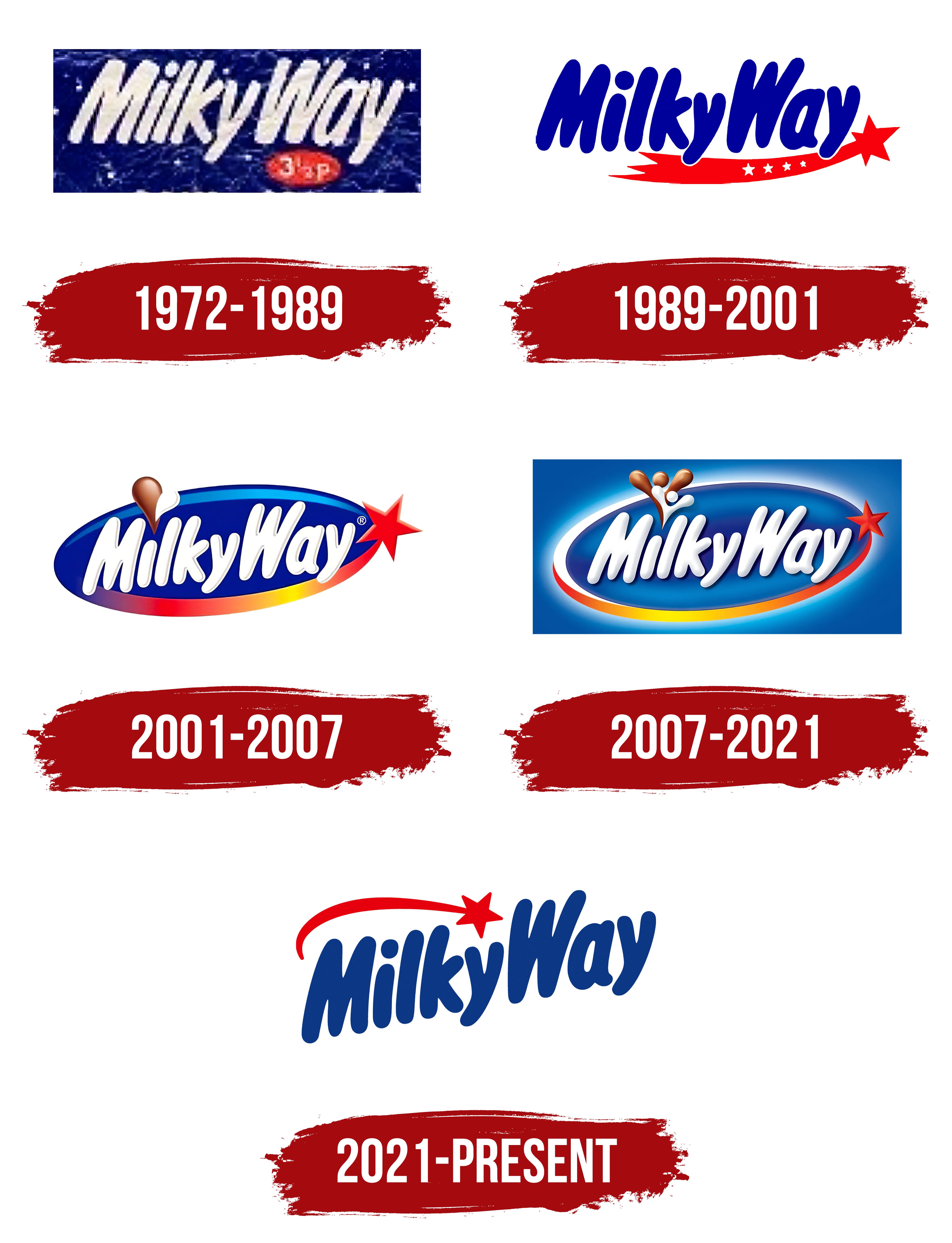
What is Milky Way?
The Milky Way brand is known for its chocolate bars featuring a unique blend of soft nougat and caramel, covered in milk chocolate. Interestingly, the brand tailors its recipe to regional tastes: in the USA, the bars focus more on caramel, while in Europe, they resemble a chocolate mousse more.
1972 – 1989

The Milky Way bar in Europe debuted its first logo between 1972 and 1989, capturing the candy’s unique charm and space theme. The logo showed a starry night sky with the candy’s name in white, stretching upward like the Milky Way. The white text represents milk, fitting the candy’s theme well.
The Milky Way bar is famous for its distinctive flavor, featuring smooth milk chocolate, fluffy nougat-like marshmallows, and crunchy malted milk rice balls. Its creamy, white ingredients played a big role in choosing the logo’s name and color, highlighting its milky base.
A fun fact about the Milky Way bar is that it can float in milk because it’s low-density. This feature ties it back to dairy and makes it a fun addition to milk-based desserts.
In Europe, the Milky Way bar and its emblem represent sweet dreams and softness, blending visuals and flavors beautifully. Its light texture and creamy taste offer a brief escape into a dreamy, magical world. This makes the candy a reminder of carefree childhood days and happy moments.
1989 – 2001
Since the 1970s and 1980s, the Milky Way bar’s logo has evolved, maintaining its cosmic theme while adding new features. The latest design uses a sky-blue font with soft, rounded shapes that appear to rise upward, suggesting the vastness of space. This connects to the bar’s unique flavor and its ability to evoke dreams and a sense of flight.
The logo now includes:
- A red star trail sits beneath the name.
- Adding a vibrant accent symbolizes the brand’s dynamic growth and global reach.
- This reflects its popularity worldwide.
The design also features five stars, representing the continents where the Milky Way bar is available and highlighting its broad distribution and appeal across cultures.
The red and blue star trail also evokes speed and energy, echoing the brand’s 1989 marketing campaign featuring racing cars. This underscores the brand’s commitment to innovation and active consumer engagement.
The logo cleverly introduces the Milky Way Magic Stars, small, star-shaped candies that continue the space theme and offer a unique treat. It reinforces the brand’s connection to space and its intent to bring magic and wonder to its customers.
2001 – 2007
The Milky Way brand has updated its logo to a classic style, using white lettering for the brand name. This change honors the brand’s history and tradition while staying current and distinctive. The white lettering nods to the dairy ingredients that give the candy bar its creamy texture and taste.
The logo’s dot above the letter “i” is designed as a splash of milk and chocolate, creatively emphasizing the main ingredients. This feature highlights the filling’s richness and the bar’s premium quality and flavor.
The logo features a space scene, with the Milky Way bar depicted as a comet in orbit. This cosmic theme underscores the brand’s enchanting, unique character. The orbit imagery also represents the bar’s broad appeal and its journey into consumers’ hearts worldwide.
The Milky Way candy is a well-known bestseller, and its new logo places it among the stars, symbolizing its high quality and unique flavor, which set it apart in the market.
2007 – 2021

The Milky Way brand has redesigned its logo to feature images of people above the letter “i,” replacing the previous milk-and-chocolate splashes. These figures symbolize the energy and strength of the bar’s key ingredients, milk and chocolate. This design showcases the energizing effect of these ingredients.
The logo now features bolder letters and a designed background that creates a sense of movement, reflecting the brand’s dynamic nature.
A new element in the logo is the red star comet, which enhances the logo’s appeal and symbolizes the Milky Way bars’ market success. The comet ties to themes of dreams and aspirations, aligning with the brand’s message that enjoying the bar inspires dreams and helps people achieve new goals.
2021 – today

The logo is now simple and minimalistic, showing only the brand name and a comet symbol. This design emphasizes the essential elements of the brand’s identity, focusing on clarity and significance. The upward-pointing blue letters symbolize ambition and the pursuit of greatness, enhanced by bright star fragments in a creative space.
Since its creation, the candy bar has adapted to changing consumer preferences and market trends. Despite these changes, the brand remains a global leader in taste preferences, highly popular with consumers, and known for delivering pleasure.
The candy bar is recognized worldwide and celebrated for its unique taste and texture, offering culinary delight, emotional uplift, and inspiring achievement. Each piece invites discovery and adventure, offering moments of joy that encourage you to reach new heights and realize your dreams.
US version
 Milky Way Logo PNG
Mars has produced the Milky Way chocolate bar for over 100 years. The treat comes in two versions. The original American recipe consists of nougat covered in caramel and milk chocolate. The worldwide version features light nougat coated in chocolate. The difference stems from the business being split into American and European branches from 1932 to 1964 because of family disputes.
Frank Mars introduced the Milky Way chocolate bar in 1923, a candy inspired by malted milkshakes popular at the time. Its malt-flavored nougat, covered in milk chocolate, offered a new taste experience and quickly became a U.S. favorite.
In the 1920s and 1930s, the Milky Way gained popularity with its unique taste and texture, leading to the launch of the Milky Way Giant Bar and other variations. This responsiveness to consumer preferences helped solidify its market position.
In the 1940s, during World War II, American soldiers’ rations included Milky Way bars, which helped boost recognition. After the war, the brand continued to thrive, maintaining its status through a growing product range that emphasized its versatility.
The 1960s and 1970s marked a period of expansion as Milky Way reached beyond the U.S. The brand introduced a European variant with whipped vanilla mousse and milk chocolate to appeal to new fans. This era also introduced Milky Way Dark, adding another flavor option.
Entering the modern era, Milky Way introduced Milky Way Midnight with dark chocolate and vanilla-caramel filling, and Milky Way Caramel expanded its flavor and texture variety. The brand also explored new areas, including frozen desserts and coffee drinks, while remaining true to its essence.
In recent years, in response to changing health trends and consumer preferences, Milky Way has introduced smaller sizes and lower-sugar options. This has ensured a wider audience can enjoy the candy. Seasonal flavors and limited editions have been launched to keep the brand fresh and engaging.
As Milky Way nears its 100th anniversary, it remains a cherished candy bar. Its story reflects a commitment to innovation, adaptability, and quality. This enduring popularity suggests the Milky Way will continue to delight chocolate lovers for years to come.

The brand’s logo has undergone several transformations over time. However, the overall concept has remained consistent: a single owner for 100 years and a long-standing family affiliation. The brand’s emblems are full of life, energy, and strength, which fill the candy bars and those who consume them. All elements resonate with the product’s properties and the treat’s taste.
1923 -1972

The first candy bar logo features the name in green cursive. The brand name is derived from the following:
- Our galaxy, the Milky Way. Candy enjoys cosmic popularity and is sold virtually worldwide. The invention of candy bars was a breakthrough for our galaxy.
- Milk is included in the nougat and outer coating. Hence, the company’s most popular slogan: “Milk is twice as tasty if it’s a Milky Way.”
- A cocktail with the same name. Legend says Frank Mars took the candy bar recipe from a drink his son liked. The company often cites this as the name’s origin.
The letters in the brand name connect to the filling’s creamy, elastic, stretching mass. All symbols are round with smooth curls, hinting at sweetness, softness, and a pleasant taste.
The green choice suggests life and vitality. The candy bars were initially considered a children’s treat and a good snack for workers during lunch breaks. The sweet replenished energy and inspired people to complete complex tasks.
This theme was also linked to the first advertisement, where a sailor survived a shipwreck thanks to the strength gained from eating the candy.
The logo’s upward lift is a common technique for conveying growth and development. This is especially true for the Milky Way, as the candy bar helped Mars go from losses to $700,000 in revenue within two years.
1972 – 1991
The founder’s grandchildren began managing the corporation. They brought a fresh approach to marketing the released brands, including the Milky Way logo. The new sign more closely matched the candy bar itself.
The inscription was placed on a white stripe surrounded by a brown foundation. The white part symbolized nougat and milk, while the brown represented the chocolate coating.
The inscription’s letters were made more slender. At the same time, M and W were displayed as mirrored, identical symbols. This technique demonstrated the chocolate coating on top and bottom. The two curves spoke of the two types of recipes and the two coating layers.
1991 – 1999

The company focused on the candy bar’s benefits. To this end, they used caprenin instead of cocoa butter (a low-calorie product made from glycerin and fatty acids). This innovation was reflected in the logo, which used a salad green to symbolize a new beginning and young, healthy greens. The light shade indicated fewer calories. All other techniques, such as connecting letters and smooth lines, remained.
1999 – today

The visual identity was updated on the eve of the 21st century. In the new logo, the salad-green inscription sits against a liquid-chocolate background, making the image more thematic and easier to understand. Chocolate evokes sweetness, suggesting the product is a candy.
The company has not changed the theme of life, the product’s original concept. The advertising slogan “Life” suggests it is better than the Milky Way, and the green shade of the emblem’s letters supports this.
The font has changed; it is now straight and even, bringing the inscription closer to the candy’s rectangular shape.
The white substrate beneath the name symbolizes milk.
The logo’s colors reflect both the product’s composition and its properties.
- Green is a life-affirming shade. It represents renewed strength, vitality, and health benefits. It predicts the product’s development and prosperity.
- White is the color of milk and dairy products, central to the recipe. It demonstrates lightness and low calories.
- Brown is the shade of caramel and chocolate. It is associated with desserts and pleasure.
The font resembles Ligurino SemiCond Bold.
Font and Colors
The Milky Way logo uses a custom sans-serif font with rounded edges and subtly tapered letters. This gives the logo a soft, welcoming feel. Although it shares some characteristics with fonts like Fun Club Spirit and Jolly Angel Italic, the Milky Way logo has unique contours that set it apart.
The logo’s colors are blue, red, and white, a combination that has represented the brand for many years. Blue represents reliability and confidence, which support the brand’s promise of quality. Red adds energy and reflects the candy’s indulgent nature. White ensures the logo looks clean and balanced. This color scheme makes the logo eye-catching and consistent across different media.
The distinctive font and color scheme make the Milky Way logo memorable and easy to recognize, which matters in the competitive candy market. These elements convey a trustworthy, vibrant brand, helping it stay a consumer favorite.
FAQ
What is the Milky Way brand?
The Milky Way is a famous chocolate bar made by Mars, Incorporated, one of the biggest candy companies. Since its founding in 1923, it’s been one of Mars’ oldest chocolates, and people still enjoy it. This long history shows how much people love it and how it keeps up with changing tastes. Milky Way bars have chocolate, nougat, and caramel. These ingredients blend well to create great taste and texture. Smooth chocolate on the outside covers the light nougat and gooey caramel inside. This mix makes the Milky Way a worldwide favorite.
Milky Way has added new flavors and sizes to keep up with people’s preferences. There’s Milky Way Midnight with dark chocolate and Milky Way Simply Caramel, which focuses on caramel. They also made smaller versions to suit different needs and preferences. Milky Way’s success comes from good marketing and keeping the product exciting. Mars has worked hard to keep the brand alive with ads and new ideas, especially as it is nearly 100 years old.
What’s the difference between a Mars bar and a Milky Way?
The Mars bar and the Milky Way bar are two popular chocolates made by Mars, Incorporated, but they’re different in a few key ways. Around the world, except in the United States, a Mars bar has nougat and caramel inside, all covered with milk chocolate.
The Milky Way is similar to the United States bar but lacks caramel, making it less sweet and lighter. It’s mostly whipped nougat covered in milk chocolate. The Milky Way debuted in 1923, offering a smooth, fluffy treat. The U.S. Mars bar had nougat, caramel, and almonds, but it was discontinued in 2002. It returned later as the “Mars Almond” bar, keeping its unique mix. The main difference between them, especially in the U.S., is what’s inside. The Mars bar has nougat, caramel, and sometimes almonds, while the U.S. Milky Way just has nougat.
What is the Flavor of the Milky Way?
The Milky Way chocolate bar has been a favorite since Frank C. Mars made it in Minneapolis, Minnesota, in 1923. It’s known for its mix of nougat, caramel, and milk chocolate. The soft nougat at the bottom has a light, sweet malt flavor, paying tribute to the malted milk drinks popular back then. “Milky Way” comes from these drinks, not the stars. On top of the nougat, caramel adds a chewy, buttery taste. The whole thing is covered in creamy milk chocolate, which adds a rich flavor and makes the bar even more delicious.
This mix of flavors makes the Milky Way unique. Malted nougat adds comforting sweetness, caramel brings rich butteriness, and milk chocolate ties it all together with a smooth finish. It’s a blend that’s both nostalgic and satisfying. The Milky Way bar’s taste isn’t inspired by outer space but by the joy of drinking malted milkshakes.
Why is Milky Way chocolate called Milky Way?
Surprisingly, the Milky Way chocolate bar got its name from a favorite drink. Many might guess it was named after the galaxy, given the creator’s last name, Mars. However, the real inspiration came from a favorite drink back in the day: the malted milkshake. Malted milkshakes were all the rage in the early 20th century. People blended milk, malted milk powder, and ice cream to make them, creating a rich, creamy treat everyone loved. Frank C. Mars wanted to capture this popular flavor in a candy bar. So he created the Milky Way to capture the taste of these beloved shakes in a convenient candy bar.
The company even advertised the Milky Way as “a double malted milk in a candy bar,” emphasizing its unique appeal. This slogan highlighted what made the bar different: it offered the familiar taste of malted milkshakes in a new form. This clever marketing helped the Milky Way stand out and connect with people who enjoyed malted milkshakes. “Milky Way” indicates the candy’s flavor, inspired by malted milkshakes, not the stars.
Why is the Milky Way different in Europe?
The Milky Way chocolate bar is made differently in Europe compared to the United States. The main reason is that Europeans prefer lighter snacks. So, the European Milky Way doesn’t have caramel, and its nougat is fluffier and less dense than the American or British versions. This makes the European Milky Way taste lighter and not too sweet.
Mars Incorporated, the company that makes Milky Way, made this change because it wanted the bar to fit what people in different places like to eat. In the U.S., the Milky Way is a heavier snack with caramel and dense nougat wrapped in milk chocolate. But they removed the caramel for the European market and made the nougat lighter to match local tastes. The European Milky Way is lighter because that’s what people there enjoy. It shows how Mars makes sure its candy bars fit what people in different countries like to eat.
What brand makes the Milky Way?
Mars, Incorporated makes the Milky Way chocolate bar, known for its delicious mix of chocolate, caramel, and nougat. Mars is a major producer of sweets, pet food, and other foods worldwide. They started selling Milky Way bars in 1924, making it the oldest chocolate bar still in production. This shows how much people have loved it over the years and how Mars continues to make quality products.
Nowadays, you can find Milky Way bars worldwide, in different versions to suit various tastes. The U.S. version is popular for its caramel and nougat, but bars sold in other countries may taste slightly different, showing Mars’s effort to please everyone everywhere.
What is the difference between the US and the UK Milky Way?
The Milky Way chocolate bar is known by the same name in the United States and the United Kingdom, but the two are quite different. In the US, the Milky Way has caramel and nougat covered in milk chocolate, giving it a rich, sweet flavor with a mix of chewy textures. In the UK, however, the Milky Way is simpler: whipped nougat in milk chocolate, making it lighter and fluffier than the US version. This difference shows how companies adapt products to different markets.
Mars, Incorporated, the company behind these candies, matches its chocolate bars to what people in different places prefer. The US and UK versions offer distinct tastes and experiences for chocolate lovers in each country.