 Mucinex Logo PNG
The Mucinex logo emphasizes practicality and the straightforward purpose of the cold and cough medicine. Its simple design reflects the brand’s functional approach and medical focus.
Mucinex grew from guaifenesin, an expectorant derived from guaiac wood and used in medicine long before the brand existed. In 1952, the FDA approved the ingredient for relieving chest congestion, allowing wider use in nonprescription remedies. For decades, guaifenesin appeared mainly in combined cough and cold products.
The brand story began in 1997, when John Adams founded Adams Respiratory Therapeutics. He focused on a 12-hour tablet that released guaifenesin gradually, and Mucinex launched in 2002. Mucinex D followed, adding pseudoephedrine for nasal congestion. Approval for the extended-release formula helped the company compete with established products such as Procter & Gamble’s Vicks range.
In 2004, advertising introduced Mr. Mucus, a green animated figure representing chest congestion. The campaign replaced vague medical language with a recurring character that the medicine removes. In 2007, Reckitt Benckiser acquired Adams Respiratory Therapeutics for $2.3 billion, widened U.S. pharmacy distribution, and expanded the line with products for different symptoms, age groups, and children.
Later marketing moved into digital media. Campaigns on TikTok and Tinder used dating, social situations, and cold-season humor to reach younger consumers, extending the direct style established by Mr. Mucus while keeping the focus on cough and congestion relief. The original formula retained its 12-hour guaifenesin release for treating persistent chest congestion.
Meaning and History
What is Mucinex?
It is a well-known American cough medicine with a prominent advertising mascot, a green character representing mucus. The drug’s main component is guaifenesin, which thins mucus and aids its removal. It comes in tablet form with a dual-layer structure, allowing for the gradual release of the active ingredient. The product line includes extended-release formulas and combined versions with fever-reducing ingredients.
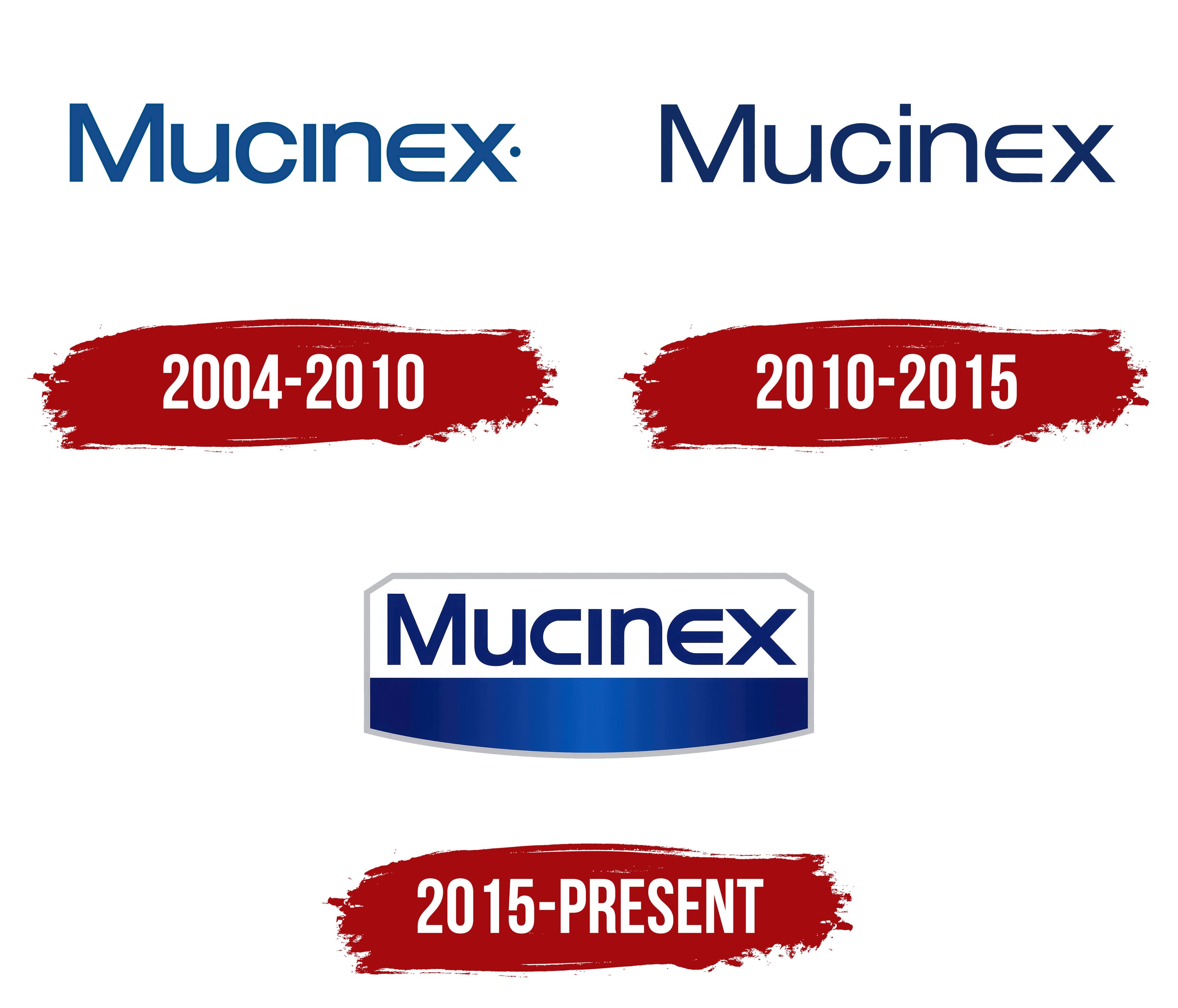
2004 – 2010

The first Mucinex logo appeared with the product’s market debut and the launch of a large-scale advertising campaign developed by McCann (NY). After Mucinex D was approved by the Food and Drug Administration (FDA) in June of that year, the brand entered an active promotion phase, with the central character being the mucus-based mascot Mr. Mucus, created by the agency. This vivid figure became the primary consumer touchpoint in commercials and multimedia campaigns, building brand recognition on both emotional and visual levels.
Visually, the logo was a minimalist wordmark set in a medium-weight sans-serif typeface. The initial “M” was capitalized, while the remaining letters were lowercase, giving the text a sense of stability and solidity. The lack of decorative elements was offset by refined typographic details: the dot above the “i” was removed, and the “e” had a slightly rounded silhouette. These subtle nuances acted as a quiet signal of technological sophistication and innovation, aligning with the brand’s medical and pharmaceutical theme.
The color palette featured a deep, dark blue, associated with seriousness, professionalism, and trust, qualities essential to the perception of medical products. The restrained simplicity of the typographic composition created a striking contrast with the vivid, emotionally charged image of Mr. Mucus. This contrast made the brand memorable and drew the audience’s attention to the key character in its advertising campaigns.
2010 – 2015

In 2010, Mucinex introduced an updated version of its logo, marking a shift toward a more technological and refined design style, replacing the previous version, which had been in use since 2004. The color palette remained unchanged, with the dark blue tone continuing to convey the brand’s seriousness and medical focus.
The updated typeface became more refined and geometric, with letters gaining cleaner lines and a more compact form. Notable adjustments were made to individual characters: a dot was added above the “i,” restoring formal completeness and neatness to the logo. At the same time, the “e” retained continuity with the previous style but adopted a more elegant shape with soft curves and rounded corners.
The letterforms closely resembled the Klavika typeface, designed by Eric Olson in 2004. Klavika belongs to the geometric humanist sans-serif category, combining precise geometric proportions with a subtle organic quality that makes the letters feel like carefully engineered forms. This typeface fits the brand’s technological style and professional character, meeting the expectations of the modern medical industry, which values precision and reliability.
The new logo evoked associations with the concise interface of medical equipment or a scientific instrument, minimalist and functional, without unnecessary decorative elements. The design conveyed a professional atmosphere, highlighting the product’s competence and technical sophistication. Through these changes, the brand visually reinforced its positioning in the field of contemporary pharmaceuticals and medical technology.
2015 – today
In 2015, the Mucinex brand updated its visual identity, timing the change to coincide with a large-scale advertising campaign centered on the three-dimensional mascot Mr. Mucus. The commercials were created by McCann New York, which was also responsible for the cognitive strategy and the refreshed character design. The campaign launched in February under the slogan “Mr. Mucus reads sick tweets,” emphasizing the interactive and lively nature of the new brand style.
The updated Mucinex logo combines minimalist symbolism with the brand name as a textual element. The emblem is a horizontally elongated shape with precise geometric lines, enclosed in a glossy silver frame with a gradient effect. This frame treatment evokes high-tech medical equipment and conveys reliability, expertise, and premium quality.
Inside the emblem, the brand name appears in lowercase sans-serif type. A distinctive typographic feature is the letter “e,” styled to resemble an uppercase form. This technique enhances the perception of the name as modern, dynamic, and innovative, evoking elements of digital or scientific aesthetics. The letterforms are bold, with geometric precision and elongated proportions that convey movement, growth, and energetic forward momentum, supporting the brand’s concept of progressive research and scientific development in the medical field.
The lower portion of the emblem is rendered in a deep blue gradient, which sometimes serves as a background for additional product information. The blue emphasizes the brand’s medical focus, symbolizing trust, safety, and professionalism. This palette serves as a metaphor for purity and efficacy, aligning with the pharmaceutical field and with Mucinex products’ ability to provide reliable protection and relief.
The emblem’s color scheme, a combination of blue and a cool silver tone, is associated with sterile laboratory or medical office settings, creating an impression of rigor, strength, and high competence. The silver frame serves as a decorative element, adding shine and visual impact that helps Mucinex products stand out among competitors.
Mucinex’s visual identity is built around confidence and technical excellence, making it memorable, authoritative, and emotionally appealing to its target audience.