


 Noggin Original Logo PNG
An online service with educational cartoons and shows proves that learning can be easy and fun. As a result, the Noggin Original logo feels positive and even festive. It symbolizes the joy of learning in a relaxed atmosphere.
Noggin’s prehistory began in 1995, when Sesame Workshop, then known as the Children’s Television Workshop, planned an educational cable channel called New Kid City. Nickelodeon, through MTV Networks, was developing a similar project called Big Orange. After discovering the overlap, the two companies partnered in 1998.
Noggin launched on February 2, 1999. Its name came from the slang word for “head,” fitting a channel built around learning and creativity. The channel had no commercials and allowed teachers to record programs for classroom use. Early content came from both owners, including The Electric Company, 3-2-1 Contact, Square One Television, and Ghostwriter from Sesame Workshop, as well as Wild Side Show, Nick News, and Doug from Nickelodeon.
The first version targeted older children and teens, featuring original shows such as A Walk in Your Shoes (1999) and Sponk! (2000). In 2002, the Sesame Workshop sold its 50% stake to Viacom but kept a production partnership. That year, Noggin split into a daytime preschool block and a teen night block called The N. Joint projects included Out There and The Upside Down Show.
On December 31, 2007, the preschool block took over the full schedule, while The N moved to another location. On September 28, 2009, Noggin was replaced by Nick Jr. The brand returned on March 5, 2015, as a preschool streaming app competing with Disney Junior and PBS Kids. It was redesigned in 2019, closed on July 2, 2024, and was sold by Paramount to former executive Kristen Kane. In August 2025, Noggin returned as a new streaming service with original content. Its smiling half-face logo lasted from 1999 to 2019.
Meaning and History
When Noggin Original was a TV channel, its owners relied on a non-standard presentation. This applied not only to content but also to visual identity. The broadcast aired unique commercials that positioned Noggin as a creative, somewhat experimental brand. To support this, they used an abstract logo.
For a long time, all emblems were based on the lower part of a cartoon man’s head. He smiled broadly because he embodied the channel’s entertainment focus and its focus on children. The character’s eyes were covered by a rectangular plaque that read “NOGGIN,” and the top of the head reflected a certain idea. Dozens of different badges floated in the air. Artists got creative freedom, so they created many options for what the little man “thinks” about. But only a few of these images were the channel’s official logos.
Later, as Noggin evolved into a streaming service for educational cartoons and shows, it adopted a new visual identity. The iconic head was replaced with a colorful wordmark set against a lilac background.
What is Noggin Original?
Noggin Original was originally a division of the Noggin television network owned by media conglomerate Viacom and the Children’s Television Workshop. The brand presented two products: an entertainment website and a TV channel for teenagers. In 2002, it targeted preschoolers. Noggin disappeared in 2009 and was relaunched six years later as an interactive learning service.
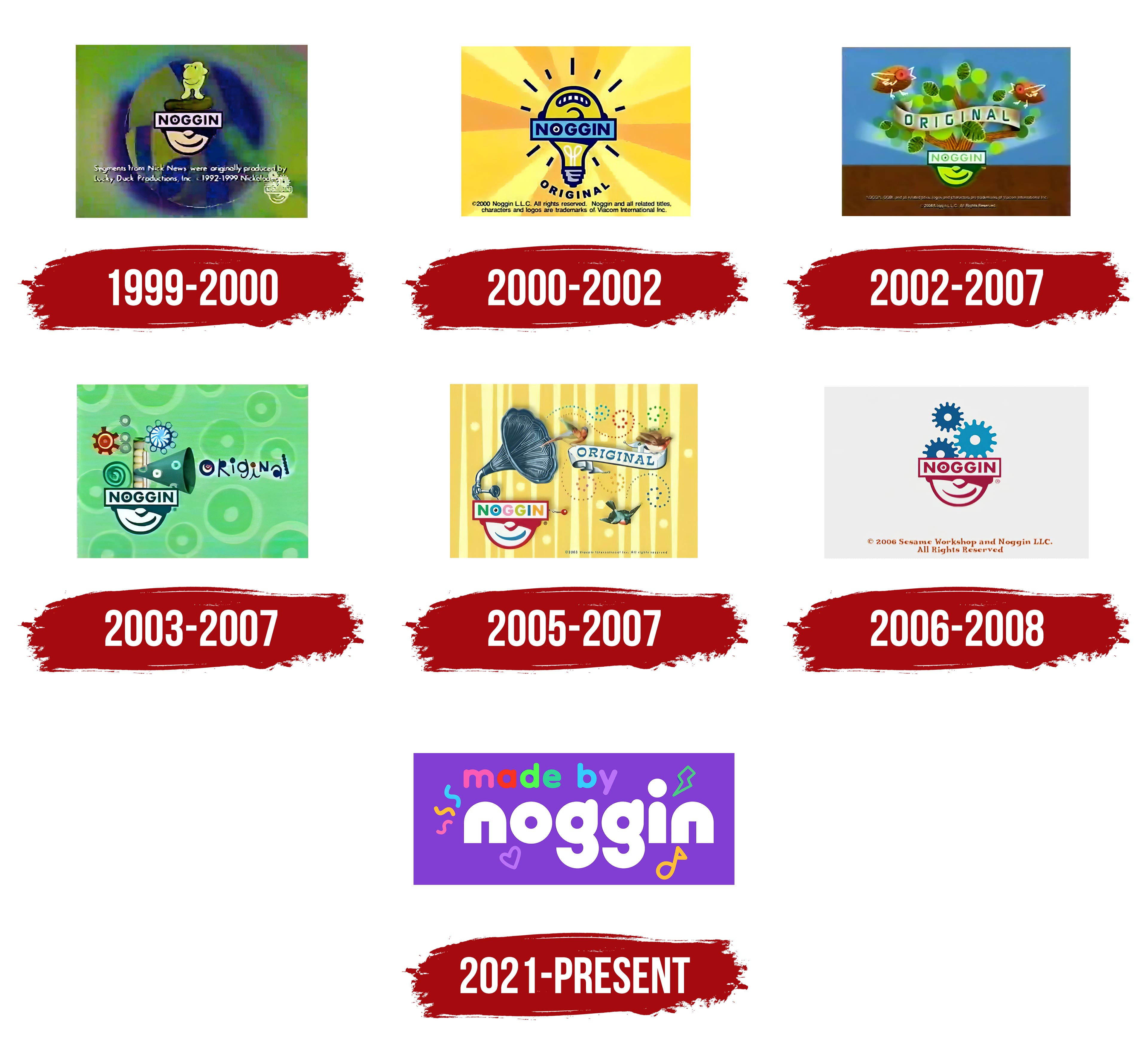
1999 – 2000
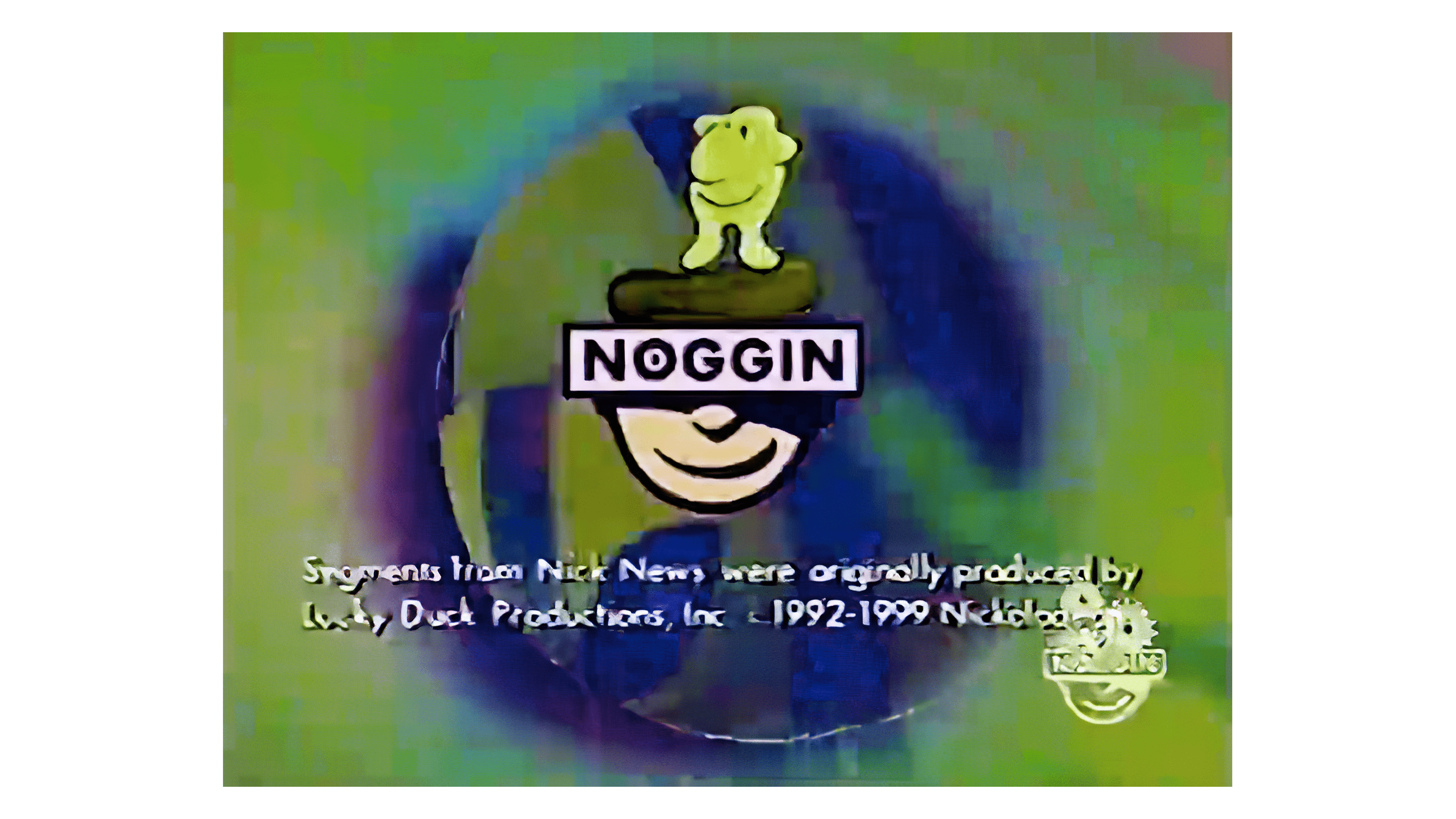
The first Noggin logo was used in the children’s series Phred on Your Head Show, which Nickelodeon created. The artists depicted a child’s head, with the child covering his eyes with a pink sign reading “NOGGIN.” Above the rectangle was a cucumber, and on top was Phred, a green man with ears, eyes, a big nose, a mouth, and legs. According to the backstory, he once lived in a pickle jar in a supermarket. Then the bank fell, and Phred went to explore the world. He jumped into people’s heads until he found his owner, after which the Noggin programs began to show.
In the 1999 emblem, the little man looked up; in the 2000 version, he stood straight. The cucumber shapes also differed: in the 1999 version, the right side of the cucumber was bent; in the 2000 version, the left side. The background color changed depending on the splash screen in which the logo was used. At the bottom, copyrights must be indicated.
2000 – 2002

In 2000, a light bulb logo appeared in several Noggin programs. Its top was stylized as the lower part of a head, which was flipped 180 degrees. The visible face featured a large nose and a smiling mouth. Beneath it was a light-blue rectangle with the TV channel’s name in dark blue. The word “ORIGINAL” appeared beneath the plinth.
The light bulb symbolized a certain idea. To show this, the artist surrounded her with many short lines resembling the sun’s rays, in the style of primitive children’s drawings. It was an imitation of light. The background also contained rays, but they looked different. These were yellow and orange stripes of different shades, diverging from the center to the edges and gradually expanding. One version of the logo included the copyright notice, while the other did not.
2002 – 2007
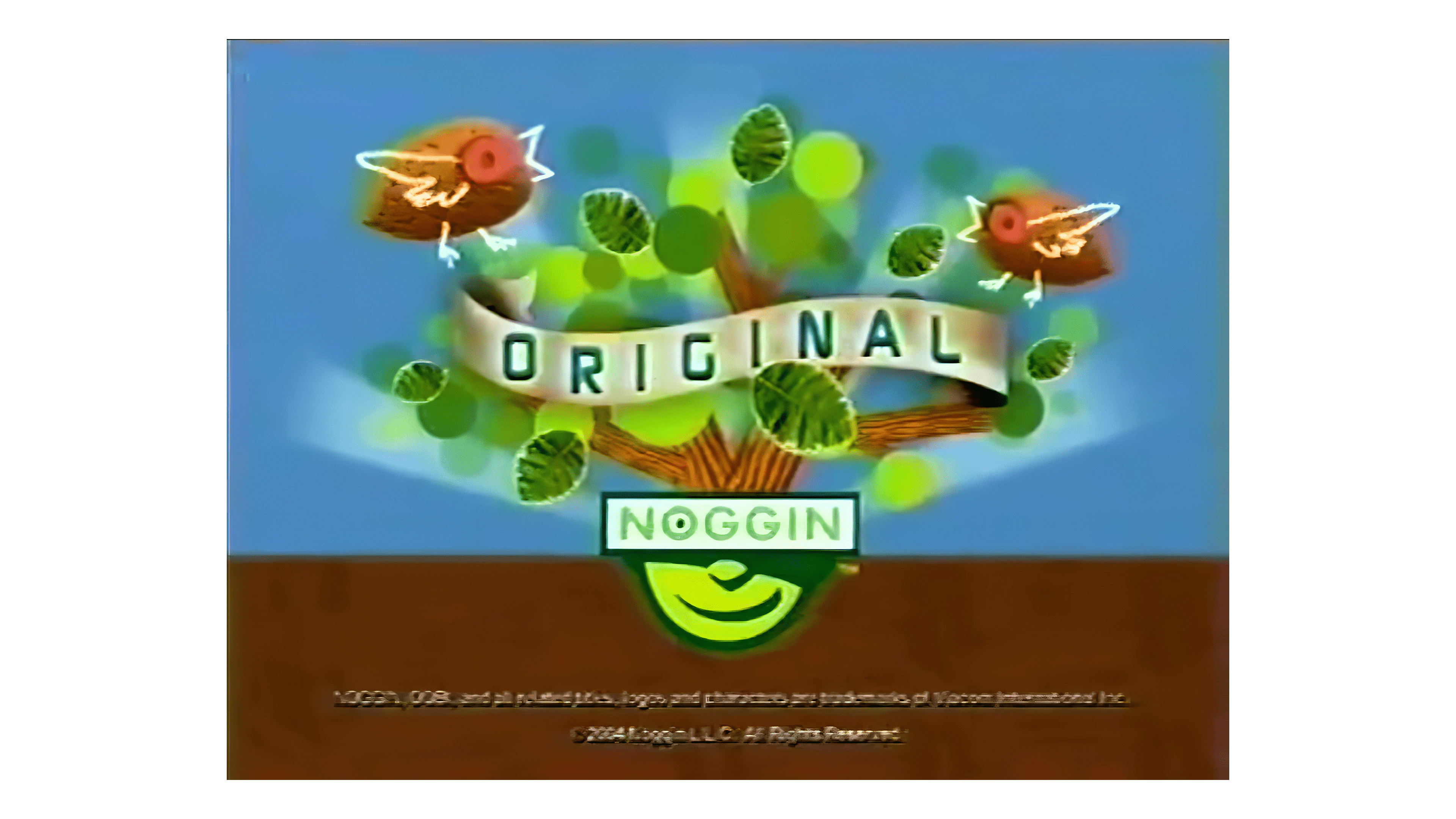
In 2002, the logo began to be used and was unofficially called “Mentally Created Tree.” The lower part of the smiling face was light green; a white rectangular sign covered the eyes, with the green word “NOGGIN.” The second part of the name, “ORIGINAL,” sat slightly higher. It was written on a translucent, wavy strip among the leaves and branches of a large tree. And on the right and left, the artists depicted cartoon birds. At the bottom, it was copyrighted, but a version without it existed.
2003 – 2007
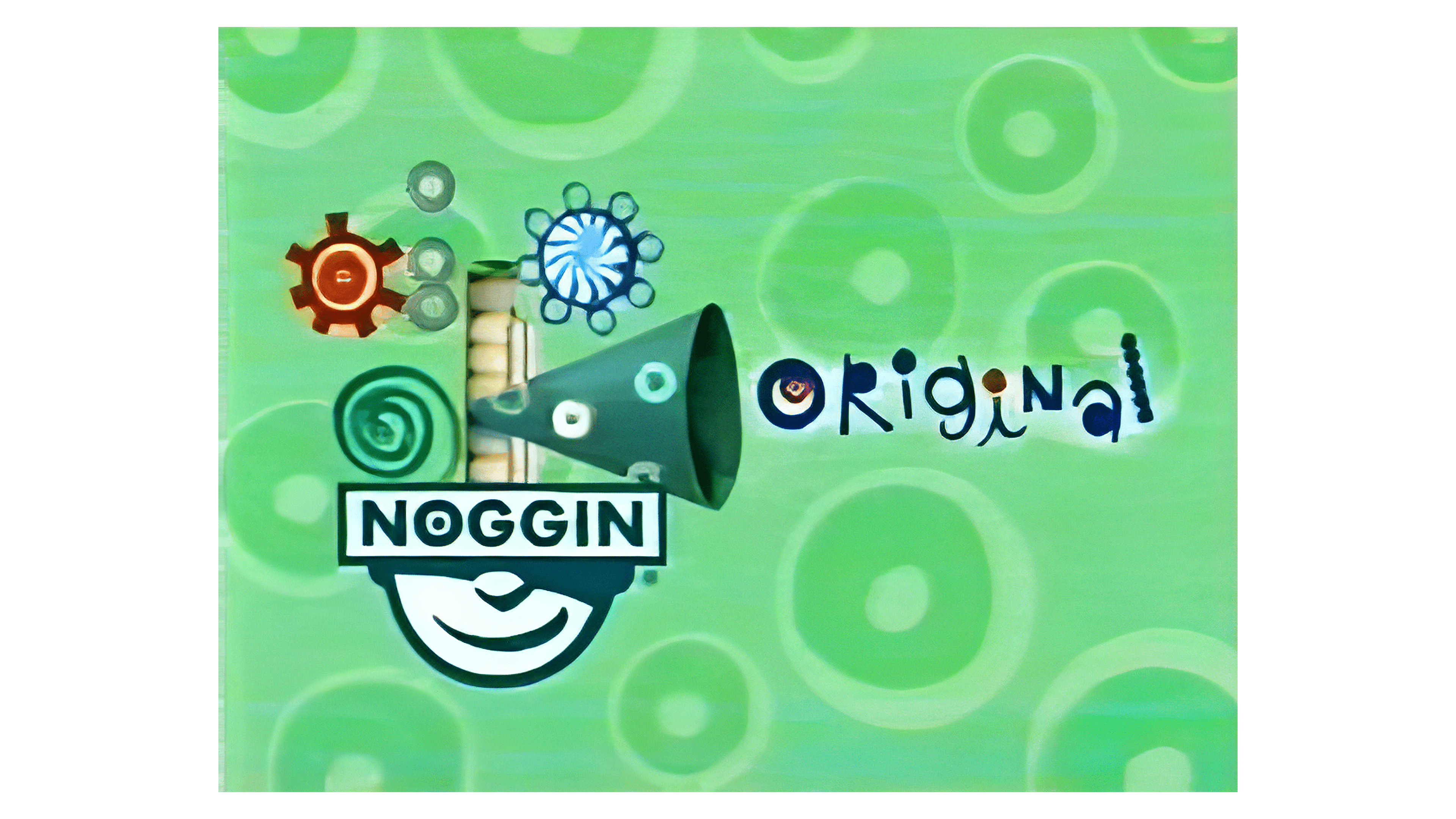
In the Play with Me Sesame intro, a sign with a cone-shaped horn stayed on screen for a long time. The musical instrument was attached to a tube that protruded from the head. Nearby, abstract flowers and a twisted spiral appeared. The background was adorned with green donut-shaped rings. As before, the word “NOGGIN” was written inside the rectangle. “ORIGINAL,” in turn, was located opposite the cone. The letters were blue and had an unusual shape.
2005 – 2007
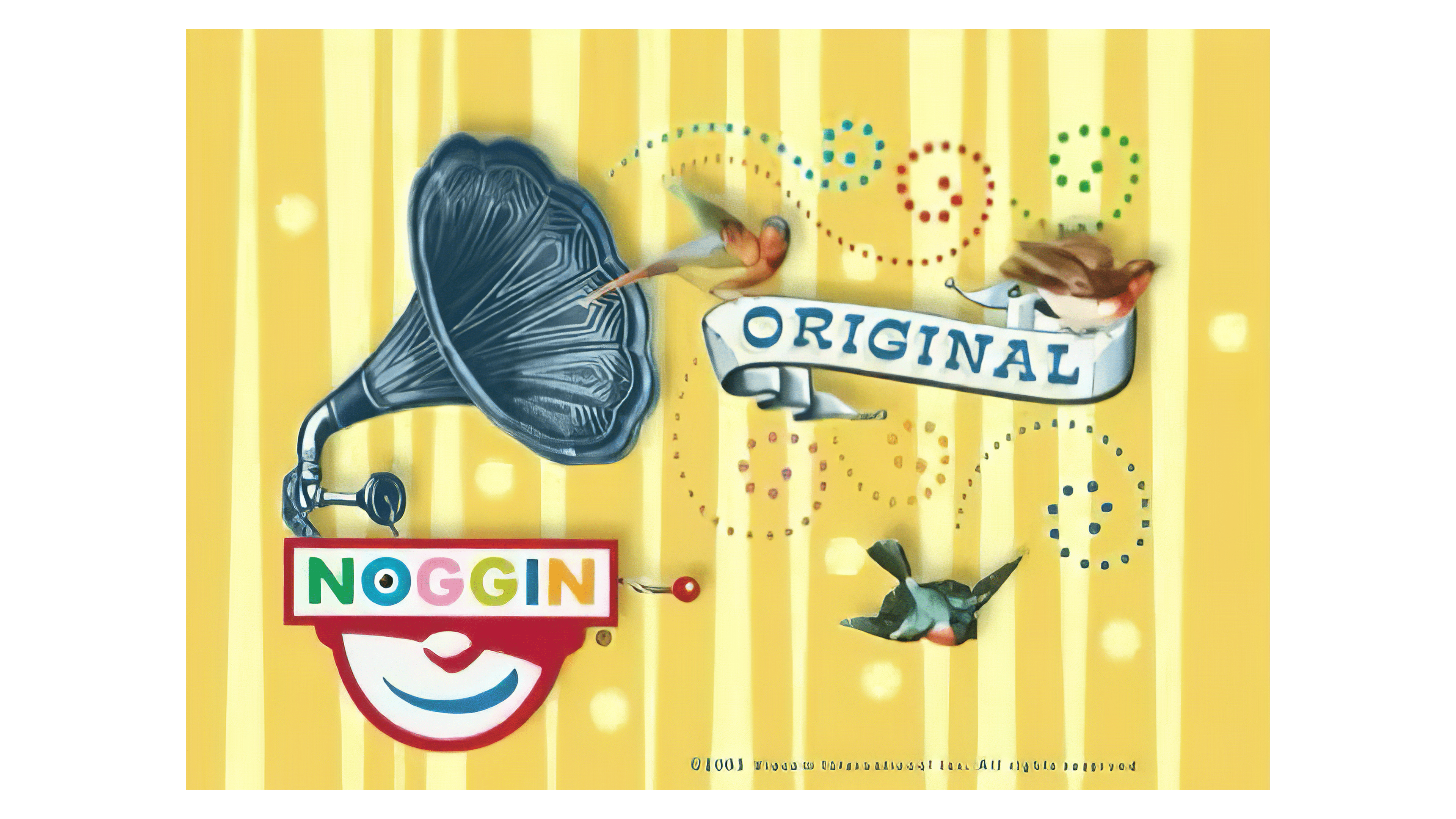
In 2005, the gramophone logo was introduced. The vintage record player had a crank and a large horn from which birds flew out. The artists depicted them surrounded by elegant dot patterns and added a white ribbon with the blue word “ORIGINAL.” The inscription “NOGGIN” was in its usual place, but this time it consisted of multi-colored letters. The head was white, the outlines were pink, and the smile was blue. As a background, alternating stripes of light yellow and dark yellow were used, complemented by miniature circles.
2006 – 2008
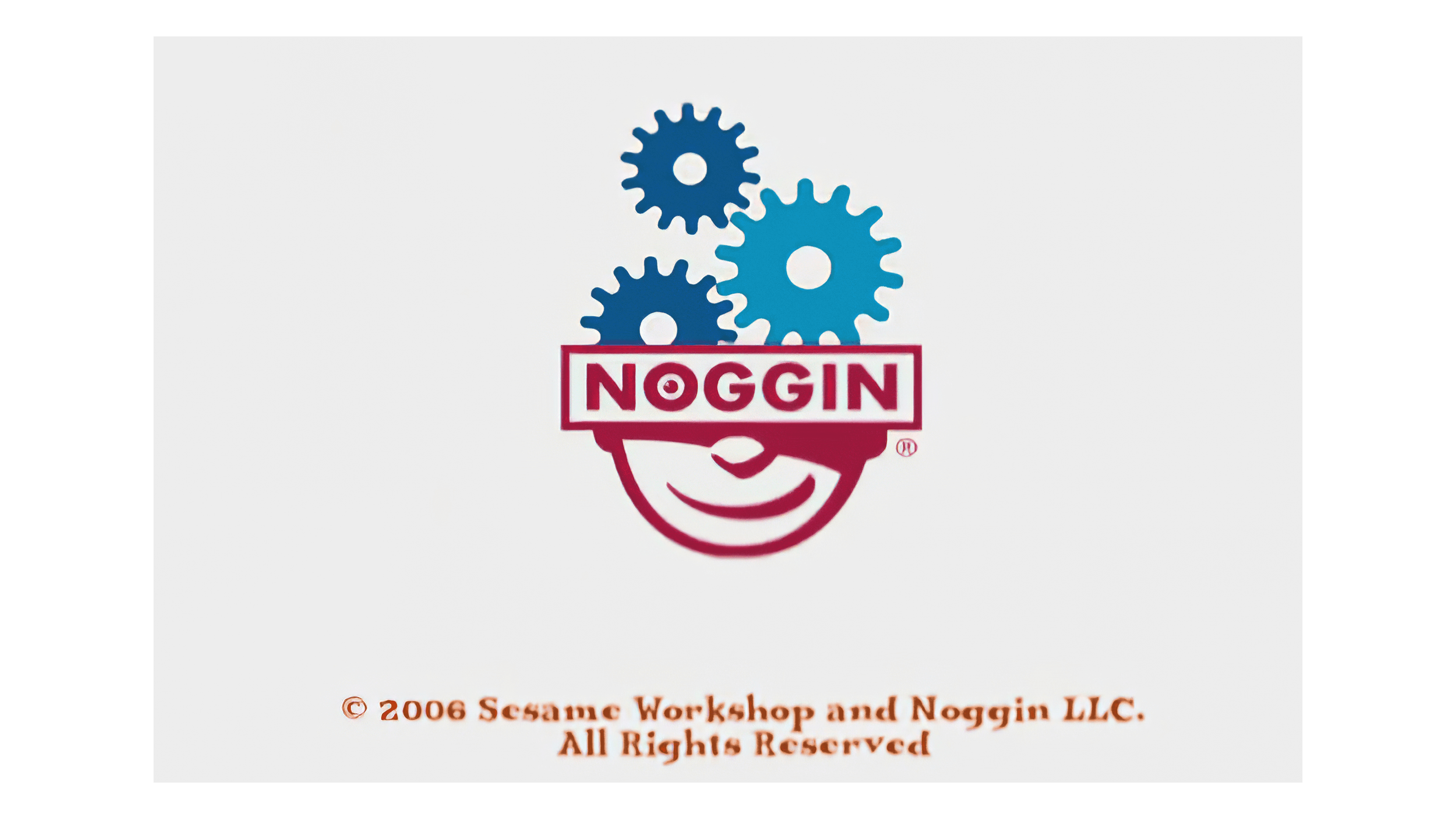
In 2006, The Upside Down Show featured a new Noggin Original emblem. The letters, head outlines, and tablet frame with text were dark pink. Three gears sat on top: two dark blue and one light blue. Copyright information is listed below.
2021 – today
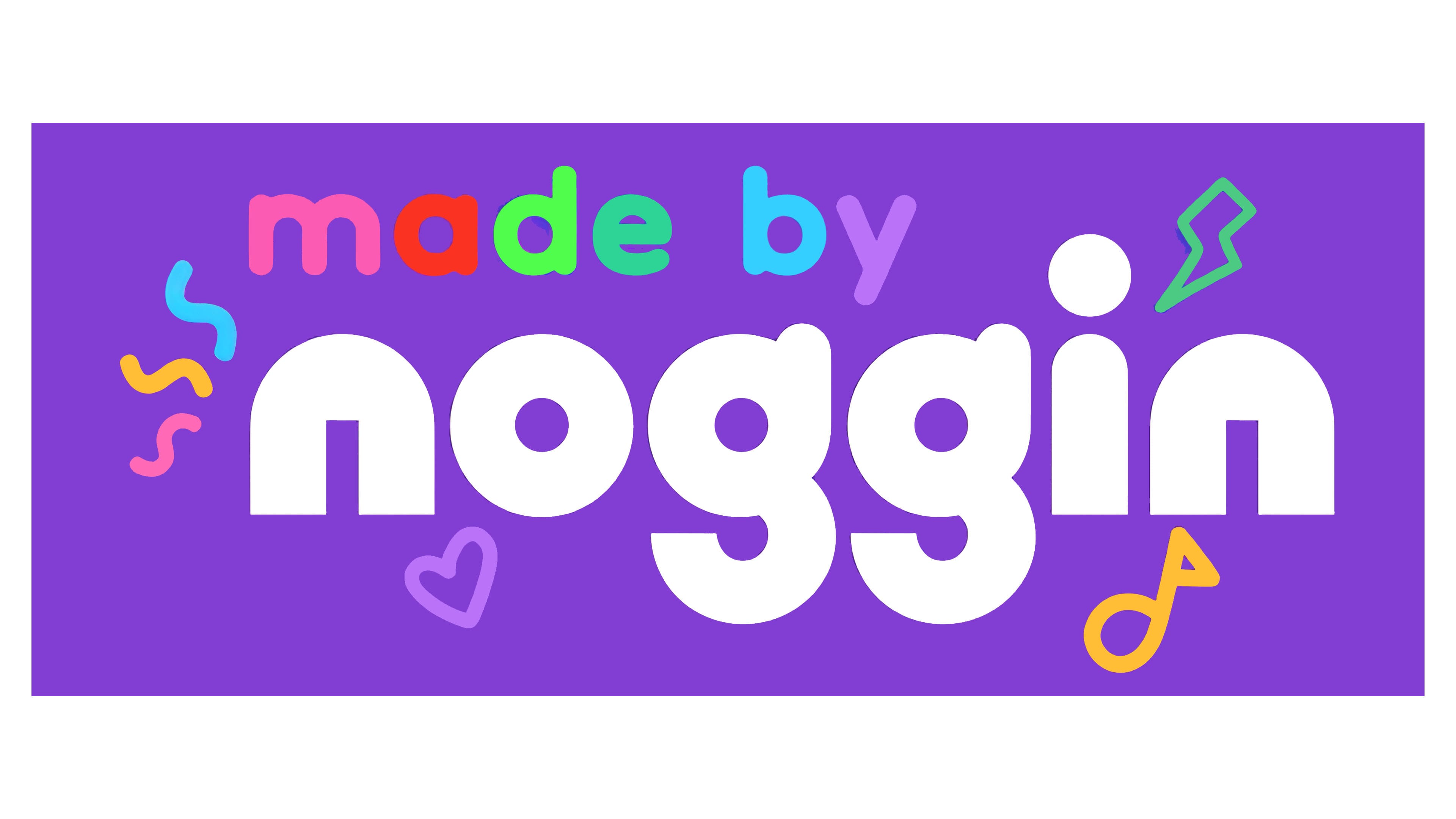
After a long absence, the streaming service relaunched the Noggin Original brand in 2015. In 2021, it began using a closing logo that reads “made by noggin,” in all lowercase letters. The first two words appear at the top of the line and use multi-colored characters. The brand name is located below them. It is completely white. Wavy lines, a musical note, lightning, and a heart are depicted around it. The background is lilac.
Font and Colors

All elements of the Noggin Original logo indicate the entertainment nature of this online service. At the same time, the cartoon style hints that the content is intended for children and teenagers. The modern emblem differs from all previous ones by omitting the famous head with “ideas.” After the rebranding, it was replaced with a wordmark, supplemented by mini-icons without a special semantic load.
An individual set of glyphs is used for the inscription. This is a modified bold sans-serif bubble font. The logo’s color scheme includes white, lilac, light purple, pale green, orange, pink, blue, red, and light green.