


 Odnoklassniki Logo PNG
On the Odnoklassniki social network, the logo happily waves its “arms” and seems to bounce, showing its desire to communicate. The emblem looks positive because it aims to attract new users.
Odnoklassniki, also known as OK.ru, was created in 2006 by Russian web developer Albert Popkov. He developed the idea after working in the UK, where he became familiar with foreign social networks. The site launched on March 4, 2006, as a service for finding former classmates, school friends, and old contacts.
The platform grew without major promotion in its first year, relying mainly on user recommendations. In 2007, it reached several million registered users as photo uploads and album activity increased. In 2008, Digital Sky Technologies, later renamed Mail.ru Group, acquired a controlling stake, providing Odnoklassniki with the funding needed to expand its functionality and technical infrastructure.
From 2009 to 2013, the network added games, video chats, virtual gifts, a mobile version, OK micropayments, redesigned profiles, and better recommendation tools. It also introduced groups and marketing options for business users. In 2014, Odnoklassniki launched online broadcasting, making it one of the first social platforms in the post-Soviet market to invest in live video.
In 2015-2016, the service improved its iOS and Android apps, added Stories, upgraded the messenger, and launched OK Video featuring licensed content. Later updates brought face recognition, stronger content recommendations, interactive streams, vertical videos, e-commerce tools, and creator features. In 2022, the focus moved to communities, moderation, and group administration. By 2023, the platform remained one of the region’s largest social networks, owned by VK and used by tens of millions of people each month.
Meaning and History
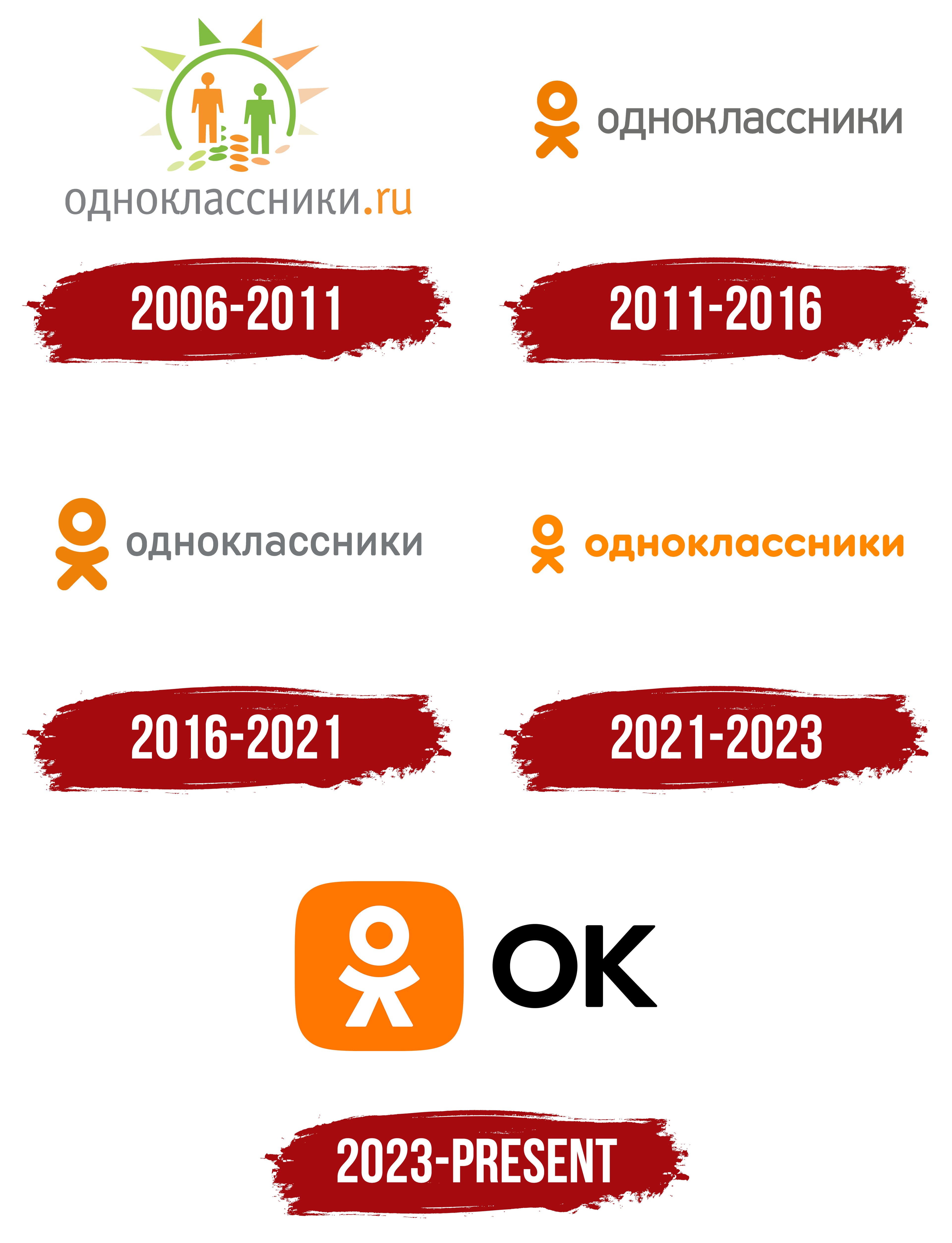
Odnoklassniki’s history includes many significant events that shaped its functionality and concept of identity. The project was started in 2006. But for the first few months, A. Popkov considered it exclusively a hobby and invested in its development himself.
As the user base grew rapidly, he created a legal entity. At first, Dmitry Utkin handled the design. The logo was brightly colored and featured various shapes. It was later replaced with a more modern and stylish version.
What is Odnoklassniki?
This popular social networking platform is used in Russia and other former Soviet republics. Users can stay in touch with friends, colleagues, and old classmates through the site. They can send messages, join interest groups, and share images and videos. With features like virtual gifts, games, and status updates, the platform attracts a diverse user base, especially older users who want to reconnect with old-school friends across long distances.
2006 – 2011
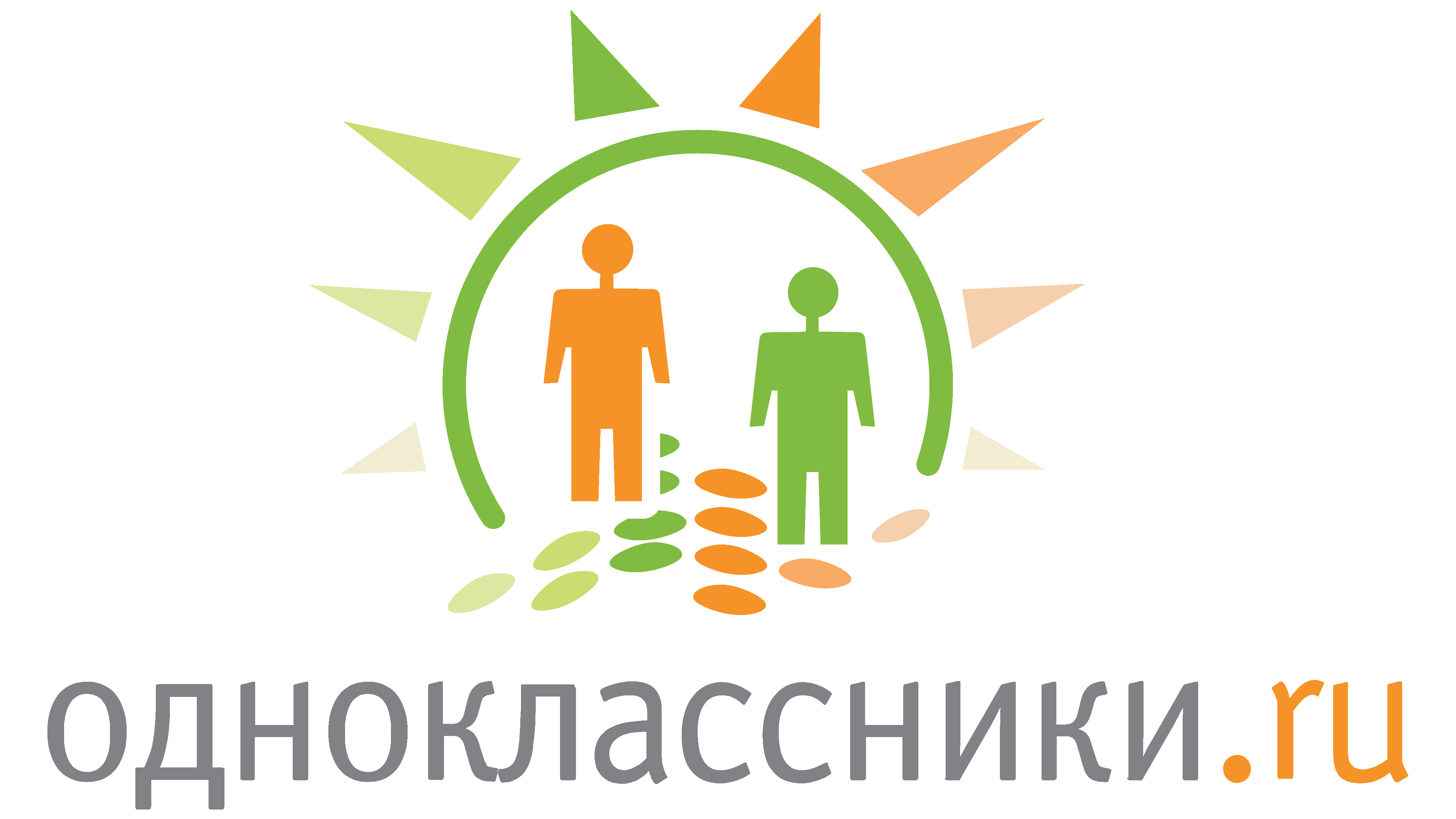
At first, the Odnoklassniki logo was multicolored: orange, gray, and green prevailed in calm pastel tones. The composition was based on the sun, depicted as an arch through which two figures passed. The little men were geometric and looked more like puppets than real people. Under their feet were ovals of several colors.
Triangles with sharp ends were located on the outer side of the arc. They symbolized the sun’s rays: the central ones were elongated and large, while the side ones were short and small. At the bottom, the designers placed the social network’s name and domain. The word “odnoklassniki” in silver was typed in Cyrillic. It was intricate and grotesque. At the same time, the orange “.ru” domain was spelled in English.
2011 – 2016
The social network Odnoklassniki expanded rapidly. In 2011, registered users reached 70 million and then grew exponentially. This growth prompted management to consider changing the corporate identity. The logo needed a major update to keep up with the times.
After some discussion, it was decided to update the logo design. The new badge was a new version that compared favorably with its predecessor. It was much simpler, clearer, and more meaningful. In addition, the bright icon has become more recognizable. Performance quality was much better than in the previous version.
This approach emphasized the company’s values and direction. The design changes also showed the social network’s desire to stay in sync with its users. The stylized word OK became the visual basis. The letters resembled a small man with a large head; the network’s name followed in a simple font.
The letters OK in the logo had a special meaning. Turned 90 degrees, they form the network’s generally accepted abbreviation. In its standard form, the letters symbolized a little man using Odnoklassniki.
2016 – 2021
In 2016, the service’s popularity continued to grow. Odnoklassniki ranked second in video views, according to Runet. During this period, there were small changes in the design of the logo:
- Updated color palette;
- The font changed.
The colors became lighter, which added lightness and freshness to the logo. In the context of identity, these changes embodied a desire for something new, opened up broader opportunities for users, and supported the service’s development. The font remained within the same family. In addition, the 2016 rules forbade rotating the image by 90 °.
2021 – 2023
The modern logo is simple. The designers changed the typeface to use low-rise, bold glyphs with rounded ends for the title. The inverted “OK” brand icon remains and is proportionally reduced in the text. Both parts are now colored orange.
2023 – today
The new “Odnoklassniki” logo looks modern and emphasizes the brand’s universality. The logo now appears the same in Cyrillic and Latin scripts, highlighting the company’s goal of reaching Russian and international audiences.
The logo’s main element is a bright orange square with rounded corners, evoking friendliness and warmth. Orange traditionally symbolizes sociability, activity, and positive interaction, perfectly reflecting the social network’s goals of connecting people, helping them find friends, and maintaining communication.
At the center of the square, a stylized person emphasizes communication and interaction. This element is simple in form but widely recognizable. It can be interpreted as a human figure, reinforcing the platform’s social focus. The symbol comprises a circle (the head) and two crossed lines (arms and legs), creating a friendly and approachable image.
The “OK” text uses a simple, black sans-serif font, symbolizing the service’s ease and simplicity. The bold font with softly rounded corners makes the text feel more welcoming and accessible. The black-and-orange combination creates contrast that adds expressiveness and attention to detail.
If you look closely at the symbol in the orange square, it can also be interpreted as a smiley face. The head represents a face, and the crossed lines for legs can resemble crossed arms as if the character is making a friendly gesture or greeting. This interpretation adds an extra layer of positive emotion to the logo.
Font and Colors

The current Odnoklassniki logo is set in a special style of Din Round Pro, which has become the social network’s official font. It replaced Din Text Pro, used to design the previous version. The company also allows other fonts, but only in certain situations. Helvetica and Arial fonts are acceptable if the required type is missing.
The logo’s color scheme consists of gray, presented in 3 shades (Cool Gray 3, Cool Gray 9, and 432 C), and orange (in the matching system, it is represented by 144 C). This palette demonstrates balance and harmony. Bright orange looks great with basic gray. This emphasizes the stability of the social network’s foundation and its ongoing functional updates.