“Olymel” carried out its first major corporate image change, introducing an identity developed with “LG2.” The Canadian company produces and sells pork and poultry meat products. It has facilities in Quebec, Ontario, Alberta, Saskatchewan, and New Brunswick. “Olymel” employs more than 12,000 people, annual sales reach $4.5 billion, and its products are sold under the “Olymel,” “Pinty’s,” “La Fernandière,” “Lafleur,” and “Flamingo” brands.
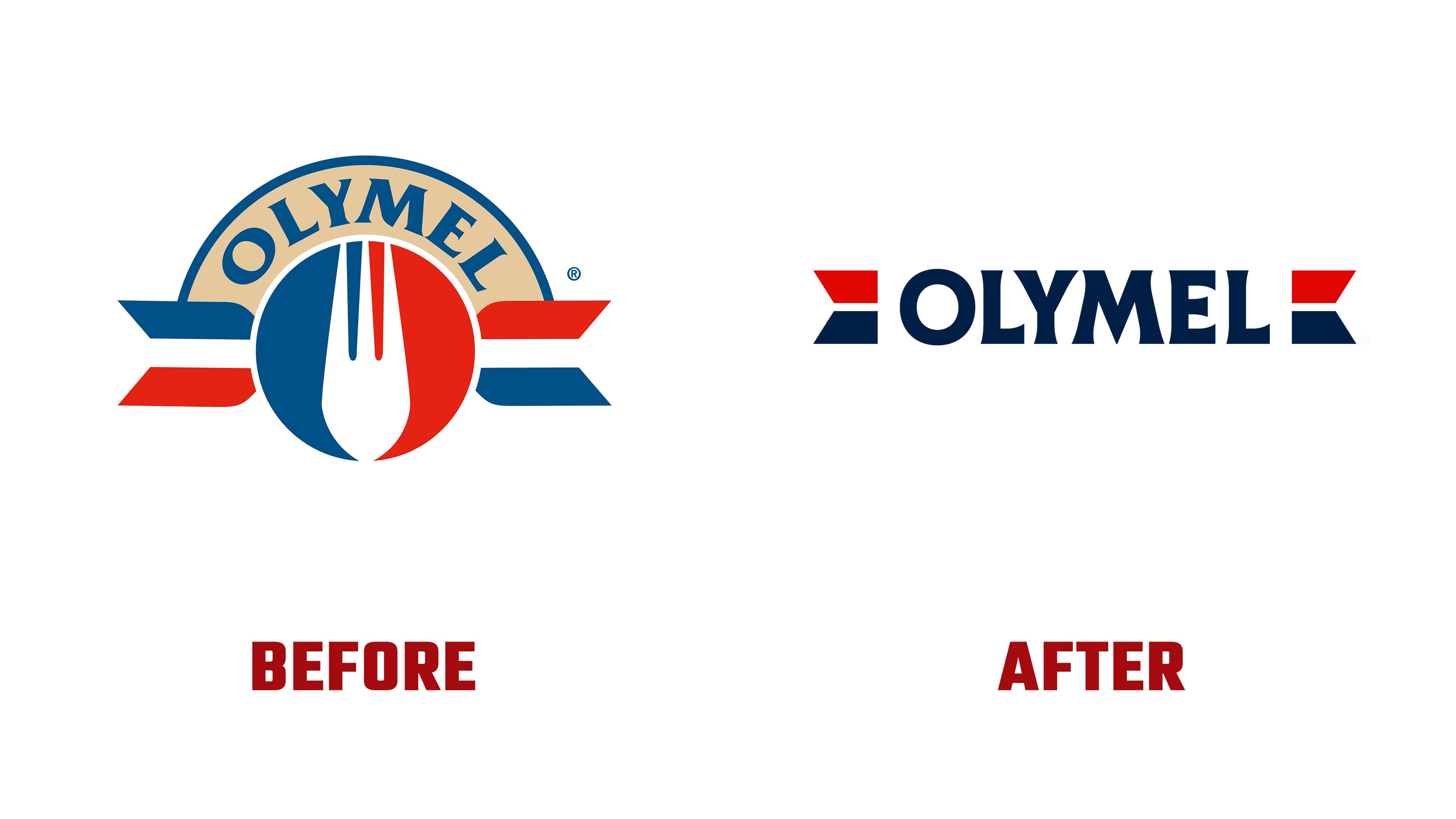
In the update, the “Olymel” name moved to the foreground. In the old mark, the “fork” symbol played the leading role, while the name felt secondary. In the new version, the symbol was removed. The brand received a more composed serif wordmark. The letters became tighter, the form took on stricter geometry, and the red and blue elements on the sides of the name preserved the link to the previous image.
The logo is built as a quality mark. On the packaging, the name sits within a circular frame with two small ribbons on either side. Because of this form, the emblem looks like a seal on the product rather than an ordinary packaging mark. In retail, the move is clear. The shopper sees the producer’s name at the center and more quickly connects the product to the brand.
The packaging became more restrained. “LG2” removed photos and illustrations to prevent the pack from looking like a meat display case. The dark blue background, gold lettering, and large logo moved to the foreground. Blue gives the brand a more premium look, while gold supports the sense of quality.
The new “Olymel” image removes the overload of the old identity. The logo became the primary reference point, and the packaging adopted a unified system across different meat types and product formats. The brand emphasizes quality through the mark’s name, color, and structure.