


 OneDrive Logo PNG
The OneDrive logo conveys the impressive scale of cloud storage. The logo symbols indicate the different file formats you can store in the vault. It also hints at the multilingual service.
OneDrive began as Microsoft’s cloud experiment, first known internally as Live Drive and then Windows Live Folders. On August 1, 2007, it opened to the public, and on August 9, it became Windows Live SkyDrive for testers in the UK and India.
The first version offered 500 MB of free storage. In October 2007, Microsoft raised the limit to 1 GB, partly under pressure from Gmail. By May 2008, SkyDrive was available in 38 countries, later expanding to 62. In December 2008, free storage grew to 25 GB, and Windows Live Photos added photo uploads, viewing, and tagging.
In 2010, Wave 4 introduced Office Web Apps, allowing users to work with documents in the browser. In 2011, Microsoft rebuilt the interface in HTML5, raised the upload limit to 100 MB, and merged photos and documents into one space. SkyDrive apps for iOS and Windows Phone arrived in 2011, followed by desktop sync clients for Windows and macOS in 2012. That same year, Google Drive entered the market, while Dropbox was already a major rival.
The SkyDrive name ended after a trademark dispute with British Sky Broadcasting. In 2013, a UK court ruled in BSkyB’s favor, and Microsoft agreed to rename the service. On January 27, 2014, SkyDrive became OneDrive. Later updates included a new sync client in 2015-2016, Files On-Demand in 2017, and Known Folder Move in 2018, tying the service more closely to Windows, Microsoft 365, Outlook, SharePoint, and Teams.
Meaning and History
The first launch of a functional product took place in the summer of 2007. In August, users worldwide gained access to extensive cloud storage, known for its convenience and reliability. But the creators weren’t going to stop there, so users later received new updates one after another.
2007
The OneDrive story began on August 1, 2007. That day, Microsoft introduced the official version of the repository, featuring a custom logo and the original name, Windows Live Folders. It was translated as “Windows Live Folders.” The version was first available to testers in America, and later the audience expanded significantly.
The first platform logo was a simple inscription paired with the familiar Windows icon. The flag used 4 traditional colors and sat in front of the service name. The font was standard, with thin, rounded letters. The emblem was unremarkable but clearly conveyed the vault’s essence.
2007 – 2008
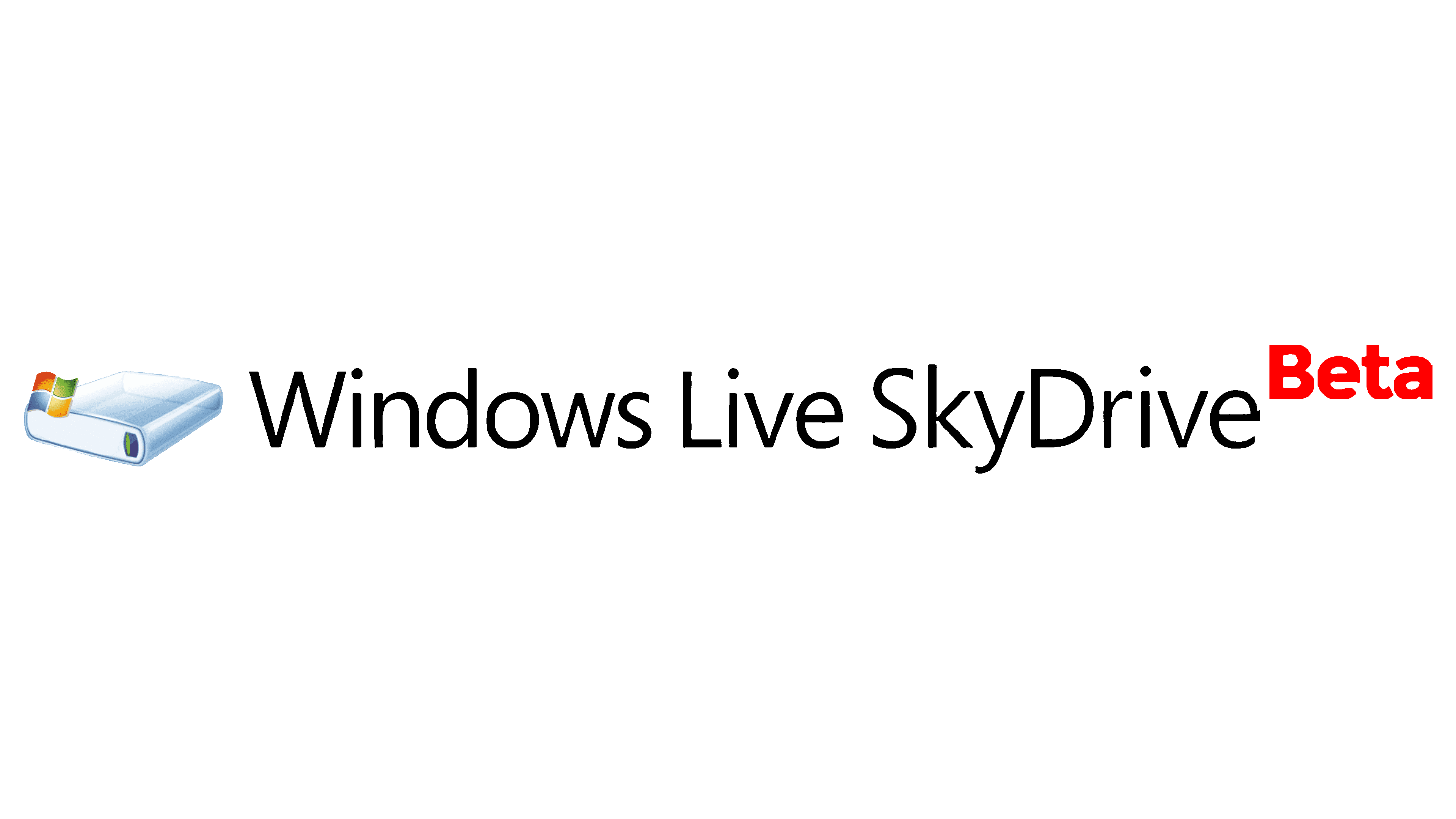
At the end of 2007, the platform’s name changed to SkyDrive. The name change can be seen as an effort to improve the service and modernize its corporate identity. During this period, the repository became available to many users (coverage included more than 60 countries).
Windows Live SkyDrive has received a new icon that has become a symbol of change in the company. The program’s logo now consists of 3 elements:
- The image of the hard disk
- The flag of the Windows corporation
- The name of the service
The font and colors remained the same. The letters are neat and thin, and the flag still consists of 4 colors. The lettering was black. Such changes symbolized renewal while also emphasizing stability.
2008 – 2010
In 2008, SkyDrive developers pleasantly surprised their users. They expanded the storage capacity to 25 GB and added a new feature (photo and video storage). The changes were also reflected in the corporate logo. The hard drive icon with a small flag has been replaced with a flag from the original version of Windows. According to the developers, this design better emphasized the program’s essence. As presented, it existed for two years.
2010 – 2011
The next change took place in 2010. On June 7, SkyDrive received a new update: support for Office applications (Office Web Apps). The new feature opened up new possibilities for users and made the program more popular.
Updates also touched the logo. The font of the inscription and the icon located in front of it have changed. Windows Live SkyDrive is divided into two parts. The first two words are located on top of the word ” SkyDrive. The bottom part is more expressive, with a larger font size.
The Windows flag has been replaced with a stylish icon resembling two clouds. A thin golden ribbon with free edges runs between them. The updates made the logo more understandable and friendlier. Two clouds connected by a ribbon symbolized synchronization and data exchange.
2011 – 2012
2011 marked the beginning of a new era of OneDrive’s visual identity, starting with a change in data transfer technology. The new version used HTML5. In addition, the repository has received an updated interface and several useful options. Many changes have also affected graphic design. During this period, the words “Windows Live ” were removed from the name and replaced with “Microsoft”. The SkyDrive add-on and the cloud icon remain unchanged.
2012 – 2014
In August 2012, the logo underwent further significant changes. As in previous periods, this event was accompanied by several functional updates. The company also paid particular attention to the graphical interface. The company has moved to a new level using the Metro UI style.
Its essence emphasizes convenience, minimalism, and smooth lines, as reflected in the new logo. It features two blue clouds, without a yellow line. One is superimposed on the other, symbolizing data storage and synchronization. The picture was supplemented with the inscription Sky Drive in blue. The light blue background was chosen because it is associated with reliability.
2014 – 2019

February 2014 began with a court loss in a lawsuit. British Sky Broadcasting said the service’s existing logo infringed trademark rights. Microsoft lost this dispute, which led to the change in logo and name. From then on, the cloud storage service became known as OneDrive.
The logo has been greatly simplified. It consisted of two blue clouds. Many users liked the laconic icon. And it’s not surprising. After all, the blue color evokes trust, goodwill, and professionalism.
2019 – today
The final version of the emblem was adopted only in 2019. The redesign aimed to make the logo more stylish and aligned with the new generation of digital technologies. The update process used the new Fluent Design language. This is a more modern solution than the old, deprecated Metro UI style.
Font and Colors
A complete graphic redesign delivered an impressive result. The program received a laconic logo: a single cloud in the original coloring. An almost invisible line divides the image into several areas with different shades of blue.
This symbolizes the vault’s wide range of functions and its capacity. Another important distinction is that the lightweight cloud is not weighed down by lettering and can be interpreted as simple, easy to use, and clear.