


 Orbitz Logo PNG
“On trips and business trips, the site is an indispensable assistant,” says the Orbitz logo. The emblem says the portal makes it easy and convenient to plan travel, choose suitable flights, and find places to stay.
Orbitz began in November 1999 as an online travel project known in the industry as T2, reportedly short for “Travelocity Terminator.” Continental Airlines, Delta Air Lines, Northwest Airlines, and United Airlines backed it. American Airlines joined in spring 2000, bringing total startup investment from the five carriers to about $145 million.
On February 24, 2000, the project was registered as DUNC LLC, named after Delta, United, Northwest, and Continental. Jeff Katz became CEO, while programmer Alex Zoghlin led platform development. The public brand name became Orbitz, and Orbitz.com officially launched on June 12, 2001.
The site’s key feature was the Flight Matrix Display, a grid that let users compare flights by price, departure time, and airline on a single screen. Orbitz also pulled data directly from airlines rather than relying solely on systems such as SABRE, which sped up searches and made fares more competitive. The model later influenced many online travel services.
The launch drew antitrust scrutiny because the founding airlines controlled most U.S. domestic flights. Southwest Airlines also sued over how its routes appeared on the site, although Orbitz did not sell its tickets there. Orbitz introduced a $5 ticket fee in December 2001 and reported $43.4 million in operating revenue that year. Supplier Link followed in 2002; bookings reached $2.5 billion, and Orbitz raised $317 million in a 2003 IPO. Cendant bought it in 2004; Travelport took over in 2006; Orbitz Worldwide went public in 2007; and Expedia acquired the company in 2015.
Meaning and History
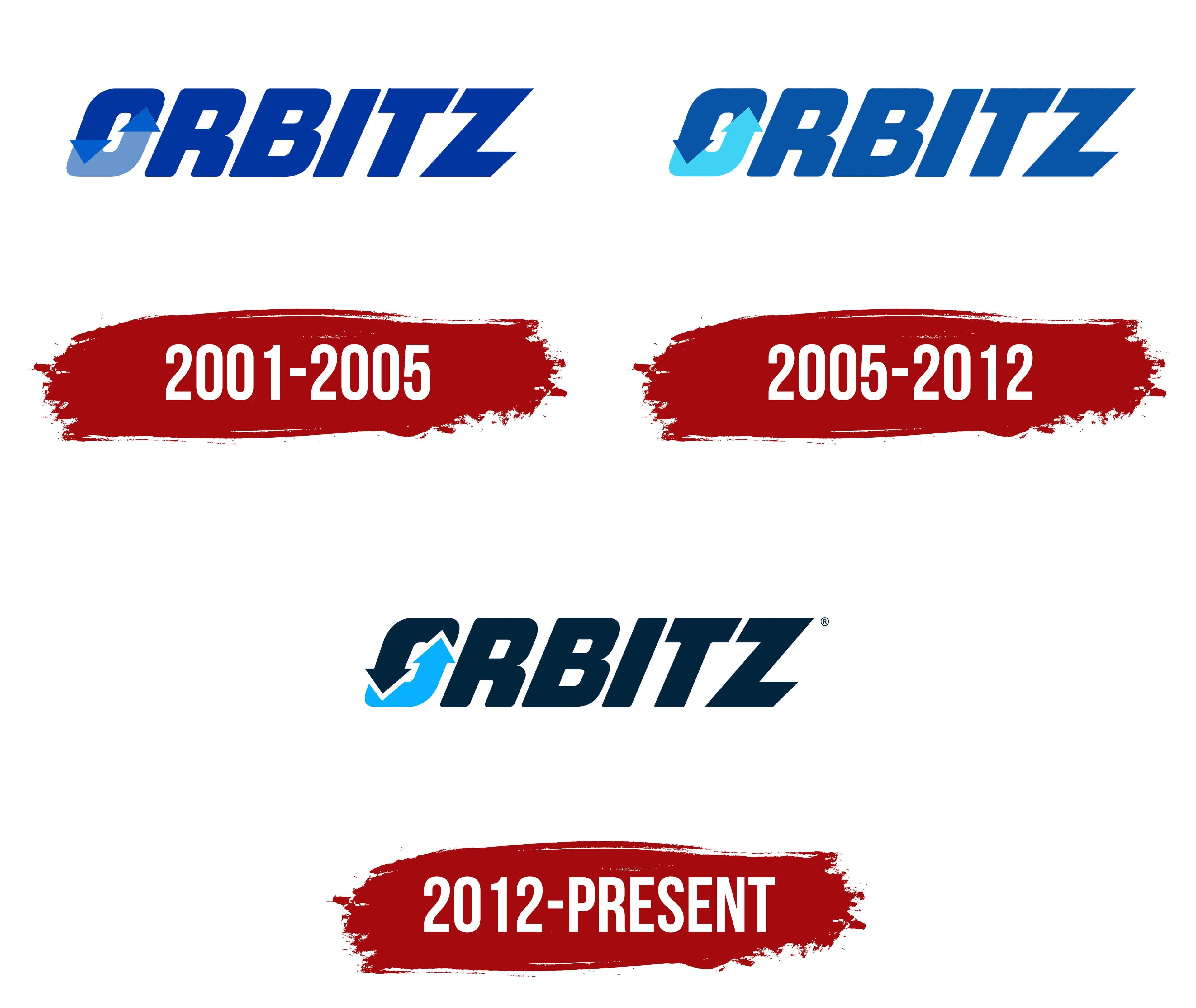
The company was founded over 15 years ago. Throughout its existence, it has steadily developed while also going through difficult stages. The turning points were reflected directly in the corporate identity and logo.
2001 – 2005
Orbitz was founded in 2001 as a partnership among major airline companies. Rich Barton (CEO of Expedia Group) and Mark Åckerstron (Technical Director in the hospitality sector) played key roles in shaping the brand. Their efforts, along with a team of experienced developers, created a convenient, functional platform for travelers.
The site’s visual identity was based on a cool, saturated color scheme, effectively combined with a large font. A deep blue was chosen as the main color, complemented by a lighter shade. This palette immediately caught the eye, making the brand recognizable while conveying calm.
Many designers have drawn a parallel between the chosen color and a shade of the sea, which evokes only positive associations. The emblem itself consisted of one word: Orbitz. Company name and nothing more. The same applies to the website. All the developers focused on creating a high-quality Online resource where you can immediately find a place to stay and book airfare.
2005 – 2012
Important events took place during this period. The prerequisites were laid in 2003, when the company went public and issued shares. Shortly after, the airline owned a 70% stake in Orbitz Worldwide, which Cendant Corporation (New York) later acquired. In 2006, the Blackstone Group acquired part of the Cendant business, including the Orbitz website.
The ownership change brought minor logo updates. The inscription and the selected font remained the same. The first letter, “O,” also remained unchanged. It was a circle of two arrows, one following the other. The changes affected the logo’s colors. Instead of deep blue, I chose a light blue hue. One arrow’s color also brightened slightly.
The chosen color scheme and dynamic cursive font symbolized professionalism. In addition, the design evoked associations with reliability and a progressive approach to service provision, which were the company’s main principles.
2012 – today
Another turning point came in 2015. In February of this year, Orbitz Worldwide was acquired by the large travel company Expedia Group, the site’s current owner. This acquisition significantly impacted its resources and contributed to its rapid development. The corporate style also changed during this time.
The logo has changed colors again. This time, I chose a darker shade of blue for the letters and a bright blue for one of the arrows in the “O.” This choice reflected a more modern design approach and a desire for improvement. The updated corporate badge reflected the brand’s development.
Font and Colors

The modern Orbitz logo is a stylish version that has been kept since the last update. This memorable, strong sign stands out for its simple execution. It symbolizes the brand’s essence: high-quality service for tourists combined with an intuitive interface.
A special semantic load is also assigned to the first letter “O.” It is made in the form of arrows that close each other. Such an icon embodies movement and development. Orbitz is always trying to improve its service and make it as comfortable as possible for users.

The font is a bold, italic sans-serif. The emblem features clear lines and rounded corners on some letters. Diagonal cuts in the letter “Z” also give some dynamism. Overall, the emblem stands out against similar services and conveys the company’s professionalism.