


 Orlando Magic Logo PNG
The name of the Florida basketball club, founded in 1989, reflects childhood memories of urban recreation zones and parks. The Orlando Magic logo conveys the team’s unique spirit, its close connection with the region, and the brand’s sports orientation.
The Orlando Magic began in 1985, when businessman Jim Hewitt proposed bringing an NBA team to Orlando. After several years of preparation, the franchise was officially established in 1989, alongside the Minnesota Timberwolves. The team’s name drew inspiration from the atmosphere of Walt Disney World.
The Magic played their first-ever game on November 4, 1989, against the New Jersey Nets and lost, but earned their first victory two days later against the New York Knicks. The team found a breakthrough in the early 1990s with the arrival of Shaquille O’Neal and Penny Hardaway, who led them to the 1995 NBA Finals against the Houston Rockets. However, O’Neal’s departure soon afterward marked a challenging period for the franchise.
The team found a new leader in Tracy McGrady, though he couldn’t achieve significant postseason success. Another successful era began with Dwight Howard, who led the team back to the NBA Finals in 2009. Following Howard’s departure, the team entered another rebuilding phase.
In 2010, the franchise moved into its new home arena, Amway Center. Today, the Orlando Magic continues to develop young talent to repeat its past success.
Meaning and History
In 1985, Florida basketball fans could only dream of having their own NBA team. Just one year later, the league approved two local franchises, beginning a rivalry that, while notable, wasn’t the most intense.
Fans in Miami and Orlando were asked to choose the names for their new teams. Both cities had similar suggestions, such as “Heat” and “Floridians.” However, the Orlando vote, organized by the local newspaper Sentinel, featured many space-related names. This was due to the tragic event in January 1986 when the space shuttle Challenger exploded shortly after launch near Florida, resulting in the deaths of all seven astronauts on board and deeply impacting the U.S. space program.
Wanting to honor the memory of those lost, fans made “Orlando Challengers” a popular choice. Other space-themed names included “Astronauts” and “Orbits.”Non-space-related favorites included “Juice,” “Tropics,” “Sentinels,” “Aquamen,” and “Magic.”
Ultimately, the general manager’s child suggested the name, much like the Chicago Bulls’ name. Pat Williams’ seven-year-old daughter visited Orlando’s amusement parks and described the city as “magical,” inspiring her father to choose “Magic” as the team’s name.
The Orlando Magic aimed to preserve a sense of enchantment through their image and logo. The emblem’s unique style helped the franchise stand out and become memorable to fans. Chosen from more than 5,000 fan suggestions, the logo evolved from a cartoonish design to a more refined, realistic appearance over time.
What is Orlando Magic?
This professional basketball team, based in Orlando, Florida, competes in the NBA. The franchise is well known for developing several legendary centers, including Shaquille O’Neal and Dwight Howard. They have reached the NBA Finals twice but have not yet won a championship. The team plays its home games in a modern sports arena in Orlando. The club’s management focuses on developing young talent and consistently drafts promising players, though it has not always retained its star athletes long-term.
1989 – 2000
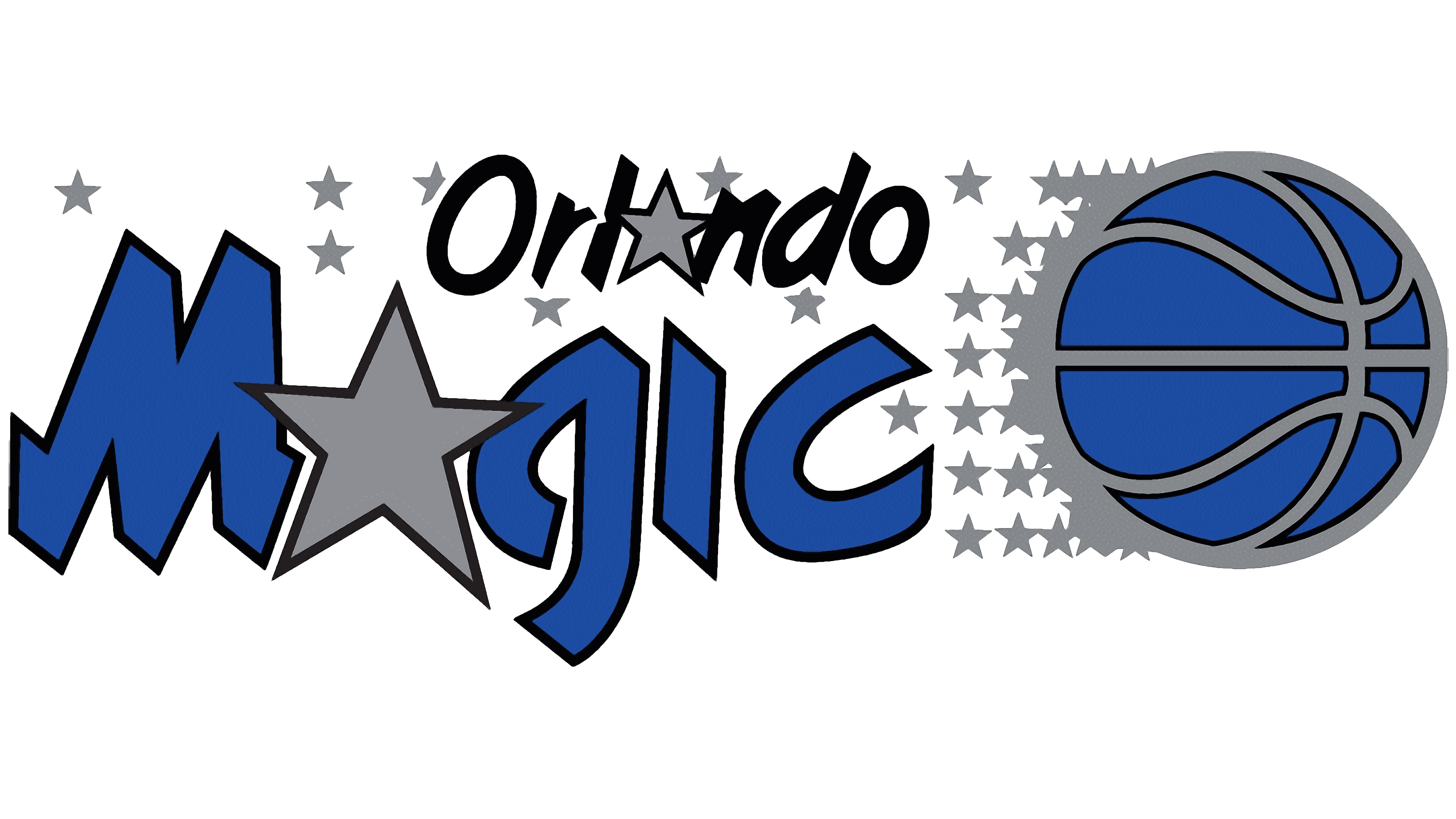
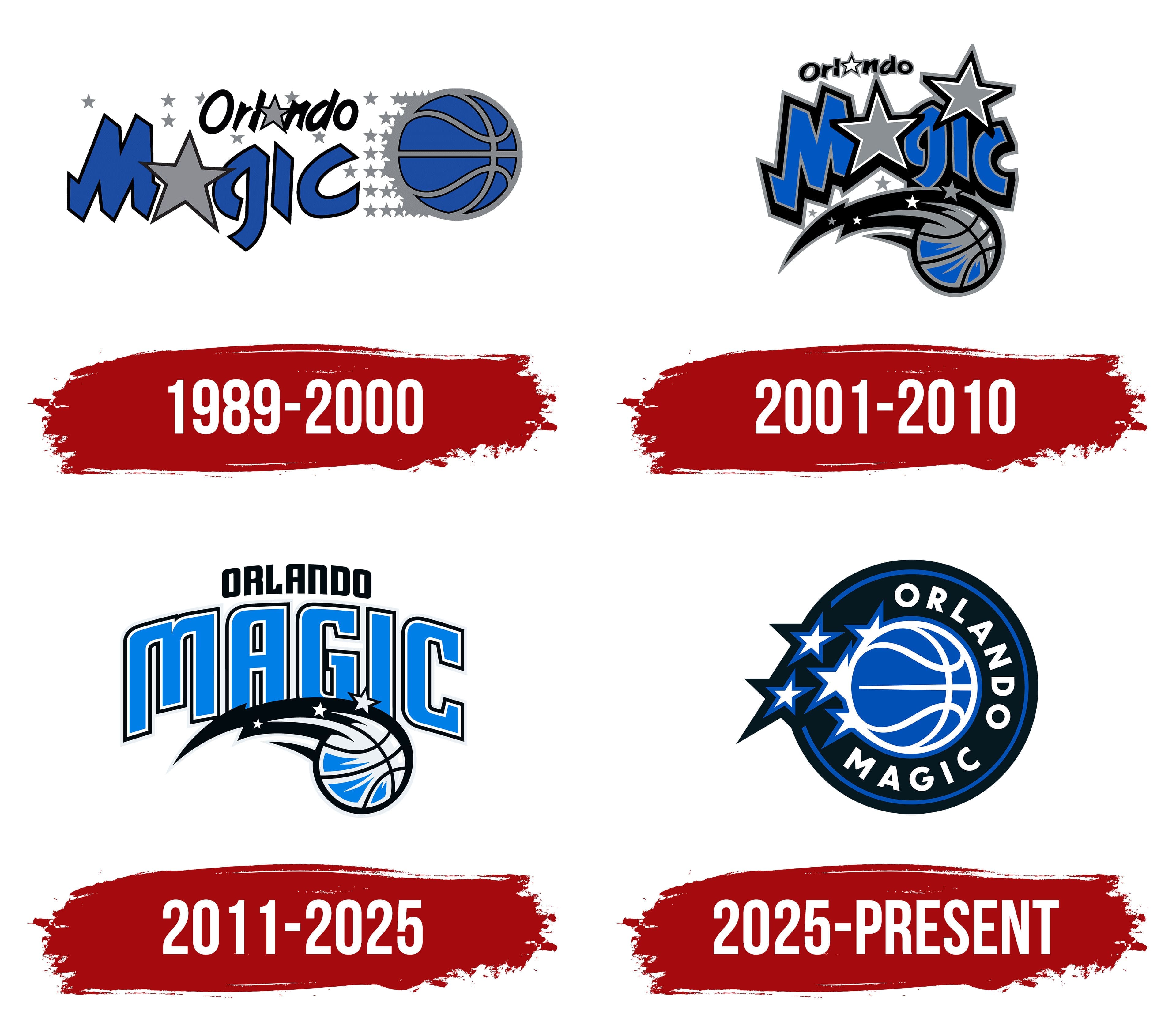
The first logo for the Orlando Magic basketball team appeared shortly before their debut in the 1989–1990 season. Artists from Walt Disney World created it in collaboration with The Advertising Works, an Orlando-based advertising agency. The project was led by Doug Minear, whose agency was responsible for collecting and selecting the best visual concepts for the future NBA franchise. Disney’s designers proposed a concept closely tied to the iconic imagery of the “Magic Kingdom,” aligning perfectly with Disney’s brand image.
The collaboration produced a vibrant, memorable emblem centered on magic and enchantment. The visual composition prominently featured the word “Magic,” stylized in large, saturated blue letters, with a distinctive inner shadow effect that added depth and movement. The letter “A” was replaced with a prominent five-pointed star, reinforcing the team’s magical theme.
The name of the city, “Orlando,” appeared at the top of the logo in black, handwritten-style lettering, also incorporating a star instead of the letter “a.” Thanks to the designers’ personalized approach, none of the typography elements used standard fonts; all glyphs were handcrafted specifically for the team’s unique identity.
On the right side of the emblem, a basketball in the same blue-and-silver color palette was surrounded by a trail of stars. The ball’s silver outline created an illusion of motion, like a comet or meteor streaking forward, emphasizing the team’s drive toward victory.
The blue-and-silver color scheme evoked professionalism and energy, while the numerous stars further heightened the magical atmosphere. Integrating stars directly into the lettering also helped make the logo instantly recognizable among other NBA franchises.
At the time of its debut, the Orlando Magic’s logo was viewed as innovative and fresh, clearly standing out from more traditional sports logos. Fans fondly remember it as a vibrant symbol of the team’s early years, closely tied to legendary players such as Shaquille O’Neal and Penny Hardaway.
2001 – 2010
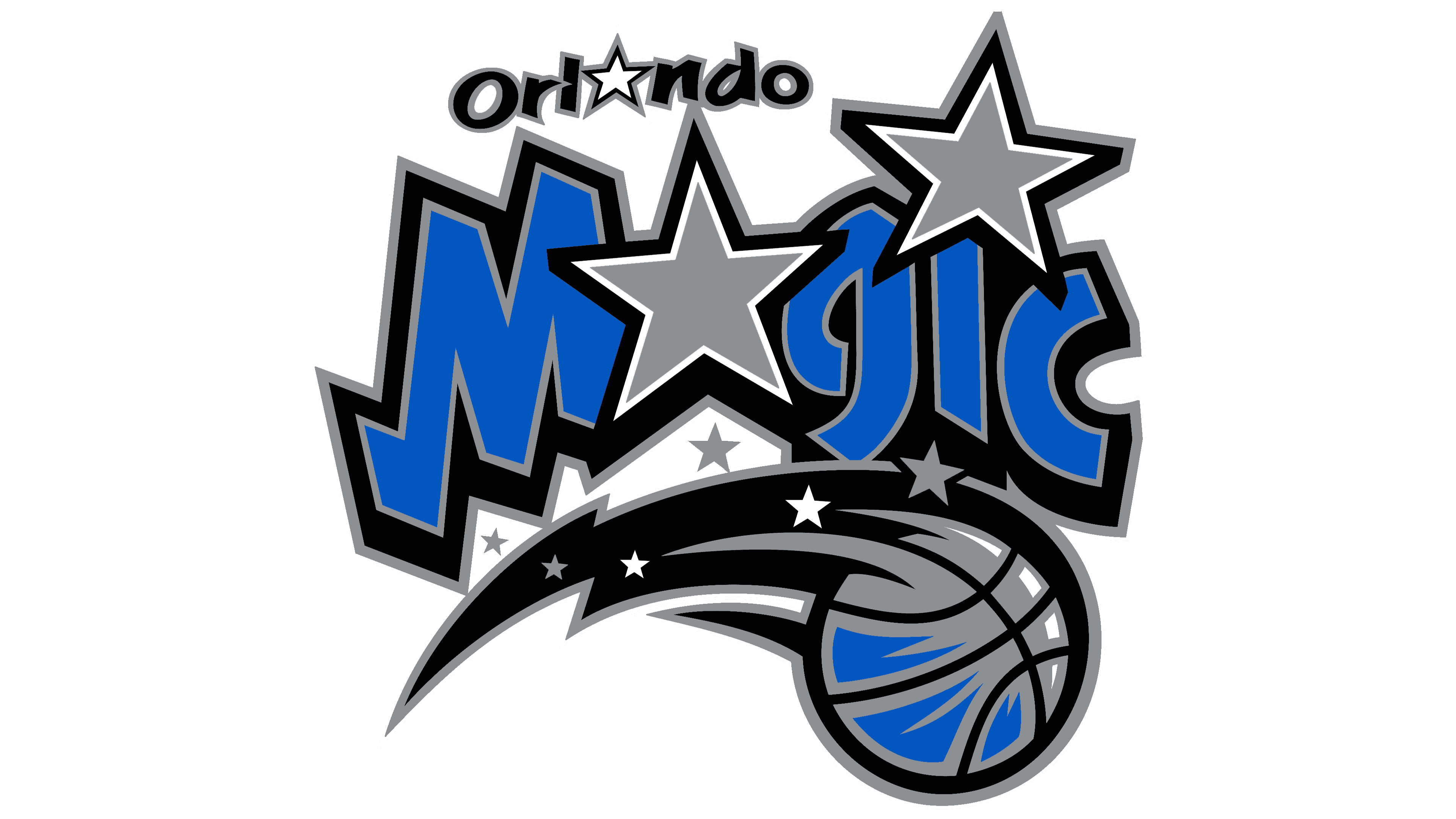
The new Orlando Magic logo continued and reinterpreted the franchise’s original emblem. Designers maintained continuity by keeping core visual elements such as the word “Magic,” star motifs, and the basketball image, while significantly altering their execution to add depth and motion.
The primary lettering “Magic” remained custom-made and hand-drawn, not based on standard fonts. The letters gained greater visual impact through wide, bold outlines, highlighted by strong black-and-silver borders, creating a three-dimensional appearance. The five-pointed star that replaced the letter “A” was enlarged and stood out prominently because of its contrasting silver fill.
Above the main lettering, the city name “Orlando” retained its stylized handwritten script, now featuring thicker lines and darker contours to reinforce its integration within the overall dimensional design.
A notable update was the new visual interpretation of the basketball, now depicted in silver and blue tones and leaving a comet-like trail. Its curved black tail features stars of varying sizes, effectively communicating speed, power, and purpose. The comet imagery is directly tied to the team’s name, symbolically expressing the franchise’s magical energy.
The logo’s primary color, officially known as “Magic Blue,” traditionally represented the team and conveyed confidence, ambition, and athletic aggressiveness. Secondary colors, black and silver-gray, provided visual contrast and emphasized the dynamic character of the logo’s elements.
This logo became a prominent symbol during a successful period for the team, associated with stars such as Tracy McGrady, Dwight Howard, Steve Francis, and Jameer Nelson. Wearing uniforms with this emblem, the team reached the NBA Finals in the 2008–2009 season under head coach Stan Van Gundy.
Although the designers sought to modernize and strengthen the team’s visual presence, they carefully preserved the emblem’s recognizability and maintained a connection to its historical version. This approach highlighted the richness of the club’s visual heritage while adapting the brand to meet early-21st-century demands.
2011 – 2025

After moving into their new home at Amway Center during the 2010–11 season, the Orlando Magic introduced an updated logo in June 2010. The new emblem marked the start of another chapter in the team’s history and aimed to represent a franchise focused on future success and professionalism.
The main change from previous designs was a dramatic shift in the style of the word “MAGIC.” The new font abandoned the previous handwritten aesthetic for a more structured, geometric look. The letters became taller and more vertical, with angular serifs and a prominent black-and-white double outline. The star previously used in place of the letter “A” was removed entirely, reinforcing the new identity’s serious, business-like nature.
The city name “ORLANDO” was placed above the main lettering in a separate, compact block. A bold, sans-serif font was chosen, featuring thick, smaller letters to balance the composition and emphasize the primary wordmark.
The basketball remained a key design element but took on a more abstract, dynamic appearance. Depicted moving along an arc resembling a comet’s trajectory, the ball featured three stars of varying sizes, symbolizing speed and forward momentum. The ball itself was designed in silver-blue, with black lines that visually highlight its motion.
The logo’s color palette continued to feature the club’s trademark “Magic Blue,” symbolizing reliability and energy, complemented by silver, black, and white for contrast and visual impact.
Alex Martins, one of the team executives, said the new emblem was meant to mark the start of a new era and the franchise’s aspirations for greater sporting success. The logo remained in active use for 15 years until the team’s rebranding in 2025.
During this period, the team continued its tradition of creating special commemorative emblems celebrating its 10th, 15th, and 20th seasons in the NBA, emphasizing historical continuity and brand stability.
2025 – present
In June 2025, the Orlando Magic basketball team rebranded, unveiling an updated logo. The new design brought back the basketball comet with stars, reinterpreting elements from the original 1989–2000 emblem. The team officially unveiled it on June 3 at the Kia Center. It was accompanied by the introduction of three new uniform sets featuring a retro-inspired look with traditional vertical stripes and the return of the star replacing the letter “A” in both “Magic” and “Orlando.”
The logo conveys dynamic motion through a basketball stylized as a comet moving rapidly forward. The ball and accompanying stars are outlined in vibrant blue and white tones, emphasizing the club’s traditional color palette.
A key element of the logo is the circular frame, inside which the club name “Orlando Magic” appears in white, sans-serif letters arranged clearly and evenly to create a professional brand look. The contrast between the white letters, the dark black background, and the bright blue outline enhances visual clarity and recognition.
Reintroducing the star within the lettering highlights a symbolic connection to the franchise’s original identity and history. This new logo blends nostalgia with contemporary branding trends, carefully considering fan feedback and the franchise’s rich visual heritage. The club has filed about 15 trademark applications for various iterations of its branding elements, underscoring the star’s importance as a key team symbol.
Font and Colors
The updated logo’s color palette builds on the club’s traditional colors, first selected at the team’s founding. The main shade is vibrant blue, associated with the team’s energy and dynamic style. Complementary colors include white, used for text and accent lines to enhance visibility and expressiveness, and a black background, which provides solidity and authority. Silver elements within the basketball and stars highlight motion and add a modern touch.
The logo uses a strict, geometric sans-serif font. The white lettering is arranged in a circular layout around the central symbol, standing out against the dark background and conveying professional restraint. The minimalist, contemporary typography emphasizes the team’s status and confidence.