


 Pirelli Logo PNG
The desire to take care of all the automotive industry’s products merged with the Pirelli logo. The fact is that Pirelli chose the emblem with an elongated “P,” the upper part of which extends beyond the traditional framework to the end of the name. So it covers the entire inscription, as if the letters were under a makeshift roof, representing security.
Pirelli was founded in Milan in 1872 by Giovanni Battista Pirelli, a 24-year-old graduate of the Milan Polytechnic. The company began as a small rubber goods manufacturer, producing seals, belts, diving suits, and other industrial rubber products. In 1879, it entered the cable business, laying Italy’s first telegraph cable and later working on submarine lines for telephone and telegraph networks.
The shift toward tires came at the end of the 19th century. Pirelli made its first bicycle tires in 1890 and its first car tires in 1901, as the automobile market was beginning to grow. Racing soon became part of the company’s promotion, with track results used to support the brand’s technical image. Its main European rivals in this field included Michelin from France and Continental from Germany.
In 1956-1960, Pirelli built Torre Pirelli in Milan, a 32-story tower designed by Gio Ponti and used as the company’s headquarters. In 1964, the first Pirelli Calendar appeared as a corporate advertising project and gradually became known outside the business world. The company later faced a difficult episode in 1988, when its attempted takeover of Continental AG failed, resulting in heavy financial losses.
By the early 2000s, Pirelli had narrowed its focus to tires, separating and selling its long-standing cable business in 2005. In 2011, it became the sole official tire supplier for Formula 1, gaining a major global platform. In 2015, China National Chemical Corporation acquired a controlling stake in a €7.1 billion deal. In 2017, Pirelli returned to the Milan Stock Exchange as a public company.
Meaning and History
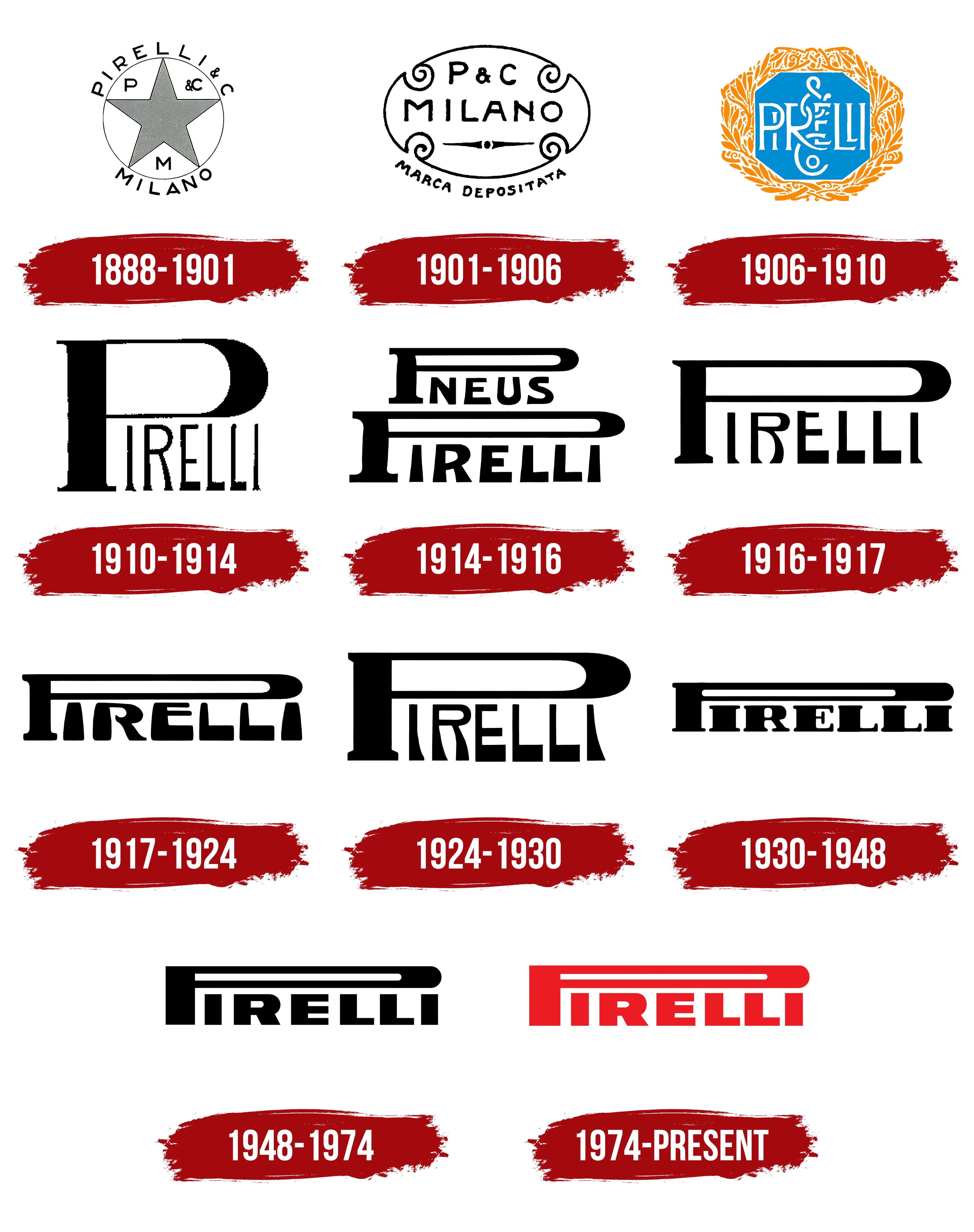
Pirelli is one of those brands that regularly change their logo. Some options lasted only 1-2 years. The visual sign reflects the owners’ enthusiastic spirit, who knew how to turn a profit in any direction they took. Interestingly, the logo’s very idea remained constant for many years. The changes concerned only the thickness, duration, and color of the lines.
What is Pirelli?
A major tire concern headquartered in Milan. Products are manufactured at 19 factories and distributed in Europe, North and Latin America, the former USSR, and the Asia-Pacific region.
1888 – 1901
Pirelli was a chemist and trained in rubber technology. Starting with various rubber products, by 1888, he, along with his assistants, had developed and patented (1894) a unique, durable compound used to make bicycle tires.
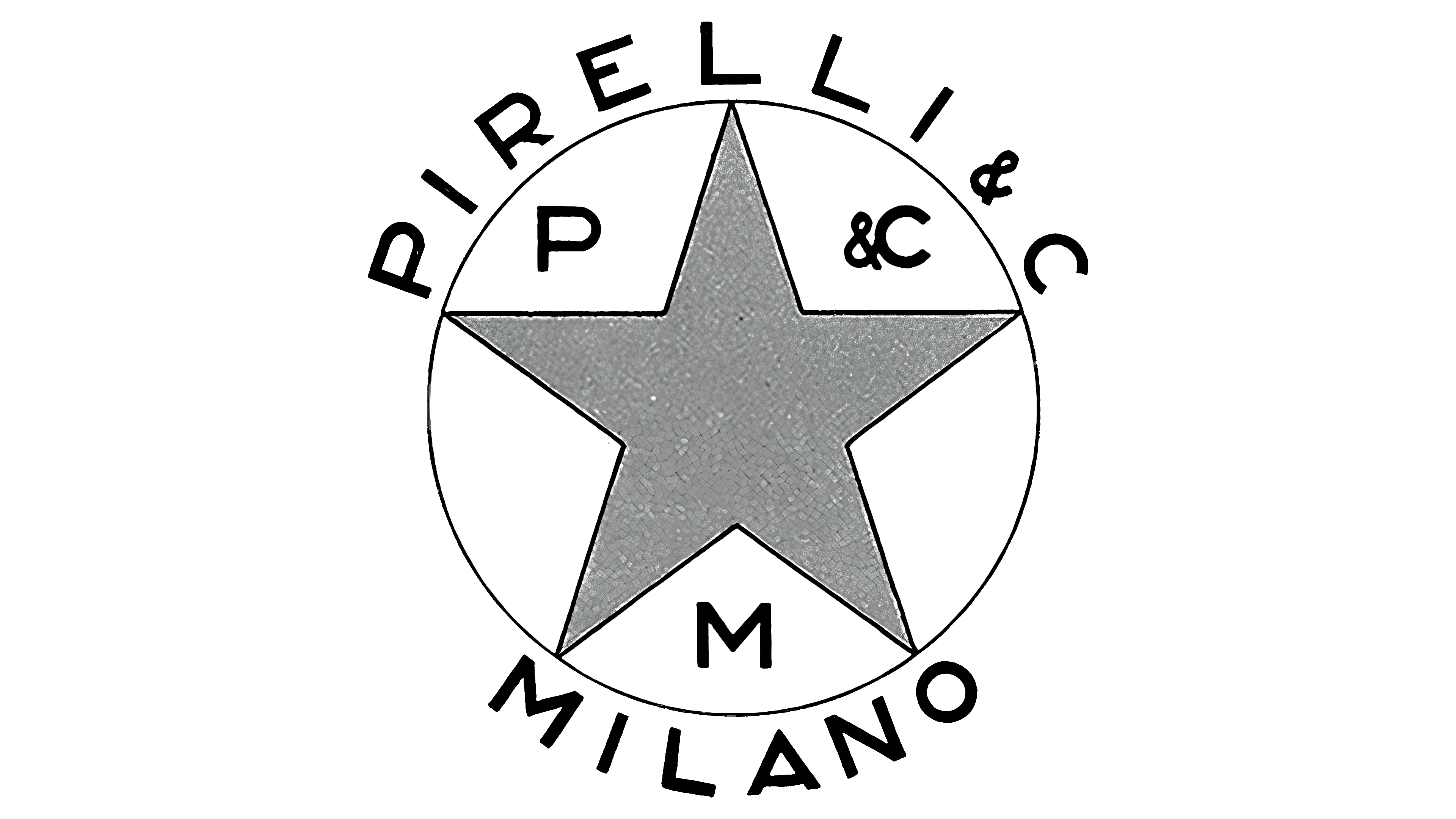
All company products were marked with a special round logo resembling a brand. It consisted of a circle with a thin rim, hinting at wheel products. In the center was a star – a symbol of leadership and excellent quality. Between its rays, the first letters of the name of the company and the city of the foundation are Pirelli & C and Milano. The same words were written outside the circle. The choice shows that Giovanni was very proud of his homeland. In addition, he needed to distinguish his products from competitors. And for the logo, the main points the buyer had to remember were used: Pirelli from Milan makes the best-quality tires.
1901 – 1906
The company begins to spread around the world. By 1902, the first factory outside Italy (in Spain) had been built, and a patent on rubber for cars was granted.
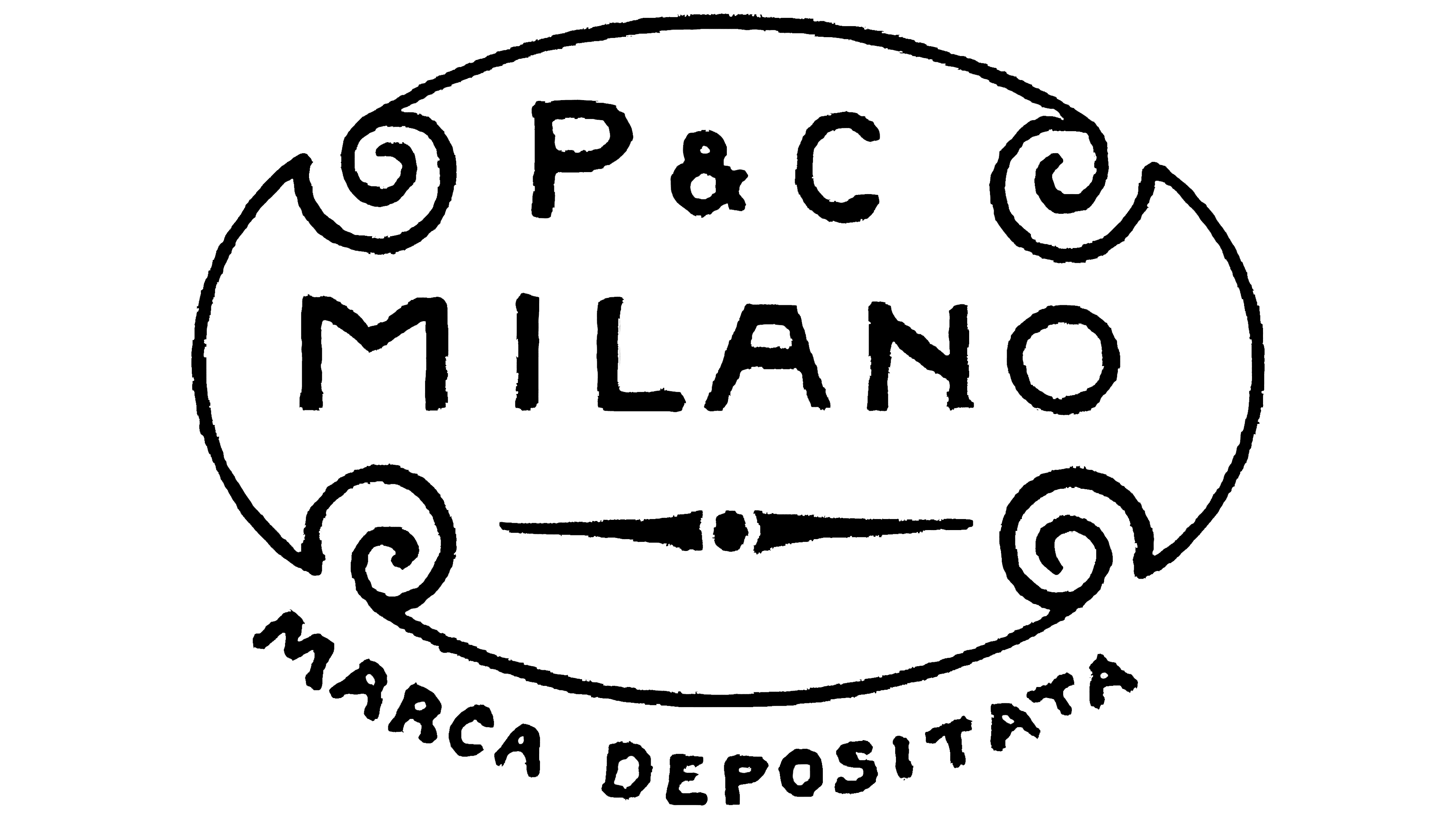
The logo of the period resembled a wrought-iron sign. If the first version of the emblem was more intended for branding on products, then this one was suitable for use at the openings of new offices.
The oval shape with four scroll-like edges hinted at the company’s patents. In the center is a large Milano inscription, and, from the company’s name, only capital letters appear at the top. Interestingly, the logo emphasized not the Pirelli company but the city where production took place. This showed the owner’s special patriotism and perhaps a desire to emphasize abroad that the company is from Italy. A similar inscription also highlighted the political life of Giovanni, who served as an adviser in his native city and did much to promote its prosperity.
Under the inscription Milano, there is a compass needle pointing to the West and East. It demonstrated the company’s spread across different parts of the world.
The logo’s outline was followed by an inscription in Italian: Marca Depositata (registered mark). It personified the owner’s pride that his products are not handicrafts but are made using special technologies and patented.
1906 – 1910
In 1904, Giovanni’s two sons, Alberto and Piero, joined the management along with their father. Since 1905, a dedicated division of the company has produced tires for cars and motorcycles. In 1906, the next factory was opened in Romania. In addition, Pirelli sponsored races and enjoyed team victories with its tires. In this regard, the owner considered it necessary to change the logo. It became the brightest and most colorful in the company’s history.
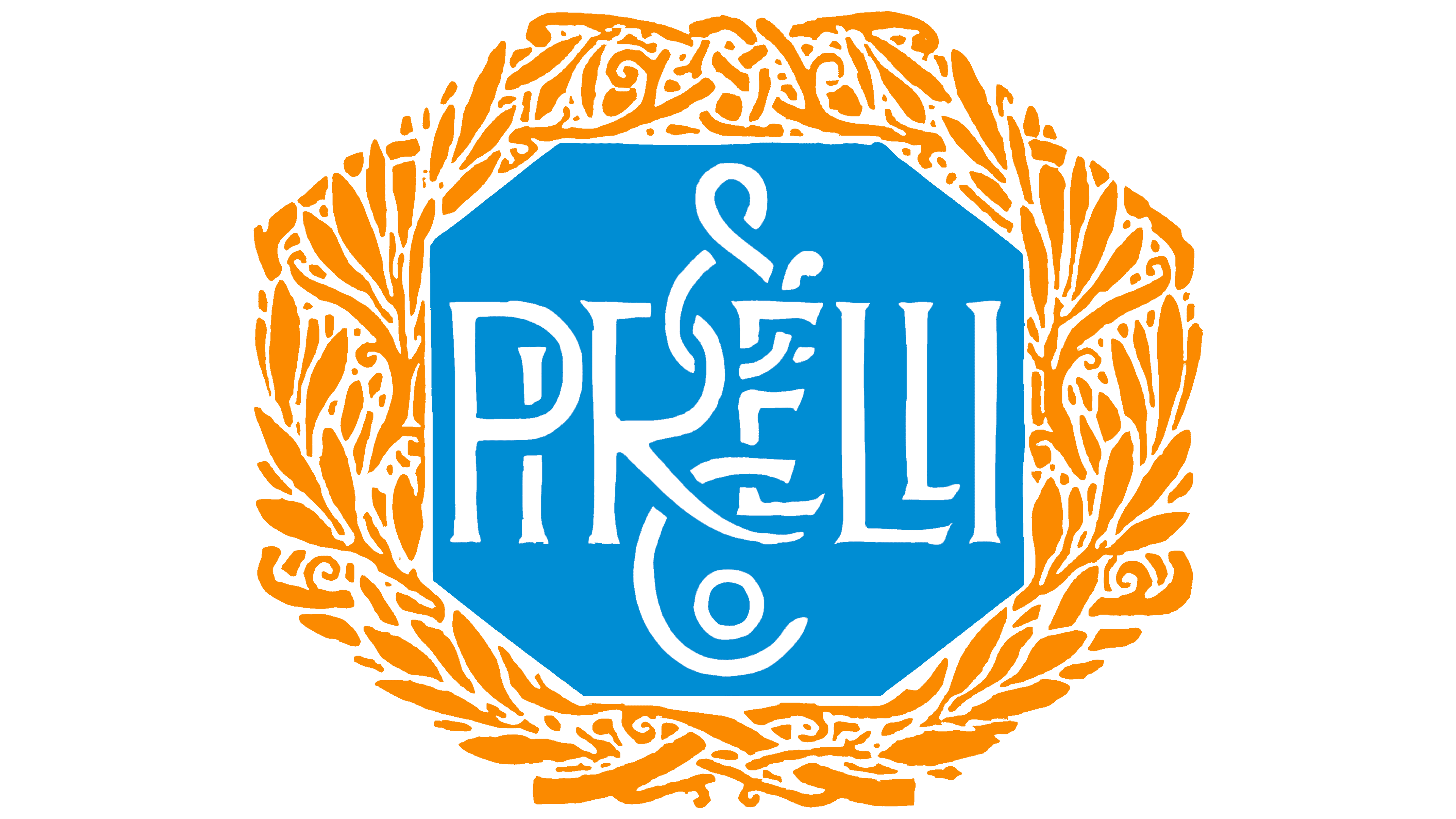
The emblem resembled an award badge. It consisted of a blue octahedron entwined in a circle with a golden laurel crown. The color scheme conveyed fulfillment, victories, and accomplishments. He demonstrated great pride in the company’s achievements.
Inside the blue figure, the name “Pirelli” is written in white monograms. Its central letters are intertwined with the signs & and Co-located above and below the main inscription. Such a composition seemed to be trying to “seal” the castle and keep the company’s luck.
1910 – 1914

A new period begins in the corporation’s life. She sold all other productions and focused entirely on tires. This was reflected in a radical modification of the logo, which became the basis for all subsequent visual signs.
The new symbol was not overly pretentious and consisted only of the brand name. Its feature was the shape of the letter P, which, like a shield, covered the rest of the letters. It showed the dominance of the Pirelli headquarters and its patronage over the other branches. It personified the surname’s significance and historical value to the country. After all, Alberto Pirelli participated in numerous government initiatives and was a figure on the international stage.
1914 – 1916

The emblem became two-level. The word “Pneus” was added to the surname, a row above the tires. Since the company engaged in diversified activities and periodically strayed from its main direction, the additional word indicated exactly which branch of the concern was in question. The composition creates the impression of a Pirelli-based pyramid; new floor directions are added. However, the company itself is invariably “wider” and more global than just tires.
1916 – 1917

In the new version, only the founder’s name remained. However, the idea of stepping was preserved in the letter E and the dominance of the capital P over all other letters.
1917 – 1924

In the visual sign, the font changes slightly. The letters expand downward as if showing growth on a solid foundation.
1924 – 1930

The emblem’s font was changed again, although the idea of larger letters at the bottom was preserved.
1930 – 1948

For the inscription, a serifed newspaper font was used. It is reminiscent of the front-page headline and reflects the corporation’s ability to create news through its developments and victories. Plus, Alberto Pirelli participated in negotiations during the First World War and later became the company’s vice president. Therefore, the surname flashed in the newspapers very often.
1948 – 1974

The founder’s son, Alberto, takes over the management of the company. Under his leadership, the corporation sponsors Formula 1 tires, which brings it special fame. New products are being developed. The Pirelli tower is being built on the site of the father’s first factory to perpetuate the Pirelli name. Another rebranding marked a new era of government.
The font of the inscription has been changed. The serifs are gone. They became straight and fat. The emblem itself has increased in height, and the space inside the letter P has expanded. All this pointed to the firm’s growing power. Her movement is in step with the times and is lifting the business to new heights.
1974 – today
In 1971, the founder’s son, who had run the business with his father and then independently for many years, died. This was the beginning of the end of the empire. In 1978, the headquarters moved to the second factory building, which Giovanni had once opened, and the famous skyscraper was sold. A whole era of famous and great people has gon bye. The company logo has changed. It became brighter.
The letters of the inscription have grown a little. The red color of the name symbolizes a new fire, the appearance of renewed energy to move forward. Marks the beginning of the next period in the history of the company.
Since 2017, under the new owners, Pirelli has once again focused exclusively on tires. According to the purchase agreement, starting in 2023, the owner will have the right to sell, divide, or combine the company’s capacities at his discretion.
Font and Colors
The main color of the Pirelli logo is black. This is the color of tires, rubber, and asphalt. It also symbolizes market dominance.

The font resembles House Sans Heavy with a modified R.