


 Power Rangers Logo PNG
According to the Power Rangers logo, law-and-order police cannot be defeated. The franchise’s superheroes are defined by strength as powerful as a hammer blow, speed as lightning, and truth as pure as glass. The emblem promises: evil will be punished.
Power Rangers began with Haim Saban’s trip to Japan in the 1980s, where he saw Choudenshi Bioman on hotel television. The idea of a team of spandex-clad fighters battling monsters led him to make a 1985 American pilot called Bio-Man, but US networks rejected it. The project returned in 1992, when Saban brought it to Fox Kids and its president, Margaret Loesch, who knew the Super Sentai format from Marvel Productions.
For the first season, Saban used footage from Kyōryū Sentai Zyuranger, linking the dinosaur theme to Jurassic Park. Mighty Morphin Power Rangers premiered on Fox Kids on August 28, 1993. The show followed Zordon, who chose five teenagers from Angel Grove to fight Rita Repulsa. Critics doubted it, and parents complained about violence. Still, the series became a hit, with Bandai toys selling fast and the episode order growing far beyond the original 40.
The franchise expanded through merchandise, live shows, home video, and the 1995 film Mighty Morphin Power Rangers: The Movie, made without Japanese footage. DIC Entertainment tried to compete with Superhuman Samurai Syber-Squad, but Power Rangers kept its lead. Saban Entertainment ran the brand until 2001, before Disney acquired it through the Fox Family Worldwide deal and moved Ninja Storm production to New Zealand.
Disney later slowed the franchise, and in 2010, Saban bought it back for $43 million. Power Rangers Samurai launched on Nickelodeon in 2011, while Lionsgate released a film reboot in 2017. Hasbro bought the franchise in 2018 for $522 million. In 2023, Cosmic Fury arrived on Netflix as the first season not to directly adapt a Super Sentai series, alongside the anniversary special Once & Always.
Meaning and History

The idea of adapting the Super Sentai series for US television viewers has been around since the 1970s. This happened after Marvel Comics, the American studio, and Toei Company, the Japanese agency, signed a concept exchange agreement. They co-created a Spider-Man television project for Japan and presented three episodes of the Super Sentai series, which was a huge hit with viewers. Haim Saban decided to adapt it for the United States.
He got the idea in the 80s during a trip to the Land of the Rising Sun. He then stayed in a hotel, where he saw a sensational TV show. The developer was fired up aboutcreating something similar for America because superheroes fighting monsters seemed interesting to him. He then filmed a test episode, but no American studio accepted it. The project took off only in 1992 when Saban turned to Fox Kids. A year later, the program aired.
In the franchise’s relatively short history, her visual identity has changed eight times, giving her nine original emblems. Despite their similarity at a cursory glance, they still differ in key ways.
1993 – 1996
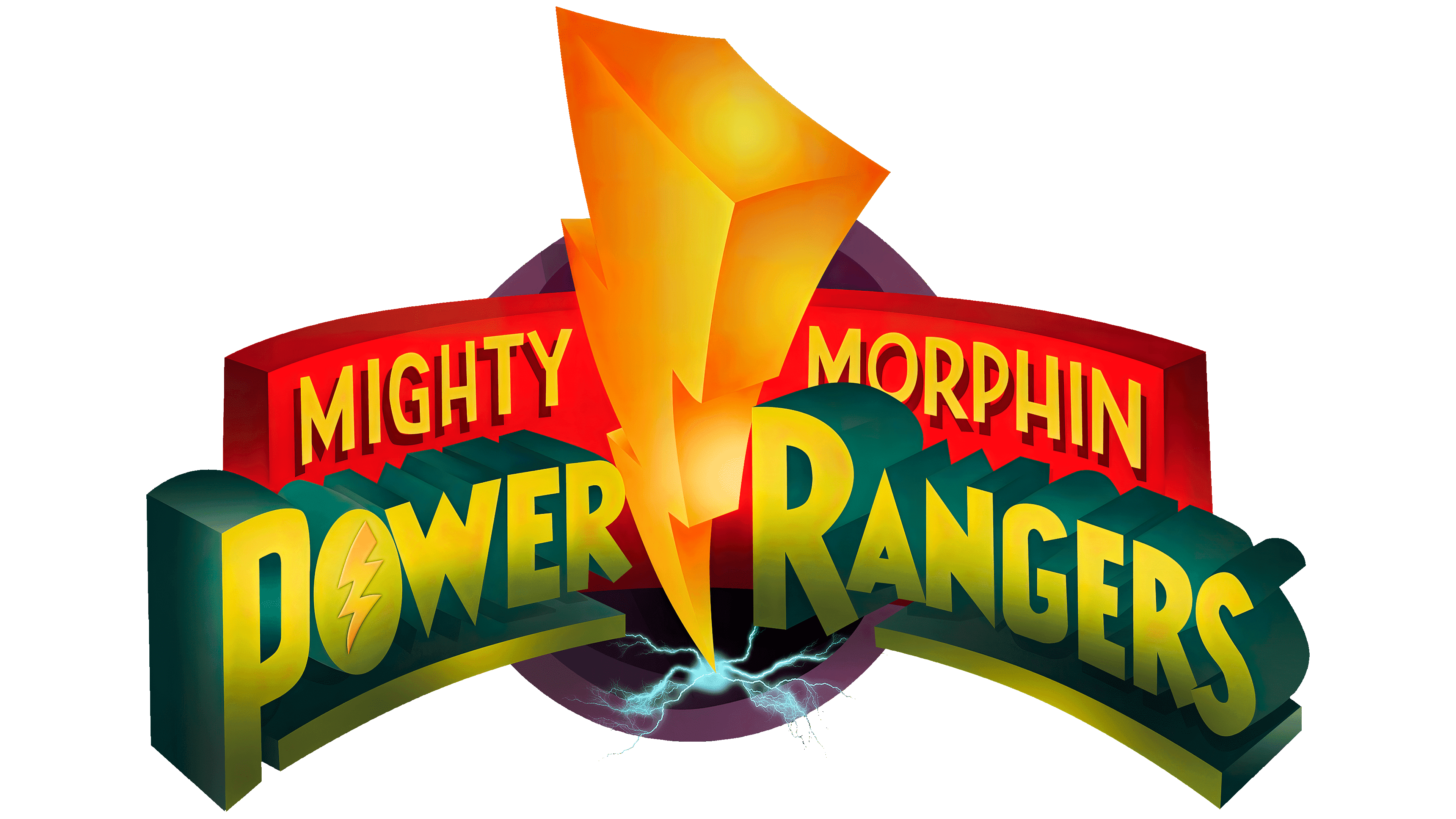
The debut logo is a three-dimensional composition rendered in a rich yet delicate palette. Her main colors are gradient green, fuchsia, a restrained pink spectrum, purple, silver, and yellow. In the center is golden lightning with several zigzags. The lightning is voluminous, with a massive three-dimensional top and a sharp bottom. At the end, chaotic strokes form a reflection. It symbolizes a powerful electrical discharge. This element separates the words “Power” and “Rangers,” thereby confirming the heroes’ superpower. Lines underline the inscription, forming a platform. A wall sits next to it in a semicircle; a black circle separates the text from the background and is surrounded by a wide ring.
1996 – 2002
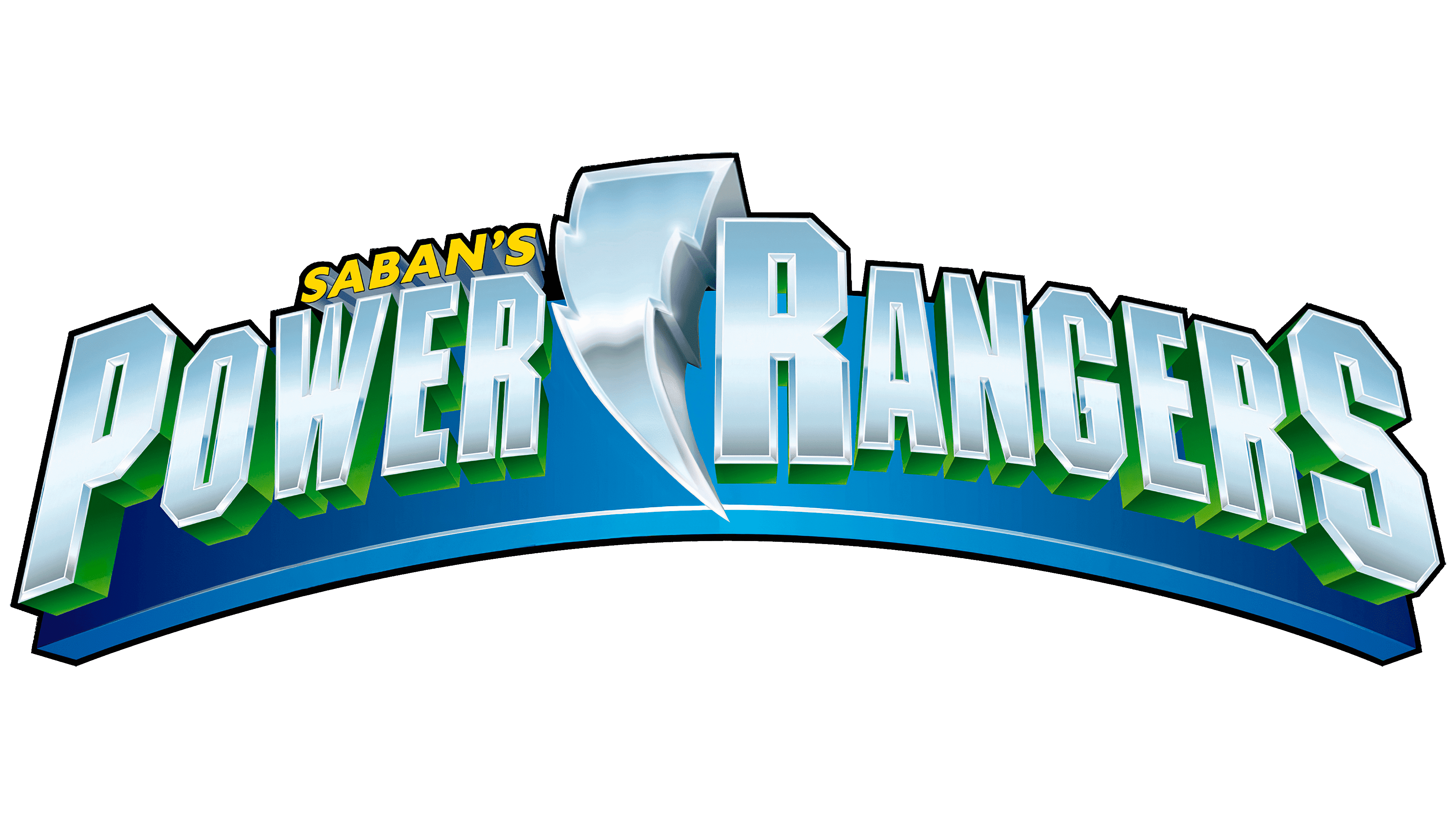
The designers changed the emblem’s font, style, color, and layout but kept the main components. In this case, the main inscription looks more brutal than before. The letters are large, massive, sans-serif, with shadows and cut corners. The plate they sit on curves outward, not inward. The color scheme is a cool blue with chrome highlights and an icy sheen. Lightning is not placed sideways; it stands straight and still in the middle of the franchise name, dividing it into two parts. Next to it (top left) is the word “Saban’s” in small letters.
2003 – 2009
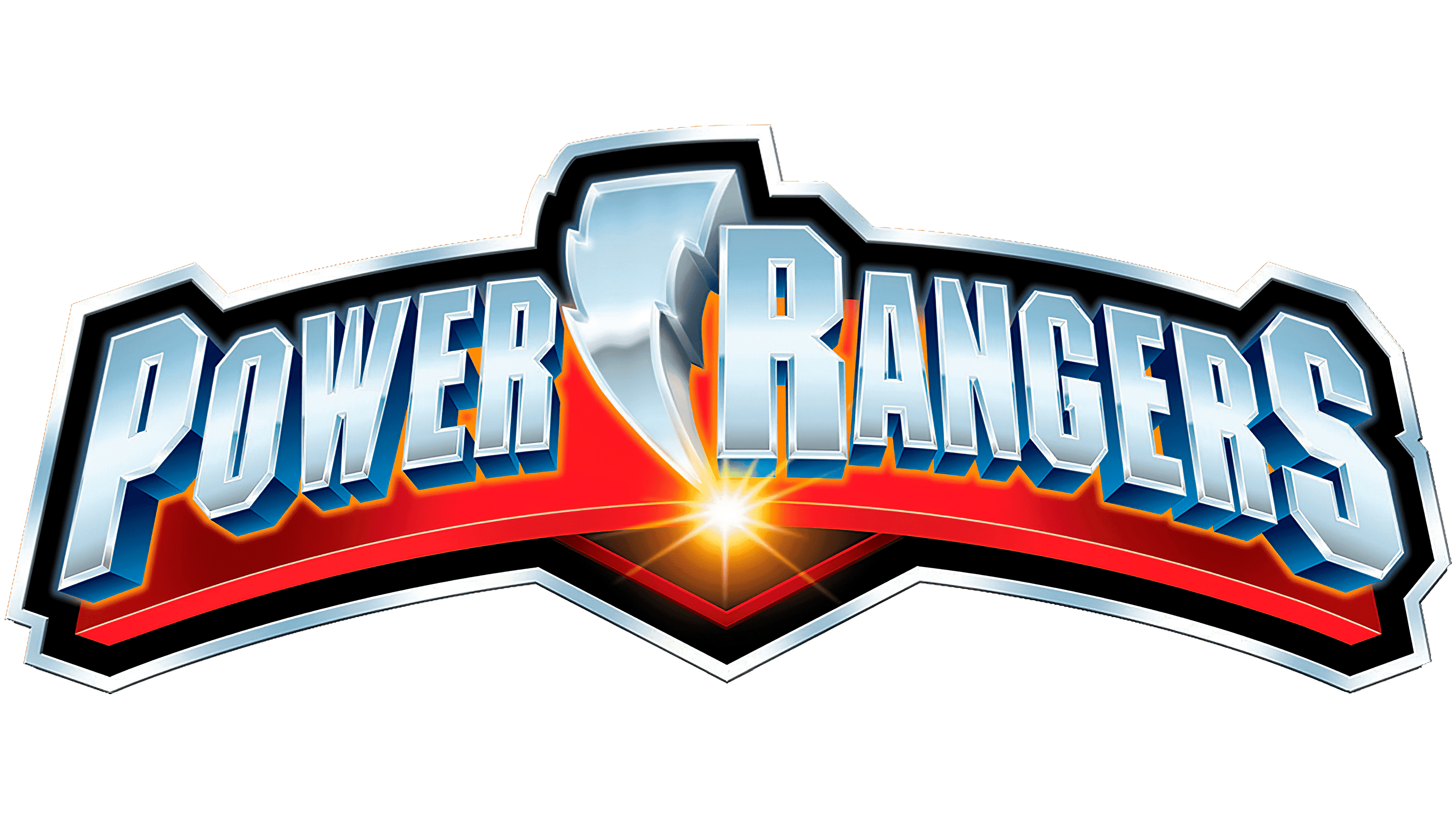
The developers have completely retained the visual identity sign this time, but changed its palette and added a few elements. As a result, a triangle appeared below, pointing outward with a sharp end and a golden flash on the lightning tip. Both the text and the background received a bold black stroke. The cold-spectrum color turned warm, becoming red-silver. Green also disappeared; blue replaced it. The designers removed the “Saban” inscription.
2010 – 2018
In 2010, the designers removed the background, so the text remained the only element of the Power Rangers identity. It is made of shiny chrome with a gradient. The shadow on the letters took on a rich red color, adding expressive contrast to the emblem.
2011 – 2012
The logo has gone through three changes. First, the “Saban’s” inscription was returned to its original place, as on the 1996 emblem. Second, the zipper became so large that its sharp end was as long as the protruding letters “P” and “S.” Thirdly, all elements received a common black border.
2013 – 2016
This emblem is very reminiscent of the 2018 silver/red variant. The difference lies in two details: the word “Saban’s” and a thin black line that covers the entire logo. Lightning authors have been reduced to the previous size.
2017
This version is radically different from the rest of the logo. The text is placed directly, not in an arch. The letters are two-sided convex: they have shadows on both sides. The “R” at the beginning of “Rangers” has a sharp point on its left stem. Lightning is depicted as classical, smooth, with clean edges and sharp zigzags. The “Saban’s” inscription is colored red and moved to the right.
2018
Again, the logo has a wide curved zipper with a massive top and a sharp bottom. This is an exact repeat of the 2010 emblem, with the word “Saban’s” rendered in the same style as the main element. The letters are metal, with a chrome effect. The shadow area is a deep red shade.
2019
The new emblem was announced three months before Hasbro acquired Bandai’s rights to goods, specifically the entire franchise. The logo depicts a signature lightning bolt with a bright reflection at the end, from which rays diverge to the right and left. The letters are geometric, large, and oblique. They do not have serifs or wide shadows; only a narrow band with rainbow-spectrum illumination. And each letter has its color. The designers moved the word “Saban’s” to the left (at the beginning of the name) and placed it behind the “P.”
2019 – today

In the modern version of the logo, the “Saban’s” designation and rainbow-colored rays are removed, as is the shiny spot at the bottom of the lightning bolt. The gradient transitions between gray and graphite have been softened. Otherwise, the current version is the same as the previous one.
Font and Colors
The logo retained its original identity despite many modifications: a lightning bolt and an inscription divided into two halves. The changes affected details related to the emergence of new franchise products or their transition from one owner to another. The palette also moved from complex to simple. At first, various bright colors prevailed, but now the color scheme is limited to silver and red.
The inscription on the emblem is individual, as it was created specifically for this project. The letters are large, strict, voluminous, with even edges and cut corners. The logo’s colors are mostly restrained, using white, red, black, yellow, and silver in various shades.