


 Ripple Logo PNG
The Ripple logo represents the connection between platform participants worldwide. The system operates smoothly and continuously, and cash flows from one wallet to another according to specially designed rules.
Ripple began in 2004, when Canadian developer Ryan Fugger created RipplePay, a small nonprofit system for exchanging credit without banks, through trusted intermediaries. The idea relied on personal trust networks, but the project remained limited and lacked external funding.
In 2011, Jed McCaleb, known for founding Mt. Gox, began developing a crypto protocol that did not rely on energy-intensive mining. David Schwartz and Arthur Britto joined him. Their system confirmed transactions via independent validators, enabling transfers in seconds rather than the longer wait times associated with Bitcoin.
In early 2012, McCaleb approached Fugger and received the rights to the Ripple name. In September 2012, McCaleb and Chris Larsen registered OpenCoin Inc. and launched the XRP Ledger. At launch, they created all 100 billion XRP tokens: 80 billion went to OpenCoin and 20 billion to the founders. In 2013, OpenCoin became Ripple Labs. In 2014, Fidor Bank became the first bank to use Ripple for payments, while McCaleb left and later founded Stellar.
Ripple later worked with Santander, Standard Chartered, and Bank of America. In 2015, it settled FinCEN claims over Bank Secrecy Act violations. Brad Garlinghouse became CEO in December 2016. On December 22, 2020, the SEC sued Ripple over XRP sales. In July 2023, a court ruled that retail XRP sales on exchanges were not securities offerings. In October 2023, the SEC dropped claims against Garlinghouse and Larsen. In August 2024, Ripple was ordered to pay $125 million over institutional XRP sales.
Meaning and History

After ten years of work in the cryptocurrency market, the company has changed its logo only once. Moreover, this was a minimal redesign that most platform users did not notice. The logo consists of the name “Ripple” and the emblem. Visual brand recognition is high, thanks to the decentralized system’s ranking among the 10 largest in the market today.
What is Ripple?
First, this is a modern resource for users who own digital assets or want to buy them on such platforms.
2012 – 2013
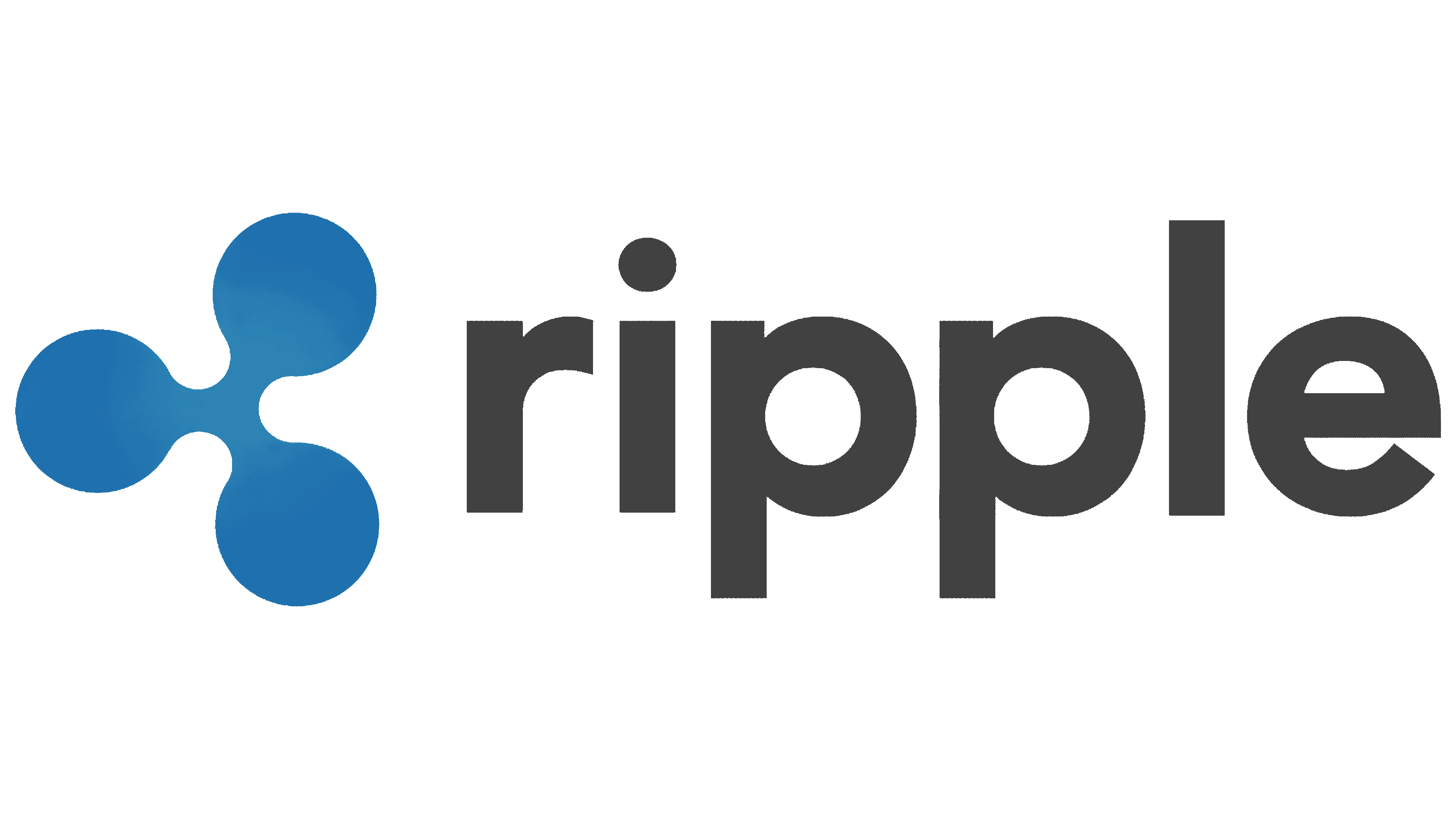
Interestingly, the first version of the Ripple logo was introduced when the future market leader was still a startup. The logo consisted of the name “ripple” in lowercase black letters, set in a classic bold sans-serif.
The ancient sign, the triskelion, served as an emblem, depicting three legs emanating from a single point. For “ripple,” however, we use three circles. This geometric figure is more closely associated with the digital world, particularly cryptocurrency. The emblem is made in blue with a barely noticeable gradient.
Despite the contrast between the two elements, the result is a solid, modern look that attracts users worldwide.
2013 – today
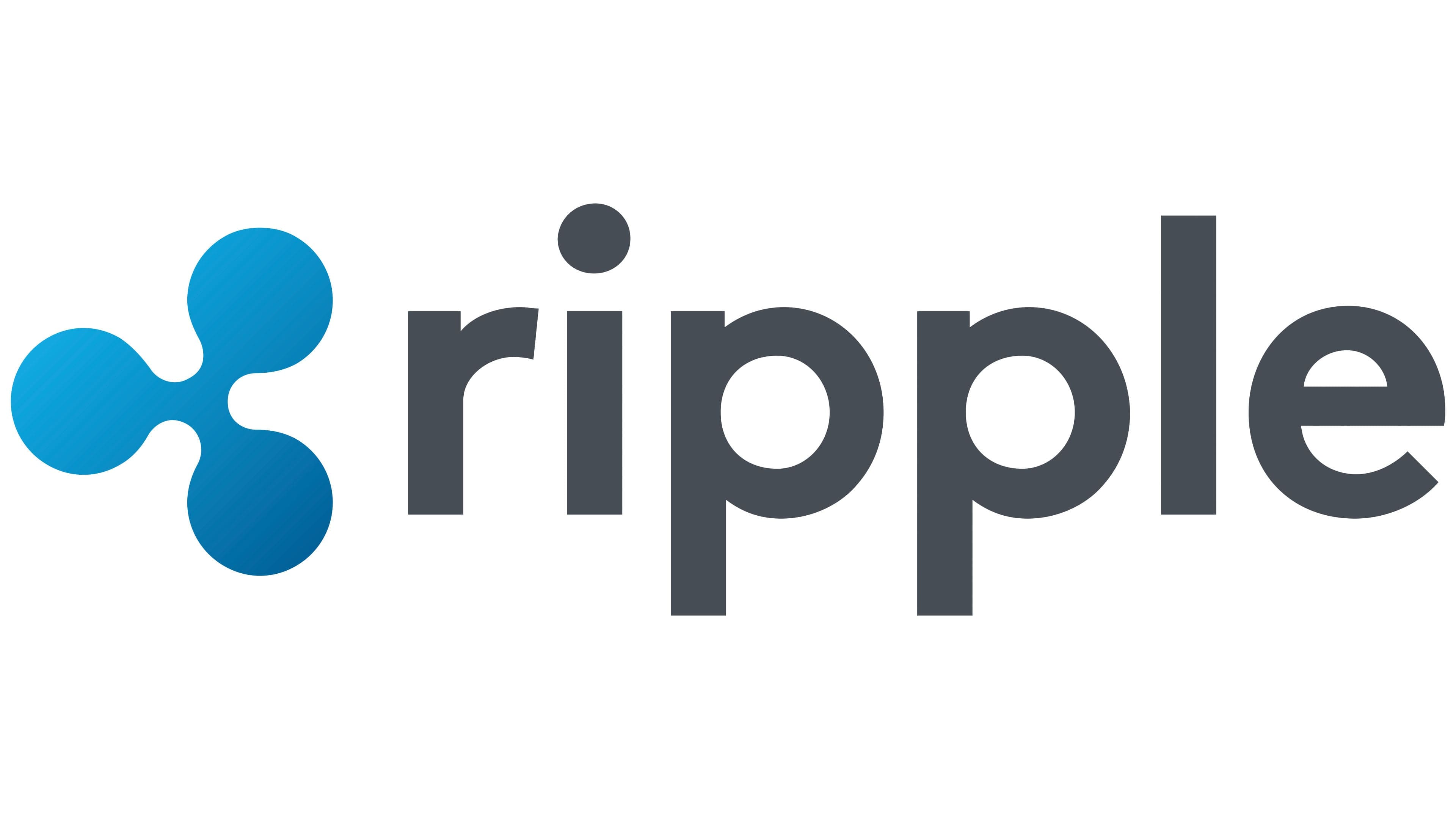
A year after the project’s launch, it was decided to redesign the logo. The changes were minimal. The emblem’s blue gradient was changed. As a result, the emblem conveyed a sense of movement, visually resembling a spinner. Users also associated it with the popular toy, but the company did not comment at the time. One thing is for sure: brighter shades of blue made the logo friendlier and more customer-oriented.
The brand’s verbal name also received minimal changes. It now displays better at small sizes. In addition, the distance between the emblem and the inscription has decreased.
Font and Colors
The brand name on the logo is made using lowercase black letters. The bold font used to create the logo is called LL Brown. It was chosen in 2013 to improve the inscription’s quality.

The triskelion, which forms the basis of the Ripple emblem, was made using blue and its shades. This choice is not accidental. Through the movement created by the gradient, the company conveyed its constant motion. As a result, users felt the platform’s reliability and timelessness.