 Stoopid Monkey Logo PNG
The Stoopid Monkey logo’s meaning lies in its name and distinct visual elements. The connected “O”s could signify a never-ending cycle of fun and humor, integral to the brand’s offerings. The exclamation mark replacing “I” adds a spark of excitement, amplifying the overall playful tone. Meanwhile, the brown backdrop establishes a clear connection to the brand’s mascot, the monkey, further grounding the brand identity in a way that is unique and memorable.
Stoopid Monkey Logo, since 2008, underwent a simplification process, retaining a lively wordmark beneath an outlined monkey head symbol. The logo’s capitalized letters were set in a robust sans-serif font, introducing a unique twist with “!” standing in for “I” and an infinity-like connection between the two “O”s in “Stoopid”. This silver-grey gradient lettering and icon against a dark blue backdrop brought an elegant contrast.
In 2009, a major transformation occurred. The emblem retained its distinct “!” and the double “O” linkage but underwent a massive stylistic revamp. The inscription took on a bold persona, presented in a gradient yellow hue rimmed with black. A departure from traditional lettering was made for “E”, which is depicted with three horizontal bars. The background has changed color, now showcasing a brown hue, often associated with monkeys.
Stoopid Monkey began from the partnership between actor Seth Green and ToyFare editor Matthew Senreich in the late 1990s. Green was known for Buffy the Vampire Slayer and as the voice of Chris Griffin in Family Guy. Senreich worked with collectible figures and pop-culture coverage. They met after Senreich learned that Green had made figures of his Buffy castmates and asked to photograph them for the magazine.
In 2001, Green and Senreich created Sweet J Presents, a 12-episode stop-motion web series for Sony’s Screenblast. The project used animated toy versions of the characters in short comedy sketches. It served as the basis for a television concept. Green and Senreich had already formed Stoopid Monkey in 1999, though the name was still mostly tied to their internal production work.
Comedy Central, MTV, MADtv, Saturday Night Live, and Cartoon Network rejected the show pitch. A Cartoon Network employee later passed it to Adult Swim, while Seth MacFarlane also advised the pair to try that block. Robot Chicken premiered on Adult Swim on February 20, 2005, using stop-motion figures to parody celebrities, films, television, and pop culture. The Stoopid Monkey card appeared at the end of early episodes, with Adam Talbott’s drawings and Green’s “Stupid monkey!” line.
Robot Chicken became the company’s defining project. In June 2007, its Star Wars special featured George Lucas, Mark Hamill, and Billy Dee Williams. Unlike Family Guy and South Park, Stoopid Monkey used stop-motion animation rather than standard 2D animation. In 2009, it released the CGI project Titan Maximum. In 2011, Stoopid Monkey merged with Buddy Systems Studios to form Stoopid Buddy Stoodios in Burbank, ending the brand’s separate history.
Meaning and History
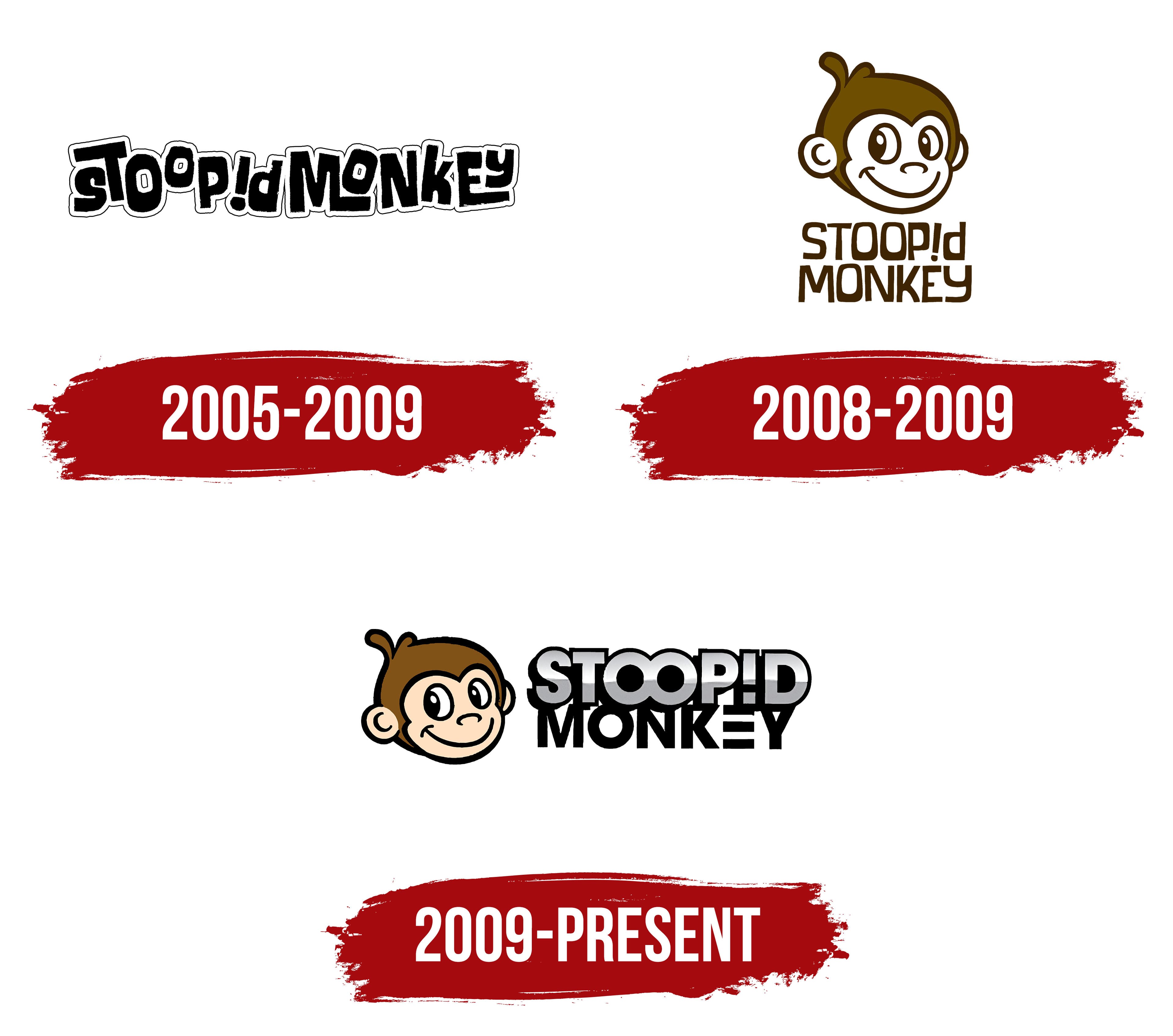
In terms of brand identity, the studio takes its name as a badge of honor, embracing the absurdity and fun at the heart of animation. Its logo, a caricatured monkey, mirrors this spirit of playful defiance. It not only represents the studio’s name but also its commitment to pushing boundaries and rejecting the ordinary.
As the studio continues to advance its brand, it remains dedicated to its founding ethos: innovative, out-of-the-box animation that challenges the status quo and redefines what adult cartoons can be. Through its ongoing creative endeavors, it stands as a dynamic force in animation and production.
What is Stoopid Monkey Logo?
Stoopid Monkey is an animation production company based in Burbank, California. It was founded in 2005 by Seth Green, Matthew Senreich, John Harvatine IV, and Eric Towner. The company is best known for producing the Emmy-winning animated series “Robot Chicken,” which airs on Adult Swim and is renowned for its stop-motion sketch comedy. Stoopid Monkey has become a significant player in the animation industry, known for its distinctive comedic style and innovative use of stop-motion techniques.
2005 – 2009
2008 – 2009
2009 – today