


 Survivor Logo PNG
The Survivor logo captures adventure and wild nature. In separate elements of the emblem, the viewer can see the season’s main features and the areas where participants live. The sign points to the heroes’ lives in a limited space.
Survivor grew out of a British television experiment before it became a major American franchise. In 1988, producer Charlie Parsons created The Castaways for Channel 4’s youth program Network 7. The segment sent a small group of British celebrities, including a soap actor, to an uninhabited Indian Ocean island with help from the Sri Lanka Tourist Board. It didn’t become a public hit, but it gave Parsons a base for a larger format.
By 1994, Parsons had turned the idea into a show about 16 contestants isolated on a remote island. Disney’s Buena Vista developed the project under the working title Survive. It offered it to ABC, but the network rejected it after months of hesitation. The format succeeded first in Europe. In September 1997, Sweden’s SVT premiered Expedition Robinson, which became the country’s top-rated show of the year.
British producer Mark Burnett, known for Eco-Challenge, noticed the Swedish version and spent years trying to secure the U.S. rights from Parsons. After securing the license, Burnett reworked the format, toned down the harsher elements, and focused on social pressure, alliances, and personal conflict. On November 24, 1999, he pitched the show to CBS president Leslie Moonves, and the network approved it as it sought a ratings breakthrough.
Producers filmed Survivor: Borneo on Pulau Tiga near Malaysia in March and April 2000. It premiered on CBS on May 31, 2000, and ended on August 23 with Richard Hatch winning $1 million. The finale drew about 52 million viewers, while the season averaged over 28 million per episode. Since Survivor: Africa in 2001, CBS has produced two seasons a year. Jeff Probst became the host, won four Emmy Awards for the show, and later joined the executive producer team.
Meaning and History

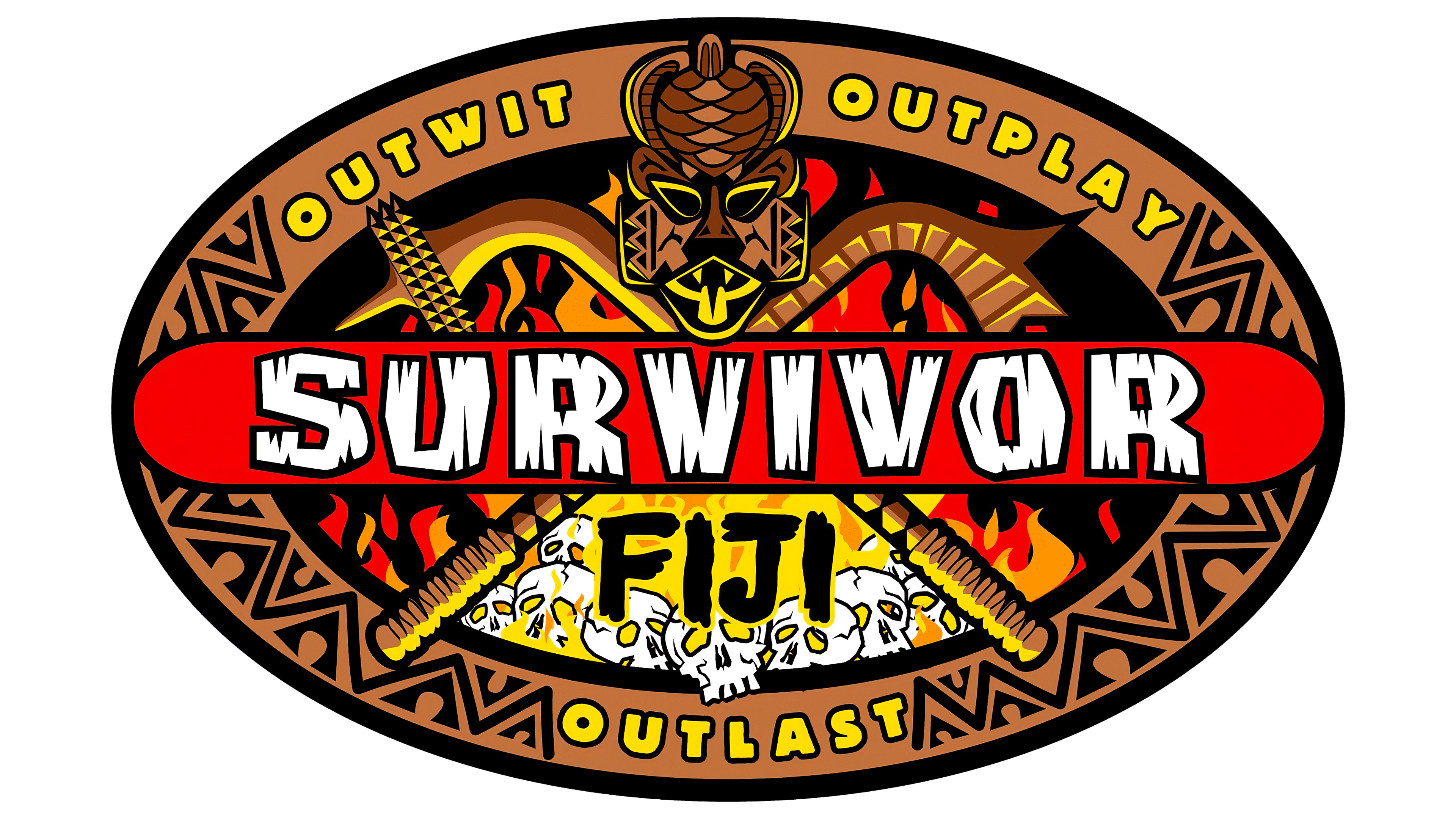
Two seasons of the show are filmed each year, and a new location is chosen for each one. For the 15-episode stretch, a separate logo is created to reflect the spirit of the locale, the competition themes, and the tasks. However, all emblems share a common shape, with the name centered and inscriptions forming a memorable motif to ensure recognition. The oval directly embodies the islands where the games take place, and the bold outline marks separation from the rest of the world and conceals it from others’ eyes. The participants are confined for the duration of the show.
What is Survivor?
An American analog of the Swedish reality show Robinson about the struggle for survival on an uninhabited island. It has been broadcast since 2000. To date, 44 seasons have been filmed, each with 15 episodes. Each episode lasts 43 minutes. It ranks among the top 10 most popular shows in the US and has earned 63 Emmy nominations.
Season 1 2000

Season 2 2001

Season 3 2002

Season 4 2002

season 5 2002

season 6 2003

season 7 2003

season 8 2004

season 9 2004

season 10 2005

The logo for the game’s tenth season is an oval with a wide khaki-camouflage rim. On both sides, images of sharks threaten the players on the island. One of them was successfully caught by the participants. The rim features game-related slogans: “Outwit,” “Outplay,” and “Outlast.” They demonstrate the players’ primary goal: to outmaneuver their opponents.
In the center, on a yellow oval backdrop, the show’s name is written in angular white letters. It conveys the game’s meaning: survival. The white letters suggest novelty, constantly changing locations, fair judging, and playing in fresh, clean air. The green outline hints at the nature of the participants’ lives.
The inscription below indicates the game’s location: the Republic of Palau. In the background are the islands of Koror and Ulong, where the main actions took place. In the water, rocky reef islands that distinguish the location are visible. The sun is particularly prominent in the picture, as the islands experience more than 20 sunny days per month year-round, with an average daily temperature of 28 degrees Celsius.
season 11 2005

The eleventh season took place in Guatemala, which is reflected in the logo. The oval border is black, and instead of sharks, it features an ancient depiction of green snakes, as the country has 134 species. The title’s backdrop is also black. It speaks to jungle life, the challenges of the night, and volcanic soils. Guatemala has 33 volcanoes and a lot of solidified lava. The outline of the white letters of Survivor is orange, hinting at the hot tropical climate.
Below the show’s name is the name of the area where the competitions took place. The territory chosen for the game was Nakúm-Naranjo National Park. The park has surviving Mayan structures, which are also mentioned on the emblem. The buildings are depicted in the background of the sign. The snakes drawn in the logo were highly valued in the tribe’s culture.
The oval also contains the image of a mask, a prototype of the immunity idol used for voting in this season.
season 12 2006

season 13 2006

season 14 2007
season 15 2007

season 16 2008

season 17 2008

season 18 2009

season 19 2009

season 20 2010

season 21 2010

season 22 2011

season 23 2011

season 24 2012

season 25 2012

season 26 2013

season 27 2013

season 28 2014

season 29 2014

season 30 2015

season 31 2015

season 32 2016

season 33 2016

season 34 2017

season 35 2017

season 36 2018

season 37 2018

season 38 2019

season 39 2019

season 40 2020

season 41 2021

season 42 2022

Modern franchise logos have changed slightly. They no longer have the country’s name, as Fiji has been the main location for several consecutive seasons. Instead, the focus has shifted to the season number. It is indicated in large numbers at the top of the oval backdrop. The first in 2022 was episode 42.
The logo has a blue border. The shooting took place on an island nation. Therefore, the tribe’s location was surrounded by water, which is symbolized by the color blue.
A labyrinth sits at the center of the background. The show’s name is written on an old board attached to the emblem, which is locked. On the other side of the board is a key. Almost all challenges involved wooden vessels, boats, chests, and sleds. Therefore, wood plays a crucial role in the season. In each game, participants solved puzzles, and whoever assembled it first got immunity. The labyrinth suggests this.
At the two ends of the emblem, you can see tongues of flame, reflecting the two tribes, their councils, and voting, which take place by torchlight.
season 43 2022

The 43rd season features a bright, vibrant logo in lettuce green. In the background are silhouettes of native men and women, into whom the participants transformed. The man holds a torch that players use to cast their votes. The woman holds a staff with a torch.
The lettuce-green wavy lines on the rim of the emblem resemble seaweed and hint at the beautiful island chains. A large octopus occupies much of the emblem, as there are many off Fiji’s coast.
The yellow letters suggest an hourglass that a player could smash to cancel the winning team’s immunity. The light shades also indicate that the show’s duration has been reduced from 39 to 26 days.
season 44 2023

The logo for the 44th season, shot in 2022, features caves and stones. The stone arch is the place where the council is held. The emblem features silhouettes of players with torches, symbolizing the elimination vote. Two torches flank the central blue inscription with the show’s name. The abundance of fire hints at the players’ inner fire, which must be showcased throughout the season, and signals many challenging obstacles.
The word “Survivor” sits on a blue background with a white outline. Part of the oval’s top rim is covered with palms and a stone structure. The emblem transports the viewer to the green Mamanuca Islands, where the season takes place.
Font and Colors
The logos predominantly feature natural colors: various shades of green, yellow, and blue. Red is used for accents, symbolizing competition and battle; black embodies the winner’s strength and dominance; and white represents beginnings and a refreshed show format.
- Green represents leaves, grass, energy, and nature’s power. Most participants’ food is plant-based.
- Yellow represents sand, as most competitions are on tropical islands and participants live on the beaches. Yellow also represents the sun and its warmth.
- Blue water is necessary for drinking, cooking, and bathing.
Together, the colors mean life because, without food, warmth, and water, survival is impossible. The title font was specially designed for the show. The letters’ angularity suggests difficulties and trials, surprises, and challenging camping conditions.