


 Transformers Logo PNG
A single whole, created from separate parts, represents the Transformers logo. Perfectly fitted parts allow you to transform the robot into other mechanisms. A “live” transformer looks at the user from the emblem as if inviting them to play.
Transformers grew out of Japanese toy engineering rather than an original American robot concept. In the early 1980s, Takara was selling Diaclone and Micro Change figures that could transform into robots, as well as cars, cassette tapes, guns, and household objects. In 1983, Hasbro representatives saw the lines at a Tokyo toy fair, and Henry Orenstein pushed the company to license them.
Hasbro and Takara then rebranded the figures for the Western market under a single brand. Hasbro used a model already tested with G.I. Joe, linking toys with Marvel Comics and animation. Jim Shooter created the basic conflict between the Autobots and the Decepticons, Dennis O’Neil named Optimus Prime, and Bob Budiansky developed the first stories for the characters. Shoji Kawamori, known for Macross, contributed to the mechanical design.
Transformers launched in the United States in 1984. The animated series The Transformers debuted on September 17 and was produced by Marvel Productions, Sunbow Productions, and Toei Animation. Marvel also released a four-issue comic. The first 28 toys sold out quickly, and Hasbro expanded the line in 1985 with Dinobots, Insecticons, and Constructicons while the brand moved into Europe, Japan, Mexico, Brazil, and Argentina.
The 1986 film “The Transformers Movie” shocked young viewers with the deaths of major characters, including Optimus Prime. The TV series ended in 1987, while Marvel’s comic ran until 1990. Later eras included Beast Wars in 1996, Michael Bay’s 2007 Paramount film, Bumblebee in 2018, and the animated Transformers One in 2024.
Meaning and History
Transformers is a non-standard path to fame because the first characters appeared as toys, with comics and anime coming later. The line was initiated by mecha – fantastic creatures, giant robots, and machines that can transform from one form to another. The basis was taken from Diaclone and Microman: living, intelligent, autonomous robots called Autobots and Decepticons.
The first toys were humanoid fantasy figures. The concept of the second generation has expanded a lot – these were robots that can transform into weapons, electronic objects, and vehicles. During this period, Hasbro, which manufactured products using Microman technology, bought Diaclone toys and became a business partner of Takara. She hired writers Jim Shooter and Dennis O’Neil to create a comic strip about robots.
Bob Budiansky wrote most of the characters. Shōji Kawamori designed the mecha robots. He also developed ways to transform them from one form to another. In 1984, the media franchise’s logo also appeared across all projects.
1984 – 1989

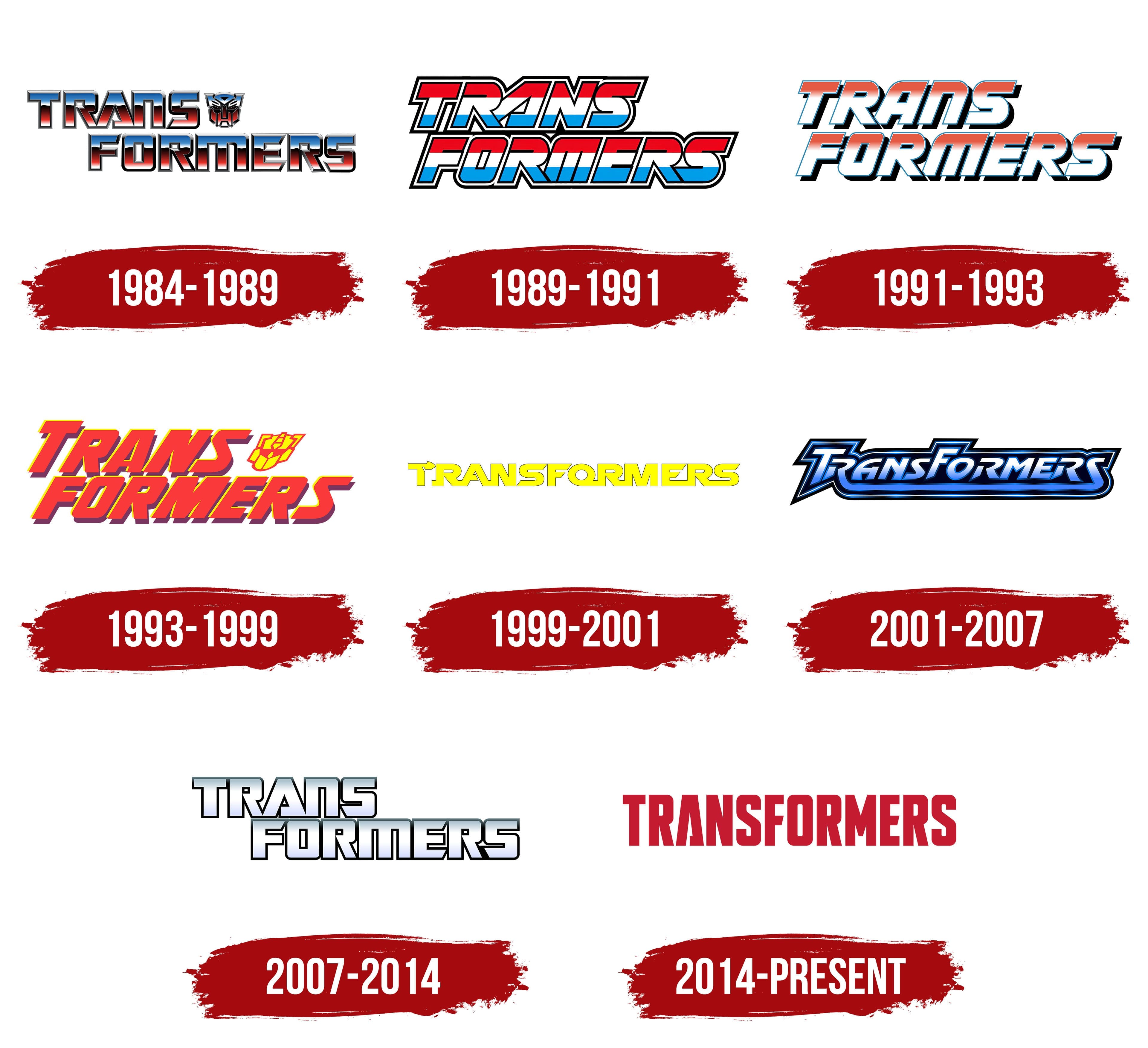
The debut logo features blue-and-red gradient lettering with a metallic sheen. Highlights and shadows along the letter outlines make the text appear three-dimensional. The name is divided into parts and placed on two levels: on the left, in the top line, the word “Trans,”; to the right, under it, “Formers.” The first row also contains an abstract icon, the mask of one of the characters. It uses the same design as the other elements: metallic, gradient, blue-red. Moreover, the inscription mixes uppercase characters with lowercase “n” and “m”. The “A” lacks a middle bar, so it looks like a delta, the fourth letter of the ancient Greek alphabet.
1989 – 1991
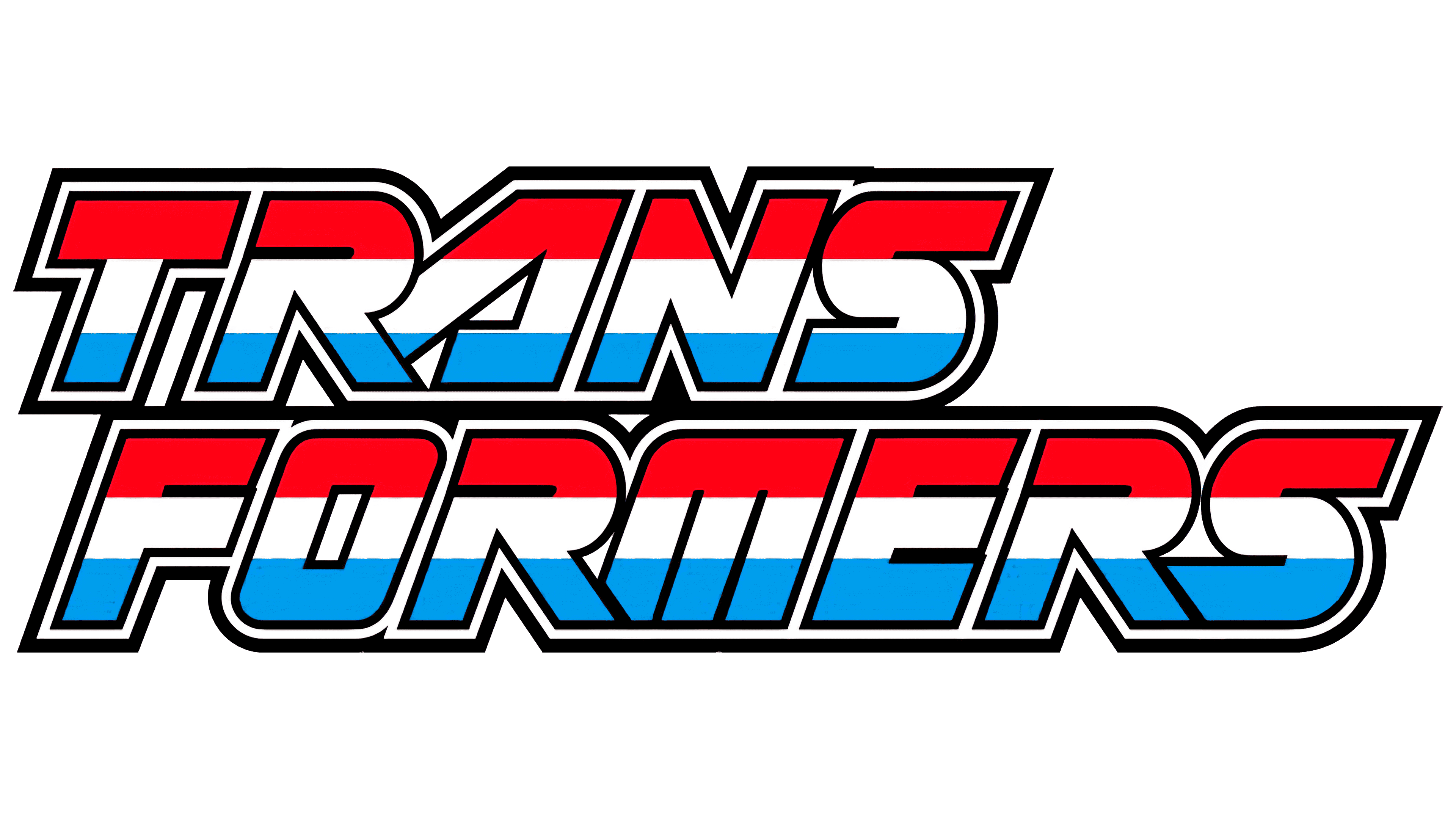
After the redesign, the graphic icon was removed from the logo, and other components became flat yet bright. The designers kept the media franchise name divided into two parts but moved the inscriptions together, so “Trans” is directly above “Formers.” The text is in italic sans serif. The “N” has been moved to uppercase, and the “m” has remained lowercase but taken on a more elongated shape. The left leg of the “A” goes behind the “R.” All letters have a double-black border and a three-color palette of horizontal stripes: red, white, and blue.
1991 – 1993
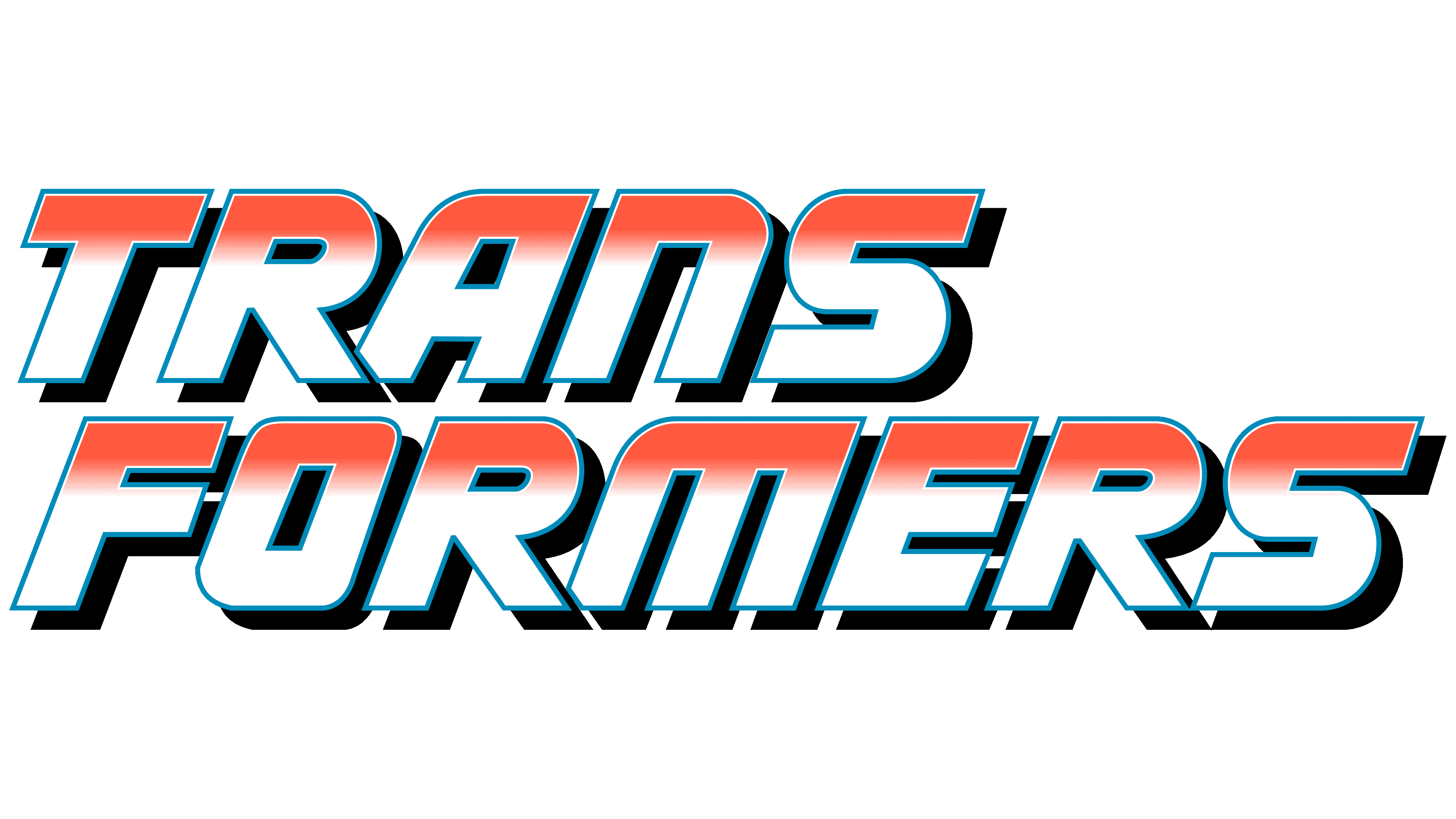
In 1991, the emblem acquired volume and a slightly different color. The developers removed the blue horizontal line from the name, keeping only the red and white. They added black shadows to the letters on the right and bottom, making them bulge as if floating above the surface. Although the edging strip has become thinner and lighter (blue), it remains visible because of the adjacent dark lines.
1993 – 1999
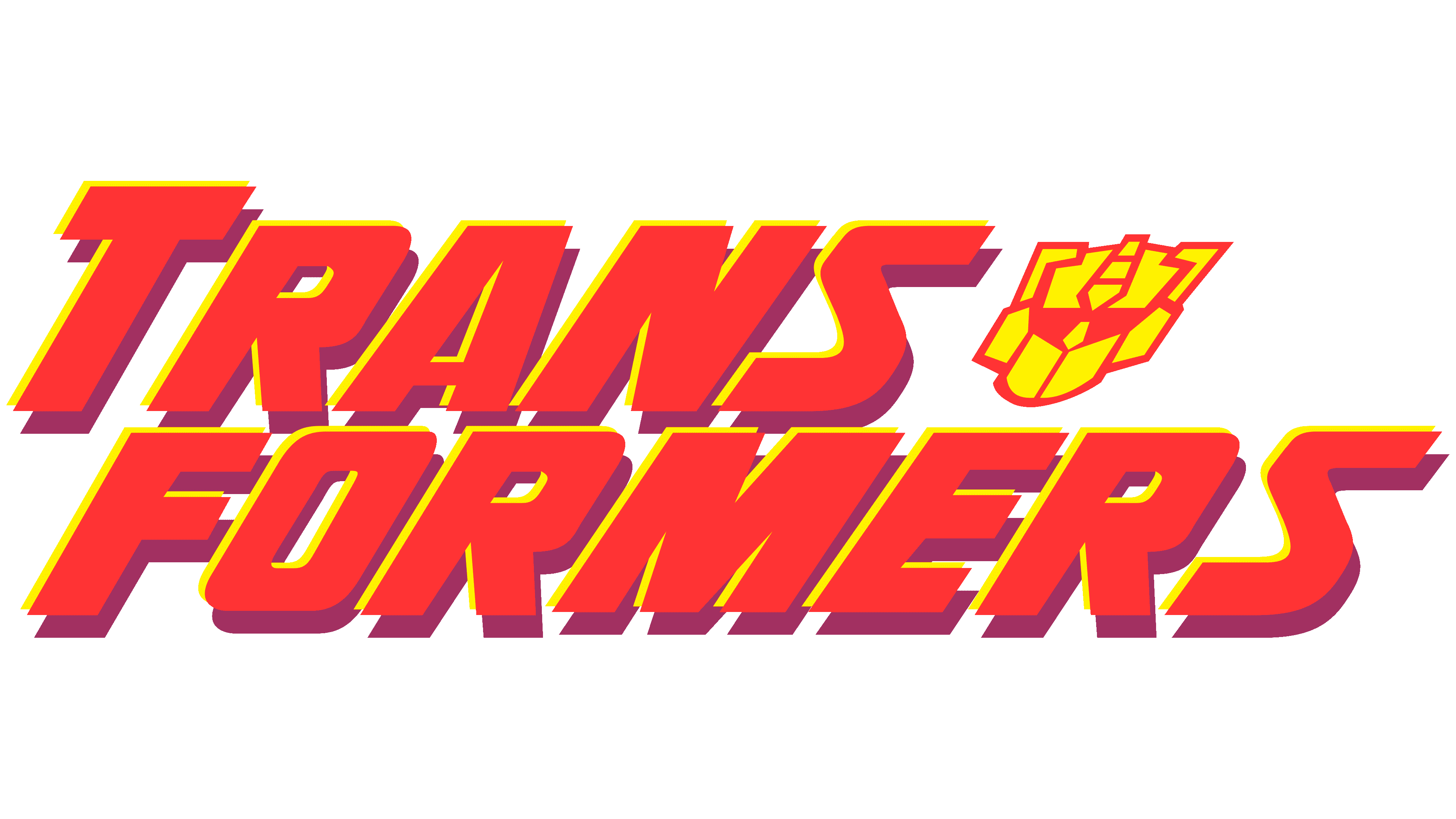
The logo is now brighter: large red letters are outlined in yellow. Italics are reinforced, so the characters slant more to the right than usual. The designers also returned the icon as a mask. Unlike the inscriptions, it is colored yellow and outlined with a red stripe. The shadows remain, but the black has now been replaced with a dark crimson.
1999 – 2001

After a long period with the word “Transformers” split in two, it finally got a solid spelling. The developers removed italics and painted the inscription lemon yellow. They modified some of the letters by connecting their legs: “RAN,” “ORM,” and “ERS.” “T” added an arrow to the bar on the right.
2001 – 2007

The 2001 redesign significantly updated the media franchise’s identity and introduced a blue-and-black badge. The emblem remained textual but acquired curly elements on some letters. For example, the letters “T” and “F” are larger than the others and have pointed legs, and the “R” and “S” connect at the bottom with a long tape shaped like a sound wave. The gradient blue “Transformers” sits against a black background and is outlined in blue. Moreover, some signs are supplemented with cuts.
2007 – 2014
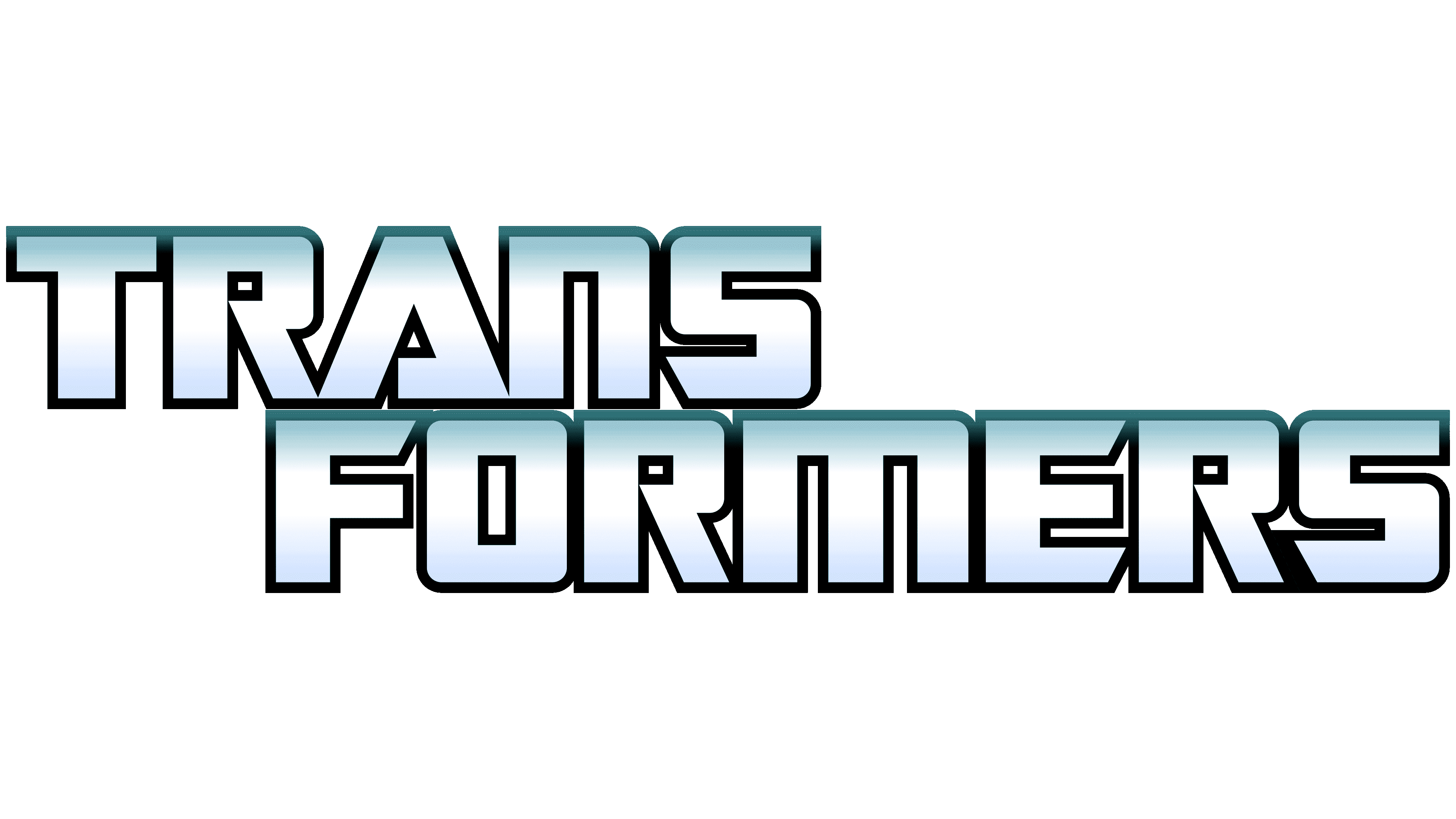
During this period, the brand regained its old name: it was split into two parts and placed on different lines. Rough serif characters have no serifs. They are outlined in black and decorated with metal plates. But their surface is matte, not shiny. Some letters also appeared in a non-standard configuration: the capital “A” again looks like a pyramid or delta, and “n” and “m” are converted to lowercase.
2014 – today
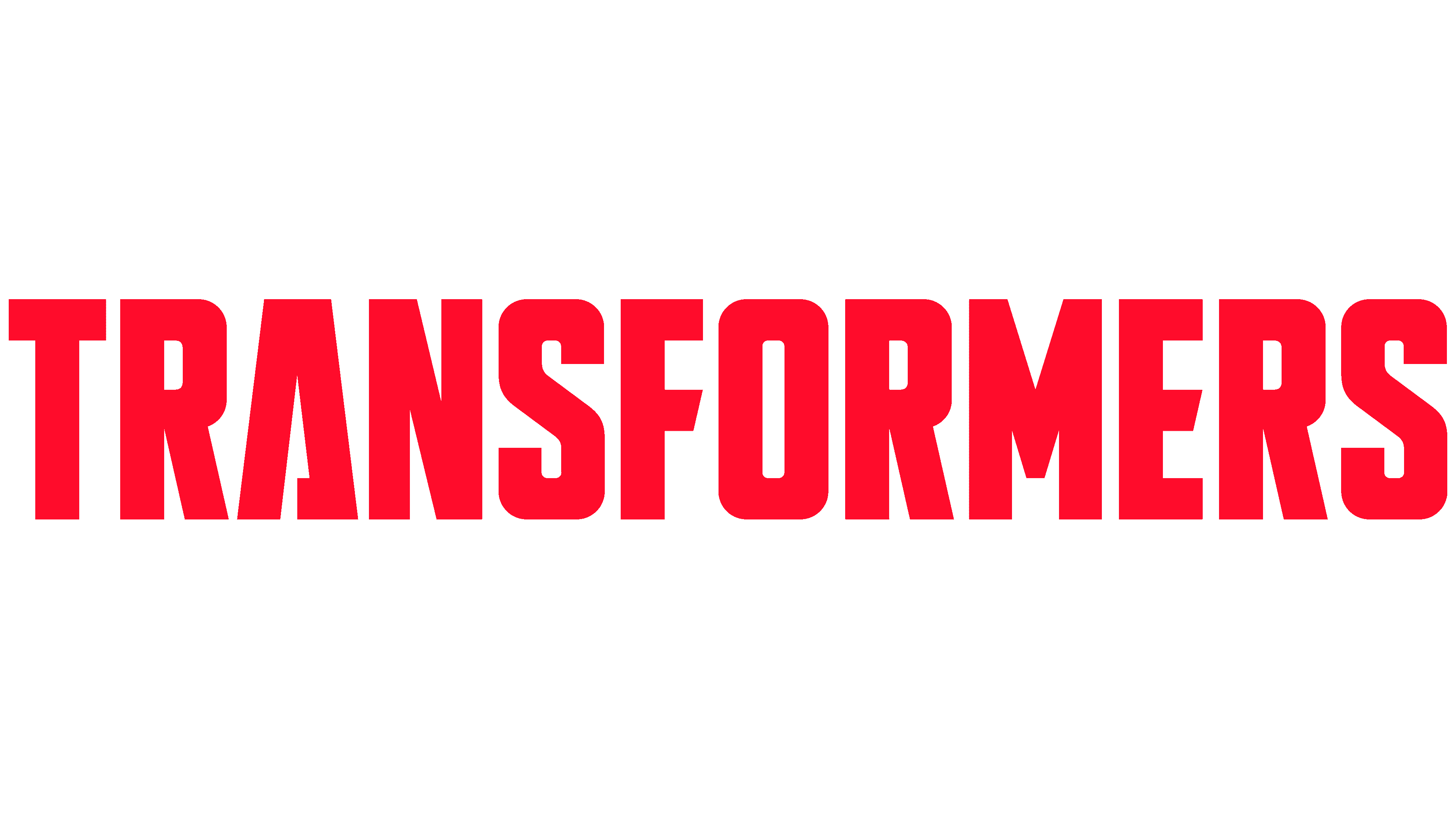
The logo changes brought brightness: the developers returned it to red and its standard appearance, except for the “A,” which remained a triangle with an open bottom. The rest of the characters are written in a different font, smooth, even, elongated.
Icon
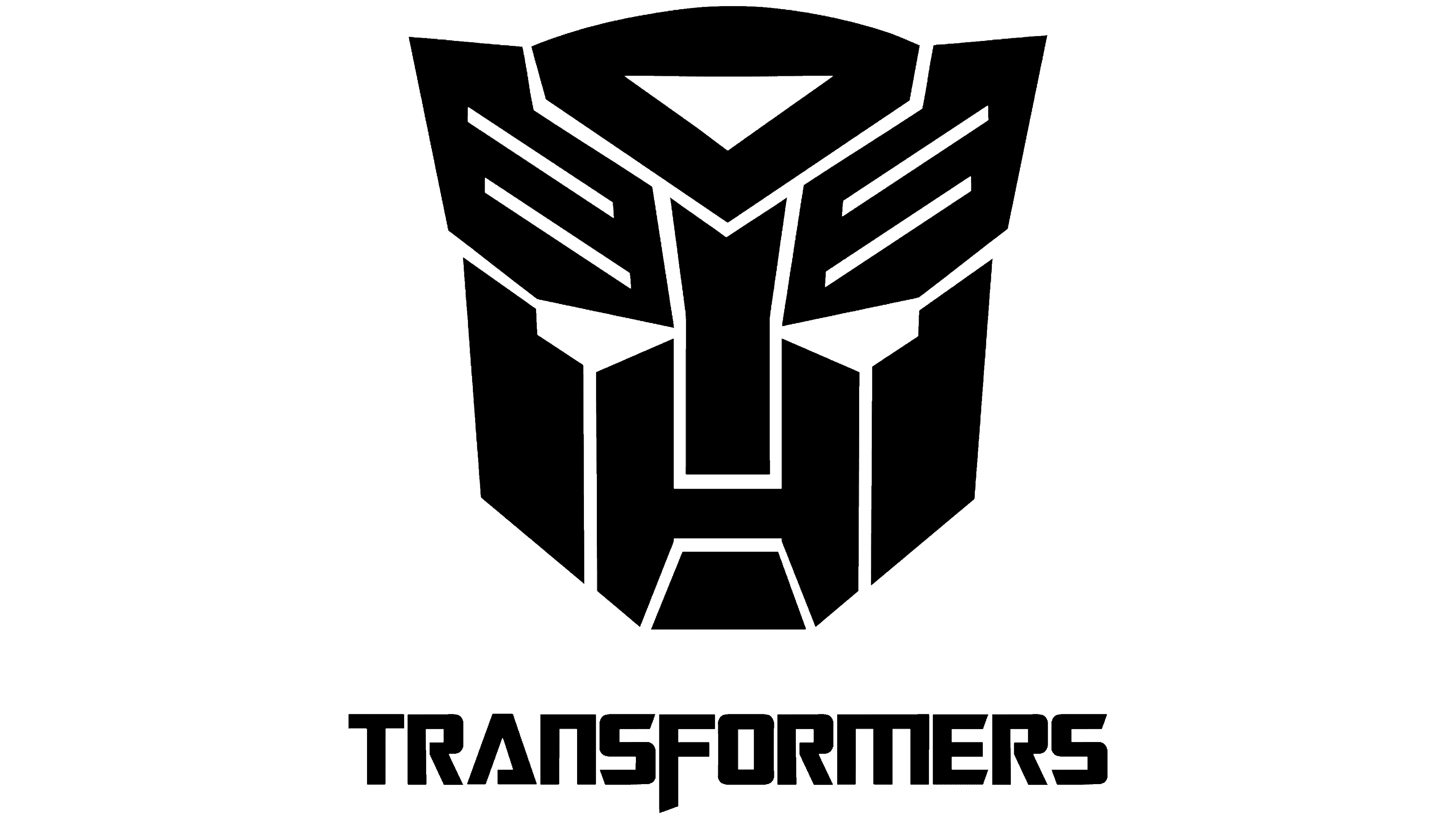
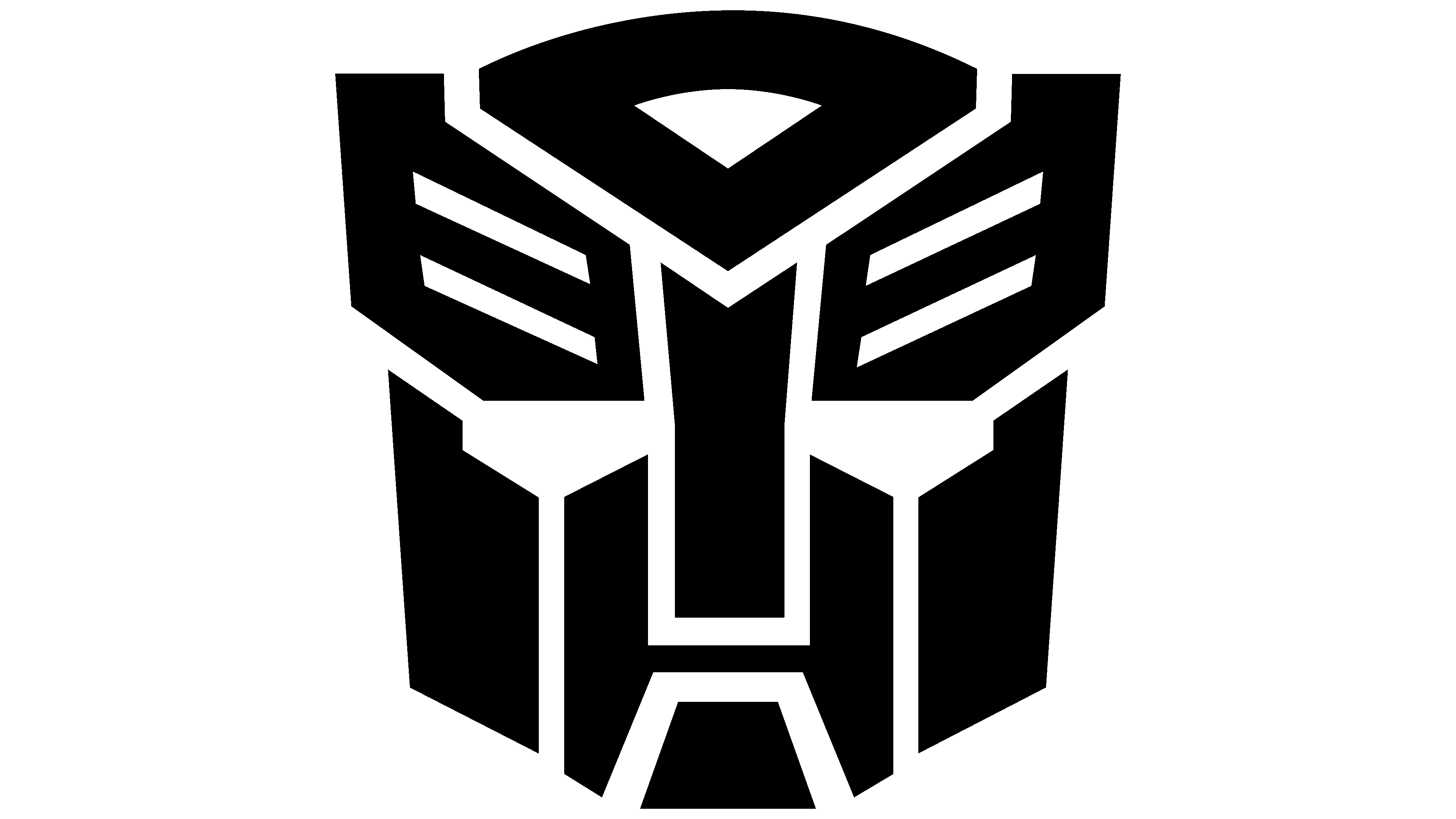
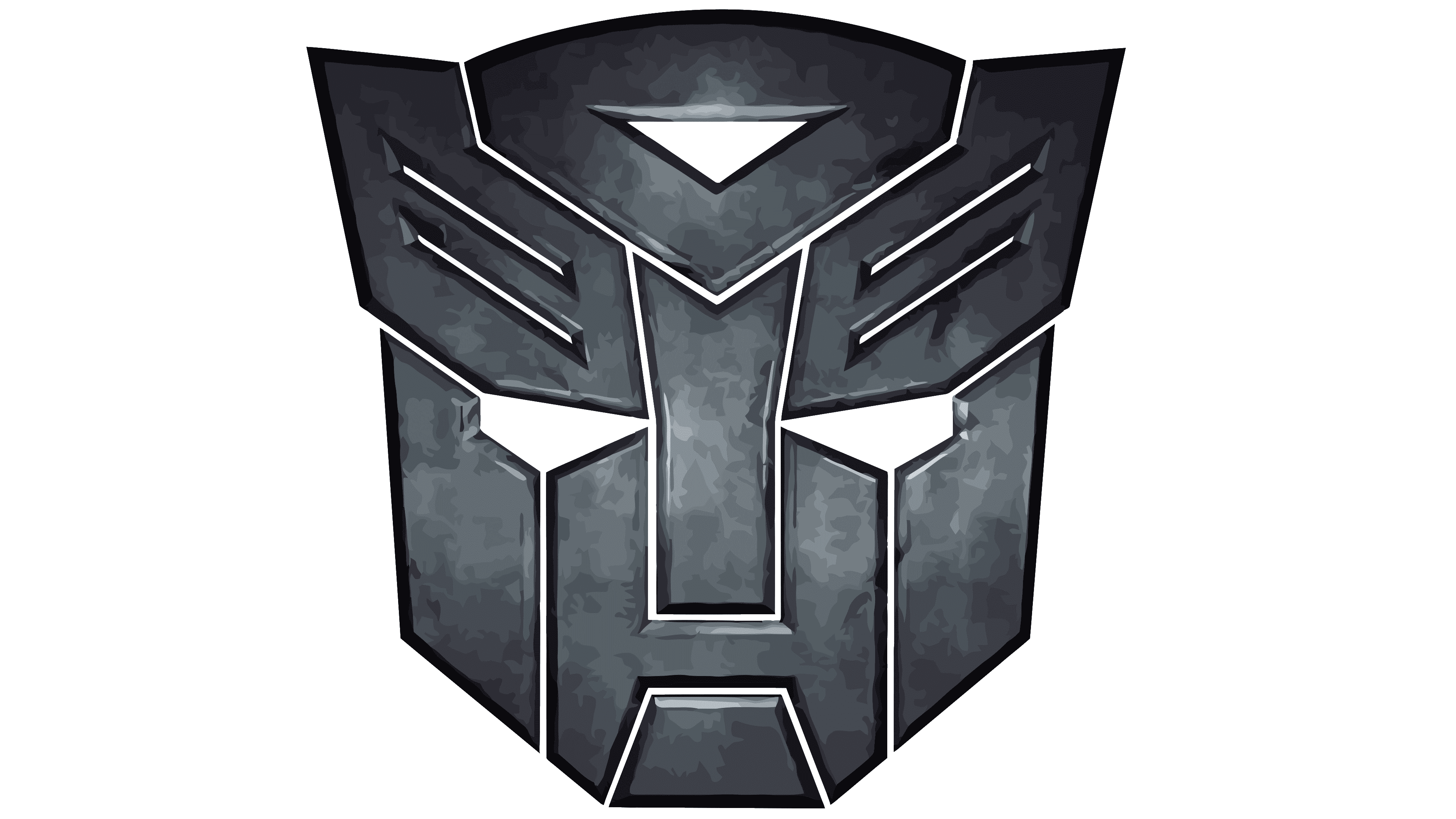
Hasbro used mask-shaped faction insignia on toys in the 1980s. They were intended to immediately determine the villain and the hero. Several such symbols existed, but the main ones were two. One was Autobot, a stylized version of Prowl’s face.
A distinctive fraction mark is placed on toy packaging. Initially, it was stylized like metal – the glossy surface seemed to shine with light. As before, it consisted of plates of different configurations, resembling irregular polygons with through cuts. They are combined to form a face with empty eye sockets. The mask was painted in three colors: red, white, and blue in the early version.
In 2007, the logo was changed to match the new film’s style. To do this, the developers removed the color, leaving the black face on a white background to make it look intimidating. For the same purpose, they thinned his evil eyes and sharpened the lines at the bridge of his nose. The authors slightly raised the diagonal strokes on the improvised forehead.
Font and Colors

The Transformers’ identity is primarily conveyed through text, which the developers continually revised to align the symbology with the design of toys and characters across media. Individual icons also represent the factions.
For the logo, a custom font called Transformers Movie was created. Alphabet & Type developed it. This option was recently approved and used in the movie of the same name. But earlier, a different typeface was used in the emblem – italic.
The symbol palette is varied: blue, black, red, white, yellow, and silver, with a metallic touch.